Goofish in English: How to Use Xianyu Without Speaking Chinese (2026)
Last updated: August 2026
Here’s the blunt truth: Goofish has no English version. No English app, no English site, no little language toggle tucked away in the settings. It’s Xianyu — a Chinese app built for Chinese users — and every screen assumes you read Mandarin. That’s a wall, but it isn’t a solid one. This guide covers the browser tricks that get you partway, the parts no translation tool can touch, and why most people who buy from Goofish regularly stop wrestling with the interface and hand the Chinese side to an agent. You browse; they translate and transact.
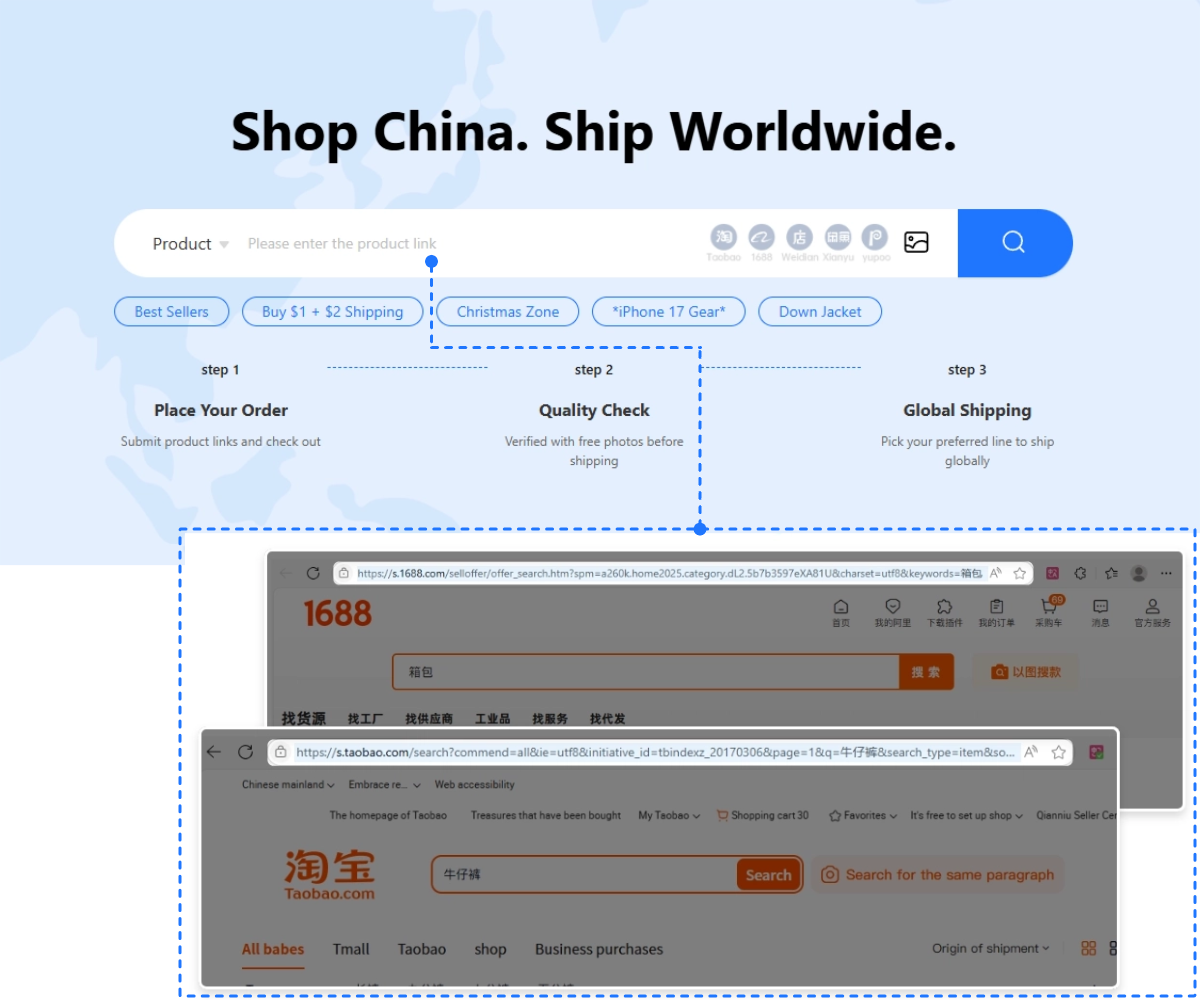
Found something on Xianyu? Paste the link.
We’ll open the item on Fishgoo so you can see the price and order it. Taobao, Tmall, 1688 and Weidian links work too.
Does Goofish have an English version?
No. There’s no official English mode anywhere in Goofish or Xianyu. Alibaba built the app for the domestic Chinese market and never localised it for foreign buyers. Unlike AliExpress, which Alibaba did design for export, Goofish stays entirely in Chinese — menus, buttons, categories, seller messages, all Mandarin. You can bend a web browser into translating some of it, which we’ll get to, but nothing flips the whole platform into English. Anyone claiming otherwise is describing a browser plugin, not a Goofish feature. If the contrast helps, our Taobao vs AliExpress breakdown shows the difference between an Alibaba platform made for export and one made for locals.
Why bother, then? Because Goofish is where China’s best second-hand deals live — used sneakers, cameras and lenses, trading cards, collectibles — and the language gap is the one thing standing between you and those listings. That’s worth solving properly rather than half-solving with a translate button.
What parts of Goofish are actually in Chinese?
All of it. And the parts that matter most are the ones machine translation handles worst. Laying it out shows you exactly where the friction sits.
| What you’re doing | Language | Can translation help? |
|---|---|---|
| Reading listing titles and descriptions | Chinese | Partly — web translate works on text, but not on photos with text baked in |
| Searching for an item | Chinese input | No — search matches Chinese keywords only |
| Messaging a seller | Chinese, in real time | Barely — lag and lost nuance wreck any negotiation |
| Checkout and payment | Chinese + mainland Alipay | No — needs a Chinese ID and bank card |
| Refunds and disputes | Chinese forms, time-limited | No — unforgiving if you misread a deadline |
See the pattern? Reading is the easy half. Doing — searching, talking, paying, fixing a problem — is where Chinese stops being optional and starts costing you money.
How to browse Goofish in English with browser translation
If you only want to look, the web version plus a browser translator gets you surprisingly far. The trick is to skip the app for browsing and use a desktop browser instead.
- Open the Goofish web listing in Chrome or Edge (not the app).
- Right-click anywhere on the page and choose “Translate to English.”
- The page text flips over — titles, condition notes, and prices in ¥ become readable.
Where it falls down: sellers on a second-hand marketplace often write the real condition details on the photos — a scuff circled here, a note about battery health there — and image text stays stubbornly Chinese. The mobile app doesn’t translate the way the browser does either, so you lose the convenience of shopping on your phone. And the second you tap anything interactive, you’re back to square one. Browsing in English is doable. Buying in English is a different beast, which is the whole point of this page.
How do you search Goofish when everything’s in Chinese?
You search in Chinese — there’s genuinely no way around it. Type an English word into Goofish and you’ll get next to nothing back, because listings are titled in Chinese and the search engine matches Chinese characters, not English ones. The workaround is to translate your search term before you paste it in: run “vintage film camera” or a specific model name through a translator, copy the Chinese, and drop that into the search bar. Brand names in pinyin sometimes land, but it’s hit and miss. Hunting one specific camera means translating the model name into its Chinese string, pasting that, then browser-translating the results back — a three-step loop for every search you run. It’s clumsy on a good day, and it’s usually the moment people realise that browsing and buying are two separate problems wearing the same coat.
How accurate is browser translation on Goofish listings?
Good enough to shop, not good enough to trust with the details. On plain listing text — what the item is, roughly what shape it’s in, the asking price — Chrome and Edge handle it well. Where they slip is exactly where second-hand money is won or lost. Condition grading is the big one: Chinese sellers lean on shorthand for grades like “99% new,” “lightly used,” or “minor flaws,” and a literal machine rendering can make a scuffed item read as mint, or a clean one read as beaten up. Slang and abbreviations that run through sneaker and collectible circles get scrambled the same way. And no translator can read text printed inside a photo, which is precisely where sellers tuck the honest condition notes they’d rather you skim past.
There’s also the matter of what a listing doesn’t say. A seller might mention a fault only in the chat, or price something oddly because of a detail buried three lines down. Miss it and you’ve bought a problem.
The practical rule is simple: translate to shortlist, verify to buy. Once something’s caught your eye, having your agent read the full Chinese listing plus the image text closes the gap between “sounds fine” and “is fine.” That check is why the agent route beats going it alone with a translate button — and it’s the same logic behind QC photos: words describe an item, photos prove it.
The parts no translation tool can fix
Translation handles words. It does nothing for the four hard locks that have nothing to do with language and everything to do with being outside China.
- Phone number. Registration wants a mainland (+86) mobile to receive the verification code.
- Payment. Checkout runs on Alipay, and a real-name Alipay account needs a Chinese national ID and usually a mainland bank card. No translator conjures those.
- Shipping address. Sellers post to a domestic address only. You need a delivery point inside China.
- Live seller contact. Second-hand deals hinge on chatting with the seller — asking for extra photos, agreeing a price, sorting a problem — in real-time Chinese. And if something goes wrong, the dispute forms are Chinese and clock-limited.
These are the same barriers that make buying from Taobao tricky from abroad, except Goofish adds the wrinkle that you’re dealing with private individuals rather than shops. Reading the listing was never the real obstacle.
How an agent gets you Goofish in English
This is where the whole thing gets simple. A Goofish agent like Fishgoo is, in plain terms, your Chinese-speaking proxy on the ground. You never touch the Chinese interface for the parts that count. The flow looks like this:
- You find a listing (browser-translated is fine) and send the link.
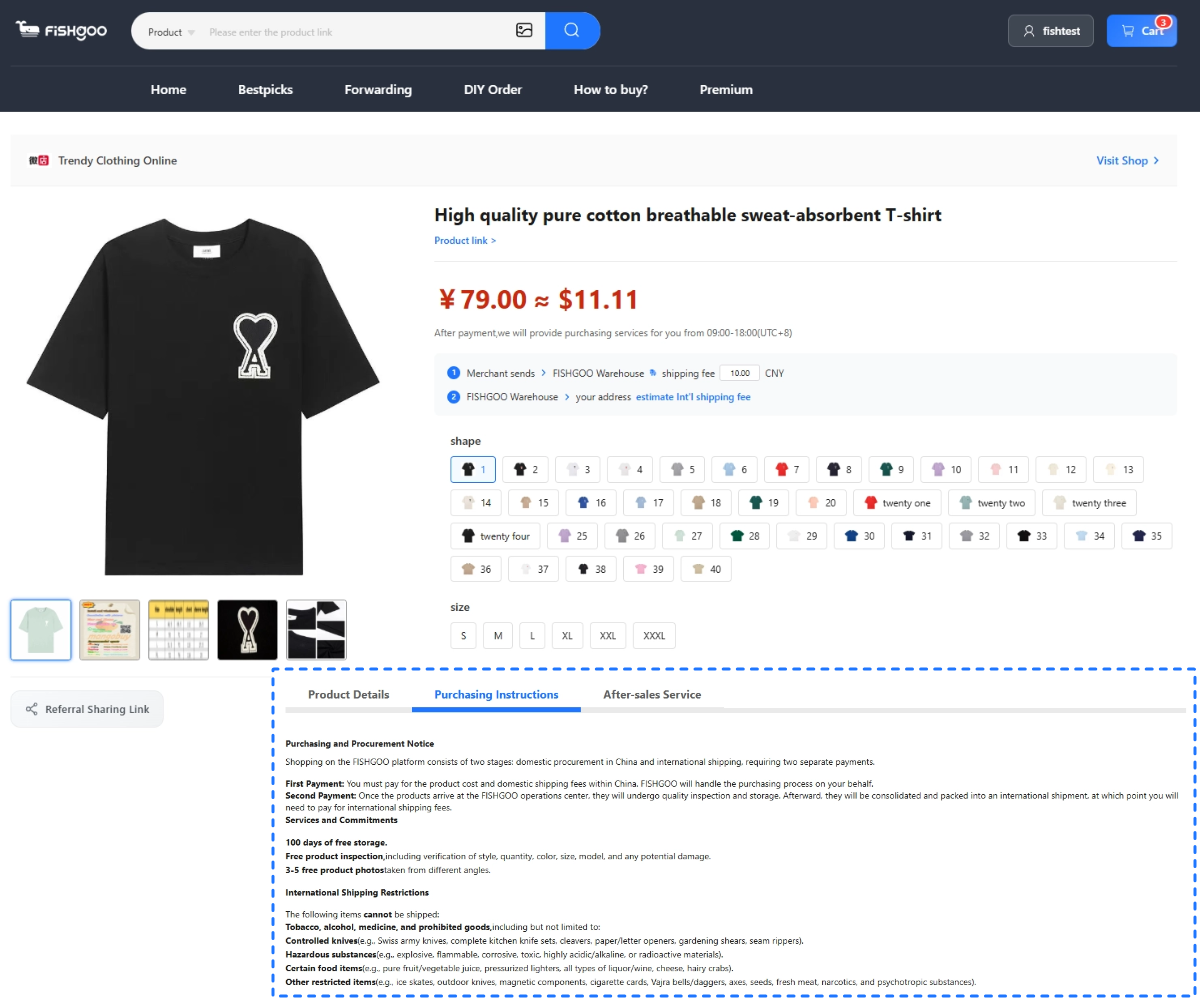
- Fishgoo reads the full Chinese listing and tells you, in English, what it actually says — condition, flaws, what’s included.
- If you want extra photos or a better price, the team messages the seller in Chinese on your behalf.
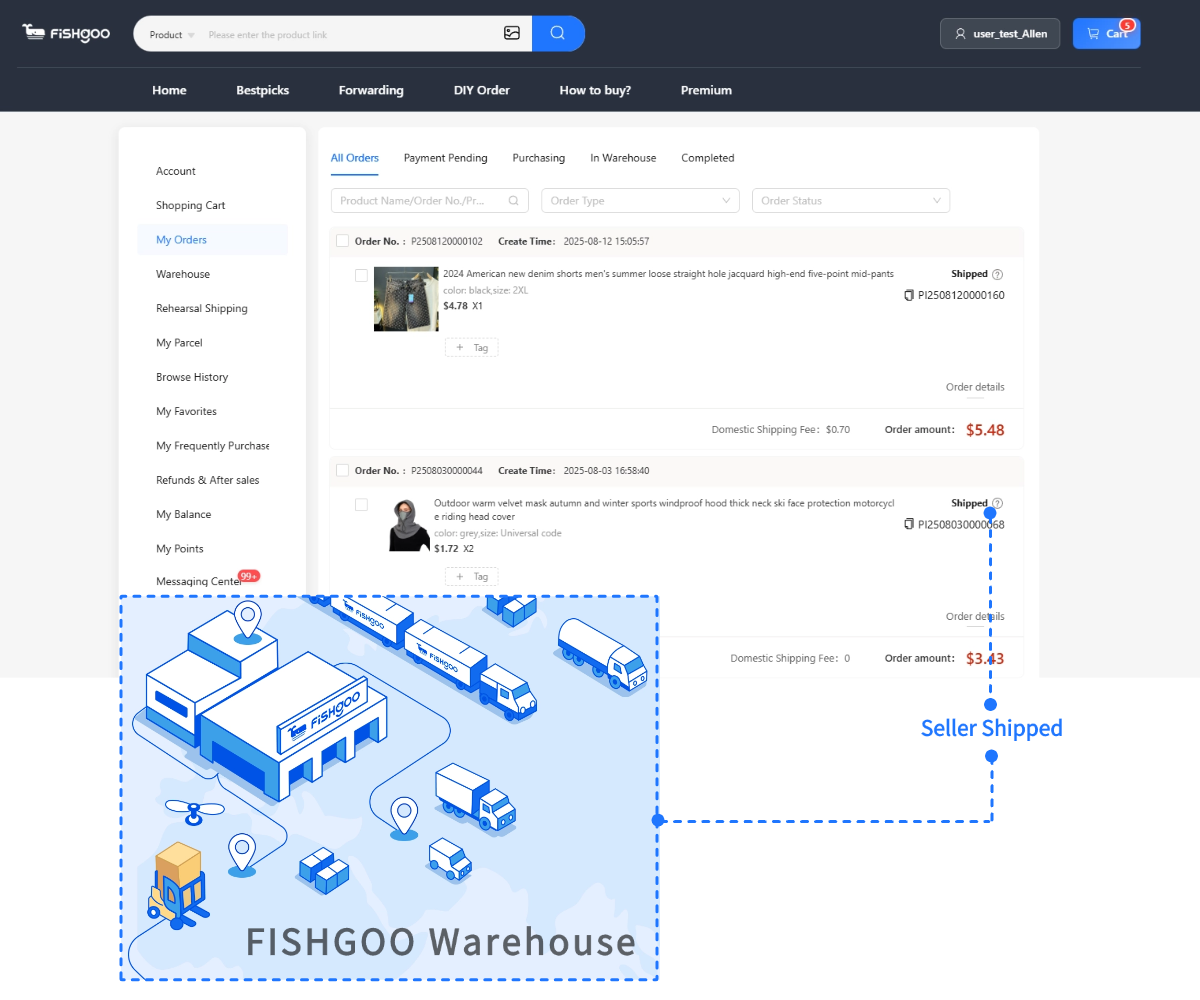
- They pay with their Alipay and have the item sent to the warehouse.
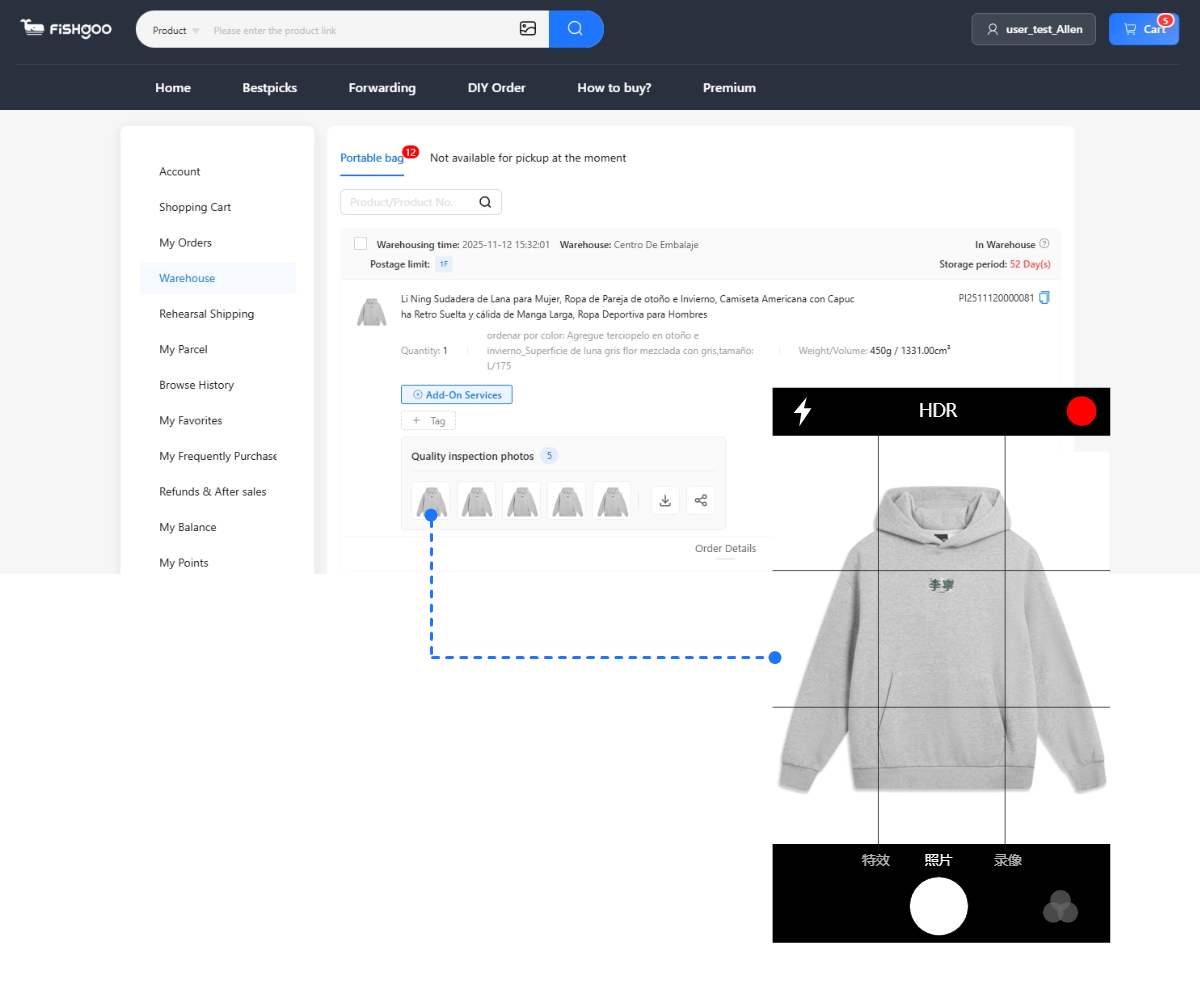
- You get QC photos of what really turned up, so you approve the true condition before it ships.
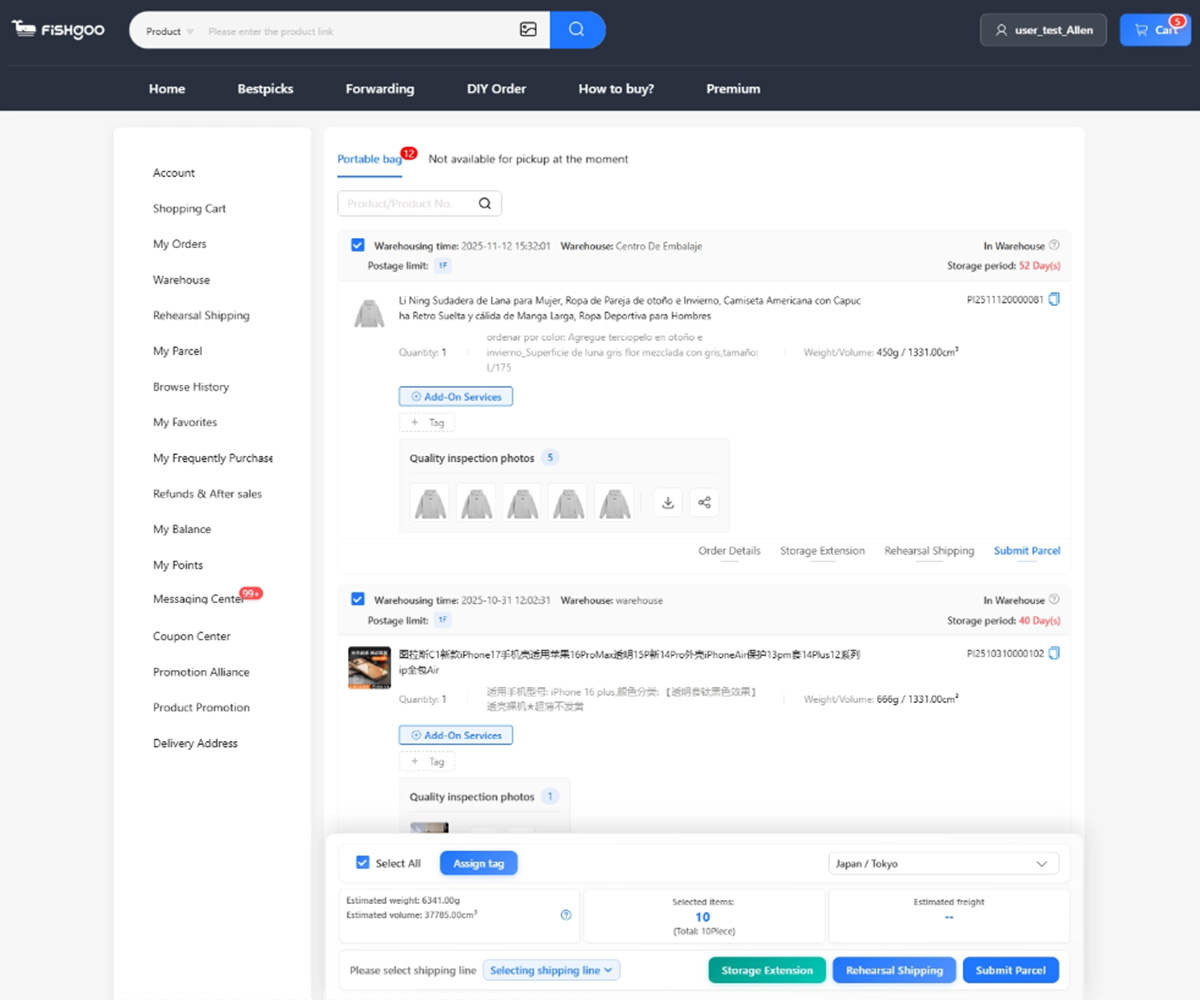
- Consolidation combines multiple buys into one parcel, and it ships to your door in Europe.
Language, payment, a Chinese address, seller chat, condition checks, parcel forwarding — handled. Your side of it happens entirely in English. The QC photo service matters more here than on new goods, because “like new” from a stranger means whatever the stranger decides it means until someone actually looks.
Shopping Goofish in English, step by step
Want the version you can run today? Six moves, no Chinese required. There’s a fuller walkthrough on the how to buy from Goofish page, but this is the shape of it.
- Browse Goofish on the web with your browser set to translate, and copy the link of anything you like.
- Create a Fishgoo account and paste the link into the order form.
- Get an English summary of the listing plus a euro quote for the item and domestic shipping.
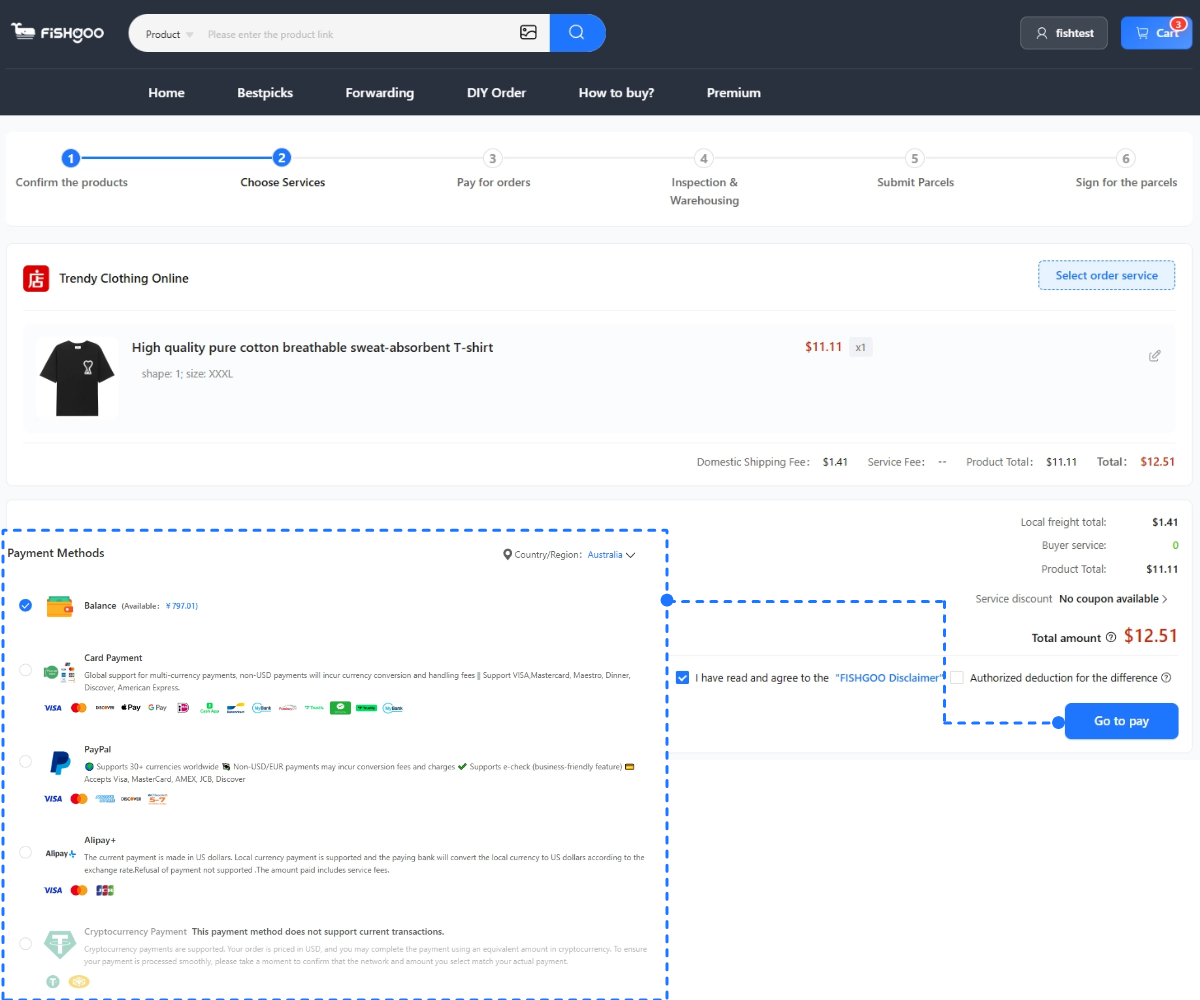
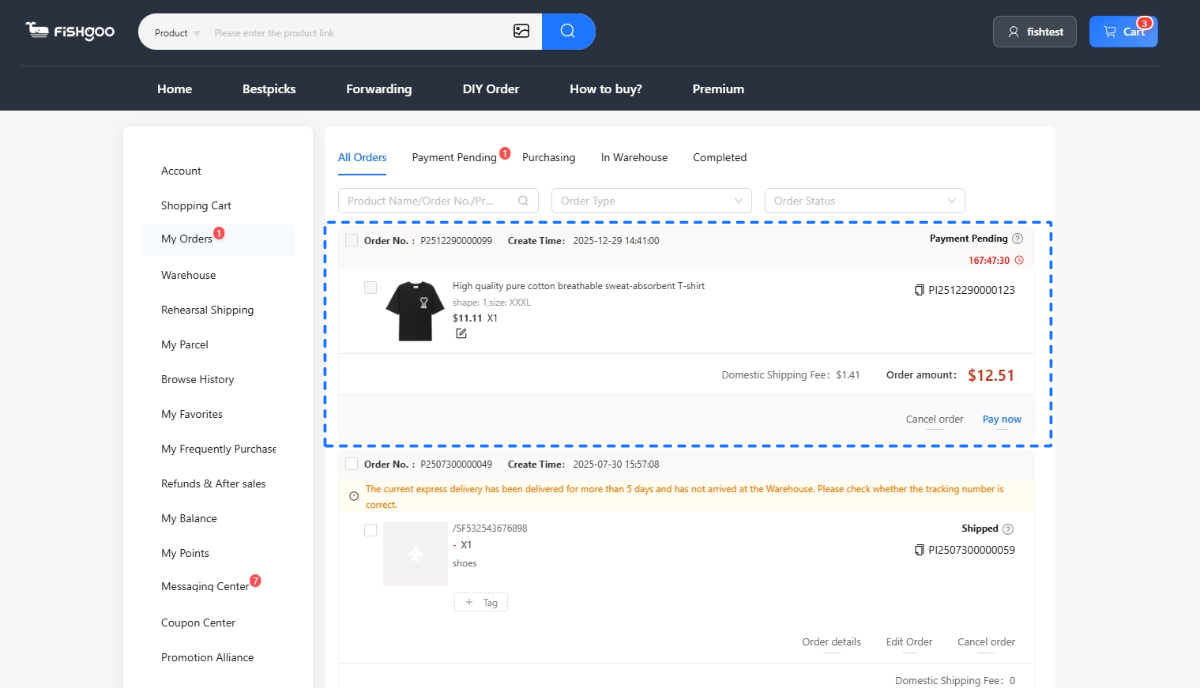
- Pay for the purchase; the team buys it and it heads to the warehouse.
- Check your QC photos, then approve or raise an issue.
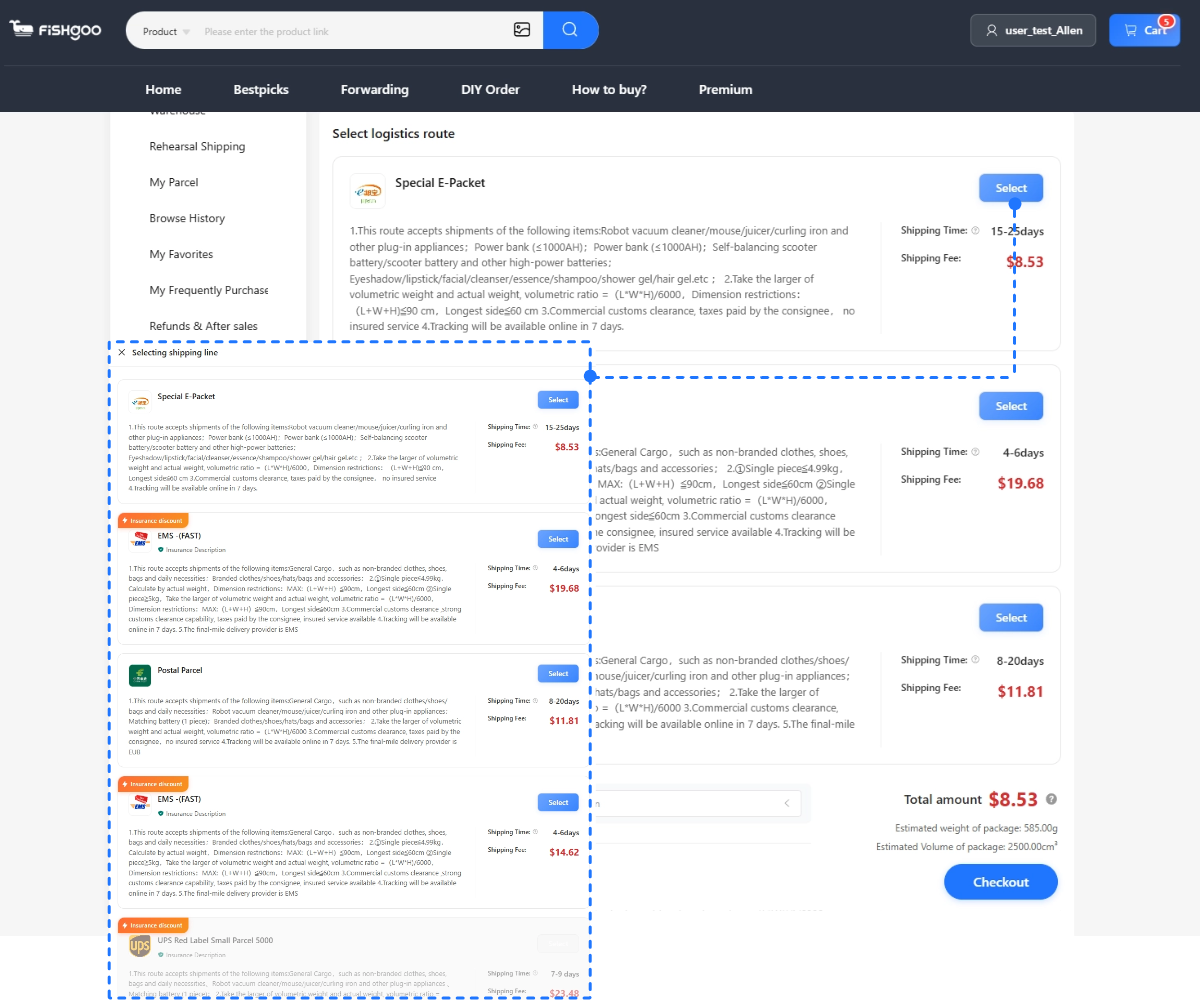
- Pick a shipping line, pay the postage, and track it home.
New to this? Run one cheap item through the whole loop first, so you’ve seen it work before a bigger sneaker haul.
What does it cost in euros?
Using an agent to clear the language barrier doesn’t mean paying a premium for it — at least not with a zero service fee model. Your bill is the item price in euros, domestic shipping (often ¥8–15, sometimes free), international postage by weight, and your own country’s import VAT. Fishgoo’s service fee on that is €0, and QC photos and consolidation are included rather than bolted on.
As a rough anchor, a small €40–60 second-hand buy shipped to France usually lands somewhere around €80–110 all-in once postage and VAT are counted — the item is rarely the biggest line. The full breakdown with a worked example sits on the Goofish agent guide, and you can price your own parcel with our import duty calculator before committing. Buying clothing or shoes? Sort sizing up front with the size converter, since Chinese sizing runs different and a returns process you can’t read in Chinese is one you’d rather avoid.
Tips for buying on Goofish without a word of Chinese
- Browse on desktop, not the app. Browser translation is your reading tool; the app won’t give you the same help.
- Screenshot anything confusing and let your agent read the image text the translator can’t.
- Ask the seller questions through your agent before paying, not after — extra condition shots are free to request and save you grief.
- Never skip QC approval. On used goods from strangers, this is the step that protects you.
- Bundle your buys so consolidation earns its keep and you post one parcel, not three.
- Check shipping options early — our Goofish shipping to Europe guide lays out cost versus speed.
Start shopping Goofish in English
The lack of an English button doesn’t have to keep you out. Browser translation gets you reading, and a Goofish agent takes care of the Chinese-only parts — searching, chatting, paying, checking condition — so the deal you spotted actually reaches your door in Berlin or Madrid. You shop in English; the Chinese happens behind the scenes.
Start your first Goofish order with Fishgoo →
Prefer a different platform with the same language wall? The same approach works on Weidian — see Weidian in English and the Weidian agent guide, or start with how to buy from Weidian. For the new-retail side of Chinese shopping, our best Taobao agent comparison, the main Taobao agent guide, and platform breakdowns like Taobao vs Temu, Taobao vs Shein and Taobao vs 1688 cover the rest.
Frequently asked questions
Can I change Goofish to English?
There’s no in-app setting to switch Goofish to English — the platform is Chinese-only. You can use a desktop browser’s translate feature to read listings on the web version, but that only helps with reading, not searching, paying, or messaging sellers.
Does the Goofish app translate like the website?
No. The mobile app doesn’t offer the same translation the browser does. To read Goofish in English, open listings on the web version in Chrome or Edge and use the browser’s translate function. For everything beyond reading, an agent handles the Chinese side.
Can I use Google Translate to buy on Goofish?
For reading listings, yes, translation tools help. For actually buying, no — checkout needs a mainland Alipay account tied to a Chinese ID, a domestic shipping address, and Chinese-language seller chat. A Goofish agent supplies all of that, so you buy in English while they handle the Chinese transaction.
Do I need to speak Chinese to talk to a Goofish seller?
Not if you use an agent. Fishgoo messages the seller in Chinese for you — asking for extra condition photos, negotiating price, or resolving an issue — and relays everything back to you in English.
Is buying from Goofish in English safe?
Goofish itself is a legitimate Alibaba platform; the risk on second-hand sales is item condition and seller reliability. QC photos let you inspect what actually arrived before it ships to Europe. See is Goofish safe for a full rundown of what to watch and how disputes work.


Start with one product, sample or restock task
Send the product link or description, approximate quantity and destination. Review the scope before any paid purchasing work begins.