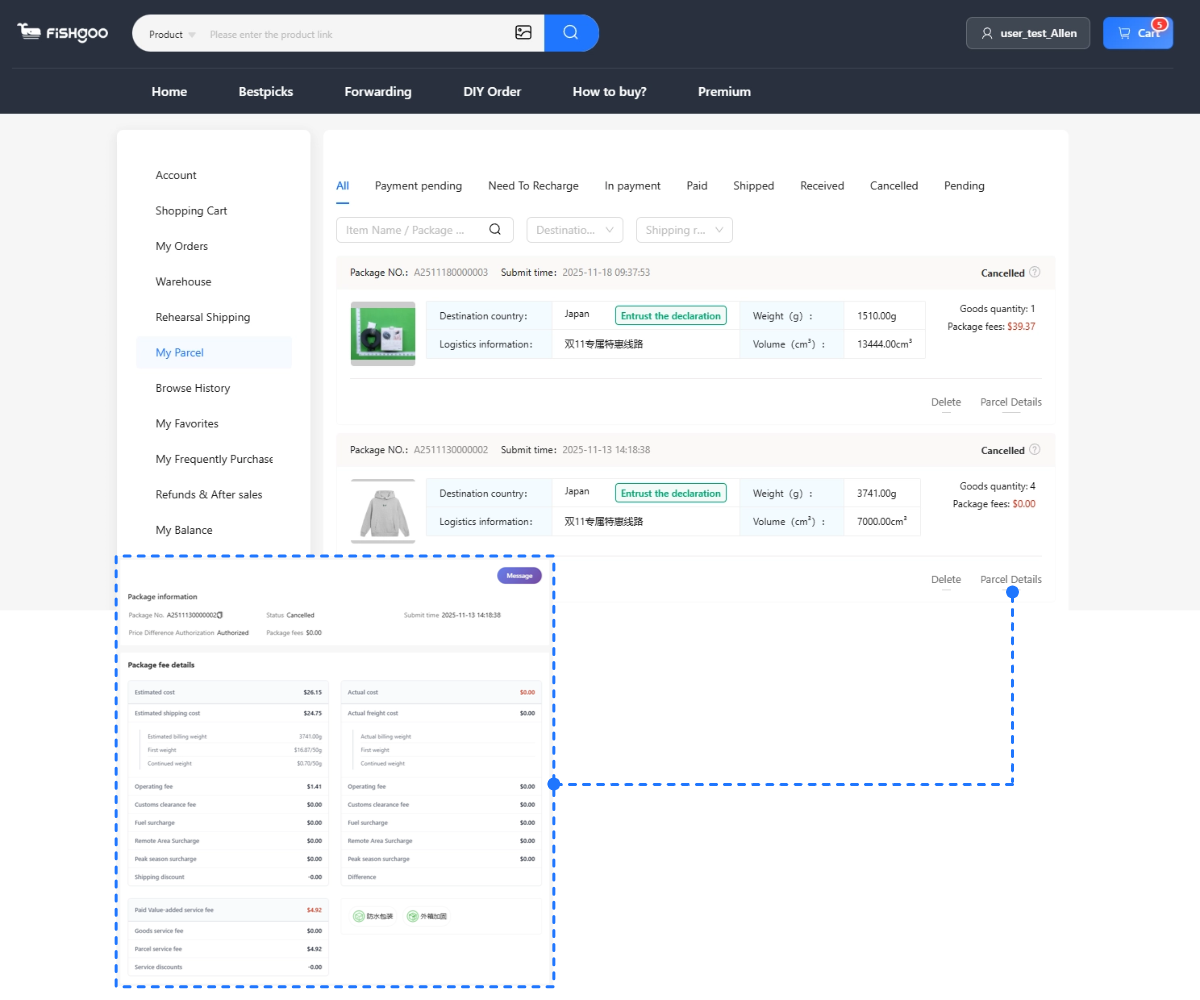
Taobao Agent Fees Explained: Where Your Money Actually Goes
About six months into my Taobao buying journey, I decided to audit where my money was actually going. I pulled up three months of orders, broke down every charge, and discovered something uncomfortable: the “3% service fee” agent I’d been using was quietly costing me closer to 8% once I factored in their exchange rate markup.
Nobody told me about that part. The service fee was plastered across the homepage in big bold numbers. Meanwhile, the exchange rate — the part doing most of the damage — was buried in the checkout flow where you’d never think to check it.
That audit changed how I evaluate Taobao agents. And it’s why I wrote this guide: so you can see exactly where your money goes before you spend it, not after.
We’ll cover every cost a shopping agent can charge — the obvious ones, the subtle ones, and the ones that some agents actively try to hide. By the end, you’ll know how to calculate the true cost of any agent in under two minutes.
→ Already know the fee landscape and just want the cheapest option? Cheapest Taobao Agent 2026
Related: how prepaid agent balances work — top-ups, refund boundaries and what a trustworthy agent publishes about your money.
Table of Contents
- The 3 Cost Buckets Every Buyer Faces
- Cost #1: The Service Fee (The Visible Part)
- Cost #2: The Exchange Rate (The Invisible Part)
- Cost #3: Shipping (The Biggest Part)
- The Other Fees Nobody Talks About
- How to Calculate True Cost in 2 Minutes
- Fee Comparison: 8 Agents Side by Side
- Zero-Fee vs Percentage-Fee: Which Model Wins?
- FAQ
1. The 3 Cost Buckets Every Buyer Faces
Every order through a Taobao agent involves three categories of cost. Understanding all three is essential, because most people only pay attention to one — and it’s not even the biggest one.
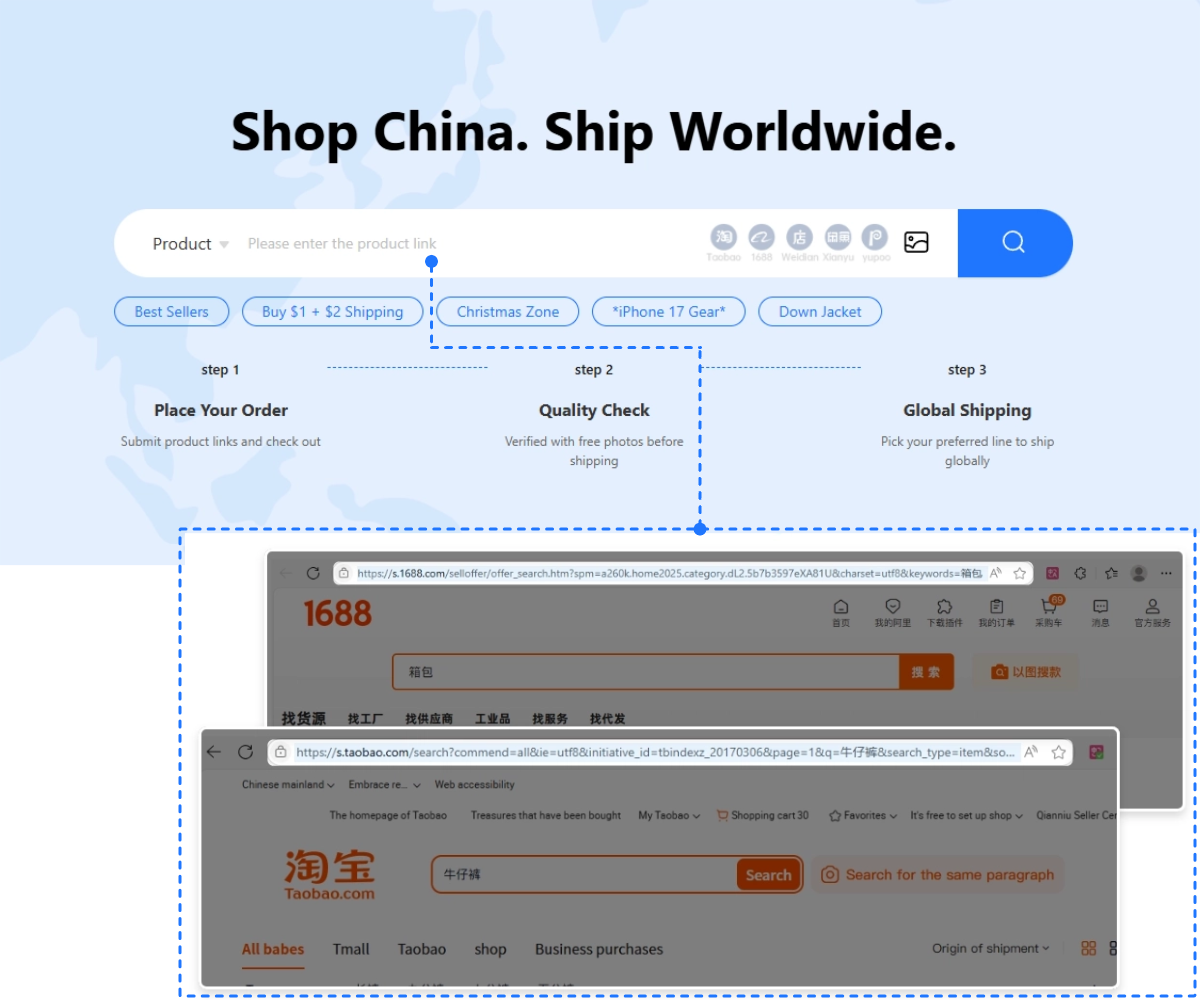
Bucket 1: Product cost + service fee. What the item costs in yuan, converted to your currency, plus whatever percentage the agent takes as their fee. This is the number agents advertise. It ranges from 0% (Fishgoo) to 10% (ParcelUp, 42Agent).
Bucket 2: Exchange rate markup. When the agent converts yuan to your currency, they typically add a margin above the real market rate. This margin usually sits between 1-4%, though some agents push it higher. Because it’s baked into the conversion, most buyers never notice it.
Bucket 3: Shipping. Almost always the largest single expense, especially on smaller orders. A 2-3kg parcel to the US costs $15-35 depending on carrier speed. Agents negotiate different rates with different carriers, so this number varies significantly between platforms.
Here’s the part that trips people up: an agent with a low service fee (Bucket 1) can still cost you more overall if their exchange rate (Bucket 2) and shipping rates (Bucket 3) are inflated. Conversely, an agent with zero service fee and competitive rates across the board — like Fishgoo — can deliver genuine savings even though they’re not “completely free.”
Let’s dig into each bucket.
2. Cost #1: The Service Fee (The Visible Part)
The service fee is a percentage of your product order total. It’s straightforward, it’s visible, and agents put it front-and-center in their marketing because it’s easy to compare.
Current service fees across major agents
| Agent | Service Fee | On a ¥1,000 order (~$138) |
|---|---|---|
| Fishgoo | 0% | $0 |
| Mulebuy | ~0% | $0 |
| CSSBuy | ~3% | ~$4.14 |
| Superbuy | ~5% | ~$6.90 |
| Sugargoo | ~5% | ~$6.90 |
| Wegobuy | ~5% | ~$6.90 |
| Pandabuy | ~5% | ~$6.90 |
| ParcelUp | ~10% | ~$13.80 |
| 42Agent | ~10% | ~$13.80 |
On a single ¥1,000 order, the spread between 0% and 10% is $13.80. That gap widens fast on bigger orders or higher shopping frequency. A buyer placing ¥3,000 in orders monthly would pay $0/month on Fishgoo versus $41.40/month at a 10% agent — a $497 annual difference on service fees alone.
Why the fee ranges exist
Different agents have different cost structures. Some, like Superbuy, invest heavily in platform polish, customer support teams, and mobile app development — the 5% fee funds that infrastructure. Others, like 42Agent, provide niche expertise (cosplay, Lolita fashion) that justifies a premium to the buyers who need it.
Then there’s the zero-fee approach. Fishgoo eliminated the service fee entirely and instead earns through a modest exchange rate margin. As a result, the pricing model feels cleaner — one variable to check instead of two. And because the rate margin is slim (~1.5%), the total cost still comes in below fee-charging competitors.
The important takeaway: a low service fee doesn’t guarantee low total cost. You need to check Bucket 2 — the exchange rate — before drawing conclusions.
3. Cost #2: The Exchange Rate (The Invisible Part)
This is where agents make money that most buyers never notice. And for some agents, it’s where they make most of their money.
How it works
When you buy a ¥100 product, the agent needs to charge you in your currency — say, US dollars. At today’s real mid-market rate, ¥100 might equal $13.80. But the agent charges you $14.20. That $0.40 difference? That’s the exchange rate markup. In this case, about 2.9% above the real rate.
On its own, $0.40 feels negligible. On a ¥5,000 order, though, that 2.9% becomes $20. On a ¥10,000 wholesale order from 1688, it balloons to $40. And here’s the kicker — you’re paying this on top of whatever service fee the agent already charges.
Why it’s “invisible”
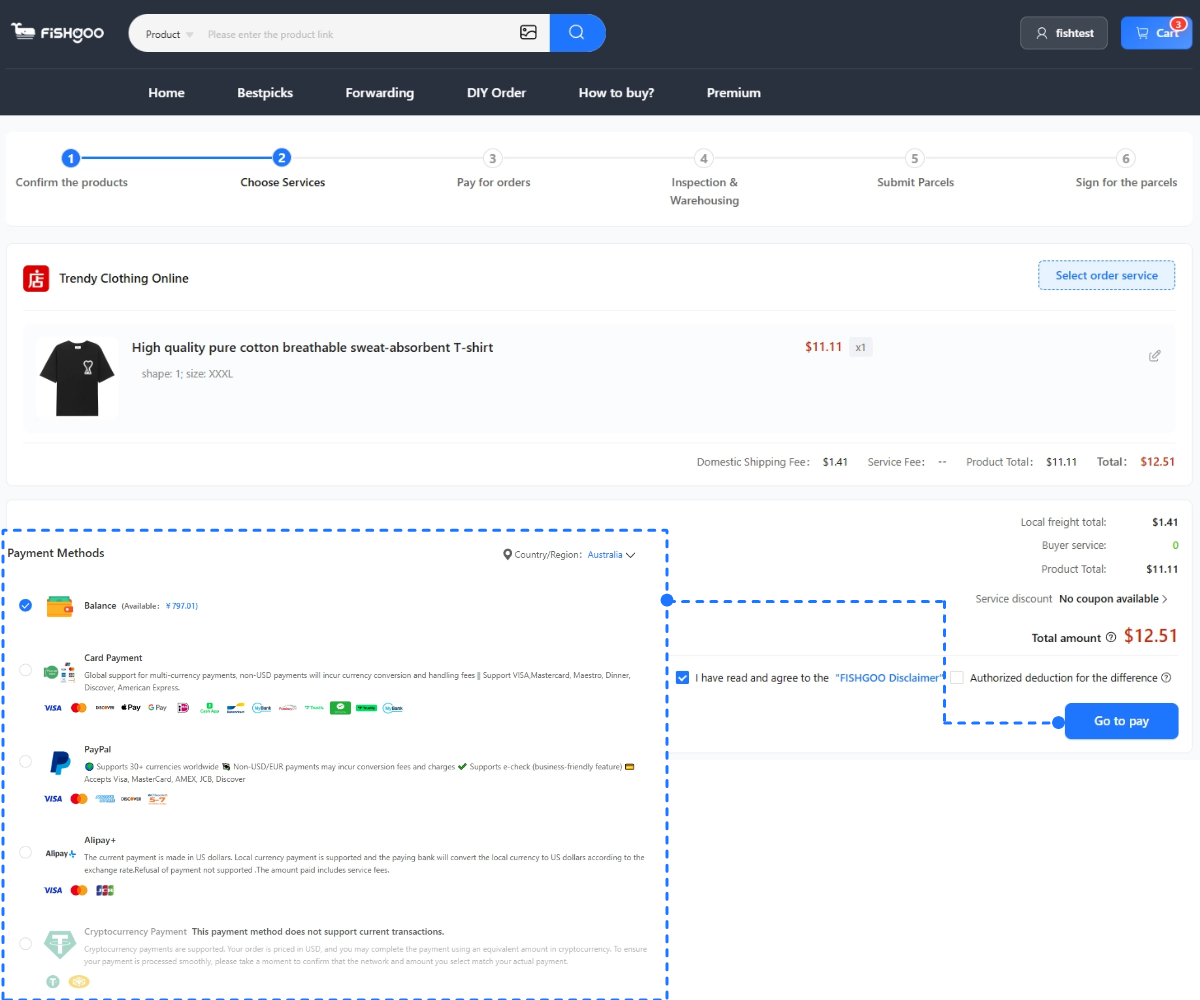
Most agents don’t display their exchange rate markup anywhere obvious. During checkout, you see the yuan price converted to your currency, but there’s no label saying “includes 3% exchange rate margin.” You’d have to manually check the real rate on Google at the exact moment of purchase and do the math yourself. Almost nobody does this.
Some agents are more transparent than others. Fishgoo, for instance, builds the rate margin into a zero-fee model where the total is still competitive. At least with that approach, there’s only one hidden variable instead of two. Meanwhile, agents charging 5% fee plus a 2-3% rate markup are effectively costing you 7-8% — nearly double what the advertised “5% fee” suggests.
How to check any agent’s markup
Follow these three steps right before you pay:
- Note the yuan amount and the dollar (or your currency) amount at checkout
- Google “1 USD to CNY” to get the current mid-market rate
- Divide the agent’s dollar amount by the yuan amount — then compare that rate to the Google rate
If the difference is under 2%, that’s reasonable and standard in the industry. Between 2-3%? A bit high, but some agents operate in this range. Above 3-4%? The agent is actively profiting from your currency conversion at an aggressive level.
Exchange rate markups by agent (estimated)
| Agent | Estimated Rate Markup | Plus Service Fee | Effective Total % |
|---|---|---|---|
| Fishgoo | ~1.5% | 0% | ~1.5% |
| CSSBuy | ~1.5% | 3% | ~4.5% |
| Sugargoo | ~1% | 5% | ~6% |
| Superbuy | ~1.5% | 5% | ~6.5% |
| Wegobuy | ~1.5% | 5% | ~6.5% |
| Pandabuy | ~2% | 5% | ~7% |
| ParcelUp | ~1% | 10% | ~11% |
These markups fluctuate and are approximations based on spot-checks. Always verify at checkout.
The “Effective Total %” column tells the real story. Fishgoo’s 1.5% all-in is less than half of what Superbuy or Wegobuy charge in combined fees, and roughly a third of ParcelUp’s effective rate. That’s a massive difference over time.
4. Cost #3: Shipping (The Biggest Part)
On smaller orders, shipping is often more expensive than the products themselves. A $5 phone case plus $12 shipping makes the phone case feel like $17. Understandably, this frustrates people — but the cost is real. International air freight isn’t cheap regardless of which agent you use.
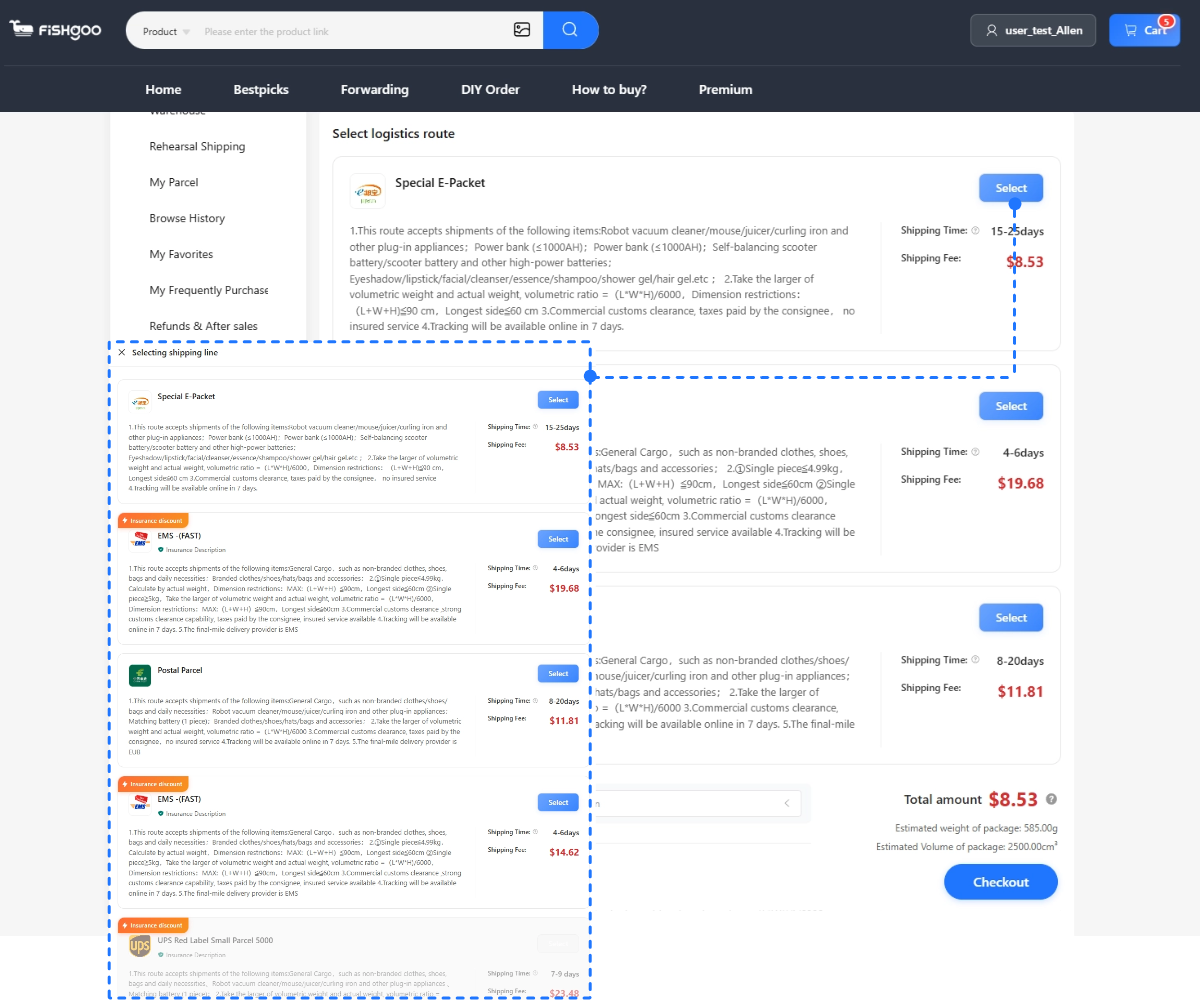
What varies between agents is how much they charge above the carrier’s base rate. Some agents pass through carrier rates at cost. Others add a 5-15% markup as an additional revenue stream. And some negotiate better bulk deals than others, resulting in genuinely lower base rates.
Why rates differ so much between agents
Volume discounts. An agent shipping 50,000 parcels per month gets better rates from DHL than one shipping 5,000. Larger agents generally negotiate steeper discounts, which should — in theory — get passed to you. Whether they actually pass those savings through or pocket the difference varies.
Route coverage. An agent with 2,000+ routes (like Fishgoo) has more carrier partnerships competing for your parcel. More competition = better prices. An agent with 50 routes has less leverage and fewer alternatives, especially for non-US/UK destinations.
Shipping markup. Some agents add a margin on top of the carrier’s rate. This is harder to detect than exchange rate markups because you’d need to know the carrier’s actual base rate — information that isn’t public. The only practical way to compare is to price the same parcel across multiple agents.
→ We did exactly that: Taobao Agent Shipping Guide
The consolidation factor
Regardless of which agent you choose, order consolidation is the single most effective way to reduce per-item shipping costs. Shipping one item alone triggers the expensive “first weight” base rate. Adding more items to the same parcel spreads that base rate across everything, dropping the per-item cost dramatically.
In our testing, a 10-item consolidated parcel cost 50-65% less per item than shipping each item individually. That saving dwarfs the difference in shipping rates between agents.
→ Consolidation strategies: Taobao Agent Shipping Guide
5. The Other Fees Nobody Talks About
Beyond the big three (service fee, exchange rate, shipping), several smaller charges lurk in the fine print. Individually they’re minor. Together they can add 5-10% to your total cost if you’re not paying attention.
QC photo fees
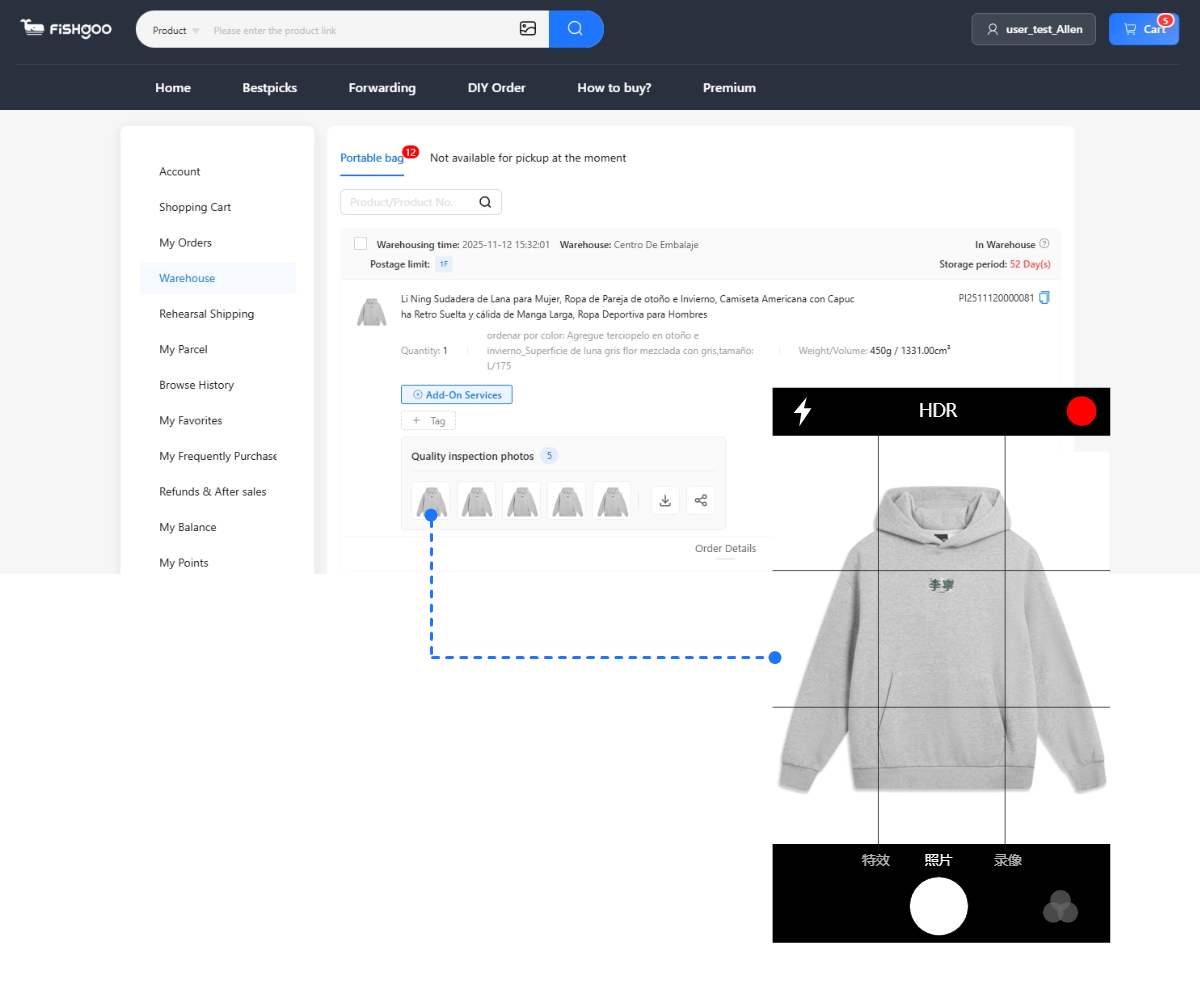
Most agents offer 3-5 free QC photos per item. Need extra angles? Additional close-ups? Video inspection? Some agents charge per extra photo — typically ¥1-3 each. For a 10-item order where you request two extra shots per item, that’s ¥20-60 in photo fees.
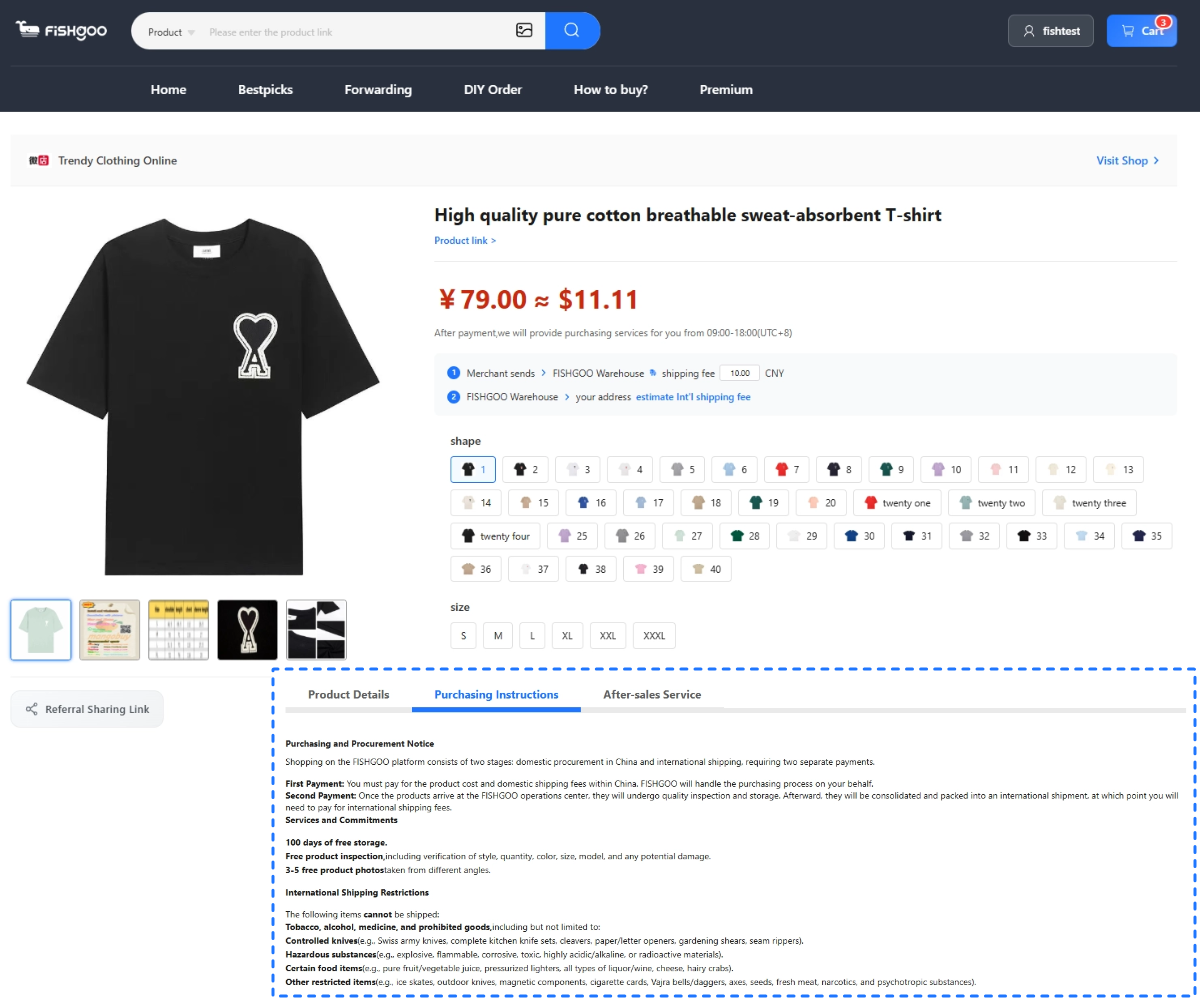
Fishgoo offers 5 free HD photos — generous enough that most buyers never need extras. Superbuy and CSSBuy offer 3 free, which often leads to paid upgrades. Basetao gives 5 free with exceptionally detailed inspection, making paid extras rarely necessary.
Storage fees
Every agent provides a free storage window — the time your items can sit in the warehouse before you need to ship or pay. After that window closes, daily or monthly fees begin accumulating.
| Agent | Free Storage | After Free Period |
|---|---|---|
| Fishgoo | 100 days | Fees apply |
| Superbuy | 90 days | ¥1/day per item |
| CSSBuy | 90 days | Fees apply |
| Wegobuy | 180 days | Fees apply |
| 42Agent | 30 days | Fees apply |
For most buyers, 90 days is more than enough. If you shop slowly or like to wait for sales before consolidating, Wegobuy’s 180 days might justify its 5% fee for your specific use case. On the other hand, 42Agent’s 30-day window feels uncomfortably tight and could force premature shipments.
Return handling fees
Returning a product to a Chinese seller through your agent usually costs very little — domestic China shipping is cheap. However, some agents add a handling fee on top: ¥5-15 per return for processing the paperwork and communicating with the seller.
For the occasional return, it’s negligible. For buyers who frequently order from new, unverified sellers and return 20-30% of items? Those ¥5-15 fees stack up. Picking reliable sellers with strong review photos reduces this cost dramatically.
Packaging and value-added services
Extra bubble wrap, vacuum packing, moisture-proof bags, stretch film, corner protection — agents offer these at ¥2-10 per service. Individually cheap, collectively they can add ¥20-50 to a shipment.
My approach: always request vacuum packing for clothing (it saves more on volumetric weight than it costs) and extra protection for fragile items. Skip everything else unless you have a specific reason.
Top-up minimums and currency conversion on refunds
Some agents require a minimum balance top-up (e.g., $10-20) before you can order. This isn’t a fee — you spend the balance on products — but it locks money into the platform. If you later want a refund on unused balance, some agents charge a withdrawal fee or convert back at an unfavorable rate.
Fishgoo and most modern agents let you pay per order without pre-loading, which avoids this issue entirely.
6. How to Calculate True Cost in 2 Minutes
Here’s the exact process I use to compare agents. Takes two minutes per agent, and it’ll save you from falling for misleading fee advertising.
Step 1: Pick a test product
Choose any item on Taobao priced around ¥500 (roughly $69). It doesn’t have to be something you actually want — you’re just running numbers.
Step 2: Check the real exchange rate
Google “USD to CNY” (or your currency to CNY). Write down the mid-market rate. For example: 1 USD = 7.24 CNY. So ¥500 should cost $69.06 at the true rate.
Step 3: Price the item on the agent
Paste the product link into the agent’s platform. Go to checkout (don’t actually pay) and note the price in your currency. Suppose Agent A shows $73.50 for the ¥500 item.
Step 4: Calculate the effective markup
($73.50 – $69.06) / $69.06 = 6.4% effective total markup
That 6.4% represents the combined service fee + exchange rate margin. If the agent advertises a 5% fee, then the remaining 1.4% is their exchange rate markup. If they advertise 0% fee, the full 6.4% is hidden in the rate — and that’s a red flag.
Step 5: Add estimated shipping
Use the agent’s shipping calculator with your country and an estimated parcel weight (say, 2kg). Add the shipping estimate to the product cost. Compare the totals across agents.
The formula
True total cost = Product checkout price (includes fee + rate) + Shipping estimate
Compare this number — not the service fee, not the shipping rate, not the exchange rate — but this single combined total. Whichever agent gives you the lowest number for the same product to the same destination wins.
When I ran this test across 8 agents with a ¥1,000 order to the US, Fishgoo came in lowest at ~$169 total. Superbuy was $181. ParcelUp was $183. A $14 spread on a single mid-size order.
→ Full results: Cheapest Taobao Agent 2026
7. Fee Comparison: 8 Agents Side by Side
Putting it all together — here’s what each agent realistically costs on a ¥1,000 order shipped 3kg to the US via standard EMS:
| Agent | Service Fee | Rate Markup | Product Total | Shipping (est.) | Grand Total |
|---|---|---|---|---|---|
| Fishgoo | 0% | ~1.5% | $140 | $29 | $169 |
| CSSBuy | 3% | ~1.5% | $144 | $28 | $172 |
| Sugargoo | 5% | ~1% | $146 | $31 | $177 |
| Pandabuy | 5% | ~2% | $148 | $31 | $179 |
| Wegobuy | 5% | ~1.5% | $147 | $33 | $180 |
| Superbuy | 5% | ~1.5% | $147 | $34 | $181 |
| ParcelUp | 10% | ~1% | $153 | $30 | $183 |
Figures based on snapshot comparison. Actual totals fluctuate with exchange rates and carrier pricing.
The cheapest-to-most-expensive spread: $14 on this single order. Over a year of monthly ordering, that becomes $168. For frequent buyers doing ¥3,000+ monthly? The gap expands to $500+ annually.
Fishgoo’s zero-fee model isn’t just a marketing angle — it produces genuinely lower costs in real-world testing. Even though the exchange rate margin exists, it’s modest enough that the total still undercuts every fee-charging competitor we tested.
→ Full ranking: Best Taobao Agent 2026
8. Zero-Fee vs Percentage-Fee: Which Model Wins?
The agent industry is split between two pricing philosophies. Understanding both helps you see through the marketing.
The percentage-fee model (traditional)
Agents like Superbuy, Sugargoo, and CSSBuy charge a visible percentage (3-10%) on every order. Revenue is predictable and directly tied to order volume. The fee is transparent — you can see it as a line item at checkout.
Where this model gets murky: the exchange rate. Because the fee is visible, it draws your attention. You compare 3% versus 5% and feel like you’re making an informed choice. Meanwhile, the exchange rate markup — which can add another 1-3% — goes unnoticed. Some agents use this psychology deliberately: keep the visible fee low, inflate the invisible rate.
The zero-fee model (newer)
Agents like Fishgoo charge no service fee and instead build revenue into the exchange rate. Since there’s only one variable (the rate), the model is actually simpler to evaluate. Check the effective rate, compare it to the market rate, and you know exactly what you’re paying.
Where this model could get murky: if the exchange rate margin is excessively high. A “0% fee” agent with a 6% rate markup is worse than a “5% fee” agent with a 1% rate markup. The model is only honest when the rate margin is genuinely modest.
In Fishgoo’s case, the ~1.5% rate margin is well below what most fee-charging agents add through their combined fee-plus-rate approach. As a result, the zero-fee model delivers a lower total cost for the buyer.
The verdict
The model matters less than the outcome. What you care about is the final number — total dollars out of your pocket for the same products delivered to your door. Run the calculation from Section 6 on any agent, regardless of their pricing model, and compare the outputs. The lowest total wins.
In our testing, Fishgoo’s zero-fee model produced the lowest total consistently. But don’t take our word for it — run the numbers yourself. That’s the whole point of this guide: giving you the tools to verify independently.
FAQ
How much do Taobao agents charge in total?
The effective total markup (service fee + exchange rate) ranges from ~1.5% (Fishgoo) to ~11% (ParcelUp). On top of that, you pay international shipping, which is the largest cost on most orders. For a ¥1,000 order shipped to the US, total out-of-pocket ranges from about $169 (Fishgoo) to $183 (ParcelUp).
What’s the biggest hidden fee to watch for?
The exchange rate markup. It can add 1-4% to your cost without appearing as a separate line item. Always compare the agent’s effective rate against the real mid-market rate at checkout. Anything under 2% above market is standard. Above 3-4% is excessive.
Is a 0% service fee actually free?
Not entirely — 0% fee agents earn through the exchange rate. But when the rate margin is modest (as with Fishgoo at ~1.5%), the total cost is still lower than agents charging 3-10% plus their own rate markups. It’s a cleaner, cheaper model for most buyers.
How do I avoid hidden fees?
Choose an agent with transparent pricing (Fishgoo, Superbuy). Calculate the true cost using the method in Section 6. Pick an agent that offers free QC photos (5 free from Fishgoo, versus paying extra elsewhere). Consolidate orders to minimize shipping’s per-item impact. And check for promotions before every shipment.
Which agent has the lowest total fees?
Fishgoo — 0% service fee plus ~1.5% exchange rate margin equals roughly 1.5% effective total. CSSBuy comes second at ~4.5% effective. Every other major agent falls between 6-11%.
Are shipping rates the same across all agents?
No — they vary significantly. Agents negotiate different bulk deals with carriers, and some add markups on top. In addition, agents with more shipping routes offer more competitive options. Fishgoo’s 2,000+ routes consistently produce lower shipping quotes for most destinations than agents with 50-100 routes.
Should I choose an agent based on fee alone?
Fee is the most important factor for most buyers, but not the only one. Quality inspection (QC photos), customer support, platform coverage (Taobao + 1688 + Weidian + Tmall), and shipping route variety also matter. Fortunately, the cheapest agent (Fishgoo) also scores well on all of these — so you rarely have to choose between “cheapest” and “best.”
Why is shipping charged separately, after I already paid for my items?
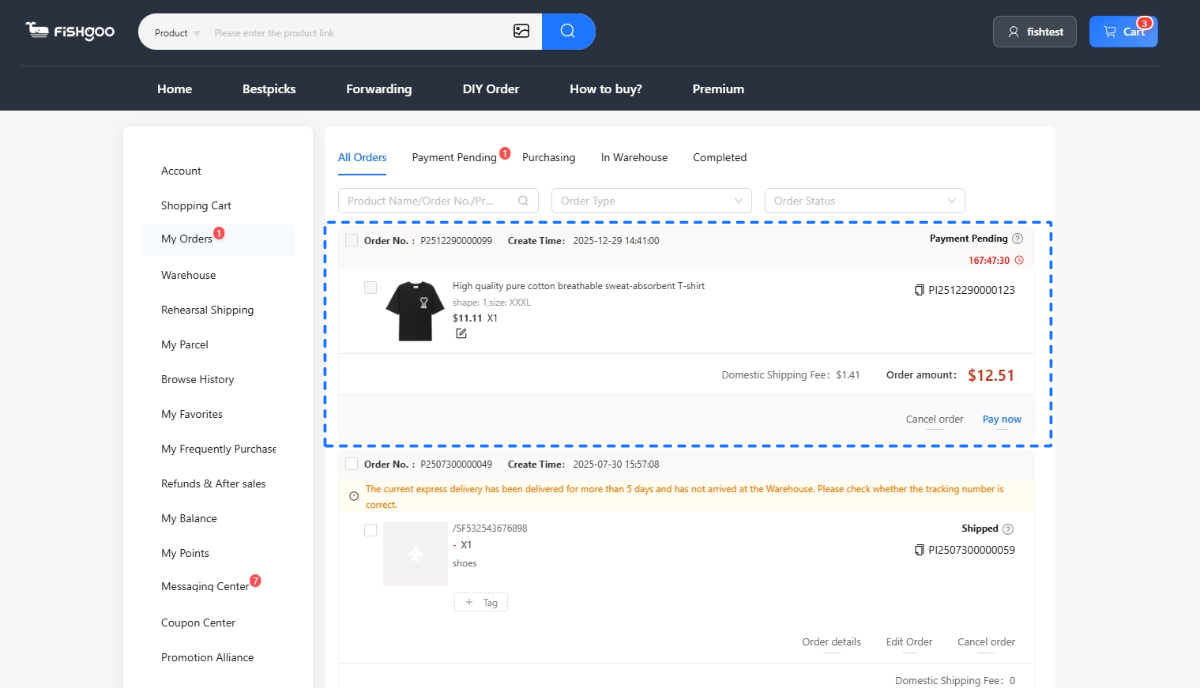
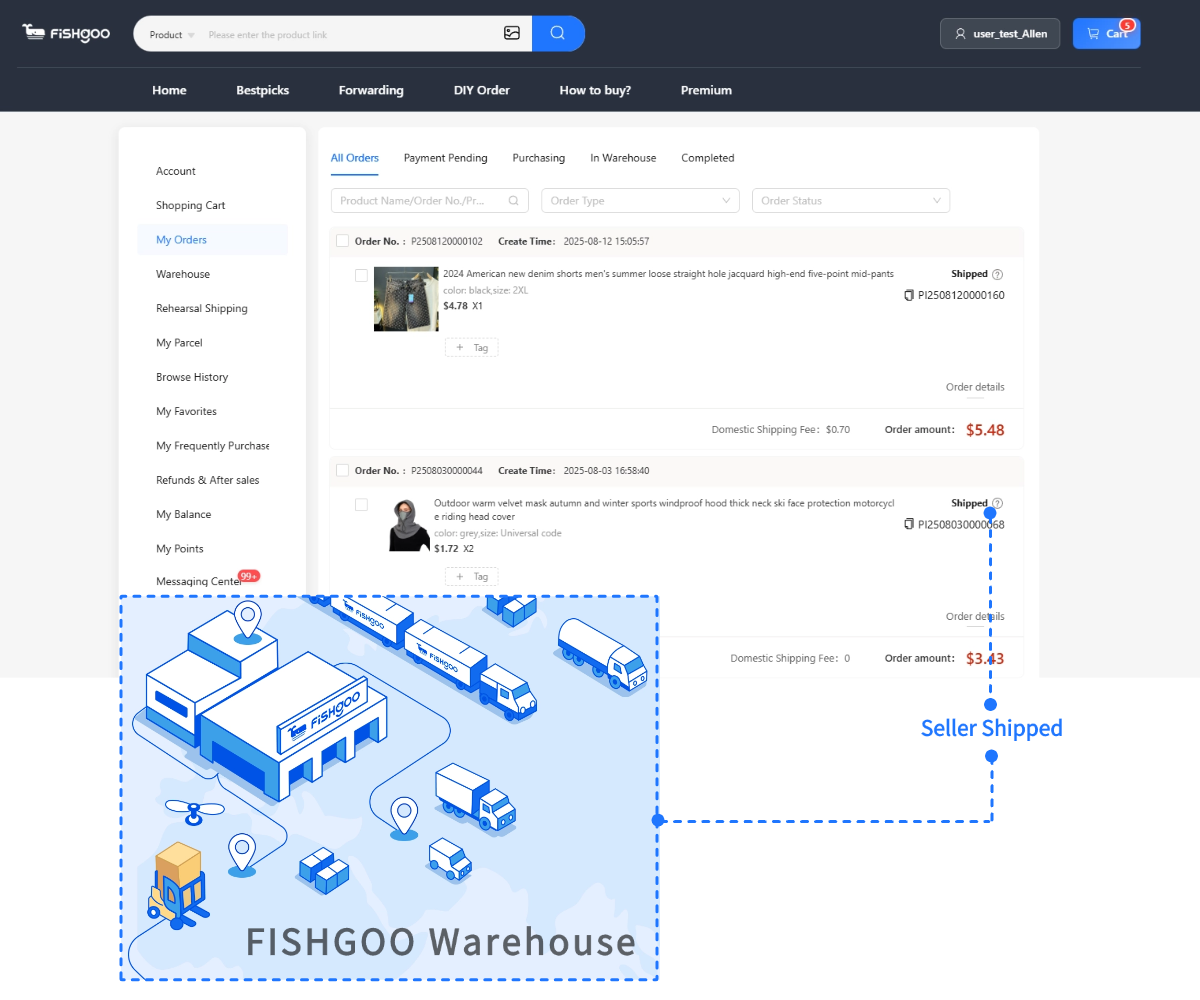
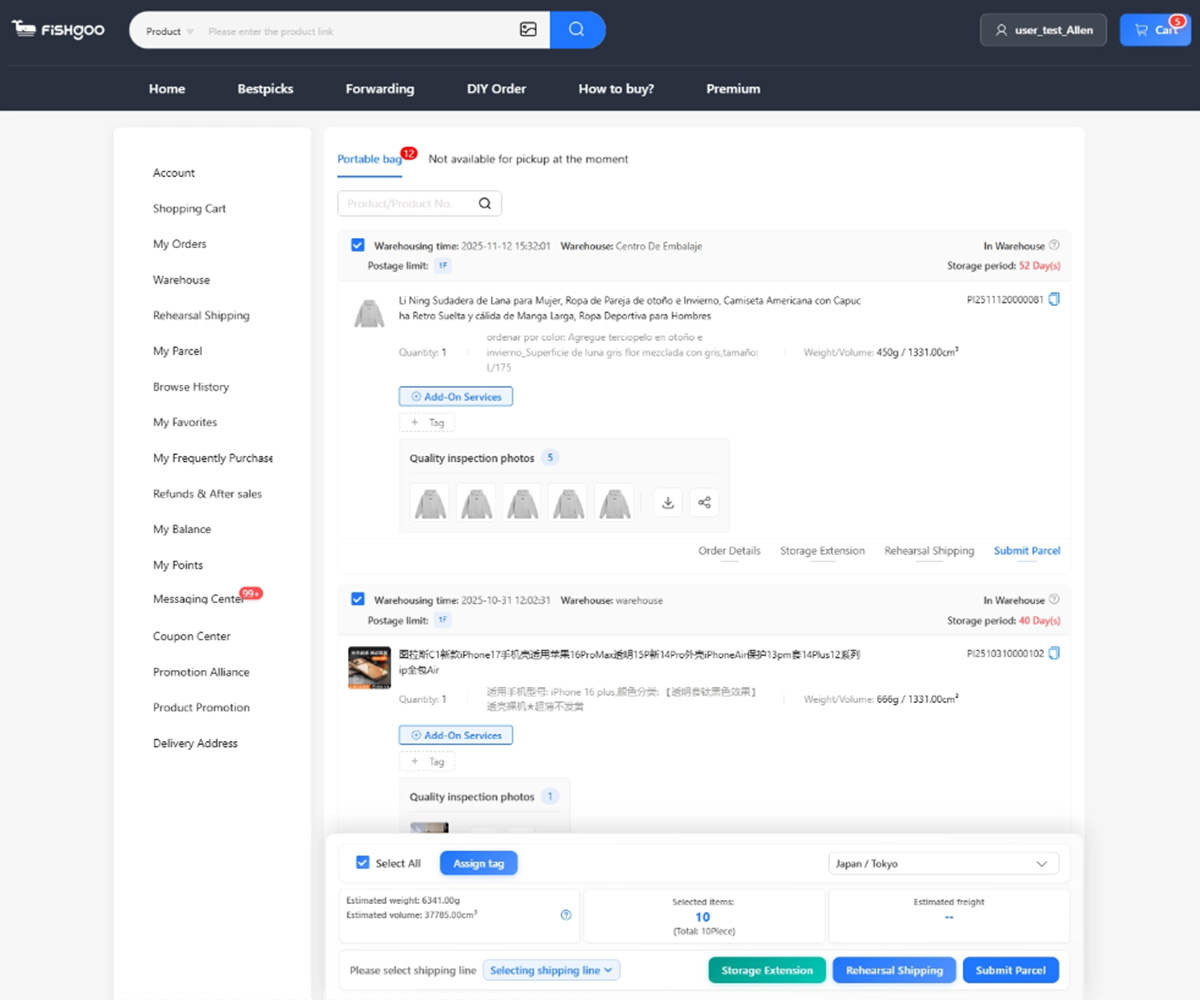
Because the two numbers are known at different times. Your first payment buys the goods and moves them to the agent’s China warehouse. International shipping can only be priced once every item has arrived, been weighed and packed into one box — before that, any figure is a guess. The waiting period in between is what makes agent buying cheap: items pile up in storage (free for 100 days at Fishgoo) and ship as a single consolidated parcel instead of five separate international postages. See the full breakdown in our shipping guide. The thing to check is that no undisclosed service fee appears on that second invoice — Fishgoo’s purchasing service fee is 0%.
Now You Know Where the Money Goes
Taobao agent fees aren’t complicated once you understand the three-bucket framework: service fee, exchange rate, and shipping. The agents that look cheapest on paper aren’t always cheapest in practice, and the ones with “hidden” costs lose their hiding spots once you know where to look.
My recommendation? Spend two minutes running the true-cost calculation from Section 6 on your top two or three agent choices. Compare the grand totals — not the advertised fees, not the shipping rates, not the exchange rates individually — but the single final number for the same order to the same destination. That number tells you everything.
In our testing, that number consistently favors Fishgoo. Zero fee, modest exchange rate, competitive shipping across 2,000+ routes. The total just comes in lower.
→ Start with Fishgoo — zero service fee, transparent pricing
→ The complete Taobao Agent Guide
→ Best Taobao Agent 2026 ranking
→ Full cost comparison across agents


Start with one product, sample or restock task
Send the product link or description, approximate quantity and destination. Review the scope before any paid purchasing work begins.