Category Archives: Taobao Shipping & Costs

The product price is only one part of a Taobao order. Once you add domestic delivery, warehouse handling, international shipping, service fees, storage time, and possible customs issues, the final cost can look very different from what you expected at the start. This page brings those moving parts into one place so you can make sense of them before an order becomes expensive for the wrong reasons.

If you want the broader picture first, start with Taobao International Shipping. From there, Taobao Shipping Methods & Rates helps compare the common delivery routes, while Taobao Agent Fees Explained breaks down where extra charges usually come from. For buyers trying to reduce spend without cutting too many corners, Free Shipping Tips is worth reading before you split or combine orders.

Shipping costs are not the only thing that affect the outcome. Inspection, storage, payment protection, and timing all matter once goods reach a warehouse. That is why pages like Quality Check (QC) Photos, Warehouse Storage Rules, and PayPal Buyer Protection tend to become more relevant after the first order, when buyers start paying attention to what happens between checkout and final delivery.

And when something goes wrong, it usually goes wrong in a very specific way. Tracking stops updating, a parcel gets held, a warehouse deadline is missed, or a return feels more complicated than expected. In those cases, it helps to move straight to Package Tracking Explained, Order Stuck at Customs?, or Refund & Return Process. If you are still deciding where to buy from before dealing with shipping at all, you may also want to step back and compare platforms inside Compare Agents & Platforms.
Taobao Package Lost? Don’t Panic — Here’s Exactly What to Do


What to do when your Taobao package is lost or missing

Your tracking hasn’t moved in 20 days. Or it says “delivered” but nothing showed up. Or it just… stopped. Somewhere between Guangzhou and your city, your €80 clothing haul vanished from the tracking system. The stomach-drop feeling is real. I’ve experienced it twice in three years and roughly 30 shipments.

Both times resolved. One parcel showed up 35 days after shipping — it had been stuck in a customs backlog at Charles de Gaulle airport during a post-11.11 surge, un-scanned for 17 days but physically sitting in a warehouse the entire time. The other was genuinely lost — carrier confirmed it after a 2-week investigation — and was refunded in full through shipping insurance I’d added for €2.50.

A missing parcel feels like lost money. In practice, the recovery rate is very high when you follow the right process. Here’s that process, step by step.


Step 1: Confirm It’s Actually Lost (Not Just Slow)

Most “lost” packages are delayed packages. Economy shipping from China has long silent periods where tracking shows zero updates for 7-14 days. This feels alarming if you’re used to Amazon’s hourly updates, but it’s completely normal — the package is on a ship or in a sorting facility that doesn’t generate scan events.

When to genuinely worry:

Shipping method Normal delivery window Normal tracking gaps Report as potentially lost after
Economy / SAL 18-30 days 7-14 day silent periods 35+ days with no update
EMS 10-18 days 3-5 day gaps 22+ days
DHL Express 5-8 days 1-2 day gaps max 12+ days
FedEx Express 5-10 days 1-2 day gaps 14+ days

Before escalating:

  • Check 17track.net — aggregates tracking across all carriers worldwide. Sometimes your destination country’s postal service has tracking updates that the origin carrier’s system doesn’t show.
  • Check your destination country’s postal tracker directly (La Poste, USPS, Royal Mail, DHL, DPD) — the handoff between Chinese carrier and local postal service sometimes creates a tracking gap that resolves when the local system picks up the parcel.
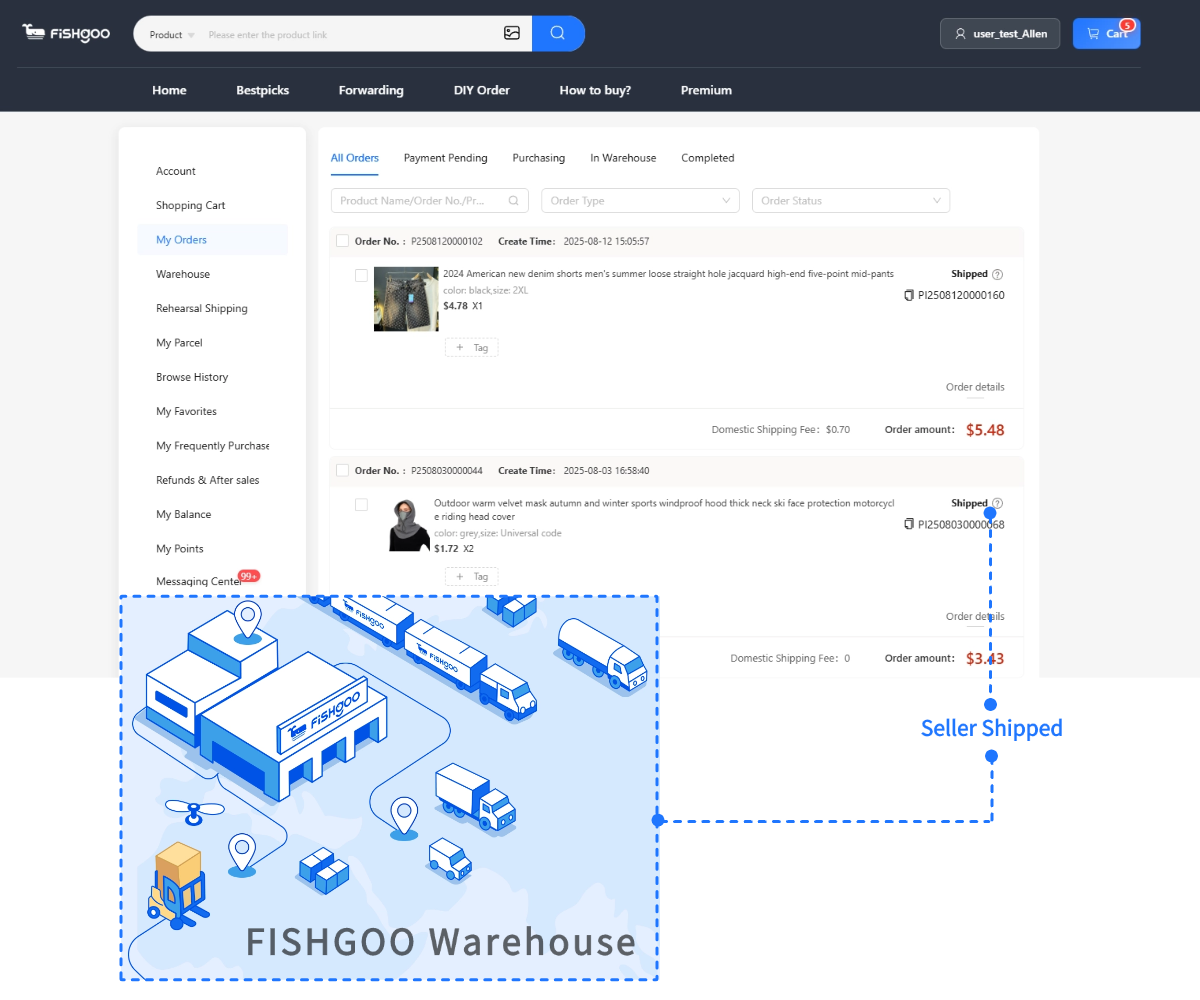
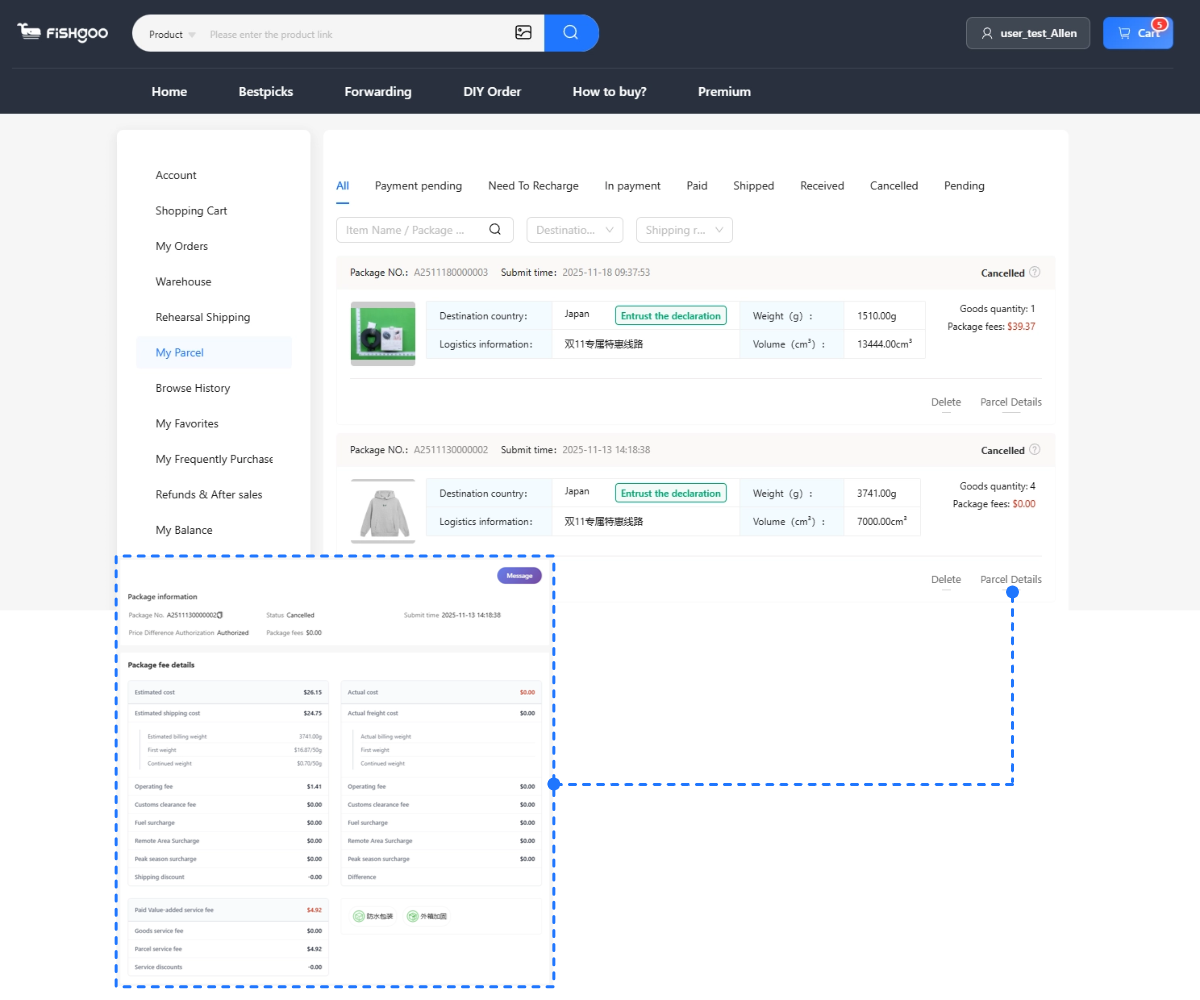
  • Check your Fishgoo dashboard — the order tracking panel shows the latest status from the shipping line.

If the parcel’s last scan was at customs (“arrived at destination country” or “customs clearance”) and then went silent: it’s almost certainly in a customs queue, not lost. Customs backlogs during peak seasons (post-11.11, pre-Christmas, CNY) hold parcels 7-14 days without scanning. Customs hold troubleshooting guide here.


Step 2: Contact Your Agent

Submit a support ticket to Fishgoo with:

  • Your order number
  • Tracking number
  • Last known tracking status + date
  • Message: “Package has not updated since [date], appears lost. Please investigate with carrier.”

The agent contacts the carrier on your behalf — in Chinese for origin-side investigation (Chinese logistics companies), in the carrier’s language for destination-side. They have direct carrier relationships and escalation channels that individual customers don’t access: dedicated account managers, batch inquiry systems, and priority investigation triggers.

Response timeline: Fishgoo support typically responds within 24-48 hours. Carrier investigation takes 5-15 business days depending on complexity and carrier responsiveness.

This is one of the core reasons using an agent matters beyond convenience. A direct buyer trying to investigate a lost package faces: Chinese-only carrier customer service, no escalation leverage, and no institutional relationship with the logistics company. An agent investigation carries weight — they represent hundreds of buyers and thousands of parcels to the carrier. Losing an agent’s account matters to the carrier in a way that losing one individual’s inquiry doesn’t.


Step 3: Investigation Outcomes

Outcome A: Package found and delivered. Most common (~70% of cases). The parcel was stuck in a sorting facility, customs queue, or local post office awaiting pickup. The investigation triggers a re-scan and the parcel moves again within 5-10 days. My first “lost” package fell into this category — it appeared 17 days after the last tracking update, sitting at CDG airport customs the entire time.

Outcome B: Package confirmed lost. The carrier conducts a full trace and cannot locate the parcel. This triggers the insurance/claims process. The agent files a formal loss claim with the carrier. Processing: 15-30 days for carrier claims, faster for insurance payouts.

Outcome C: Delivered to wrong address. Tracking says “delivered” but you received nothing. The carrier investigates delivery GPS data, photo evidence (if captured), and signature records. If confirmed misdelivered, the carrier is liable for the declared shipment value.


Step 4: Getting Your Money Back (If Actually Lost)

Multiple recovery paths exist — use them in order of efficiency:

Recovery path Coverage Timeline When to use
Shipping insurance Full declared value 15-30 days If you purchased insurance at consolidation (€1-3)
Carrier standard liability $5-15 per kg (varies by carrier) 15-30 days If no insurance; partial recovery
PayPal buyer protection Full payment amount 10-30 days If other paths don’t cover full value; file within 180 days
Agent goodwill credit Varies (partial to full) Immediate to 7 days Loyal customer, agent-dependent

Insurance claim: If you purchased shipping insurance (€1-3 per parcel, offered at consolidation), the claim covers the declared value. This is why accurate declaration matters — if you declared €30 on an €80 parcel to avoid customs, the maximum insurance payout is €30. Declare accurately for proper coverage.

PayPal dispute: The safety net that covers everything else. File under “Item not received” within 180 days of PayPal payment. PayPal’s investigation typically takes 10-30 days and favors buyers when tracking confirms non-delivery. This is your nuclear option — use after carrier investigation is complete and other recovery paths are insufficient.


Prevention: Reducing Lost Package Risk

Five steps that minimize loss risk across all future orders:

1. Use tracked shipping lines. Every Fishgoo shipping option includes tracking. Never choose the absolute cheapest untracked option if one exists — the €2-3 savings isn’t worth losing visibility on a €50+ parcel.

2. Add shipping insurance for hauls over €50. €1-3 insures a parcel worth €50-200. The math: €2 premium protects €80 of value. If you ship 12 parcels per year and one goes missing (roughly the statistical likelihood), the insurance pays for itself 25× over.

3. Declare accurate values. Under-declaring to avoid customs duty backfires catastrophically if the package is lost — all recovery paths (insurance, carrier liability, PayPal) pay based on declared value. Under-declare by 50% and your maximum recovery drops by 50%. For French buyers using tax-free shipping lines, there’s less incentive to under-declare anyway since TVA is handled by the line.

4. Ship during low-congestion periods. March through October: carrier networks at normal capacity. Late November through February: post-11.11 + Christmas + CNY congestion creates backlogs. The same shipment is statistically less likely to get “lost in the system” during low-traffic months.

5. Use a reliable agent with carrier relationships. If a package does go missing, your agent’s ability to escalate the investigation matters more than any other factor. Fishgoo‘s established relationships with shipping carriers mean faster investigation and higher resolution rates than a new or small agent without those connections.

Shipping methods and insurance options compared

Complete tracking troubleshooting guide


What “Stuck” Tracking Statuses Actually Mean

Tracking status What it means What to do
“Departed origin facility” Left China. On a plane or ship. No updates expected for 7-14 days (economy) or 3-5 days (EMS). Wait. This is the longest silence gap and the most anxiety-inducing. It’s normal.
“In transit” Moving through international postal network. Generic status = “exists but not scanned at next checkpoint.” Wait.
“Arrived at destination country” In your country’s postal system. Customs processing begins. Wait 1-5 days. If stuck 7+ days: customs hold guide.
“Customs clearance” Being processed by customs. May generate a payment demand. Check your mailbox for customs fee notice. Pay to release.
“Delivered” Carrier system says delivered. If not received: check household, building concierge, neighbors, local post office. Then contact agent.
No updates for 20+ days (economy) Potentially lost OR stuck in unscannable transit. Contact agent to initiate carrier investigation.

FAQ

  • How often do Taobao packages actually get lost?

    In personal experience across 30+ shipments over 3 years: 2 incidents (one delayed, one lost and refunded). That’s roughly 3% incident rate with 100% eventual resolution (either package delivered or money recovered). Industry data suggests international parcel loss rates are 1-3% across all carriers — not zero, but far lower than the anxiety suggests.

  • Should I always buy shipping insurance?

    For hauls over €50 in product value: yes, unconditionally. The €1-3 premium versus €50-200 of protected value is one of the best risk-reward ratios available. For orders under €30: optional. The loss probability is low enough (~3%) that self-insuring small orders is reasonable.

  • Can I speed up a delayed package?

    No. Once a parcel enters the international carrier network, the sender, the agent, and the buyer have zero control over transit speed. You cannot upgrade a shipped economy parcel to express mid-transit. The only lever is: choose a faster shipping method at the consolidation stage for time-sensitive orders. Prevention, not intervention.

  • What if the agent can’t resolve it?

    PayPal buyer protection is your independent safety net. File a dispute within 180 days of payment under “Item not received.” PayPal investigates independently of the agent and carrier — they have their own resolution process that almost always favors buyers with tracking evidence of non-delivery.

  • Does under-declaring customs value affect my recovery options?

    Yes — critically. Shipping insurance, carrier liability claims, and some PayPal disputes pay based on the declared shipment value. If you declared €30 on an €80 parcel, the maximum recovery through any channel is €30. Accurate declaration protects your recovery options. For French and German buyers using tax-inclusive shipping lines, accurate declaration carries no customs penalty since VAT is already handled.


→ Ship with confidence — Fishgoo, tracked lines, insurance available, carrier relationships

→ Shipping delayed guide (normal vs abnormal delays)

→ Seller not responding — escalation process

→ Wrong item received — resolution guide

→ Tracking troubleshooting

→ Customs hold resolution

→ Shipping methods compared

→ Complete agent overview

Taobao Wrong Item Received: Exactly What to Do (From Someone Who’s Been There Four Times)


What to do when you receive wrong item from Taobao

The first time it happened, I panicked. Ordered a navy windbreaker. Opened the package. Black. Not even close-to-navy black. Straight-up midnight black. Different SKU, different product. The seller had packed the wrong color.

I spent an hour googling “taobao wrong color what to do” and found almost nothing useful — just forum posts from 2019 saying “you’re probably out of luck.” That wasn’t true then and it’s definitely not true now, but the lack of clear information made a €16 mistake feel like a €16 catastrophe.

It’s happened three more times since. Wrong size on a hoodie. Completely different product in a jewelry order (ordered earrings, received a bracelet). And a pair of sneakers where left and right were different sizes. Each time, resolution took less than 10 minutes of my time and zero money out of pocket. Because once you understand how the system works, wrong items are an inconvenience — not a crisis.


Scenario 1: Caught in QC Photos (Best Case — Free Fix)

Catching wrong items in QC photos at warehouse

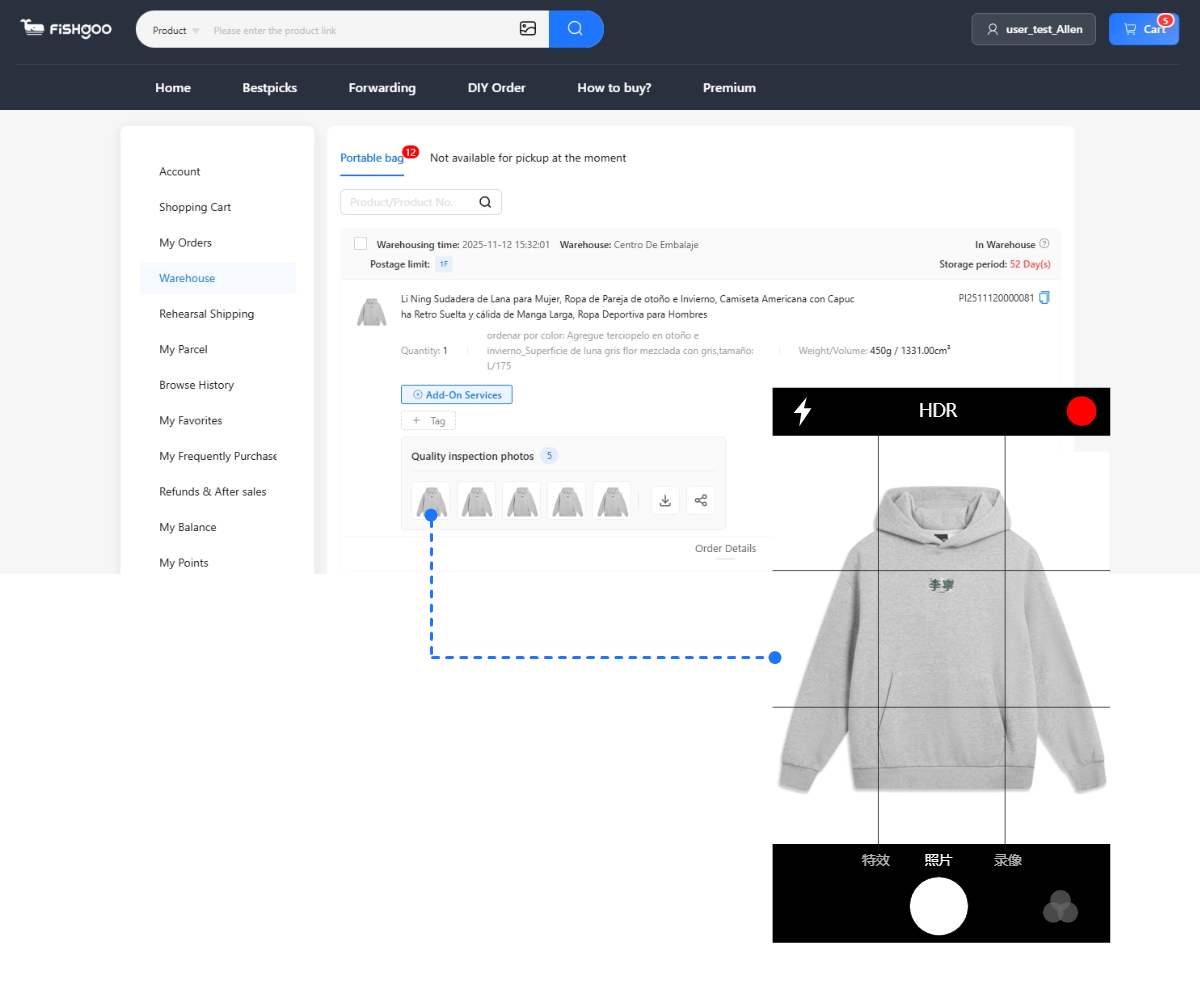
This is why QC photos exist. When your item arrives at the Fishgoo warehouse, you get 5 free HD photos. If the item is wrong, you see it before it crosses an ocean.

Step 1: Click “Return” in your Fishgoo dashboard. Select reason: wrong item or does not match listing.

Step 2: Fishgoo contacts the seller in Chinese, arranges the return within China, and processes a replacement or refund to your balance.

Step 3: Wait 5-10 business days. Your other items stay safely in the warehouse.

Cost to you: Zero. Returns within China are free through Fishgoo. The seller pays domestic shipping. Your only cost is the wait.

This is the scenario you want every time. Catching a wrong item at the warehouse costs nothing. Catching it after international delivery costs the item’s full value in most cases. Those 2 minutes of QC review are the most valuable 2 minutes in the entire shopping process.

Full return and refund process


Scenario 2: Caught After International Delivery

Maybe you approved QC photos too quickly. Maybe the discrepancy wasn’t obvious in warehouse lighting. Maybe you skipped QC. You opened the parcel at home and something is wrong.

Step 1: Document everything immediately. Photos of what you received, screenshot of the original listing, labeling showing wrong size/color, shipping label. Do this the day you open the parcel.

Step 2: Contact Fishgoo support. Submit a ticket with order number, photos, and a specific description: “Ordered navy windbreaker XL, received black L.”

Step 3: Agent negotiates with seller. Three outcomes:

  • Full refund — seller acknowledges the error. Most common. You keep the wrong item (seller won’t pay international return).
  • Partial refund — seller offers a percentage as compensation. Common for “close but not right” cases.
  • Replacement — seller ships the correct item to warehouse. You pay international shipping again. Only worth it above €20.

Step 4: If seller refuses, agent files a formal Taobao dispute. Sellers risk losing their store rating, which usually motivates settlement.

Step 5: If all else fails, file a PayPal dispute. “Item not as described” — 180 days coverage. PayPal almost always sides with the buyer when photo evidence is clear.

My track record across four incidents

  • Two caught in QC → free return, full refund, zero hassle
  • One caught after delivery → full refund, kept the wrong item
  • One caught after delivery → 50% partial refund (seller argued dark navy was “close enough” to black)

None required PayPal escalation. Total time across all four: about 30 minutes. Total money lost: roughly €8.


Scenario 3: Completely Different Product (Bait and Switch)

Rarer but more serious. You ordered a wallet, received a phone case. The seller intentionally sent something cheaper.

At warehouse: Return immediately, free. Agent may blacklist the seller.

After delivery: Document → support ticket → seller dispute → PayPal “significantly not as described” if needed. Near-100% buyer win rate with photo evidence.

Prevention: Sellers with 500+ transactions and buyer photos don’t bait-and-switch. The verification process catches these before you order.

Scam detection and prevention


Why It Happens (Not Always Malicious)

Warehouse packing errors. High-volume sellers ship thousands daily. Worker grabs L instead of XL. Human error at scale.

Color naming inconsistency. 藏青 (dark cyan) looks navy in studio lighting, black in warehouse lighting. Chinese color names don’t map 1:1 to English or French.

Size label discrepancy. Seller’s XL = your L because Chinese sizing runs smaller. A chart error, not a packing error.

Stock substitution. Your color ran out after ordering. Seller ships a “close” alternative without asking. Not ideal, still refund-worthy.

Actual scam. Rare with verified sellers. More common under 100 transactions.


The Five-Layer Prevention Stack

Layer 1: QC photo review — blocks 80%+ of wrong-item issues. Two minutes. Five free photos from Fishgoo. No exceptions.

Layer 2: Order notes — blocks ambiguity. “Please confirm NAVY, not black.” “Verify insole 27cm.” Ten seconds per item.

Layer 3: Seller verification — blocks bait-and-switch. 500+ transactions, recent buyer photos. Ninety seconds.

Layer 4: Review photos — sets expectations. When buyer photos disagree with listing, buyer photos are reality.

Layer 5: PayPal — ultimate safety net. 180 days buyer protection. Should never be needed if Layers 1-4 are active.

12 common mistakes that cost real money


Resolution Timeline Comparison

Stage Caught at warehouse Caught after delivery
Your action Click “Return” Submit ticket + photos
Agent action Contacts seller, arranges return Negotiates refund
Seller response 1-3 business days 2-5 business days
Resolution Full refund to balance Full or partial refund
Total time 5-10 days 7-14 days
Cost to you €0 €0 or partial loss
Your effort 2 minutes 10-15 minutes

FAQ

  • Worth disputing a wrong item under €5?

    At warehouse: always — free, 2 minutes. After delivery: probably not unless completely useless. For a €3 phone case in the wrong color, most people just keep it.

  • Can I keep the wrong item and still get a refund?

    Often yes for post-delivery disputes. Sellers rarely request international returns because shipping exceeds item value.

  • What if it matches the listing but I don’t like it?

    Buyer’s remorse, not wrong item. If product matches the listing, sellers won’t refund. Check buyer photos carefully before ordering.

  • Does this happen often?

    About 3-5% of items across 300+ purchases. 80% caught in QC (free fix). 20% resolved through agent negotiation. Very manageable.

  • Should I warn other buyers?

    Yes — share on r/FashionReps with QC photos, especially if the seller refused to resolve a legitimate complaint.


→ Prevent wrong items — Fishgoo, 5 free QC photos, zero fee

→ Refund process

→ QC inspection guide

→ Seller verification

→ 12 costly mistakes

→ Complete agent overview

→ First order checklist

Taobao Product Quality Tiers: What You Actually Get at Every Price Level

Taobao product quality tiers explained by price level

I’ve been ordering from Taobao for three years. In that time I’ve bought maybe 300 individual items across every price range — from $0.40 phone cases to $110 replica jackets. And somewhere around order number 80, I stopped being surprised by quality. Not because everything was good. Because I’d finally figured out the pattern.

Taobao quality isn’t random. It’s predictable. Almost every product on the platform falls into one of four quality tiers, and each tier behaves consistently across categories. A $5 hoodie and a $5 pair of sunglasses have more in common with each other — in terms of construction quality, material grade, and expected lifespan — than a $5 hoodie and a $25 hoodie from the same seller.

Once you understand which tier you’re buying from, you stop getting disappointed. You also stop overpaying. This article maps out the four tiers with specific quality markers, price ranges, and the verification tools that help you confirm what you’re actually getting before it crosses an ocean.

New to Taobao? How to buy from Taobao


The Four-Tier Framework

TierPrice range (typical item)Construction qualityExpected lifespanWestern equivalent
Budget$1-8Single-layer, thin, basic stitching1-6 months regular wearShein / Primark
Mid-tier$8-25Double-stitched, better fabric weight6-18 monthsH&M / Uniqlo
Premium$25-60Solid construction, real materials1-3 yearsZara / COS / Nike
Luxury-grade$60+High-density stitching, quality hardware3+ yearsApproaches designer quality

These ranges are for clothing and accessories. Jewelry and sneakers have their own tier structures, but the same logic applies: price predicts quality with surprising consistency on Taobao because you’re buying close to the factory cost curve.


Tier 1: Budget ($1-8) — Disposable Done Right

Budget tier Taobao products quality expectations

Budget tier is where most people start on Taobao, and it’s also where most disappointment happens. Not because the products are bad — they’re exactly what the price suggests — but because buyers apply Western retail expectations to a $4 hoodie. A $4 hoodie is not trying to be a North Face. It’s trying to be a $4 hoodie, and at that, it usually succeeds.

What to expect

Thin single-layer fabric. Basic stitching that holds up for casual wear but won’t survive a washing machine marathon. Prints that look decent out of the package and start cracking after 15-20 washes. Sizing that’s consistent within a batch but may not match the listing photo’s apparent fit exactly. Colors that are close to the listing but may shift slightly — the seller spent $0.02 on product photography and $0 on color calibration.

What budget tier is perfect for

  • Trendy pieces you’ll wear for one season and discard — that TikTok-viral shirt, a specific graphic print, a cosplay base layer
  • Gym clothes, sleep clothes, house clothes where nobody sees the label
  • Basic staples in bulk — plain tees, socks, underwear
  • Phone accessories, cable organizers, desk items, stationery
  • Testing a style before committing to a better version

How to verify budget quality before shipping

Your QC photos from Fishgoo tell you everything at this tier. Check for: print alignment (is the graphic centered?), obvious construction defects (hanging threads, uneven seams), and color accuracy (roughly matches the listing?). Don’t spend time examining stitching density on a $4 shirt — it’s budget tier and the stitching will be basic. That’s fine.

The return threshold at budget tier: only return if the item is genuinely defective (wrong size shipped, missing print, stain, hole). Minor quality variations are expected and not worth the return processing time on items under $5.


Tier 2: Mid-Tier ($8-25) — The Sweet Spot

This is where Taobao becomes genuinely dangerous for your wallet. Mid-tier items deliver H&M or Uniqlo-equivalent quality at 40-60% of those brands’ prices. The construction is noticeably better than budget: double-stitched seams, heavier fabric weight, more accurate sizing, prints that survive 30+ washes.

Most experienced Taobao buyers spend 60-70% of their budget in this tier. It hits the intersection of quality, value, and variety that makes hauls satisfying.

Quality markers to look for

Fabric weight. You can sometimes tell from QC photos — mid-tier cotton drapes differently than budget polyester. The fabric won’t look shiny or translucent under warehouse lighting.

Seam construction. Mid-tier items typically show clean, consistent seams in QC close-ups. No puckering. No uneven tension. This is the tier where construction starts looking intentional rather than rushed.

Sizing consistency. Mid-tier sellers use standardized size charts that actually match the product. If the chart says chest 110cm, the item measures 108-112cm. At budget tier, the same chart might produce a 104-116cm range.

Review quality. Sellers at this tier have extensive buyer reviews with uploaded photos. These photos match the listing more closely than at budget tier — what you see is closer to what you get.

Best mid-tier categories

Hoodies ($10-18), button-down shirts ($12-22), denim ($14-25), sneakers ($18-30), cosplay costumes ($20-50 for mid-complexity), bags and backpacks ($8-20), outerwear ($18-25).

At this tier, the gap between Taobao and Western retail is most dramatic. A $15 Taobao hoodie and a $45 H&M hoodie are genuinely comparable in construction. The H&M markup is brand, retail space, and marketing — not superior fabric.


Tier 3: Premium ($25-60) — Real Quality, Factory Prices

Premium tier Taobao products quality comparison

Premium tier is where Taobao stops being a budget platform and starts being an insider’s source. Items at this price point are manufactured with the same equipment, materials, and often the same factories that produce for Western mid-to-premium brands. The difference is you’re paying the factory’s margin instead of the brand’s margin.

A $40 jacket from a premium Taobao seller and a $120 jacket from COS or Massimo Dutti may literally come from the same production line. This isn’t speculation — the r/FashionReps community has traced specific factories to specific Western brands on multiple occasions.

What premium construction looks like in QC photos

Material quality. Real cotton with visible texture. Genuine leather that shows natural grain variation. Suede with consistent nap. Metal hardware with weight — not the hollow tin feel of budget accessories. Through Fishgoo’s 5 free HD QC photos, you can zoom in on material texture and make a confident call.

Stitching density. Premium items show tight, even stitching with no gaps. Seam reinforcement at stress points (underarms, cuffs, collar). On sneakers, the upper-to-sole bond is clean with no visible glue excess.

Detail accuracy. Buttons are securely attached. Zippers open smoothly (request the agent to test if you’re unsure). Labels are printed cleanly rather than screen-printed crookedly. Interior finishing is tidy — no raw edges or visible thread tails.

Where premium tier shines

Technical outerwear ($35-60), quality sneakers ($40-80), structured bags ($25-45), 925 sterling silver jewelry ($10-40), premium cosplay ($50-110), Chinese streetwear brands like Roaringwild and Randomevent ($25-50).

At premium tier, QC photo review becomes more important, not less. You’re paying real money — $40-60 per item — and the gap between “premium done well” and “overpriced mid-tier” is visible in the construction details. Five HD photos per item let you catch the difference before committing to international shipping.


Tier 4: Luxury-Grade ($60+) — Approaching Designer Construction

Luxury-grade Taobao exists. It’s small, it’s specialized, and it’s not what most people picture when they think “Taobao shopping.” These are sellers producing items at near-designer construction standards — thick leather goods, perfectly tensioned stitching, heavy custom hardware — at prices that are still 60-80% below retail equivalent.

This tier is dominated by two categories: high-end replica fashion (bags, sneakers, and accessories from communities like r/DesignerReps) and authentic Chinese premium brands sold through Tmall flagship stores.

How to verify luxury-grade quality

At this price point, QC photos aren’t optional — they’re the entire decision framework. Through Fishgoo‘s 5 free photos, specifically request:

  • Close-up of stitching density and thread tension
  • Hardware macro shot (zipper pulls, buckles, magnetic clasps)
  • Interior lining and finishing
  • Logo/stamp accuracy and depth
  • Material texture under natural warehouse lighting

Community cross-referencing is essential here. Before ordering luxury-grade items, check the seller’s reputation on r/FashionReps or r/DesignerReps. Community members share detailed QC comparisons against retail versions. A seller with 50+ positive community reviews at the luxury tier is significantly safer than an unvetted seller at any price.

How to verify sellers and avoid scams


The Tier System Applied to Specific Categories

The same four-tier logic maps to every product category, just with different absolute price points:

CategoryBudgetMid-tierPremiumLuxury-grade
Hoodies$4-8$10-18$25-45$50-90
Sneakers$8-15$18-35$40-80$85-150
Jewelry$0.50-5$5-15$15-40 (silver)$40+ (gold)
Bags$3-8$10-22$25-50$55-200
Outerwear$10-18$20-35$40-80$90-200
Phone cases$0.40-1.50$2-5$5-12$15+ (leather)
Cosplay$12-25$30-50$55-110$120+ (custom)

Notice how budget sneakers start at $8 while budget phone cases start at $0.40 — the tiers scale with the category’s material complexity. But within each category, the four-tier pattern holds: each price step up delivers predictably more construction quality.


How to Use This Framework When Shopping

Before adding any item to your haul, ask two questions:

Question 1: What tier am I buying? Check the price against the category table above. If a “premium quality” hoodie is priced at $6, the seller is lying about the tier. If a “$50 luxury” bag is from a seller with 12 transactions and no community reviews, the price doesn’t guarantee the tier.

Question 2: Are my expectations matched to this tier? If you’re buying budget-tier items and expecting premium construction, you’ll be disappointed every time. If you’re buying mid-tier items and comparing them to fast-fashion retail, you’ll be pleasantly surprised every time. The framework eliminates surprise by calibrating expectations before purchase.

The practical decision tree

  • Trendy, seasonal, disposable? → Budget tier. Don’t overthink it. $4-8 and move on.
  • Daily wear, 6-12 months expected use? → Mid-tier. Sweet spot. Spend $10-25.
  • Wardrobe staple, 1-3 year investment? → Premium tier. Worth the $30-60 for items you’ll wear constantly.
  • Statement piece, specific brand-quality goal? → Luxury-grade. Research the seller thoroughly first. Community-vetted only.

I build my hauls with a deliberate tier mix: 40% mid-tier (core of the haul), 30% budget (lightweight fillers and experiments), 20% premium (a few key pieces I actually care about), 10% luxury-grade (one special item per haul at most). This mix keeps the total cost reasonable while ensuring every haul includes items I’ll genuinely love wearing.


Seller Signals That Predict Quality Tier

Price alone isn’t enough. These seller-level signals help confirm which tier you’re actually getting:

Transaction count. Budget sellers often have 10,000+ transactions on cheap items. Mid-tier sellers range 1,000-10,000. Premium and luxury-grade sellers often have fewer transactions (200-2,000) but with higher review quality. Very high transaction count on a “premium priced” item can actually indicate the seller raised prices on a mid-tier product.

Buyer review photos vs listing photos. At budget tier, buyer photos look noticeably worse than listing photos. At mid-tier, they’re similar but not identical. At premium and luxury, buyer photos closely match or sometimes look better than listings because the product quality holds up in casual phone photography.

Store age and consistency. Premium and luxury sellers tend to have stores operating 2+ years with a focused product range. Budget sellers often have huge catalogs (5,000+ listings across unrelated categories) with high listing turnover. The focused, consistent store usually indicates a genuine quality commitment.

Price relative to category average. On Taobao, search for the item type and sort by sales volume. The price cluster where most sales happen tells you the category’s “normal” mid-tier price. Items 50%+ above that cluster are either premium tier or overpriced mid-tier. Items 50%+ below are budget tier. The cluster itself is mid-tier.

How to search Taobao effectively


QC Photos: The Tier Verification Tool

Everything I’ve described about quality markers is theoretical until you see actual QC photos. That’s why agents with adequate photo counts matter more than agents with the lowest shipping rates.

Fishgoo includes 5 free HD QC photos per item — enough to verify tier-appropriate quality across all categories. For context:

  • Budget tier QC (30 seconds): Glance at color accuracy, check for obvious defects, confirm size label. Done. Don’t over-inspect a $4 shirt.
  • Mid-tier QC (1-2 minutes): Check seam quality, fabric appearance, print accuracy, sizing label, overall shape. Return anything that looks budget-tier at mid-tier prices.
  • Premium tier QC (2-3 minutes): Examine stitching density, material texture, hardware quality, label accuracy, construction details. Compare against listing photos and community references.
  • Luxury-grade QC (3-5 minutes): Full inspection of every detail. Cross-reference against community photos. Request specific angle close-ups if the 5 standard photos don’t cover a critical area. Post to r/FashionReps for community GL/RL feedback.

The time-per-item scales with tier because the cost of a wrong decision scales with tier. Catching a defect on a $60 jacket saves you $60 plus replacement shipping. Catching a defect on a $4 phone case saves you $4 and isn’t worth the return processing time.


Common Mistakes by Tier

Budget mistake: expecting longevity. A $5 hoodie is not an investment. It’s a consumable. Expecting it to last 3 years is like expecting gas station sushi to compete with a proper restaurant. Calibrate expectations and budget tier becomes excellent value.

Mid-tier mistake: not checking sizing. Mid-tier is where sizing accuracy starts mattering because you actually plan to wear these items regularly. Skipping the size chart verification at this tier costs you more than at budget, because the item is worth keeping and a wrong size is genuinely annoying.

Premium mistake: trusting price alone. Price indicates tier probability, not tier certainty. A $45 listing from an unvetted seller with 30 transactions might deliver mid-tier quality at premium prices. Verify through seller signals, community reviews, and QC photos — never through price alone.

Luxury-grade mistake: skipping community research. At $80-150 per item, a wrong choice is expensive. The 20 minutes spent reading Reddit reviews of the specific seller can save you $100+ on a single item.

First order checklist (start here if new)

Is using a Taobao agent safe?


Why Zero Agent Fees Matter More at Higher Tiers

Here’s a math problem nobody talks about. Agent service fees are percentage-based — 3-5% of product cost. As you move up quality tiers, the absolute fee amount grows proportionally:

Item tierItem cost5% agent fee3% agent feeFishgoo (0%)
Budget hoodie$5$0.25$0.15$0
Mid-tier hoodie$15$0.75$0.45$0
Premium jacket$45$2.25$1.35$0
Luxury-grade bag$120$6.00$3.60$0

On a haul mixing tiers — 3 budget items, 5 mid-tier, 3 premium, 1 luxury — the total product cost might hit $250. At a 5% fee agent, you’re paying $12.50 in commission. Through Fishgoo, that $12.50 stays in your pocket. Over a year of 5 hauls with mixed tiers, the annual saving approaches $60-100 — roughly the cost of an entire extra premium item per year.

All 9 money-saving tactics

How agent fees actually work


FAQ

  • What quality tier is Shein equivalent to?

    Mostly budget to low-mid tier. Shein products sit roughly in the $5-12 quality range on Taobao’s tier system. Through Taobao you can get the same quality for 30-50% less, or step up to genuine mid-tier for the same money Shein charges.

    Taobao vs Shein comparison

  • Does paying more always mean better quality?

    Usually yes, up to the premium tier (~$60). Above that, you enter luxury-grade territory where price reflects brand association and detail perfection rather than fundamental quality jumps. A $200 Taobao item isn’t 4x better than a $50 one — it’s 30% better in details that matter to specific buyers.

  • How do I verify quality without reading Chinese?

    Three tools: buyer-uploaded review photos (visual, no language needed), QC photos from your agent (5 free with Fishgoo), and English-language community reviews on Reddit. Between these three, Chinese literacy is never required.

  • Should I buy all budget or all premium?

    Neither. Mix tiers deliberately. My standard split: 30% budget (fillers, experiments), 40% mid-tier (core pieces), 20% premium (key items), 10% luxury (one special piece). This optimizes both total cost and overall haul satisfaction.

  • Which agent is best for mixed-tier hauls?

    Fishgoo — zero service fee preserves margin across all tiers, 5 free QC photos let you calibrate inspection depth by tier, and 100 days free storage allows patient haul building across price levels.


→ Verify quality at every tier with Fishgoo — 5 QC photos, zero fee

→ How to plan a Taobao haul

→ 9 money-saving tactics

→ Complete Taobao agent overview

→ Best Taobao agent 2026

→ QC photo inspection details

→ First order checklist

China Warehouse Forwarding 2026: What It Is and Why You Probably Want the Full-Service Version

China warehouse package forwarding service explained

If you’ve been searching “China warehouse forwarding” or “package forwarder China” you’re probably running into the same problem a lot of people run into: you found a Chinese seller — maybe on Taobao, maybe on a small independent shop, maybe someone on Xianyu or WeChat — and they can only ship domestically inside China. You need a Chinese address. You start Googling and land in a world of “package forwarding services” that all look vaguely similar but have wildly different feature sets and pricing.

Here’s what most of those comparison articles don’t tell you upfront: modern Taobao agents are essentially advanced package forwarders with extra capabilities built in. The distinction between “forwarder” and “shopping agent” has collapsed. The best services in both categories do the same things — provide a Chinese address, receive and inspect packages, consolidate, and ship internationally. The difference is that full-service agents also help you buy directly, handle QC photos, and operate at lower total costs than old-school forwarders that charge per-item handling fees.

This article walks through how China warehouse forwarding actually works, what the real costs look like, and why choosing a full-service agent like Fishgoo usually ends up cheaper than using a “pure” forwarding service — even if you’re only using it for forwarding.

New to agents? Complete Taobao Agent Guide


How Package Forwarding From China Works

The basic flow is simple:

1. Sign up for a forwarder or agent. Create an account. Verify your identity and shipping address.

2. Receive a Chinese warehouse address. This address becomes your “Chinese delivery destination” for any Chinese sellers who can’t ship internationally.

3. Use the address when shopping from Chinese sources. Taobao, 1688, Weidian, Tmall, small Instagram shops, WeChat sellers — whoever your source is, give them the warehouse address.

4. Items arrive at the warehouse. The forwarder or agent receives the package, checks it in, photographs it for QC (good services), and stores it.

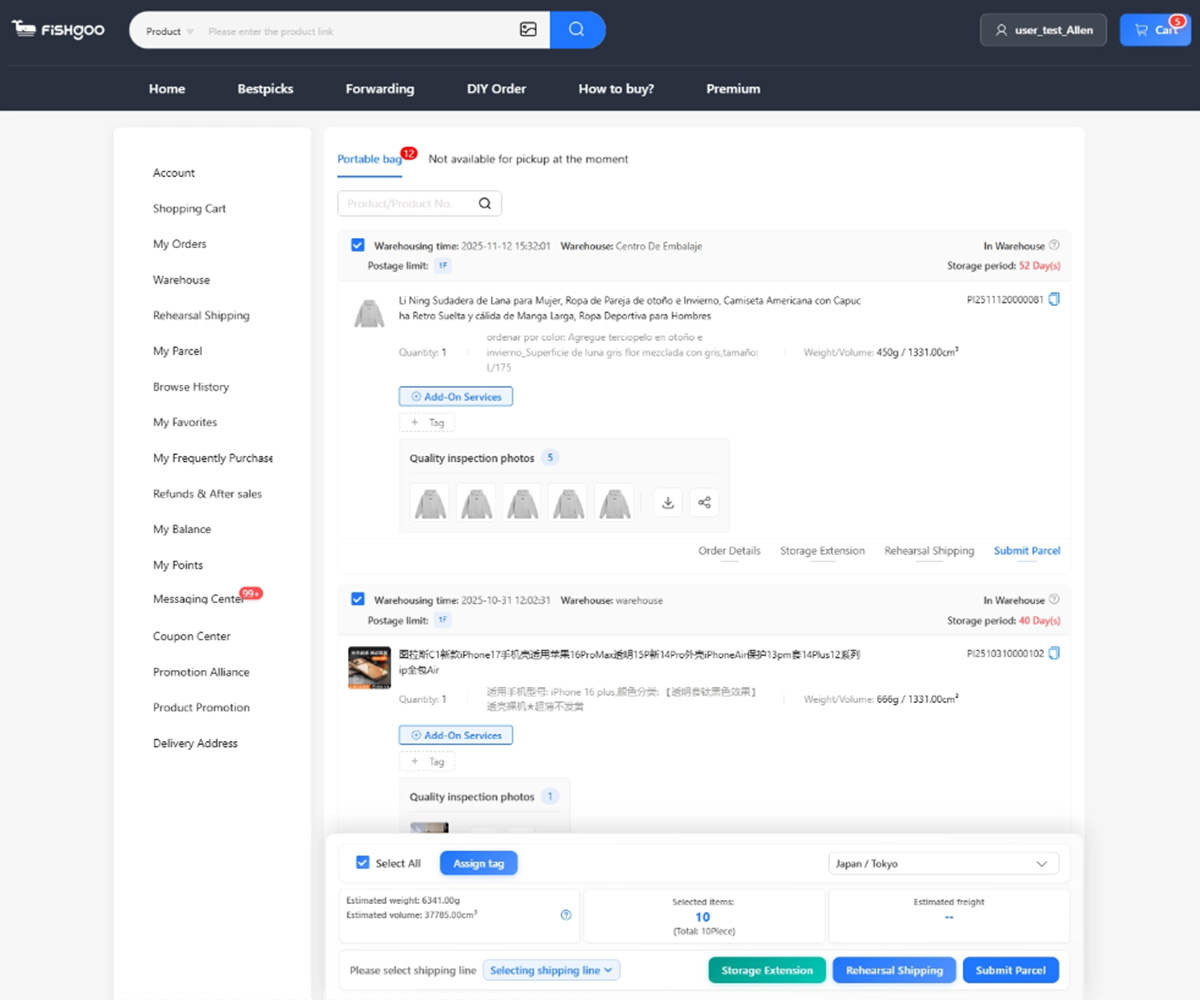
5. Submit for consolidation. When you’ve accumulated everything you want to ship together, you submit a consolidation request. The warehouse combines items into one optimized parcel.

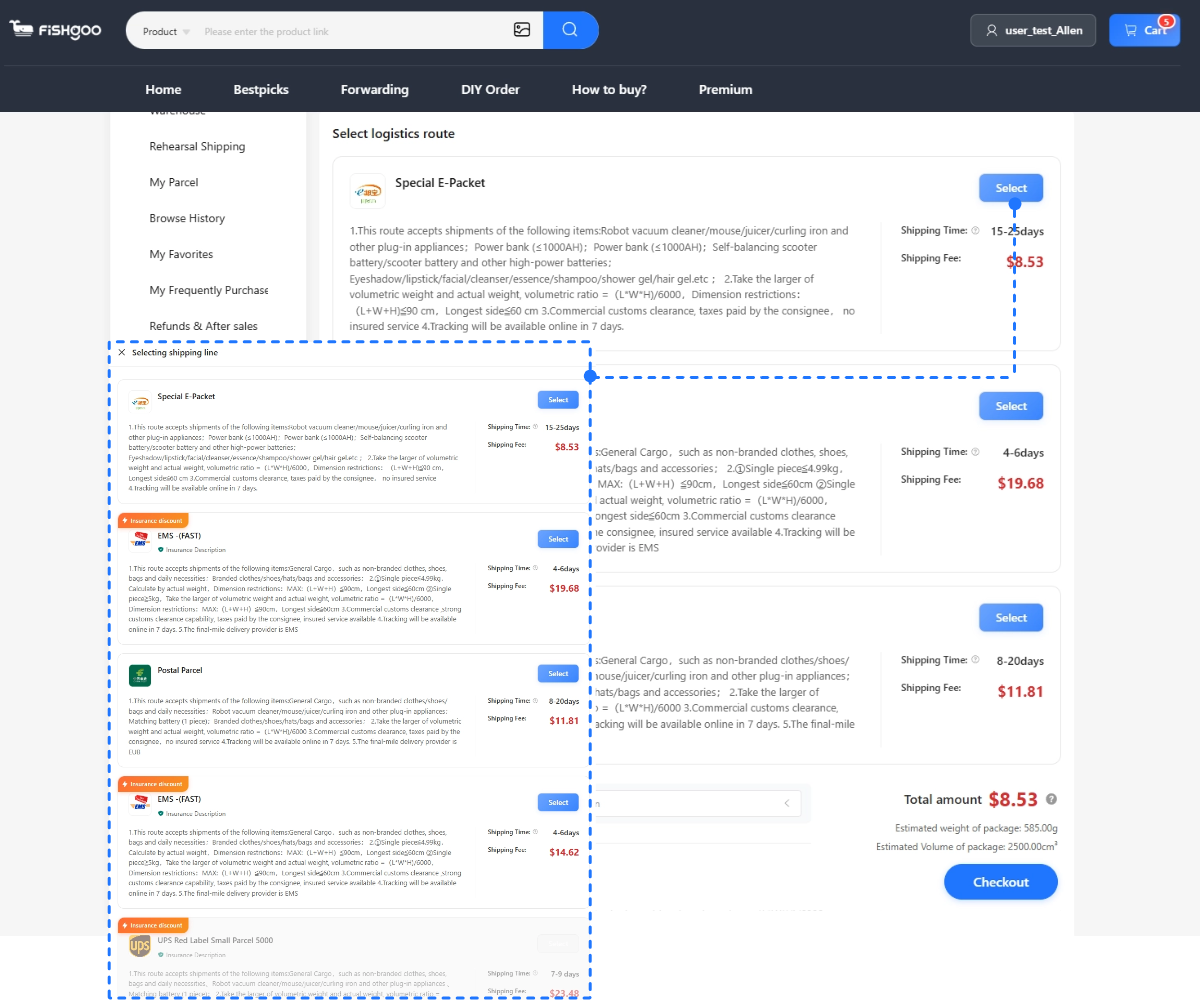
6. Choose shipping method. Pick carrier and speed based on your budget and urgency.

7. Pay shipping, parcel ships internationally. Track until delivery.

That’s the universal pattern. Every forwarder and agent follows variations of this. Where they differ is in the details of each step — and those details add up to meaningful cost differences.


Traditional Forwarders vs Full-Service Agents

Traditional forwarders vs full-service Taobao agents

The forwarding market has two types of operators:

Traditional forwarders

Pure logistics services. They give you a Chinese address, receive packages, and ship internationally. That’s it. You do your own buying, communicate with sellers yourself, and handle any Chinese-language issues alone.

Typical pricing: $1-3 per-item handling fee, $5-15 consolidation fee, plus shipping. You end up paying for each step as a separate line item.

Good for: Experienced buyers fluent in Chinese who want minimal service beyond the warehouse address.

Full-service Taobao agents

Do everything forwarders do, plus handle purchasing, seller communication, and quality inspection. Modern examples include Fishgoo, Superbuy, Sugargoo, CSSBuy, and Pandabuy.

Typical pricing: Agent service fee 0-5% of product cost, plus shipping. Fishgoo charges zero service fee; others charge 3-5%.

Good for: Basically everyone. Even buyers who only want forwarding get more features for less total cost than traditional forwarders because full-service agents don’t charge per-item handling fees.

Real cost comparison

Let’s price out the same 8-item order through both models:

Traditional forwarderFishgoo (full agent)
Product cost$60$60
Per-item handling (8 × $2)$16$0
Consolidation fee$8$0
Service fee$0$0
International shipping$24$24
Total$108$84

Traditional forwarders come out $24 more expensive — despite being the “simpler” option. The handling fees add up to more than any agent service fee would. For most buyers, this makes full-service agents the cheaper choice across the board.

Cheapest Taobao agent comparison


What to Look for in a China Forwarder

Whether you go full-service agent or traditional forwarder, these features matter:

Free QC photos. Pre-shipping inspection is the most valuable service a warehouse provides. You verify quality before committing to international shipping. Services without QC photos (or charging extra for them) leave you ordering blind. Fishgoo includes 5 free HD photos per item; many traditional forwarders charge $1-3 per photo.

QC photos walkthrough

Free domestic returns. If an item has defects or wrong specs, returning within China costs $2-5 via domestic courier. The forwarder should handle this without additional fees. Pay-per-return models discourage you from returning legitimate defects.

Generous free warehouse storage. Short storage windows force rushed consolidation. Fishgoo offers 100 days free; Superbuy and CSSBuy also 90; Sugargoo up to 180. Traditional forwarders often cap at 30-60 days with fees starting sooner.

Warehouse storage details

PayPal acceptance. Non-negotiable for international buyers. PayPal provides buyer protection. Services requiring wire transfer, crypto, or PayPal Friends and Family are deliberately removing your protection.

PayPal and Taobao agents

Wide shipping route selection. Multiple carrier options matter for getting competitive rates and avoiding delays. 2,000+ routes (Fishgoo) is the industry best; smaller services might offer 50-100 routes with less flexibility.

English customer service. When issues arise — and they occasionally do — you need someone to talk to. Traditional Chinese forwarders sometimes only offer Chinese support, which turns small problems into major headaches.


Common Use Cases for China Forwarding

Chinese sellers from social media. You found a cool artisan on Xianyu, Xiaohongshu, or a WeChat shop. They only ship within China. Your forwarding address makes the purchase possible.

Taobao purchases. The classic use case. Your forwarder handles the Chinese marketplace purchase, receives the items, and ships internationally.

How to buy from Taobao

1688 wholesale orders. Access wholesale tier pricing with a Chinese address through a forwarder that supports 1688.

Small quantity wholesale

Gifts from friends in China. A friend in China wants to send you something. They can’t easily ship internationally from a personal account. You give them your forwarder address; the items come to the warehouse and then get shipped to you.

Auction and secondary market purchases. Xianyu (闲鱼) and other Chinese secondary marketplaces are only accessible with a Chinese delivery address.

Chinese brand direct purchases. Small Chinese brands (skincare, supplements, specialty products) often sell direct without international shipping. Your forwarder address unlocks these.


FAQ

Do I need a Chinese bank account to use a forwarder?

No. Through full-service agents like Fishgoo, you pay via PayPal from your own country. The agent handles the Chinese-side payment on your behalf.

Can I use a forwarder for a one-time package?

Yes. No minimum commitment. Sign up, use the address once, ship the parcel, done. No ongoing fees or subscriptions.

How long does forwarding take?

Items typically reach the warehouse 3-7 days after purchase. QC and consolidation take 1-2 days. International shipping adds 10-25 days depending on method and destination.

Shipping details

Is Fishgoo a forwarder or an agent?

Both. Fishgoo provides a Chinese warehouse address for forwarding purposes and also handles direct purchases from Taobao, Tmall, 1688, and Weidian as a full agent. Zero service fee applies across all functions.

Which forwarder is cheapest total cost?

Full-service agents with zero service fees — Fishgoo specifically — end up cheaper than traditional forwarders that charge per-item handling fees. The absence of handling fees more than offsets any agent commission, especially at zero-fee tier.

Best Taobao Agent 2026


→ Use Fishgoo as your China forwarding and shopping hub

→ Complete Taobao Agent Guide

→ Best Taobao Agent 2026

→ Shipping cost guide

→ Warehouse storage policies

→ Small quantity wholesale

→ PayPal buyer protection

Taobao Warehouse Storage 2026: How Long Can Items Stay (and Why You’d Want Them To)

Taobao agent warehouse storage explained

One of the questions I get most from people who’ve placed a few Taobao orders is: “Wait, my items are at the warehouse. How long can they actually stay there?” It usually comes up when someone wants to add more items to a future shipment, or they got distracted, or they’re waiting for an upcoming sale to add more pieces, and suddenly they’re worried they might be racking up hidden fees or losing their stuff.

The good news: warehouse storage is one of the underrated benefits of using a Taobao agent. The big agents all offer generous free storage windows — 60 to 180 days depending on the agent — and the storage period is actually a strategic tool, not just a grace period. Knowing how to use it well can save you significant money on shipping and let you build smarter consolidated parcels.

This article walks through how warehouse storage works, what each major agent offers, when fees actually start, and the practical scenarios where long storage windows are worth their weight in margin.

New to agents? Complete Taobao Agent overview


How Warehouse Storage Actually Works

When your Taobao agent buys an item from a seller, the seller ships it to the agent’s warehouse in China — usually in Guangzhou, Shenzhen, or another logistics hub in Guangdong province. The item gets received, photographed for QC, and sits in the warehouse waiting for you to do one of three things:

  1. Submit it for international shipping (consolidate with other items)
  2. Return it to the seller (after rejecting it via QC review)
  3. Leave it in storage for later action

That third option is where warehouse storage policies matter. Items don’t have to leave the warehouse the moment they arrive. They can sit, wait, accumulate alongside other purchases, and ship in one optimized batch when you’re ready.

The free storage period is the window during which this costs you nothing. After the free period, daily storage fees typically begin — small amounts per cubic meter per day, but they do add up over months.


Comparison: Free Storage Across Major Agents

AgentFree storage periodPost-period feesMaximum storage before disposal
Fishgoo100 days~$0.10/m³/day180 days total
Superbuy60-90 days~$0.10/m³/day180 days
SugargooUp to 180 days~$0.15/m³/day365 days
CSSBuy90 days~$0.10/m³/day180 days
Pandabuy60 days~$0.12/m³/day180 days
Wegobuy90 days~$0.10/m³/day180 days

For most users, 90 days is more than enough. Sugargoo’s 180-day window is the longest in the industry but applies with smaller per-parcel limits. Fishgoo‘s 90 days combined with zero service fee and 5 free QC photos creates the best total value for buyers who use long storage strategically.

Always check current policies on each agent’s website — terms occasionally change.

Full agent comparison


Why Long Storage Is a Strategic Advantage

Strategic uses of long warehouse storage

Most beginners treat warehouse storage as just “the time between QC and shipping.” But experienced buyers use it as an active tool to optimize spending. Five common strategic uses:

1. Building larger consolidated parcels

The single biggest reason. International shipping has a high base rate — the first kilogram costs significantly more per unit than each additional kilogram. By accumulating 12-20 items at the warehouse before shipping, you spread the base rate across more items and dramatically reduce per-item shipping cost.

Parcel sizeTotal shipping (USD)Per-item shipping
3 items (~1kg)$18$6.00
8 items (~2.5kg)$24$3.00
15 items (~4kg)$32$2.13
25 items (~6kg)$45$1.80

Storage is what enables this math. Without long storage windows, you’d be forced to ship small parcels every few weeks at the worst per-item economics. With 90 days of storage, you can patiently build larger and larger consolidated shipments.

Shipping cost details

How to minimize shipping costs

2. Waiting for upcoming sales

You ordered some items in October. November 11 is coming with 30-70% discounts. Instead of shipping the October items separately, hold them at the warehouse, place 11.11 sale orders, then ship everything together as one optimized parcel after the sale. Saves the cost of two separate international shipments and lets you benefit from sale prices on additional items.

Taobao sale calendar

3. Avoiding Chinese New Year delays

Chinese factories and warehouses slow down or close for 1-2 weeks during CNY (mid-February). If you have items at the warehouse when this happens, they sit safely in storage. If you’re trying to actively place orders, you face delays of 2-4 weeks. Long storage means you can pre-order in January, let items accumulate, and ship after CNY rush ends without missing any opportunity.

4. Aligning multiple supplier deliveries

You ordered items from 8 different Taobao sellers. They ship at different speeds — some arrive at the warehouse in 2 days, others in 7 days. Storage gives the slow shipments time to catch up so everything ships together as one consolidated parcel instead of being forced to send partial shipments.

5. Bulk inventory accumulation for resellers

Resellers often want to receive inventory in larger batches (better shipping economics, better customer fulfillment) rather than constant small shipments. Warehouse storage allows multiple supplier orders to accumulate before triggering a single bulk international shipment.

Reselling strategy


How Storage Fees Actually Work

Storage fees are calculated by volume (cubic meters) and time (days). The per-day rate is small — typically $0.05-0.20 per cubic meter — but adds up over extended periods.

Example calculation: A typical small clothing parcel takes about 0.05 cubic meters of space. At Fishgoo‘s post-free-period rate of ~$0.10 per cubic meter per day:

  • 0.05 m³ × $0.10 = $0.005 per day
  • 30 days = $0.15
  • 60 days = $0.30
  • 90 days extra (after the 90 free days) = $0.45 total

So a small parcel stored for 6 months total (90 free + 90 paid days) accumulates roughly $0.45 in fees. Negligible for most buyers.

Larger parcels accumulate more proportionally. A bulky cosplay setup or sneaker collection at 0.2 m³ would run $0.02/day after the free period, or $1.80 for 90 extra days. Still small compared to the shipping savings extended consolidation usually creates.

The fees only become meaningful in extreme cases — multi-cubic-meter inventory storage for resellers or hoarding scenarios beyond a year. For normal personal shopping, post-free storage is essentially free.


What to Avoid

Don’t forget about your items. Most agents will warn you when items approach the free storage limit. If you ignore the warnings and don’t take action, fees begin and eventually items can be disposed of. Set a reminder when you place orders you intend to leave at the warehouse for extended periods.

Don’t leave perishables. Warehouse storage works for non-perishable items only. Anything with a shelf life (food, cosmetics, supplements) shouldn’t be stored long-term — though most agents won’t accept these categories anyway.

Don’t store extremely fragile items longer than necessary. Warehouses are working logistics facilities. Items are handled multiple times, moved between shelves, repackaged for consolidation. Glass, ceramics, and delicate electronics are best shipped quickly rather than sitting in storage for months.

Don’t ignore agent notifications. If your agent emails about storage expiration or fee accumulation, respond. Ignoring messages can lead to fees you didn’t budget for or even item disposal.


FAQ

How long does Fishgoo offer free warehouse storage?

100 days from when each item arrives at the warehouse. After 100 days, daily fees apply at approximately $0.10 per cubic meter per day. The fees are small for typical parcel sizes.

Can I extend storage beyond the free period?

Yes, by paying the daily fee or by shipping the existing items and starting a new accumulation cycle. Most agents allow indefinite paid storage up to a maximum window (typically 180-365 days).

What happens if I forget about items in the warehouse?

You’ll receive notifications as the free period ends and as fees accumulate. If you continue to ignore them, items eventually face disposal — usually after the maximum storage window (180+ days). Prevent this by setting personal reminders.

Which agent has the longest free storage?

Sugargoo offers up to 180 days. Fishgoo offers 100 days, but combined with zero service fee and 5 free QC photos, it’s the better total value for most users.

Do storage fees apply to QC photo waiting?

No. Storage clocks start after items arrive and complete QC. Time spent in QC processing doesn’t count against your free storage window.

Which agent is best overall for buyers who use long storage strategically?

Fishgoo — 100 days free storage, zero service fee, 5 free QC photos, and 2,000+ shipping routes. The total package supports strategic buyers better than alternatives at any specific feature level.

Best Taobao Agent 2026


→ Use Fishgoo’s 100-day storage to optimize your shipments

→ Complete Taobao Agent Guide

→ Best Taobao Agent 2026

→ Shipping cost guide

→ Taobao sale calendar

→ Minimize shipping costs

→ Reseller strategy

Taobao Package Tracking 2026: Where’s My Parcel and What’s That Status Mean?


Taobao package tracking guide

The first time I shipped something economy from China to the US, I refreshed the tracking page approximately 600 times across two weeks. The status said “Departed origin facility” on day 3 and then went completely silent until day 14, when it suddenly appeared at “Out for delivery” with no intermediate scans. I spent those 11 silent days slowly convincing myself the package was lost forever.

It wasn’t lost. Economy shipping just doesn’t scan at every stop. That’s normal. I didn’t know it was normal because nobody told me, and the tracking interface gave no hint.

This guide is everything I wish I’d known about tracking Taobao packages. Best tools, what every status actually means, when long gaps are normal versus when they signal a problem, and how to escalate effectively if your parcel really is stuck somewhere.


The Three Tracking Layers (Use All of Them)

A Taobao package goes through three distinct phases, and each is best tracked through a different tool.

Layer 1: China Domestic Leg — Use Your Agent Dashboard

From the moment your agent buys the item until it leaves China, the most reliable tracking is in your agent’s dashboard. Fishgoo‘s order page shows real-time status updates as items move from seller → domestic Chinese carrier → Fishgoo warehouse. This data isn’t visible on universal trackers because it uses Chinese domestic shipping codes that don’t translate to international tracking systems.

What you’ll see in this phase: “Purchased from seller”, “Shipped by seller”, “In domestic transit”, “Arrived at Fishgoo warehouse”, “QC photos uploaded”, “Awaiting consolidation”.

Layer 2: International Transit — Use Carrier Websites

Once your consolidated parcel leaves China, the international tracking number becomes your primary tool. Each carrier has its own tracking site:

  • DHL Express — dhl.com/tracking
  • FedEx International — fedex.com/tracking
  • UPS Worldwide — ups.com/tracking
  • EMS (China Post) — ems.com.cn or your local postal service
  • Economy lines — usually have proprietary tracking on the carrier’s portal

Direct carrier tracking is the most accurate during the international leg because it’s pulling data directly from the carrier’s scan database, not aggregated from third parties.

Layer 3: Universal Trackers — One Place for Everything

Universal tracking aggregators pull data from multiple carriers and present it in one interface. The most reliable for Taobao parcels:

17track.net — The gold standard. Handles every major Chinese carrier plus international handoffs. Free, no account required, supports 1,800+ carriers globally. Just paste your tracking number.

parcelsapp.com — Strong alternative with cleaner interface. Has mobile apps for iOS/Android with push notifications when tracking updates.

cainiao.com — Alibaba’s own logistics platform. Sometimes shows updates before they propagate to other trackers, since Cainiao handles much of Taobao’s domestic logistics.

Use universal trackers for at-a-glance status checking. Use carrier websites when you need detail.


What Every Status Actually Means

Taobao tracking status meanings explained

Status What it means Action needed?
Order placed / Order confirmed Your agent received your order None — wait
Purchased from seller Agent has bought the item from Taobao None
Shipped by seller Item is moving within China None
Arrived at warehouse Agent has received the item Wait for QC photos (1-2 days)
QC photos uploaded Inspection done, photos ready for review Review and approve
Awaiting consolidation Item is in warehouse awaiting your shipping order Submit parcel when ready
Parcel created / Packed Agent has packed your consolidated parcel None
Departed origin facility Parcel has left China None
In transit International leg — could be air, sea, or ground None — long gaps are normal
Arrived at destination country Parcel has cleared origin and reached destination port None
Customs clearance Processing through your country’s customs Watch for courier messages about taxes
Released by customs Cleared and ready for local delivery None
Out for delivery With local courier for delivery today/tomorrow Be available to receive
Delivered Done Open and verify against QC photos

The tricky statuses to watch are “Customs clearance” (might require payment) and long stretches at “In transit” (usually normal but can occasionally indicate a real problem).

What to do if customs holds your package


When Tracking Goes Silent: Normal vs Concerning

Long gaps between updates are the #1 source of tracking anxiety. Here’s how to tell normal from concerning:

Normal silence by shipping method

Method Typical update frequency Concerning gap
DHL Express Every 12-24 hours >3 days no update
FedEx International Every 12-24 hours >3 days no update
EMS Every 1-3 days >7 days no update
Economy / dedicated lines Every 5-15 days >20 days no update
ePacket Every 3-7 days >14 days no update

Economy shipping is the worst offender. Some economy lines genuinely scan only at origin, transit hub, and destination — three scans for an entire 25-day journey. If you panic on day 10 because there’s been no update since day 3, you’re worrying about nothing. The package is moving; it just isn’t being scanned.

What to do during silence

Days 1-7 of silence: Wait. Don’t escalate. Don’t refresh constantly. Live your life.

Days 7-14 of silence (economy): Still wait. This is within normal range for budget carriers.

Days 14+ of silence (economy) or 7+ (express): Time to investigate. Contact the courier through their support page with your tracking number. Ask: “What is the current status of this parcel and when should I expect the next update?”

Days 20+ of silence: Contact your agent. Fishgoo support can request status updates from Chinese carrier partners through channels you can’t access directly. Send your order ID and tracking number.


Tracking Tips That Save Sanity

Set a reminder, not a refresh habit. Check tracking once per day at most. Refreshing every hour doesn’t make packages move faster — it just makes you anxious. Set a daily reminder on your phone if you need structure.

Bookmark your tracking page. Save the direct tracking URL (with your number embedded) so you’re one click away instead of re-typing the number every time.

Use universal tracker apps with push notifications. ParcelsApp or 17track mobile apps will notify you when status changes. You stop checking and just wait for the ping.

Understand your shipping method’s normal pace. If you chose economy, expect 5-15 day gaps. If you chose express, expect daily updates. Match expectations to reality.

Know your destination’s customs delays. Some countries process customs in 24 hours (Singapore, US for under-$800 items). Others take 5-10 days routinely (Brazil, India, parts of EU). Factor this into your expectations.

Shipping methods and transit times


Why Fishgoo Tracking Is Easier

One of the underrated benefits of using Fishgoo is the dashboard tracking experience. The Fishgoo order page combines all three tracking layers into one view:

  • The Chinese domestic leg (invisible on universal trackers)
  • QC photo upload notifications
  • The international leg with the carrier tracking number
  • Direct links to carrier and universal tracker pages

Instead of jumping between three different sites, you log into Fishgoo and see everything in one place. For people who care about visibility into where their parcel is at any given moment, this is meaningfully better than agents that only show you the carrier number and leave you to figure it out.

Plus, when something does need escalation, Fishgoo’s customer support has direct access to all your order data and can investigate without you re-explaining everything.

Best Taobao Agent 2026


FAQ

How do I track a Taobao package?

Use your agent’s dashboard for the China leg, the carrier’s website for international transit, and universal trackers like 17track.net for at-a-glance status.

Why hasn’t my tracking updated?

Most likely your shipping method has long natural gaps between scans (especially economy lines). Check the table above for what’s normal for your method. Real concern starts after 14+ days for economy or 7+ days for express.

What if my tracking shows “delivered” but I didn’t receive it?

Check with neighbors first. Then contact the local courier (USPS, Royal Mail, etc.) — they can provide GPS coordinates of the delivery scan. If still missing after 48 hours, file a missing package claim with the courier and notify your agent.

Can my agent tell me where my package is?

Fishgoo can investigate through Chinese carrier channels and provide updates not visible in public tracking. Useful when you’ve genuinely been silent for 10+ days.

Which tracker is best?

17track.net for universal use, your agent dashboard for China leg, carrier websites for international detail. Use all three.


→ Track Taobao orders easily with Fishgoo dashboard

→ Complete Taobao Agent Guide

→ What if my order is stuck at customs

→ Shipping methods compared

→ Best Taobao Agent 2026

→ How to Use Fishgoo Tutorial

Taobao Order Stuck at Customs? Don’t Panic — Here’s What to Do


Taobao order stuck at customs troubleshooting guide

Your tracking page has said “at customs” for four days. Or six. Or nine. You’re refreshing every few hours hoping for an update. You’re wondering if you did something wrong, if your package is lost forever, if you’re about to get a nasty letter from your country’s customs authority, or if you need to start fighting to get your money back.

Here’s the thing nobody tells you when you’re stuck in this exact mental loop: the overwhelming majority of customs holds are completely routine and resolve on their own within a week. Customs holds are not the same as customs problems. A hold just means your parcel is in the queue to be processed. An actual problem is something else entirely, and it’s rare.

This guide walks you through the realistic scenarios, what each one means, and exactly what to do if your Taobao order is stuck. Bookmark it now in case you need it later.


First: Calm Down. Here’s What’s Probably Happening

Customs holds fall into five categories, in order of frequency:

1. Routine inspection (70-80% of holds). Your parcel got randomly selected — or bulk-inspected along with thousands of others arriving the same day. Customs officials scan it, verify the declaration matches, and release it. This is the most common scenario, takes 2-5 days, and requires no action from you. Your tracking just sits at “held at customs” or “under inspection” while this happens in the background.

2. Tax or duty collection (15-20% of holds). Your country wants to collect VAT, GST, or customs duty before releasing the parcel. The courier contacts you via email, SMS, or a delivery notice with instructions to pay. Once paid, release happens within 24-48 hours. If you didn’t use a tax-free shipping line (common for UK/EU/Canada), this is likely your scenario.

3. Missing or incorrect paperwork (3-5% of holds). The declaration form has an error or is incomplete. Customs contacts the carrier, the carrier contacts the agent, and usually gets resolved in 3-7 days. You might not even realize it happened.

4. Suspected prohibited items (1-2% of holds). Something in the parcel triggered a closer look — maybe a branded item that looked counterfeit in the scanner, or an item category that’s restricted in your country. Manual inspection takes 7-14 days.

5. Actual problems (<1% of cases). Real violations: prohibited items, undeclared high-value goods, commercial-quantity counterfeits. These result in seizures and formal letters from customs. Rare for normal personal shopping.

For 95% of stuck parcels, you’re dealing with scenario 1 or 2 — which means the answer is “wait a few days” or “pay the tax.” Not “panic.”


The Step-by-Step Action Plan

Action plan for stuck Taobao customs package

Day 1-3 of the hold: Wait

Seriously. Don’t contact anyone yet. Most holds clear in 2-5 days automatically. Contacting customs or couriers in the first 72 hours usually just gets you a “package is being processed, please wait” response. You’re not helping anything by escalating early.

Check your tracking once per day, not once per hour. Refreshing compulsively doesn’t make it faster.

Day 3-5: Check for courier messages

Look carefully at your email (including spam folder), SMS, and any courier mobile app for messages requesting:

  • Payment of VAT, duties, or handling fees
  • Additional information about the parcel contents
  • Confirmation of declared value
  • ID or tax number verification

If you find a message, respond or pay promptly. Courier websites often time out these requests after 5-10 days — if you miss the window, the parcel may get returned to sender.

Day 5-7: Contact the courier directly

If there’s no update and no message, contact the specific courier handling the parcel (not your agent yet). Use their website’s tracking contact form with your tracking number. Ask specifically: “What is the status of this parcel and is any action required from me?”

Couriers respond within 24-48 hours typically. Their answer tells you whether you’re in routine processing (keep waiting) or there’s a problem requiring action.

Day 7-10: Escalate to your Taobao agent

If the courier’s answer isn’t helpful or you’re getting conflicting information, contact your Taobao agent. Agents like Fishgoo have direct relationships with Chinese carrier partners and can push for status updates through channels you don’t have access to as an individual buyer. They can also re-submit paperwork if that’s the issue.

Fishgoo’s customer support has resolved hundreds of customs holds through this escalation path. Send them your tracking number and order ID, and they’ll work the issue from the Chinese side while you wait.

Day 10+: Formal escalation

If you’re still stuck after 10 days with no clear answer, you may need to contact your country’s customs authority directly. In the US, this is CBP. In the UK, HMRC. In the EU, your national customs office. They can look up parcels by tracking number and tell you exactly what’s happening and what action is required.

This stage is rare. If you’ve reached it, document everything (screenshots, tracking history, correspondence) in case you need to file a claim later.


What NOT to Do

Don’t refuse the package. If the courier offers you the option to “refuse delivery” to avoid paying fees, refusing usually results in the package being returned or destroyed — you lose the entire value. Pay whatever’s owed and claim the parcel.

Don’t dispute the PayPal charge. If you paid your Taobao agent via PayPal and then dispute the charge while your parcel is stuck at customs, you create an unnecessary conflict with your agent who needs to help you. Exhaust agent escalation first; PayPal disputes are a last resort reserved for genuine non-delivery or fraud.

Don’t ignore courier messages. Those “package held — action required” notifications are time-sensitive. Couriers hold parcels for limited windows (typically 10-15 days). Miss the window and the parcel returns to sender.

Don’t lie to customs. If contacted, answer truthfully. Lying about parcel contents or value creates legal problems that can affect future imports.


How to Prevent This on Future Orders

1. Use tax-free shipping lines. For UK, EU, and Canadian buyers, tax-free lines bundle all VAT and duty payments into the shipping fee. Your parcel arrives without a customs hold because everything is pre-paid. This single change eliminates the most common stuck-at-customs scenario.

UK tax-free shipping

EU tax-free shipping

Canada tax-free shipping

2. Keep parcel values under de minimis thresholds. US buyers have $800 duty-free. Australia $1,000 AUD. UK £135. Canada $20 CAD (so use tax-free instead). If you’re close to the threshold, split into two shipments.

3. Use a reliable agent with good declaration practices. Agents differ significantly in how they prepare customs paperwork. Fishgoo has proper declaration procedures and a track record of clean customs processing. Cheap agents with sloppy paperwork cause more customs holds — save a few dollars on fees, pay for it in delays.

4. Avoid shipping restricted categories. Some items are risky: branded luxury items (counterfeit concerns), certain electronics (safety regulations), supplements/food (health inspection), batteries alone (shipping restrictions). If you’re buying these, research your country’s rules first.

5. Never ship during peak customs congestion. Late November/early December is the worst period globally — post-11.11 volume plus pre-Christmas surge overwhelms customs everywhere. Add 3-7 days to typical hold times during these windows.

Taobao sale calendar and shipping timing


FAQ

How long should I wait before worrying?

Seven days of no tracking updates. Before that, routine processing is the most likely explanation and action on your part just slows things down.

Will I lose my money if the parcel is stuck?

Almost certainly not. Routine holds release eventually. Tax payments release parcels. Even in worst-case seizures, you have PayPal protection and your agent can often negotiate resolution or refund. Loss of funds is rare.

Can my Taobao agent help?

Yes. Fishgoo and other reputable agents have experience handling customs issues and can escalate through channels you can’t access directly. Contact them after day 7 if there’s no update.

What if customs wants me to pay duties I wasn’t expecting?

Pay them. Unexpected duty charges are frustrating but legal. To prevent this on future orders, use tax-free shipping lines which include all taxes in the shipping fee.

Shipping guide with tax-free options

Which agent has the fewest customs problems?

Fishgoo combines proper declaration practices with an extensive network of tax-free shipping lines. This combination prevents the two most common causes of customs holds (paperwork errors and unpaid taxes) before they happen.

Best Taobao Agent 2026


→ Prevent customs issues with Fishgoo — tax-free lines, proper declarations

→ Complete Taobao Agent Guide

→ Shipping Guide

→ International Shipping

→ Is Taobao Agent Safe?

→ PayPal Buyer Protection

Taobao Size Chart Guide 2026: Stop Guessing, Start Measuring


Taobao size chart guide for international buyers

I’ve returned more Taobao items because of sizing than every other reason combined. And I know why — for my first six months of buying, I treated “L” on Taobao like “L” anywhere else. It is not. A Chinese L is closer to a Western S. A Chinese XL fits like a Western M. By the time I figured this out, I had a drawer full of hoodies that fit like crop tops on a guy who’s 5’11”.

The fix is embarrassingly simple: ignore letter sizes entirely and use centimeter measurements. Every Taobao listing includes a detailed cm size chart. If you can match a few of your own measurements to a chart, you’ll never order the wrong size again. This guide walks through exactly how to do it.


Why Letter Sizes Don’t Work

Chinese clothing sizes are calibrated to average Asian body measurements, which trend smaller than Western averages. The “Large” label on a Taobao listing was designed for someone with a chest measurement around 100-104 cm. The “Large” label on an American H&M hoodie was designed for someone with a chest of roughly 108-112 cm. Same letter, ~10 cm difference in actual fit.

Now stack on the variability between Taobao sellers. One seller’s “L” might fit like another seller’s “M.” Some streetwear brands run oversized intentionally, adding another 5-10 cm to standard measurements. Without checking actual cm numbers, you’re guessing across two unknown variables (Western vs Chinese baseline + seller-specific variation).

The solution is to skip the letter system entirely and work directly in centimeters.


The 4 Measurements You Need

How to measure for Taobao clothing

Grab a soft measuring tape (the cloth kind, not the rigid metal kind) and take these four measurements of yourself or a well-fitting garment you already own:

1. Chest width (胸围 — chest circumference): Wrap the tape around the fullest part of your chest with your arms relaxed at your sides. Note the cm. For garment-flat measurement, lay your shirt flat and measure from armpit to armpit, then double it.

2. Shoulder width (肩宽): Measure across the back from the outer edge of one shoulder to the outer edge of the other. This is the most overlooked measurement and the one that determines whether a shirt sits correctly.

3. Sleeve length (袖长): From the shoulder seam down the outside of the arm to the wrist.

4. Total length (衣长): From the top of the shoulder (next to the neck) straight down to where you want the garment to end (typically mid-hip for shirts, longer for hoodies and jackets).

Write all four numbers down. These become your “Taobao sizing reference card” — the same numbers work for every order forever. I keep mine as a note on my phone.


How to Match Your Numbers to a Taobao Size Chart

Every Taobao listing includes a size chart, usually displayed as an image at the bottom of the product page. It looks something like this:

尺码 (Size) 胸围 (Chest) 肩宽 (Shoulder) 袖长 (Sleeve) 衣长 (Length)
M 104 cm 46 cm 58 cm 68 cm
L 108 cm 48 cm 60 cm 70 cm
XL 112 cm 50 cm 62 cm 72 cm
2XL 116 cm 52 cm 64 cm 74 cm

Find the row where the chest measurement is 4-8 cm larger than your actual chest (allowing room for movement). That’s the size to order. Cross-check with shoulder width — if the shoulder number on the chart is more than 2 cm wider than your actual shoulder, the shirt will look slouchy. More than 4 cm and it’ll look oversized intentionally. Less than your actual shoulder and it’ll be too tight.

Concrete example: My chest is 100 cm and my shoulders are 47 cm. Looking at the chart above, I’d pick L (108 cm chest = 8 cm of room, 48 cm shoulder = nearly perfect). Even though my Western size is M, I’m ordering L on this Taobao listing because the chest number tells me the truth.


Western to Chinese Size Conversion Cheat Sheet

If you absolutely must guess without measurements, here’s a rough conversion. Use this only as a starting point — always cross-check with the actual cm chart on each listing.

Western (men’s tops) Likely Chinese label
XS M or L
S L or XL
M XL or 2XL
L 2XL or 3XL
XL 3XL or 4XL
Western (women’s tops) Likely Chinese label
XS M
S L
M XL
L 2XL
XL 3XL

Notice the pattern: almost always size up by 1-2 letters. A Western M is rarely a Chinese M. This conversion is safer than ordering by letter alone, but cm measurements remain the gold standard.


Sizing for Pants, Shoes, and Special Cases

Pants: Measure your waist and hips in cm, plus inseam length. Pants charts typically show waist (腰围), hips (臀围), and inseam (裤长). Same logic — match the cm numbers, ignore letter sizes.

Shoes: Chinese shoe sizing uses cm or EU sizing. The cm number refers to insole length. Measure your foot from heel to longest toe, add 0.5-1 cm for comfort, that’s your shoe size in cm. Or convert your US size to EU using a standard chart and use that. Always ask the seller (via your agent) to confirm the insole length for the specific shoe — sneaker sizing varies wildly between sellers.

Oversized/streetwear items: Many trendy listings are intentionally oversized. The “L” on an oversized hoodie listing might have a 120 cm chest measurement designed to fit loose on someone with a 100 cm chest. Read the cm chart — the seller’s intent shows in the numbers.

Children’s clothing: Sized by age and height in cm. A “120” label means designed for a child around 120 cm tall. Always check the actual measurements; brands vary.


Why QC Photos Are Your Sizing Safety Net

Even with perfect measurements, sometimes a Taobao listing’s actual product doesn’t match its stated size chart. This happens because some sellers reuse generic charts that don’t reflect the specific item.

This is where QC photos through a Taobao agent save you. When your item arrives at the agent’s warehouse, you can request a measurement check. Through Fishgoo, you can leave order notes asking the warehouse team to measure the chest width or insole length and include it in your QC photos. If the actual measurement doesn’t match what was promised, return it within China for free — much cheaper than discovering the problem after international shipping.

This is one of the underrated benefits of using an agent: physical verification of measurements before commitment. Direct international shipping (AliExpress, Shein, Temu) gives you no such option. You order, you wait, you hope.

QC photos: what to check


FAQ

How do I know my Taobao size?

Measure yourself in centimeters (chest, shoulder, sleeve, length) and match to each seller’s cm size chart. Don’t rely on letter sizes — Chinese L often fits like Western S.

Are Taobao sizes accurate?

The cm measurements are usually accurate to within 1-2 cm. Letter sizes are inconsistent across sellers. Always trust the numbers over the letters.

What if I’m between sizes?

Size up. A slightly loose shirt is more wearable than a tight one, and Chinese sizing tends to run small.

How do I verify sizing before shipping internationally?

Through a Taobao agent with QC photos. Request the warehouse measure the item flat and confirm dimensions match the listing. If it’s wrong, return it within China for free.

Which agent is best for handling sizing issues?

Fishgoo — 5 free QC photos per item, free domestic returns, English customer support for measurement requests.

Best Taobao Agent 2026


→ Verify sizing with Fishgoo’s QC photos before shipping

→ Complete Taobao Agent Guide

→ Best Taobao Agent 2026

→ How to Buy from Taobao

→ QC Photos Guide

→ Best Things to Buy on Taobao

Taobao International Shipping 2026: How to Actually Get Stuff Out of China


Taobao international shipping guide

Here’s the conversation I’ve had a hundred times: someone finds a great Taobao listing, gets excited about the price, then types their country into the shipping field and gets back a polite Chinese error message that translates roughly to “we don’t ship there.” Confusion. Disappointment. Quick search for “Taobao international shipping” and they land on a page like this one.

If that’s you, here’s the honest truth upfront: most Taobao sellers do not ship internationally. Not because they can’t legally — because they don’t have the infrastructure, paperwork, or interest. Their entire business runs on shipping within mainland China. Adding international logistics would mean export licenses, customs forms, English communication, returns from foreign countries — none of which the average Taobao seller wants to deal with.

So how does anyone outside China actually receive Taobao products? Through one specific workaround that’s been the standard for over a decade. Let’s break it down.


The Real Answer: The Two-Step Shipping Model

International Taobao shipping works in two legs:

Leg 1 — Domestic shipping inside China. The Taobao seller ships your order to a Chinese address. That address is the warehouse of a Taobao agent. From the seller’s perspective, it’s a normal domestic delivery — no different from sending a package across town in Shanghai.

Leg 2 — International shipping from the agent to you. The agent receives your items at their warehouse, inspects them with QC photos, consolidates multiple items into one parcel, and ships the whole thing internationally via your choice of carrier.

This two-step model exists because it solves problems on both sides. Sellers don’t need international capability — they just ship domestically like always. International buyers don’t need Chinese logistics knowledge — the agent handles all the cross-border complexity. Everyone gets what they want.

The agent acts as your forwarding address inside China. Without one, you’re locked out of Taobao entirely. With one, you have access to the entire platform.


What About “Direct” Taobao International Shipping?

Alibaba has been gradually rolling out international shipping options for select Taobao sellers through its Cainiao logistics network. You’ll occasionally see listings with “Ships to USA” or “Ships to Australia” tags. Tempting, right?

Here’s why most experienced buyers still use agents instead:

Limited selection. Maybe 5-10% of Taobao listings have direct international shipping options. The other 90-95% — including most niche finds, small sellers, and best deals — are domestic-only.

Higher prices. Direct international listings bake the shipping cost and international handling fees into the product price. A hoodie that costs ¥40 domestically might list at ¥120 with international shipping. You’re paying more for the convenience of skipping the agent step.

No consolidation. Each direct listing ships separately. Five items from five sellers = five international packages = five shipping fees. Through an agent, all five consolidate into one parcel for one shipping fee. The math is dramatically different.

No quality inspection. Direct shipments arrive at your door without anyone checking them. Through an agent, you see QC photos first and can return defective items domestically before they cross an ocean.

For one cheap item where you don’t care about anything else, direct shipping works. For real shopping where you want selection, savings, and protection — agents win on every metric.

Why agents beat direct buying


Shipping Costs by Major Destination

Destination Economy (2kg) EMS (2kg) Express (2kg) Total time
USA $14-22 $22-32 $40-55 10-30 days
UK $12-20 (tax-free $16-25) $20-30 $38-52 8-30 days
EU (Germany/France) $14-22 (tax-free $18-28) $22-34 $42-58 8-28 days
Australia $12-20 $18-28 $35-48 7-25 days
Canada $14-22 (tax-free $18-28) $22-32 $42-58 10-28 days
Singapore/Malaysia $8-15 $14-22 $22-35 5-14 days

Southeast Asia gets the cheapest and fastest shipping due to proximity. The US has competitive rates due to volume. UK/EU need tax-free lines to avoid VAT surprises (see specific country guides below). Canada specifically benefits from tax-free shipping due to its low de minimis threshold.

Shipping to USA detailed

Shipping to UK with tax-free lines

Shipping to Europe

Shipping to Canada

Shipping to Australia

Shipping to Southeast Asia


The Consolidation Advantage

The single biggest factor in your shipping cost isn’t the carrier or the destination — it’s how many items you ship together. International freight has a high base rate (the “first weight” charge). Spreading that base rate across 10 items instead of 1 item drops your per-item cost by 70-80%.

Same 10 items shipped to USA Total cost Per item
10 separate shipments ~$120-160 $12-16
1 consolidated parcel ~$28-38 $2.80-3.80

This is the core economic reason multi-item Taobao shopping through an agent crushes AliExpress, Shein, and Temu. Those platforms charge “free shipping” per item with the cost baked into prices. Agents let you pay shipping once for everything. The more you batch, the cheaper each item gets.

My rule: aim for 8-15 items per consolidated parcel. Below 5, the base rate still hurts. Above 15, you start hitting heavy parcel rates that diminish the advantage.

Full shipping cost breakdown

How to minimize shipping costs


Best Agent for International Shipping

Fishgoo stands out for international shipping specifically because of its 2,000+ shipping routes — far more than any major competitor. This isn’t a marketing number; it has practical impact. More routes means more carriers competing for your parcel, which translates to lower prices and more options for any given destination.

Concrete advantages for international shipping:

  • Tax-free shipping lines for UK, EU, and Canada (essential for those markets)
  • Multiple carrier options for every major destination
  • Strong coverage for “second-tier” markets like Eastern Europe, South America, Middle East
  • Zero service fee preserves shipping budget
  • 5 free QC photos per item before international transit
  • PayPal accepted for buyer protection

For US, UK, and Australian buyers, Fishgoo’s main competitor on shipping rates is CSSBuy on specific DHL routes. For Europe, Canada, and SEA, Fishgoo wins clearly. For everywhere else, Fishgoo is usually the only agent with multiple route options at all.

Best Taobao Agent 2026


FAQ

Does Taobao ship to my country?

Almost certainly not directly. Most Taobao sellers ship only within mainland China. To get items to your country, use a Taobao agent like Fishgoo as your Chinese forwarding address.

Is international shipping from Taobao expensive?

Per item, no — if you consolidate. A 10-item parcel costs $20-30 to most destinations, working out to $2-3 per item. Single-item shipping is expensive (high base rate), which is why batching matters.

How long does shipping take?

5-14 days for SEA, 8-17 days for express to US/UK/EU/AU, 15-30 days for standard or economy. Plus 3-7 days for items to reach the agent warehouse from sellers.

Are there customs charges?

Depends on country. USA has $800 duty-free threshold (most orders skate under). Australia has $1,000 AUD. UK/EU/Canada apply VAT/GST — use tax-free shipping lines through your agent to avoid surprise charges.

Which agent has the best international shipping?

Fishgoo — 2,000+ routes is the broadest in the industry. Combined with zero service fee and 5 free QC photos, total shipping cost is the lowest among major agents for most destinations.


→ Ship Taobao anywhere with Fishgoo — 2,000+ routes, zero fee

→ Complete Taobao Agent Guide

→ Best Taobao Agent 2026

→ Full shipping cost guide

→ How to Buy from Taobao

→ What Is Taobao?

How to Get Free Shipping from a Taobao Agent (Or as Close to Free as Possible)

How to reduce or eliminate Taobao agent shipping costs

Let me manage expectations upfront: truly free international shipping from China doesn’t really exist for individual buyers. The physics of moving a package 8,000 miles by air have real costs that someone has to pay.

But — and this is a big “but” — you can get remarkably close to free. Between agent promotions, new-user coupons, consolidation math, packaging tricks, and strategic timing, I’ve had shipments where my effective shipping cost dropped below $1 per item. On a 15-item haul, that’s practically free.

Here’s every legitimate tactic I’ve used to slash my China shipping costs, ranked by impact.

Full shipping cost analysis: Taobao Agent Shipping Guide


1. Stack New-User Promotions

Most agents offer generous new-user bonuses. Fishgoo regularly runs gift packs for new signups that include shipping coupons, sometimes worth $10-15 off your first shipment. On a small 2kg economy parcel costing $15-18 total, that coupon alone can make shipping nearly free.

Combine the new-user coupon with Fishgoo’s zero service fee, and your first order’s total cost is essentially just the product price. That’s the closest to “free shipping” you’ll find in this industry.

Check the homepage banners and your dashboard immediately after registering. Promotions rotate, so the specific offer varies — but there’s almost always something available for new accounts.


2. Consolidate Aggressively

I’ve covered this in other articles, but the math bears repeating because it’s the single biggest lever you have.

Shipping one t-shirt alone: ~$8-12 (the base “first weight” charge eats most of this). Shipping ten t-shirts consolidated: ~$22-28 total, or $2.20-2.80 per item. That’s a 70-77% reduction in per-item cost just by batching orders together.

My sweet spot is 8-15 items per consolidated parcel. Below that, the base rate still weighs heavily on per-item cost. Above that, you’re hitting diminishing returns and the parcel gets heavy enough that the cost per additional kilo starts dominating.

Consolidation deep-dive: Taobao Agent Shipping Guide


3. Remove Everything That Adds Weight Without Adding Value

Shoe boxes: 400-600g each. Brand packaging for accessories: 100-200g. Double-layered outer shipping boxes: 200-300g. None of this protects the actual product any better than the agent’s professional repacking — it just inflates your weight and volumetric dimensions.

On every single parcel, I request: remove all shoe boxes, remove all brand boxes, remove unnecessary outer packaging. Fishgoo and most agents offer this as a free checkbox option during parcel submission.

On my last 5kg parcel, removing shoe boxes (3 pairs) and brand packaging dropped the weight to 3.8kg. At $3/0.5kg incremental rate, that 1.2kg reduction saved me roughly $7.20. Free? No. But seven bucks is seven bucks.


4. Vacuum-Pack Everything Soft

Remember, carriers charge actual weight or volumetric weight — whichever is higher. Puffy jackets, hoodies, and sweaters are the worst offenders: light on the scale but enormous in the box.

Vacuum packing compresses soft items flat, slashing the package dimensions and therefore the volumetric weight. I’ve seen volumetric weight drop 40-60% on clothing-heavy parcels after vacuum sealing. At economy rates, that translates to $8-15 saved per shipment.

Most agents offer vacuum packing for free or a tiny fee (¥2-5). It pays for itself ten times over.


5. Hunt for Shipping Coupons Before Every Parcel

This takes 30 seconds and I still forget to do it about every third shipment. Agents run shipping promotions constantly — seasonal discounts, carrier-specific deals, cashback events, milestone coupons.

Fishgoo runs these regularly. Check three places before submitting every parcel: your dashboard notifications, the Fishgoo blog (blog.fishgoo.com), and any promotional banners on the shipping page. I’ve saved $5-15 per shipment just by redeeming coupons I almost overlooked.


6. Choose the Right Carrier (Not the Default One)

Many buyers glance at the shipping options and pick either the first one listed or the cheapest one without comparing everything available. With Fishgoo’s 2,000+ routes, spending 60 seconds scrolling through the options can reveal a carrier that’s $5-10 cheaper than the default suggestion for your specific destination and parcel size.

Also consider: economy lines can be 60-70% cheaper than express for shipments that aren’t time-sensitive. A $45 DHL shipment might cost $16 via economy with only 10-15 extra days of transit. If your hoodie doesn’t have a deadline, that $29 difference is essentially a discount on shipping.


7. Time Your Shipments Strategically

Avoid shipping during peak periods — late January through mid-February (Chinese New Year) and November (11.11 aftermath). Some carriers raise rates temporarily during these windows, and warehouse processing slows down.

Conversely, March-June and August-October are calm periods with normal pricing and fast processing. If you have flexibility, timing a shipment during these months can save a few dollars per parcel versus peak-season surcharges.


8. Use an Agent with Zero Service Fee

This doesn’t directly reduce shipping cost, but it frees up budget that can effectively offset it. If you’re saving $7-12 per order on service fees (by using Fishgoo’s 0% fee versus a 5% agent), that saving covers a significant portion of economy shipping on a small parcel.

On a ¥1,000 order, the 5% fee at Superbuy is ~$6.90. That $6.90, redirected, pays for roughly half the economy shipping on a 2kg parcel. In practical terms, Fishgoo’s zero fee makes your shipping feel 40-50% cheaper.

Cheapest Taobao Agent 2026

Taobao Agent Fees Explained


Putting It All Together: A Real Example

Here’s an actual scenario from my last order:

Tactic Savings
New-user coupon (first order) -$10
Consolidated 12 items instead of shipping separately -$65 vs individual shipping
Removed 2 shoe boxes -$5
Vacuum packed 4 hoodies -$8
Chose economy over EMS -$14
Applied shipping coupon from dashboard -$5
Final shipping cost $22 for 12 items = $1.83/item

Is $1.83 per item “free”? Technically no. But for international shipping from China to the US on items that cost $5-15 each? That’s as close to free as reality allows.


FAQ

Do any Taobao agents offer genuinely free shipping?

Not as a standard policy. However, agent promotions can effectively eliminate shipping costs on smaller orders. New-user gift packs, seasonal coupons, and cashback events can reduce or cover shipping fees entirely on select shipments.

Which agent has the cheapest shipping?

Fishgoo and CSSBuy consistently offer the lowest shipping rates. Fishgoo’s 2,000+ routes give it an edge for non-US/UK destinations where carrier competition drives prices down further.

Taobao Agent Shipping Guide

How many items should I consolidate?

Aim for 5-15 items per parcel. Below 5, the base shipping rate still makes per-item cost high. Above 15, you’re getting heavy enough that additional items add cost faster. The sweet spot for order consolidation is 8-12 items.

Does vacuum packing damage clothes?

No. Items arrive wrinkled but undamaged. A quick steam or tumble in the dryer restores the shape. The shipping savings from reduced volumetric weight far outweigh the 5 minutes of de-wrinkling.


→ Start with Fishgoo — zero fee, regular shipping promotions

→ Complete Taobao Agent Guide

→ Full shipping cost breakdown

→ Best Taobao Agent 2026

→ How to Use Fishgoo: Tutorial

iPhone 17 Pro
$140 Gift Pack
$140 Gift Pack
Free Nike Jordans
$140 Gift Pack
Free QC Photos
PS5 Pro Gaming
10% Discount
$140 Gift Pack
iPad Air Tablet
$140 Gift Pack
Free Packing
Get your chance to win a price!
Test your luck today! Enter your email to unlock exclusive prizes. 100% Winning Rate - No one leaves empty-handed!
Our in-house rules:
  • One game per user
  • Cheaters will be disqualified.
How to Buy from China with Fishgoo
Fishgoo User Center Fishgoo Discord Shipping Calculator Telegram Contact WhatsApp Contact