My first “import business” was 10 silicone phone cases I ordered from Taobao for €8 total. I listed them on Vinted at €4 each, half-expecting nothing to happen. They sold in 11 days. All ten. Total revenue: €40. Profit after the original purchase and shipping: about €18. Not life-changing money, but it answered the question I’d been asking myself for months: can you actually make money buying cheap stuff from China and selling it locally?
The answer — which took me roughly 2 hours of work and €22 of risk to discover — was unambiguously yes. The margin between Chinese factory prices and European consumer expectations is enormous, and most people don’t know how to bridge it. That gap is the business.
That phone case experiment was 18 months ago. It led to watch straps, then desk accessories, then seasonal items, then a small but consistent business generating €400-600 per month in profit from about 8 hours of weekly work. I haven’t quit my job. I don’t plan to — not yet. But I’m paying my car insurance, gym membership, and dining-out budget entirely from Taobao margins. All from a €22 initial test batch that I placed during a lunch break.
This article is the practical starter guide. Not the “passive income guru” fantasy where someone shows you their Lamborghini and claims you’ll be rich in 30 days. Real numbers, real timeline, real mistakes, and the actual amount of work involved — which is more than influencers admit but less than most people fear.
→ Never used Taobao? Start with how to buy from Taobao
Why Taobao/1688, Not Alibaba (For Your First Order)
Every “how to import from China” guide on YouTube tells you to go to Alibaba.com. Contact a factory. Negotiate a price. Order 500 units minimum. Invest $2,000-5,000. Wait 6-8 weeks for production and ocean freight. Then discover whether anyone actually wants to buy your product.
That’s the established path. It’s also the riskiest possible way to start. You’re committing thousands of dollars to an unvalidated product from an unverified factory with a 2-month feedback loop. If the product is wrong, if the quality is poor, if the market doesn’t want it — you’ve lost $2,000-5,000 and 2 months of waiting.
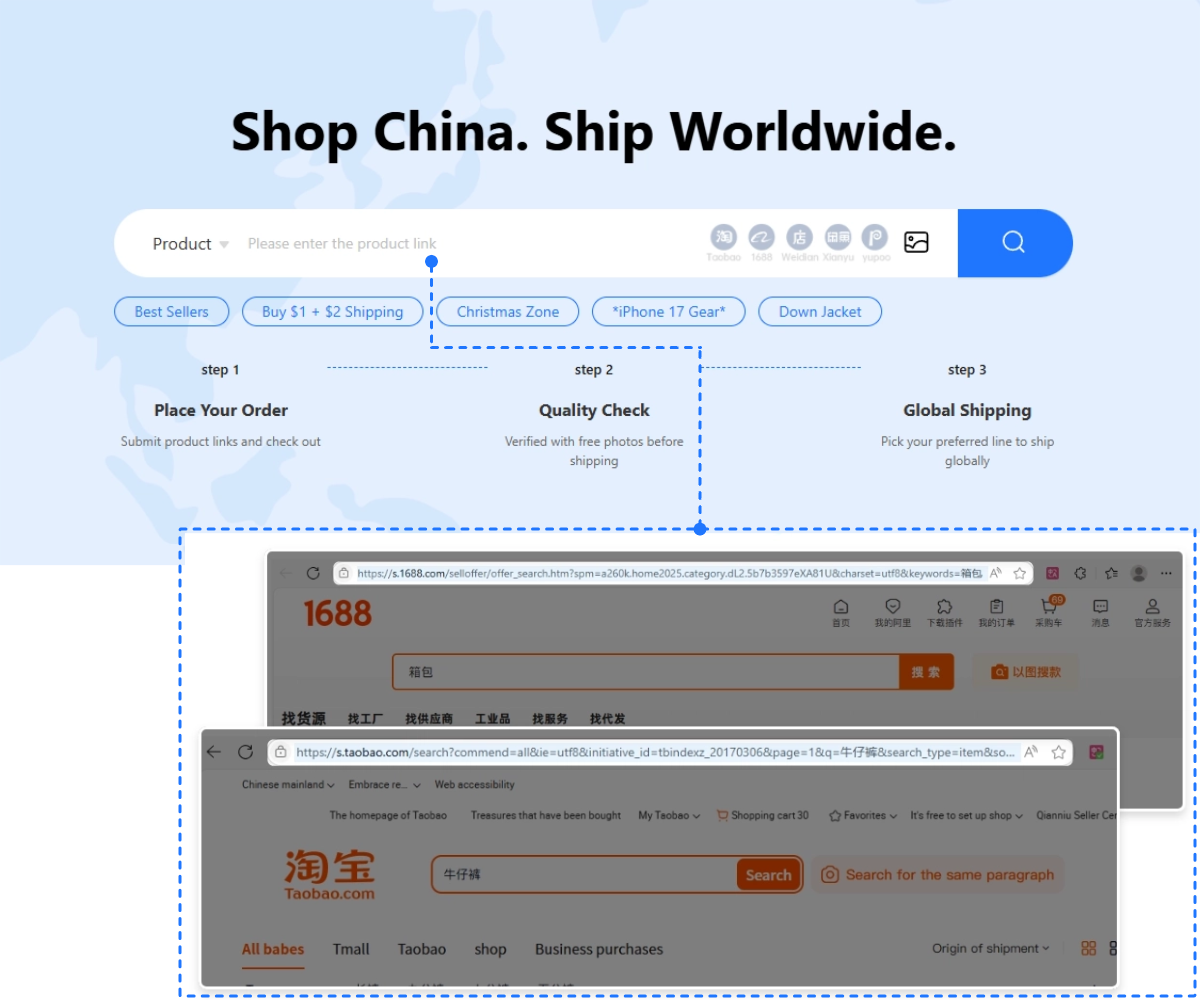
There’s a better entry point that nobody in the Alibaba-centric import world talks about: Taobao and 1688 through a zero-fee agent.
| Taobao/1688 (via Fishgoo) | Alibaba.com |
| Minimum order | 1-50 units | 100-1,000+ units |
| Minimum investment | €30-200 | €500-5,000+ |
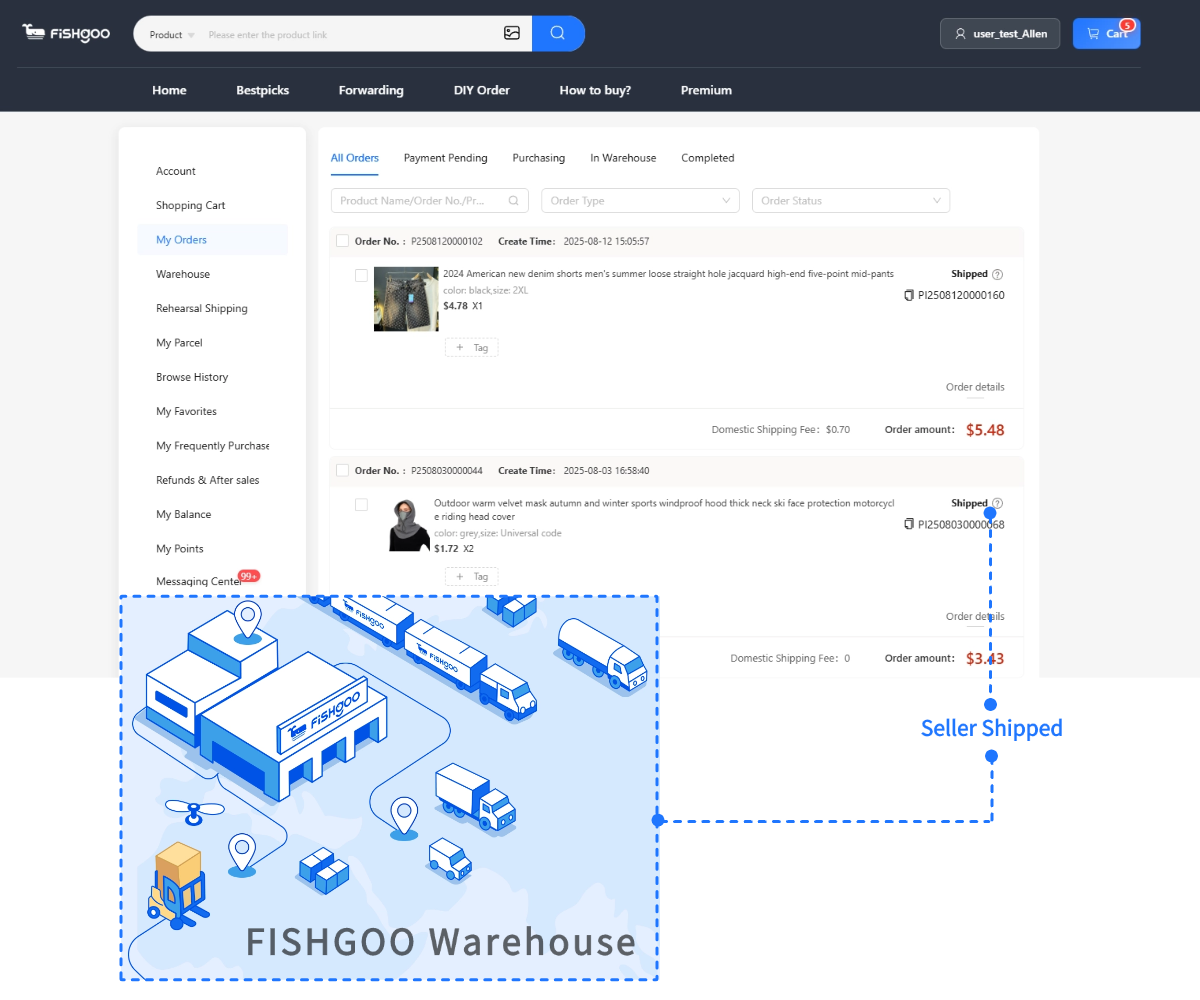
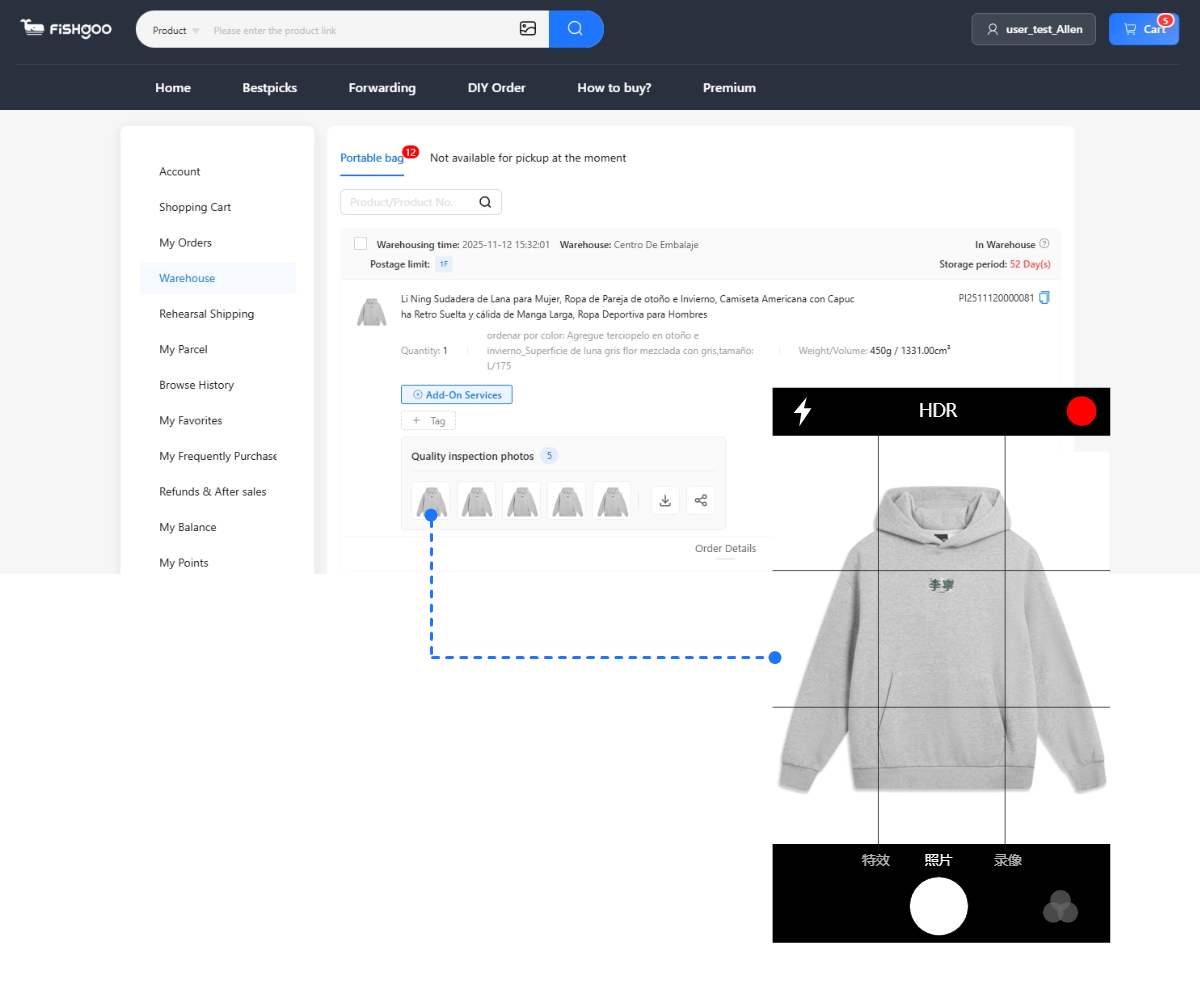
| Quality verification before shipping | 5 free QC photos per item | Usually 0 (you see the product when it arrives) |
| Agent/service fee | 0% (Fishgoo) | N/A (direct negotiation) |
| Time to first units in hand | 2-4 weeks | 4-8 weeks (production + shipping) |
| Risk if product fails market test | €30-200 lost | €500-5,000 lost |
| Product variety for testing | Test 5 products simultaneously | Usually commit to 1 product per order |
| Payment protection | PayPal 180-day buyer protection | Trade Assurance (limited coverage) |
The smart path isn’t Taobao or Alibaba. It’s Taobao/1688 first, Alibaba after validation. Test with 10-50 units at minimal risk. Prove the product sells. Then scale to Alibaba quantities with confidence. Don’t skip step one.
Phase 1: Product Research (Week 1-2, €0 Cost)
Before spending a single euro, identify products with three characteristics that predict resale viability:
Characteristic 1: High source-to-retail markup (3x minimum, 5-10x ideal). Your total landed cost (product + shipping ÷ units + agent fee + customs) needs to be 30% or less of your selling price for healthy margins after platform fees. On Taobao, products at €1-5 that sell locally at €8-25 hit this threshold easily.
Characteristic 2: Lightweight (under 200g per unit). Shipping cost is per-kilogram. Heavy items (ceramic, glass, metal) eat into margins. Lightweight items (accessories, textiles, small tools) ship for pennies per unit when consolidated. A 30-unit order of phone cases (30g each = 900g total) adds maybe €5-8 in shipping. The same quantity of ceramic mugs (300g each = 9kg) adds €40-60.
Characteristic 3: Not brand-dependent. If customers buy the item because of what it is (a minimalist ring, a leather desk mat, a phone stand) rather than whose name is on it, you can source unbranded from Taobao. If customers buy it specifically for the brand (Nike sneakers, Apple accessories), you can’t compete because you can’t offer the brand.
Best starter categories (ranked by margin × weight × ease)
| Category | Taobao source cost | Typical resale price | Margin multiplier | Weight per unit | Resale platform fit |
| Phone cases / accessories | €0.50-1.50 | €4-8 | 4-8x | 30g | eBay, Vinted, Amazon |
| Watch straps | €1-5 | €8-25 | 4-8x | 25g | Etsy, eBay, own site |
| 925 silver jewelry | €2-8 | €15-45 | 4-7x | 10-20g | Etsy, boutiques, Instagram |
| Hair accessories | €0.30-2 | €4-12 | 5-10x | 10-30g | Etsy, Vinted, market stalls |
| Desk accessories | €1-5 | €8-20 | 4-8x | 50-200g | Amazon, Etsy, office supply |
| Skincare tools | €1-3 | €8-25 | 5-8x | 50-100g | Etsy, beauty platforms, spas |
| LED accessories | €1-4 | €8-15 | 4-8x | 50-100g | Amazon, eBay, home décor |
| Makeup brushes/tools | €0.30-2 | €5-15 | 5-10x | 10-50g | Etsy, beauty platforms |
| Stationery / planners | €0.50-3 | €5-15 | 4-8x | 30-100g | Etsy, bookstores, school supply |
During Phase 1, don’t buy anything. Research. Browse Taobao using image search and keyword search. Check prices on your target resale platforms (Etsy, eBay, Amazon). Calculate the margin gap. Build a shortlist of 5-10 product ideas with estimated margins above 4x. This research costs nothing and prevents the expensive mistake of importing a product nobody wants.
→ Best product categories on Taobao
Phase 2: Test Order (Week 2-3, €50-200 Investment)
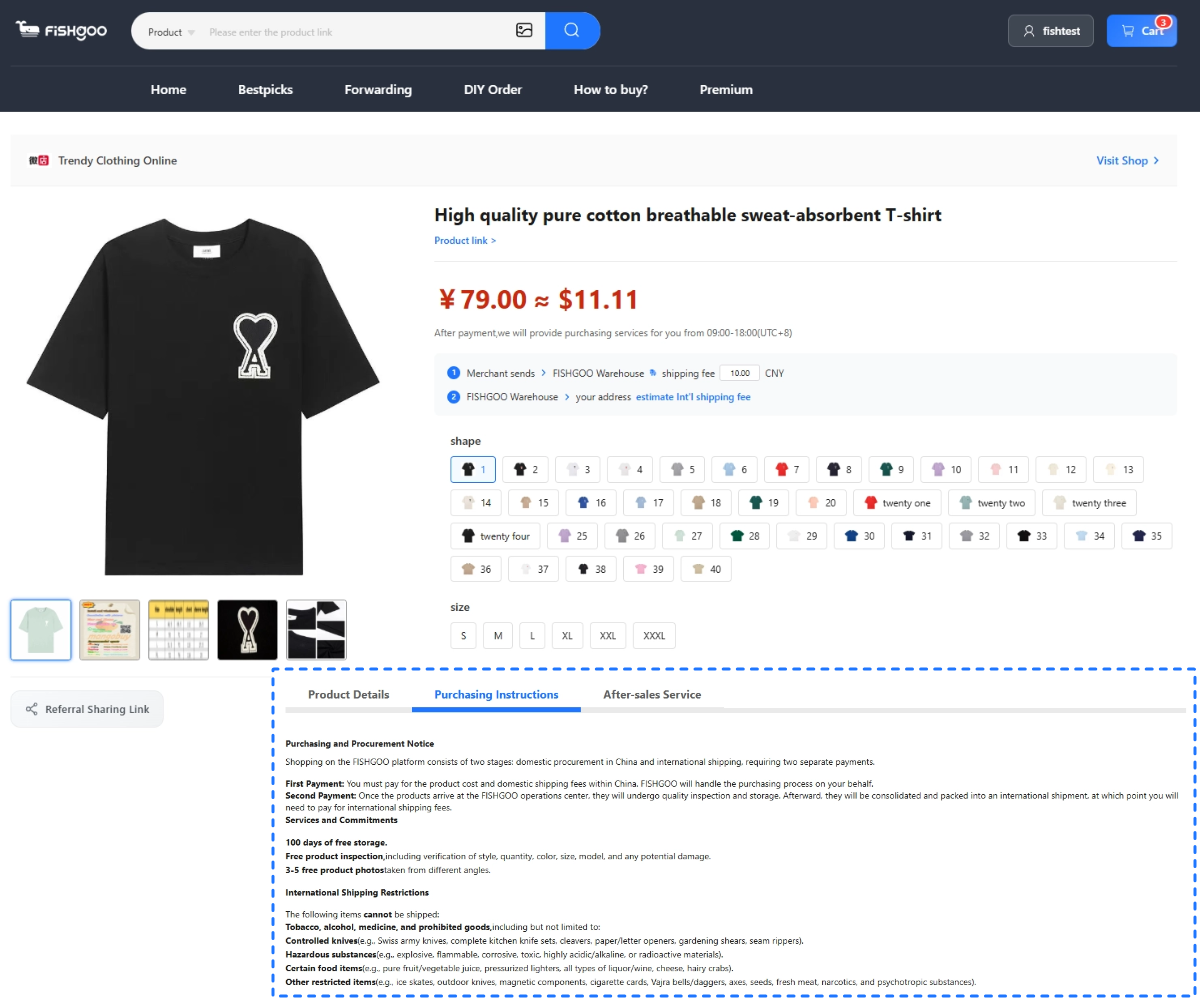
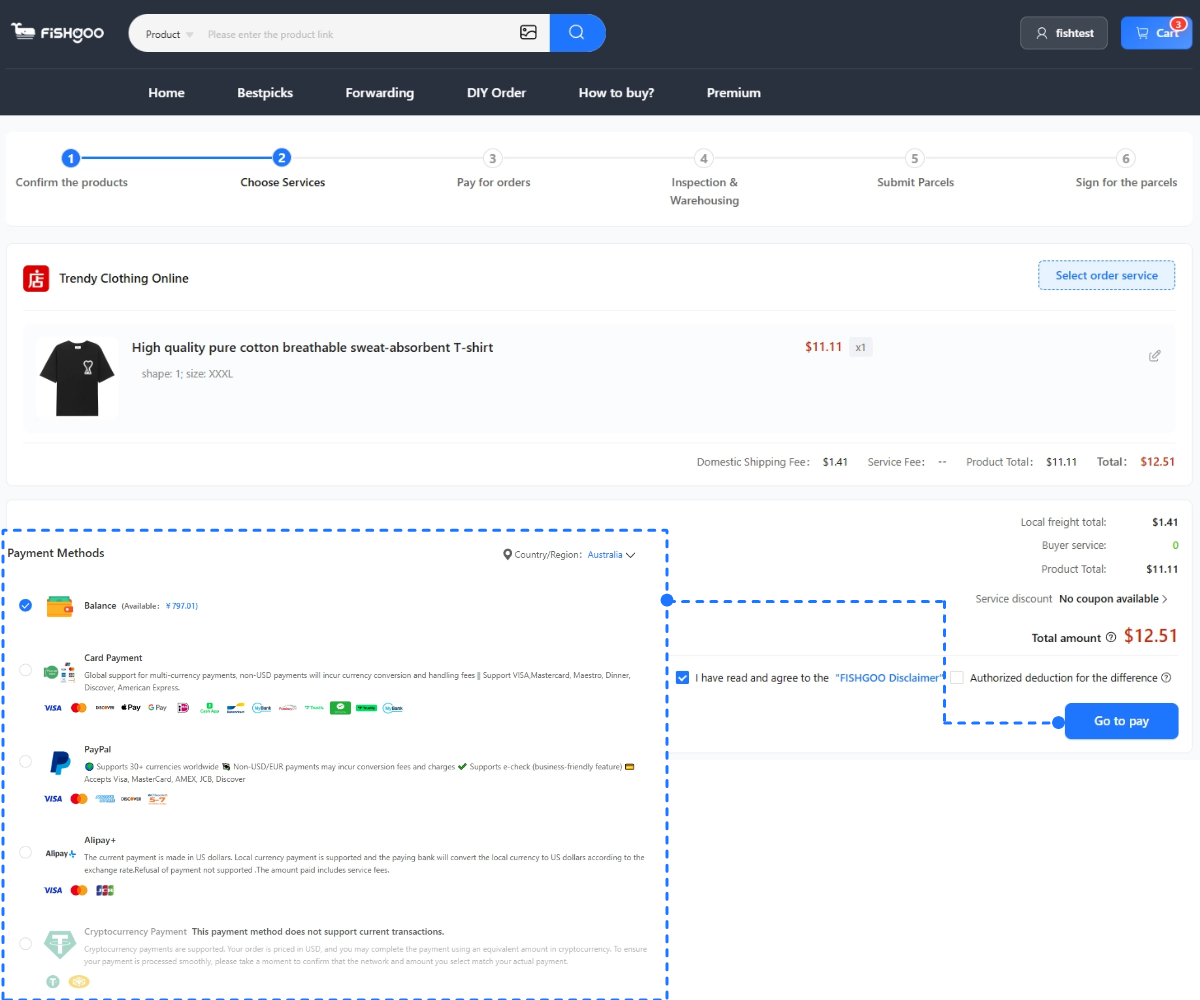
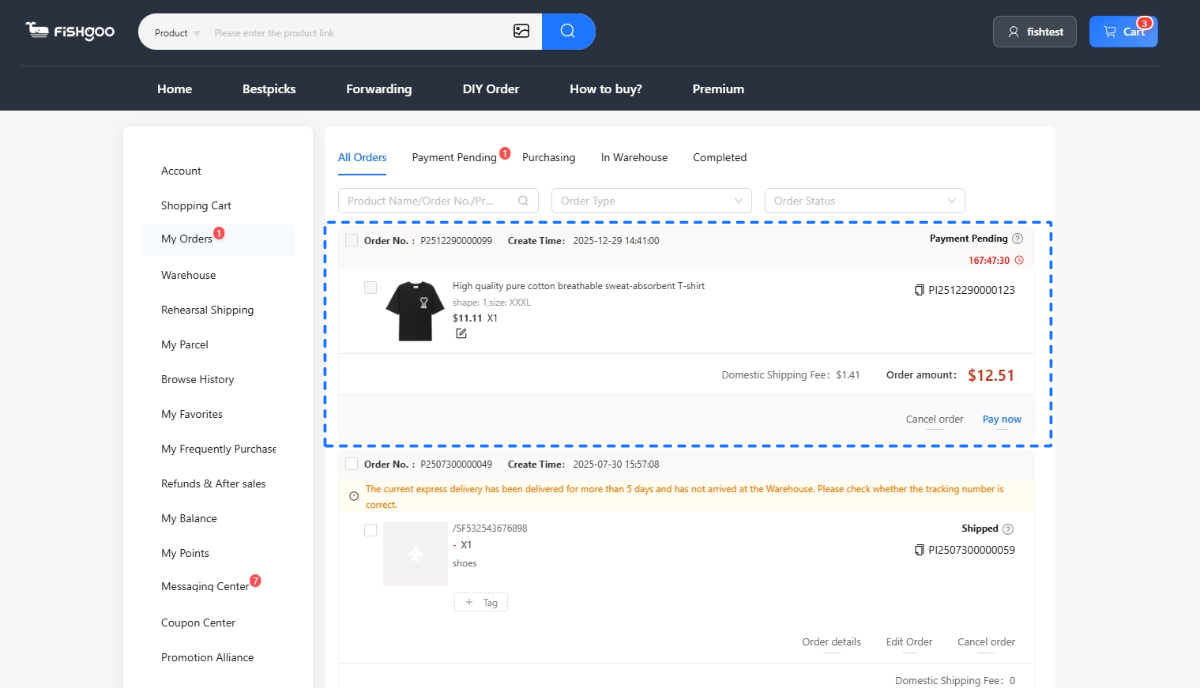
Order 5-20 units of your top 2-3 product picks through Fishgoo. Why Fishgoo specifically for a resale operation:
- Zero service fee — critical for margin-sensitive businesses. A 5% agent fee on your cost basis directly reduces your profit margin on every unit, forever. Over a year of importing, zero fee versus 5% means hundreds of euros kept as profit instead of paid as commission.
- 5 free QC photos per item — verify product quality unit-by-unit before committing to selling it to customers. A defective product sent to a customer = refund + bad review + reputation damage. QC photos are your quality gate.
- 1688 access — same dashboard as Taobao but at wholesale pricing (30-50% below Taobao retail). Once you validate a product on Taobao, reorder from the same product on 1688 at better unit economics.
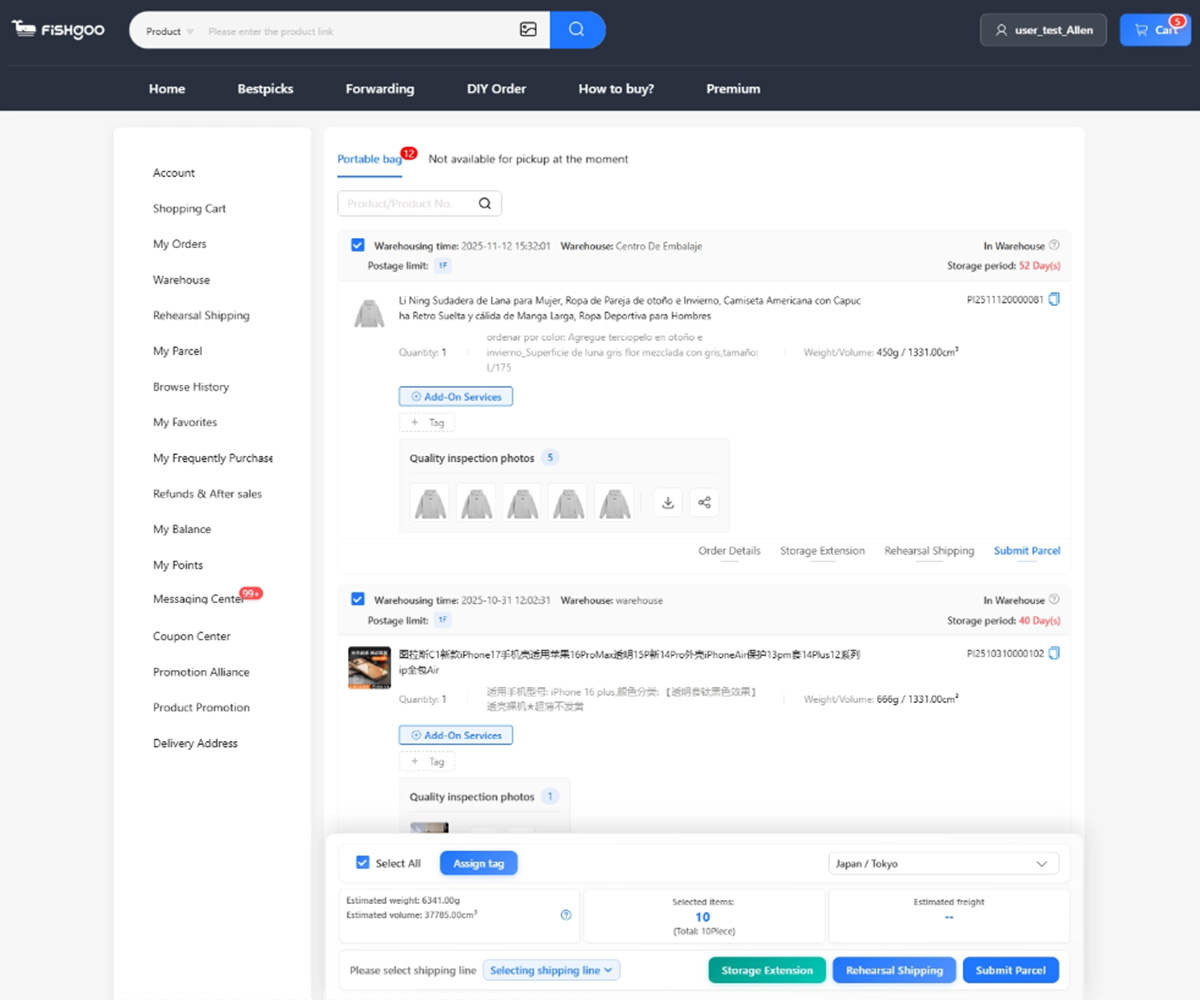
- 100-day warehouse storage — accumulate multiple product tests in the warehouse and ship in one consolidated parcel. This lets you test 3-5 products in one shipping cost instead of five.
- Multi-platform support — Taobao, Tmall, 1688, and Weidian links all work in the same dashboard. Source from any Chinese platform without switching agents.
Your test order validates four things:
- Actual product quality (not listing photos — the real thing under warehouse lighting in QC photos)
- Shipping timeline (how long from order to your doorstep)
- Landed cost per unit (product + shipping ÷ units = your true cost basis)
- Customer demand (do people actually buy this at your target price?)
A test order of 10 units across 2 product types might cost €40-80 in products plus €15-25 in consolidated shipping. Total risk: €55-105. If both products validate, you’ve launched a business for under €100. If neither validates, you’ve lost less than a night out and gained valuable market data.
→ First order checklist — every step
→ How to build a consolidated haul
Phase 3: Test Selling (Week 4-6)
Your test inventory is in hand. You’ve inspected every unit through QC photos and in person. Now find out if anyone besides you thinks these products are worth buying.
List on 1-2 platforms to start. Each platform has a different audience and pricing dynamic:
Vinted / Depop — Lowest barrier to entry. Fashion-conscious audience. List in 2 minutes. No listing fees on Vinted (buyer pays service fee). Best for: clothing accessories, jewelry, bags, trendy items. Price sensitivity: moderate (buyers expect deals but accept 3-5x markup on unique items).
eBay — Widest general audience. Established buyer trust. Small listing fees. Best for: phone accessories, tech gadgets, desk accessories, broad-appeal items. Price sensitivity: high (eBay buyers comparison-shop aggressively).
Etsy — Curated, boutique-oriented audience. Buyers pay premium for aesthetics and presentation. Higher fees (~13-15% total) but higher average order value. Best for: jewelry, skincare tools, home decor, stationery, anything that photographs well. Price sensitivity: low (Etsy buyers pay for perceived quality and curation).
Facebook Marketplace / Instagram — Zero listing fees. Direct customer relationship. Requires more marketing effort (you’re driving traffic, not riding a platform’s audience). Best for: local sales, niche communities, repeat customers.
Pricing rule: Set your price at 3-5x your total landed cost (product + shipping per unit). If your 10 watch straps cost €30 landed (€3/unit including shipping share), price at €10-15 each. If they sell within 2 weeks at that price, the product is validated. If they sit for a month with zero interest, either the price is wrong, the photos are wrong, or the product doesn’t have demand — iterate or move on.
Photography matters more than product. The same €2 ring photographed on a kitchen counter looks like a €3 trinket. The same ring on a marble tray in window light looks like a €25 artisan piece. Invest 30 minutes per product in decent photos — phone camera, natural light, clean background. This single variable determines whether your markup is 3x or 8x.
→ DIY product photography with €10 of Taobao props
Phase 4: Scale Winners, Kill Losers (Month 2-3)
After 4-6 weeks of test selling, you’ll have data. Some products sold quickly. Some didn’t. The data tells you what to do next.
If a product sold out in 2-3 weeks: Reorder immediately. This time, source from 1688 instead of Taobao for wholesale pricing. A product that worked at 10 units from Taobao at €3/unit might cost €1.80/unit from 1688 at 50 units. Your margin expands 40%+ just from the sourcing platform change. Order 30-50 units through the same Fishgoo account — 1688 links work in the same dashboard.
If a product sold slowly (50% sold in 4 weeks): Before killing it, try: better photos, lower price by 10-15%, listing on a different platform, different product description. Sometimes a product with real demand just needs a presentation adjustment. Give it one more iteration before abandoning.
If a product didn’t sell: Drop it. No attachment, no sunk-cost fallacy. Use the remaining inventory as gifts, keep them for personal use, or sell at cost to recoup. The €15-30 you “lost” bought you the knowledge that this product doesn’t work. That knowledge is cheap at the price.
Build a portfolio of 3-5 proven products rather than constantly chasing new ideas. Depth beats breadth in the early stages. A shop with 3 products that reliably sell 15 units/month each is more profitable and less work than a shop with 15 products that each sell 2 units/month.
Phase 5: Systematize (Month 3+)
Once you have repeatable products and reliable channels, the game shifts from “experimenting” to “operating”:
Reorder triggers. When stock drops below 10 units (or whatever your 2-week supply is), place a reorder through Fishgoo. Build a rhythm: order the first week of the month, receive by the third week, sell during weeks 3-4 while the next order is in transit. This pipeline keeps you in stock continuously.
Better product photos. Once a product is validated, invest 1-2 hours in professional-quality photography. A lightbox (€3 from Taobao), some textured backdrops (€1-2), and good window light produce images that increase conversion rate by 30-50% versus phone snapshots. Full photography guide here.
Expand sales channels. A product that sells on Etsy probably also sells on Amazon, eBay, and your own Shopify site. Each additional channel multiplies revenue without multiplying sourcing work. If volume justifies it, consider Amazon FBA for the fulfillment automation.
Consider private labeling. Adding your own brand tag, packaging, or custom design to an existing product increases perceived value by 20-30% and prevents direct price comparison with generic alternatives. Many Taobao and 1688 sellers offer custom labeling at minimal additional cost (usually ¥0.5-2 per unit for a brand tag or sticker).
Track your numbers. Use a simple spreadsheet or the profit calculator framework to track: product cost, shipping cost per unit, platform fees, return rate, and net profit per product per month. The numbers tell you which products to double down on and which to sunset.
Real Numbers: My First 6 Months
| Month | Products sold | Revenue | Cost (product + shipping) | Platform fees | Profit | Hours/week |
| 1 | 10 phone cases | €40 | €22 | €0 (Vinted) | €18 | 2 |
| 2 | 25 mixed (cases + straps) | €180 | €68 | €12 | €100 | 5 |
| 3 | 40 items (3 categories) | €340 | €115 | €22 | €203 | 6 |
| 4 | 55 items (3 categories + seasonal) | €460 | €155 | €30 | €275 | 7 |
| 5 | 65 items | €520 | €175 | €35 | €310 | 8 |
| 6 | 75 items | €580 | €185 | €38 | €357 | 8 |
| 6-month total | 270 items | €2,120 | €720 | €137 | €1,263 | avg 6 |
Not glamorous numbers. Not “quit your job” numbers. But €1,263 in cumulative profit over 6 months from an average of 6 hours per week is €8.10/hour of actual work — a decent return for something I do from my couch while watching Netflix. And the trajectory was upward: months 7-12 averaged €450-600/month as I found better products, optimized listing photos, and built repeat customer relationships.
The key insight from these numbers: profit scaled faster than effort. Month 1 took 2 hours for €18. Month 6 took 8 hours for €357. The per-hour return improved 5x because the systems (sourcing, photography, listing templates) were built once and reused. The work shifted from “figuring things out” to “executing a repeatable process.”
The 7 Mistakes That Cost Me Money (So They Don’t Cost You)
Mistake 1: Starting with Alibaba. My very first import attempt — before the phone case experiment — was a Alibaba order of 200 bamboo phone stands. €380 investment. They arrived 7 weeks later. The quality was adequate but the market was saturated. I sold maybe 60 over 4 months at thin margins and donated the rest. The same test through Taobao would have cost €25 for 10 units and taught me the same lesson in 3 weeks instead of 4 months.
Mistake 2: Using an agent with service fees. For my first 4 months I used an agent charging 5%. On €720 of product purchases, that was €36 in commission — not catastrophic, but not nothing. Switching to Fishgoo at zero fee immediately improved margins on every future order. That €36 could have bought 18 more phone cases worth €72 in revenue.
Mistake 3: Bad product photos. My first Etsy listings used photos taken on my kitchen table under ceiling light. They looked terrible. Sales were near zero. I spent €3 on a Taobao lightbox and €1 on a marble-look backdrop, reshot everything, and sales jumped from 2/week to 8/week on the same products at the same prices. Photography is the multiplier that most beginners underinvest in.
Mistake 4: Ignoring QC photos. Month 2, I approved a batch of 20 rings without checking QC photos carefully. Three had visible tarnish, two had crooked settings. I shipped all 20 to customers. Three got returned with negative reviews. The QC photos — which I had access to for free — showed the defects clearly. I just didn’t look. Two minutes of QC review per batch prevents hours of customer service headaches.
Mistake 5: Selling only one product. Month 3, my phone case sales slowed because a competitor started undercutting by 20%. If cases were my only product, the business would have died. Having watch straps and desk accessories as backup meant the business survived while I adjusted pricing. Never depend on a single product line.
Mistake 6: Not calculating landed cost accurately. I forgot to include Etsy’s payment processing fee (4% + €0.30) in my margin calculation for the first 2 months. My “60% margin” was actually 48% after all fees. Still profitable, but the pricing mistake meant I’d undercharged by roughly €0.80/unit on 50 sales = €40 in missed profit. Calculate all cost layers before setting prices.
Mistake 7: Ordering during Chinese New Year. I placed a restock order on January 28 without checking the Taobao calendar. CNY holiday: January 25 – February 10. Nothing shipped for 3 weeks. I ran out of stock on my best-selling product during the entire Valentine’s gift window. Plan orders around Chinese holidays.
→ 12 common Taobao mistakes
The Zero-Fee Advantage for Business Users
Agent service fees matter exponentially more for resellers than for personal shoppers. Here’s why:
| Annual sourcing volume | 5% agent fee | Fishgoo (0%) | Annual savings |
| €500 (hobbyist) | €25 | €0 | €25 |
| €2,000 (side hustle) | €100 | €0 | €100 |
| €5,000 (active seller) | €250 | €0 | €250 |
| €10,000 (serious business) | €500 | €0 | €500 |
| €20,000 (scaling operation) | €1,000 | €0 | €1,000 |
At €5,000 annual sourcing — a realistic number for a 6-month-old side hustle — the zero-fee advantage is €250/year. That’s 50-100 extra units of free inventory, or roughly one month’s profit preserved. At €20,000 annual sourcing, you’re saving €1,000 — enough to fund an entire product line expansion.
The exchange rate margin (~1-1.5% on Fishgoo) is the only agent-related cost, and it’s the lowest in the industry. Combined with zero service fee, Fishgoo delivers the lowest total cost basis of any Taobao/1688 agent — which matters enormously when your margins are your business.
→ Full agent fee comparison
→ Cheapest agent breakdown
Legal and Tax Basics (Not Legal Advice, Just Orientation)
I’m not a lawyer or accountant. These are general orientations — consult a professional for your specific situation.
Do you need a business license? For small-scale personal imports under your country’s duty-free threshold (US: $800 per shipment, EU: €150 product value per shipment), no license is typically required. Once you’re importing regularly and selling commercially, most countries require business registration. The threshold varies: in France, auto-entrepreneur status starts at €0 in registration fees and takes 15 minutes online. In the US, a sole proprietorship or LLC is similarly straightforward.
Do you owe taxes on resale income? Yes — resale income is taxable in virtually every jurisdiction. Track your revenue and expenses from day one. The good news: your Taobao purchases, shipping costs, platform fees, packaging supplies, and photography props are all deductible business expenses that reduce your tax liability. A simple spreadsheet separating revenue from expenses is sufficient for small-scale operations.
Customs and import duties. For US buyers under $800 per shipment — no duty. For French / German / EU buyers under €150 product value per shipment — VAT applies (handled by tax-free shipping lines) but no customs duty. Structuring orders to stay under these thresholds is standard practice and completely legal.
→ Understanding all cost layers including customs
Scaling Beyond Side Hustle: The Inflection Points
The transition from “side hustle” to “real business” happens at predictable inflection points:
Inflection 1: €500/month profit (month 4-8). You’ve proven the model. 3-5 validated products. Consistent weekly sales. At this point, you start thinking about: business registration (for tax purposes), dedicated bank account, and possibly your own brand identity.
Inflection 2: €1,000/month profit (month 6-12). The business pays meaningful bills. You start considering: quitting a part-time job, hiring help for packaging/shipping, expanding to Amazon FBA for automation, or developing private-label products with your own branding.
Inflection 3: €2,000+/month profit (month 12+). This is where the Alibaba path opens up naturally. You have data on what sells, established customer relationships, and enough volume to justify Alibaba’s minimum orders. The factory-direct pricing at 100-500 unit quantities drops your cost basis another 20-40% below 1688 pricing, compounding your margins further.
Not everyone reaches Inflection 3 — and not everyone should try. A stable €500-800/month side hustle that runs on 6-8 hours/week is a perfectly valid end state. The point is that the option to scale exists because you built the foundation on validated products and reliable sourcing.
Search Terms for Product Research on Taobao
| Product category | Taobao search term | 1688 search term |
| Phone cases | 手机壳 批发 | 手机壳 工厂直销 |
| Watch straps | 表带 批发 | 表带 厂家 |
| Silver jewelry | 925银饰 批发 | 925银饰 工厂 |
| Hair accessories | 发饰 批发 | 发饰 厂家直销 |
| Desk accessories | 桌面收纳 批发 | 办公用品 工厂 |
| Skincare tools | 美容工具 刮痧板 | 刮痧板 工厂 |
| LED accessories | LED灯带 批发 | LED灯带 工厂 |
| Makeup brushes | 化妆刷 批发 | 化妆刷 厂家 |
| Stationery | 文具 ins风 批发 | 文具 工厂直销 |
Add “批发” (wholesale) to Taobao searches to surface sellers offering better per-unit pricing on larger quantities. On 1688, add “工厂” (factory) or “厂家直销” (factory direct) to find manufacturers rather than resellers.
→ All Taobao search methods
→ Image search for product sourcing
FAQ
-
Do I need a business license to start importing?
Not for initial test orders under personal import thresholds (US $800, EU €150 per shipment). For ongoing commercial activity, register a business — it’s inexpensive and fast in most countries (€0 for French auto-entrepreneur, $50-500 for US LLC depending on state). Start selling first, register when you have consistent revenue.
-
How much money do I realistically need?
€50-100 for a first test batch through Fishgoo (zero fee = entire budget goes to product and shipping). €200 gives you enough for 3-5 product tests simultaneously. Compare to Alibaba’s €500-5,000 minimum. The Taobao/1688 entry point is accessible to virtually anyone.
-
Should I use Taobao or 1688 for reselling?
Both — in sequence. Taobao for initial test orders (5-10 units at retail pricing). 1688 for scale orders (20+ units at wholesale pricing, 30-50% below Taobao). Both accessible through the same Fishgoo account.
-
What’s the realistic timeline to profit?
First profit: month 1 (test batch sells). Sustainable €200-400/month: month 3-4. Scaling to €500+: month 5-8 depending on product validation speed and time invested. This is not passive income — it requires consistent weekly effort of 4-8 hours. The effort compounds as systems get built.
-
What if my products don’t sell?
A €30-50 test batch that fails teaches you what the market doesn’t want — valuable data at a low price. Use the remaining inventory as gifts, keep for personal use, or sell at cost. Then test a different product. Most successful importers test 5-10 products before finding their first consistent winner. The Taobao/1688 model keeps each test cheap enough that multiple failures don’t drain your budget.
→ Start your first import test — Fishgoo, zero fee, 1688 access, PayPal protected
→ Selling on Etsy from Taobao
→ Taobao to Amazon FBA
→ Small quantity wholesale from 1688
→ Profit margin calculator
→ Reseller strategy guide
→ Complete agent overview
→ First order checklist