Goofish Agent 2026: Buy from Xianyu (China’s Biggest Second-Hand App) & Ship Worldwide
Last updated: August 2026
So you found something on Goofish — maybe a pair of barely-worn sneakers at half the retail price, or a vintage lens some seller in Guangzhou is clearing out — and then you hit the wall. The app is entirely in Chinese. It wants a mainland phone number. Payment runs through Alipay, tied to a Chinese ID. And the seller only ships within China anyway.
A Goofish agent gets you past every one of those walls. In plain terms, a Goofish agent (Fishgoo is one) is a purchasing service based in China that buys the item for you, receives it at their warehouse, photographs it so you can check the condition before it travels, and ships it to your door in France, Germany, the UK or anywhere else. You pay them; they deal with the Chinese side. That’s the whole idea. The rest of this guide walks through how it works step by step, what it actually costs in euros, and how to dodge the traps that catch first-timers on a second-hand marketplace.
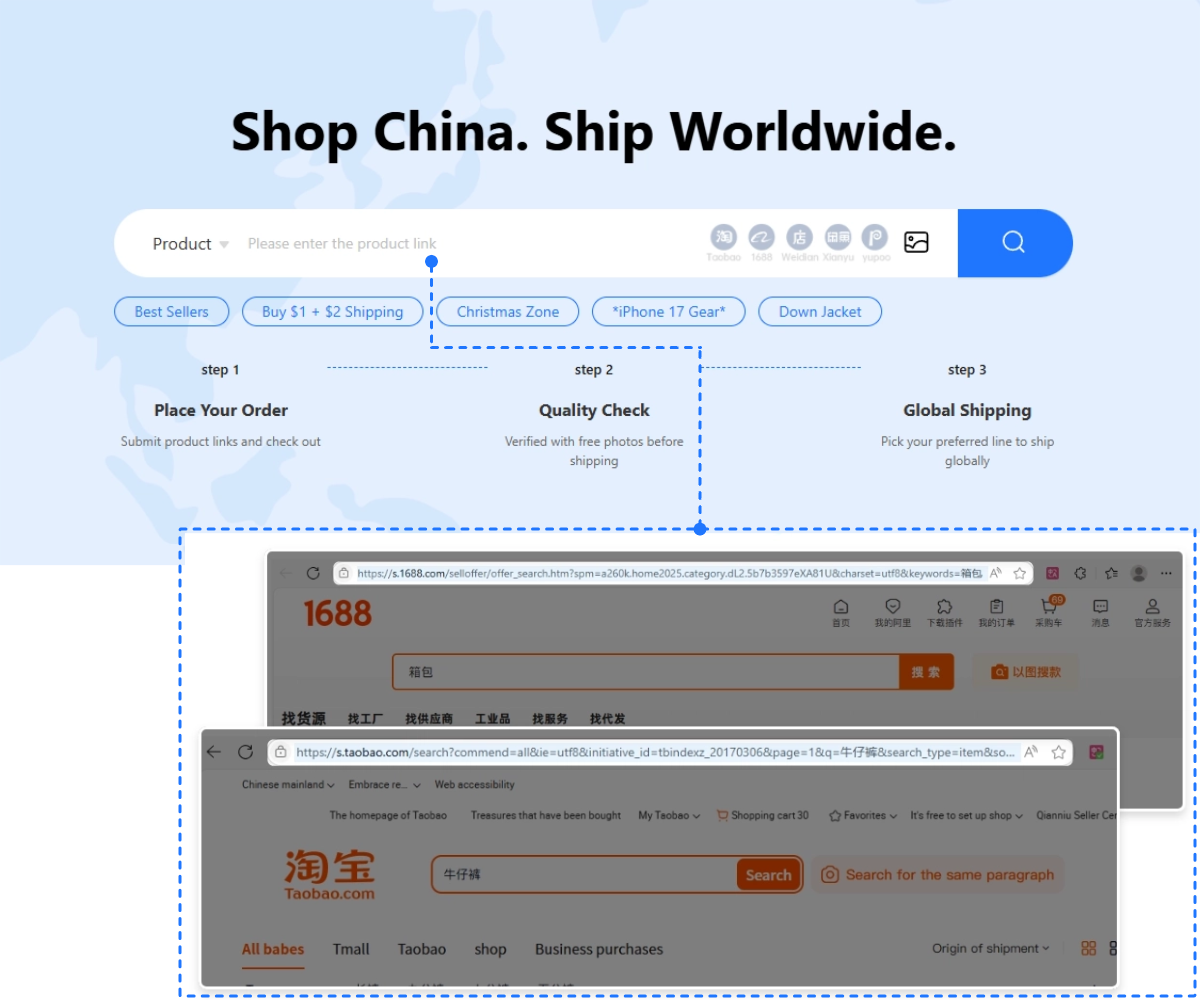
Found something on Xianyu? Paste the link.
We’ll open the item on Fishgoo so you can see the price and order it. Taobao, Tmall, 1688 and Weidian links work too.
What is Goofish (Xianyu)?
Short version: Goofish is the international name for Xianyu (闲鱼), China’s largest second-hand and peer-to-peer marketplace, owned by Alibaba. Think of it as the Chinese answer to eBay and Vinted rolled together, except the scale is enormous and most listings never leave the country.
It launched back in 2014 and has grown into the default place mainland shoppers go to offload things they no longer want — and to hunt for deals. The listings are overwhelmingly from private individuals rather than shops, which is exactly why the prices can be so good and why the process is fiddly. You’re buying from a person, not a storefront. That person has a rating, a chat window, and usually zero interest in dealing with a foreign buyer directly.
People shop Xianyu for second-hand sneakers, streetwear, cameras and lenses, trading cards, gaming handhelds, figures and collectibles, pre-owned luxury, and the occasional new-in-box item a seller received as a gift and wants to flip. If you’ve spent time around the Taobao purchasing scene, Goofish is the sister platform where the used and one-off stuff lives.
Why can’t you buy from Goofish directly?
You can’t check out on your own from outside China because four separate barriers stack up, and clearing one doesn’t clear the rest.
- Language. There’s no English version of the app — here’s how to use Goofish in English. Listings, seller chat, dispute forms are all Chinese, and machine translation on a phone screen mid-negotiation is painful.
- Phone number. Registration needs a mainland (+86) mobile number to receive verification codes.
- Payment. Checkout runs through Alipay, and a real-name Alipay account requires a Chinese national ID and usually a mainland bank card. Foreign cards don’t slot in cleanly.
- Shipping. Even if you got through the first three, almost no Xianyu seller ships internationally. They post to a domestic address and that’s it.
This is the gap a purchasing agent exists to fill. The agent already has the Chinese account, the verified Alipay, and a warehouse address inside China. You hand them a link; they become the local buyer you can’t be.
What does a Goofish agent actually do?
Here’s the flow from your side, start to finish. It’s less complicated than the wall of Chinese text makes it look.
- You send the link. Copy the Goofish listing URL (or share code) and drop it into the agent. Fishgoo reads the Chinese listing for you and confirms price, condition notes, and whether the seller looks legit.
- The agent buys it. They pay the seller with their Alipay and give the seller the warehouse address as the delivery point.
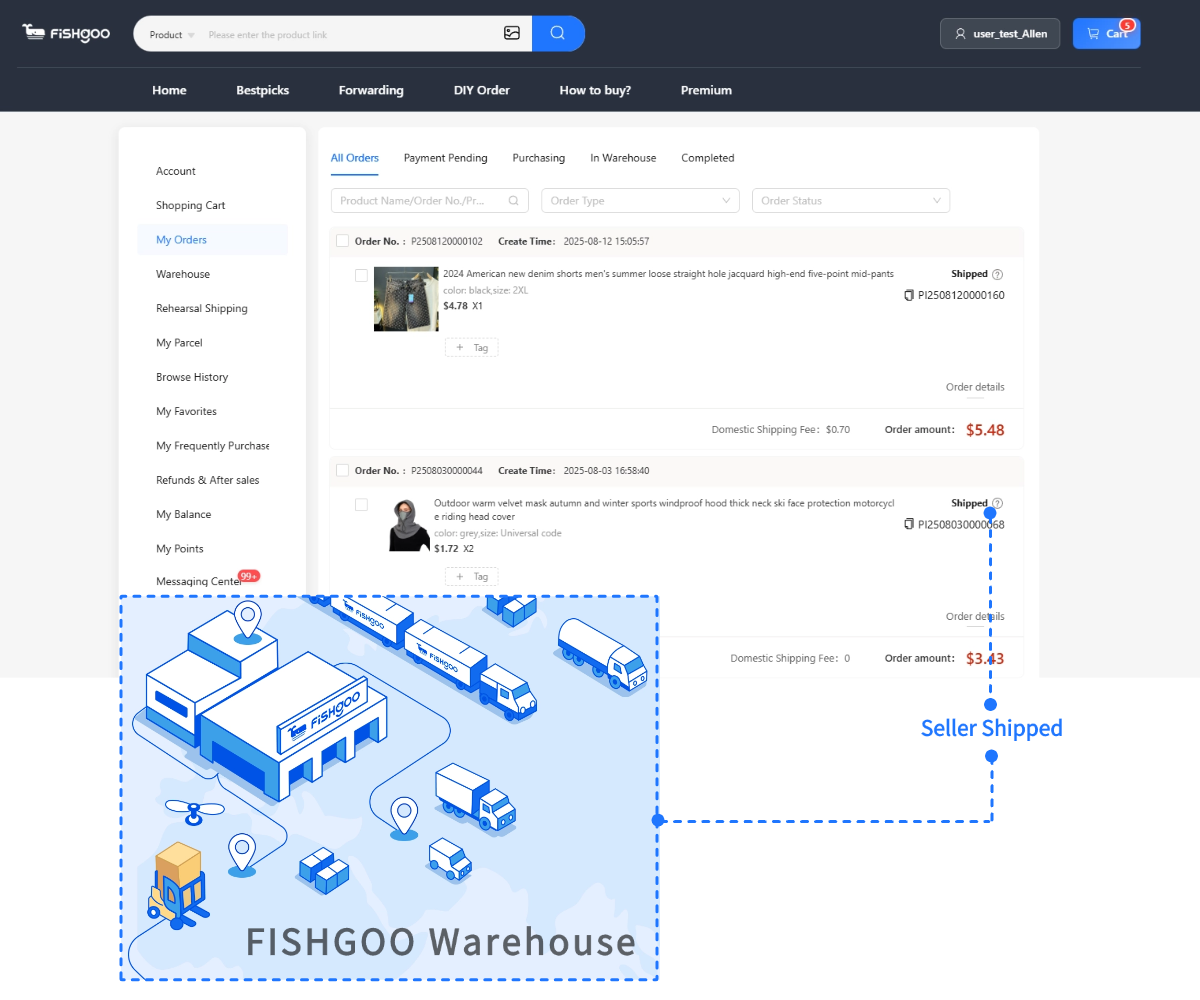
- The item lands at the warehouse. Domestic Chinese shipping is fast and cheap, so this usually takes a couple of days.
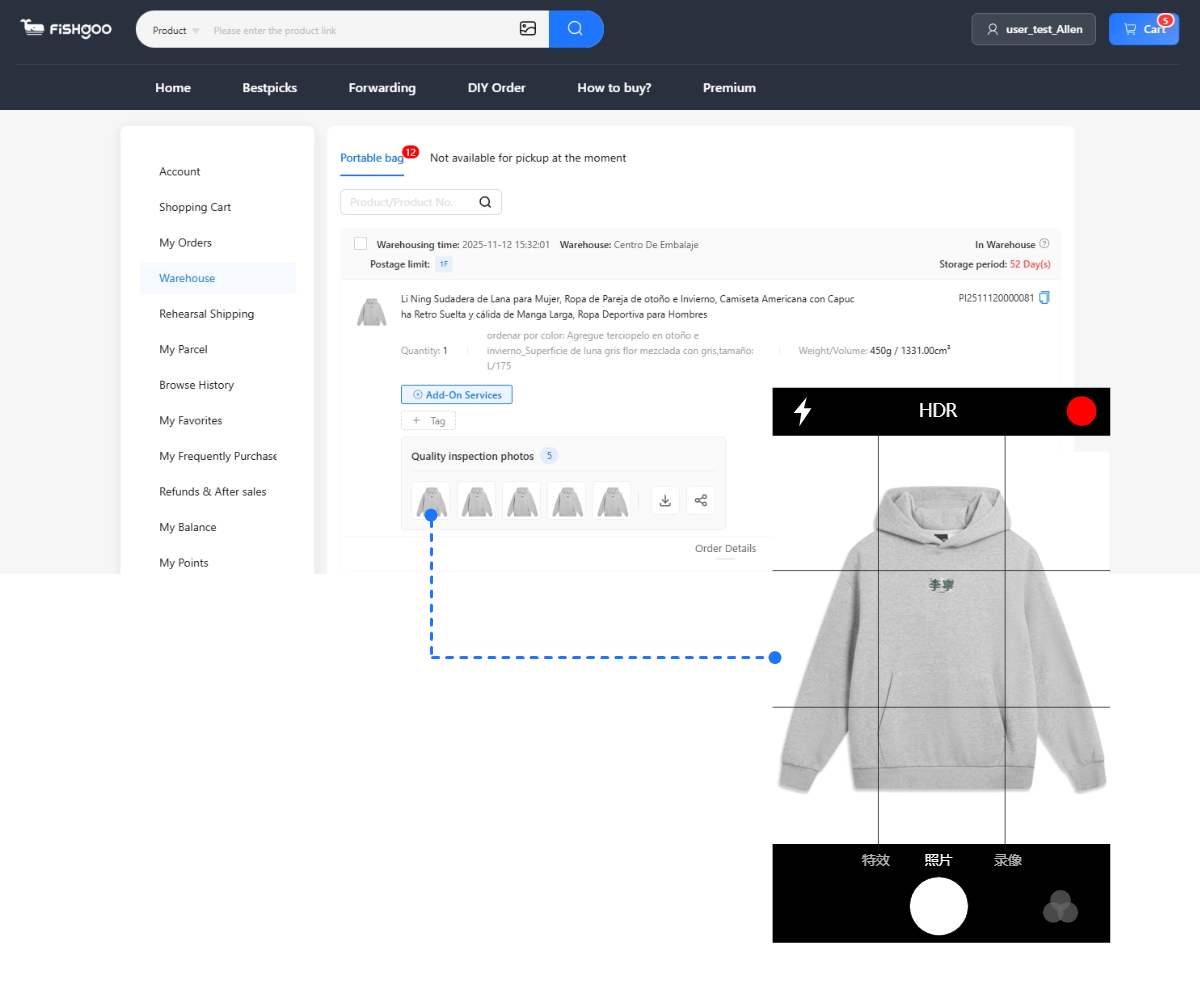
- QC photos. This is the step that matters most on second-hand goods. The warehouse photographs what actually arrived — the real condition, any flaws, whether it matches the listing. You see it before it crosses a continent. Fishgoo’s QC photo service is included here, not a paid add-on.
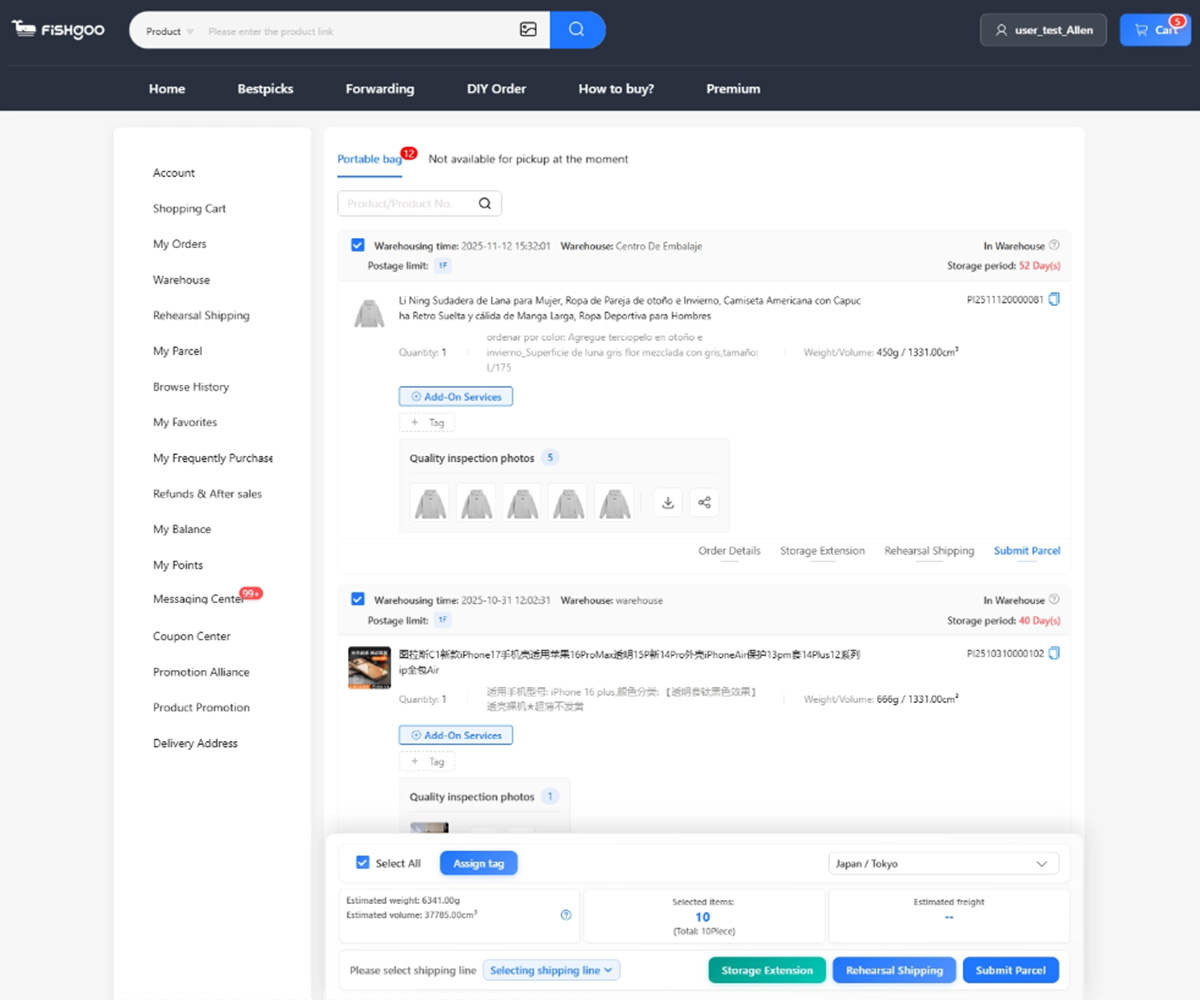
- Consolidation. Bought from three different sellers? All three parcels sit in your warehouse box and get combined into one shipment. That’s the single biggest way to cut international postage — you pay to send one parcel, not three.
- Repack and ship. The team strips excess packaging (repacks) to shrink the volumetric weight, then hands it to an international courier bound for Europe.
Language, payment, a domestic address, seller communication, condition checks, and shipping — the agent covers all of it. Your job is picking the item and clicking pay.
How to buy from Goofish with Fishgoo: step by step
If you want the practical version you can follow today, this is it. We keep a deeper walkthrough on the how to buy from Goofish page, but the core is six moves.
- Find your listing in the Goofish app or on the web and copy its link.
- Create a Fishgoo account and paste the link into the order form.
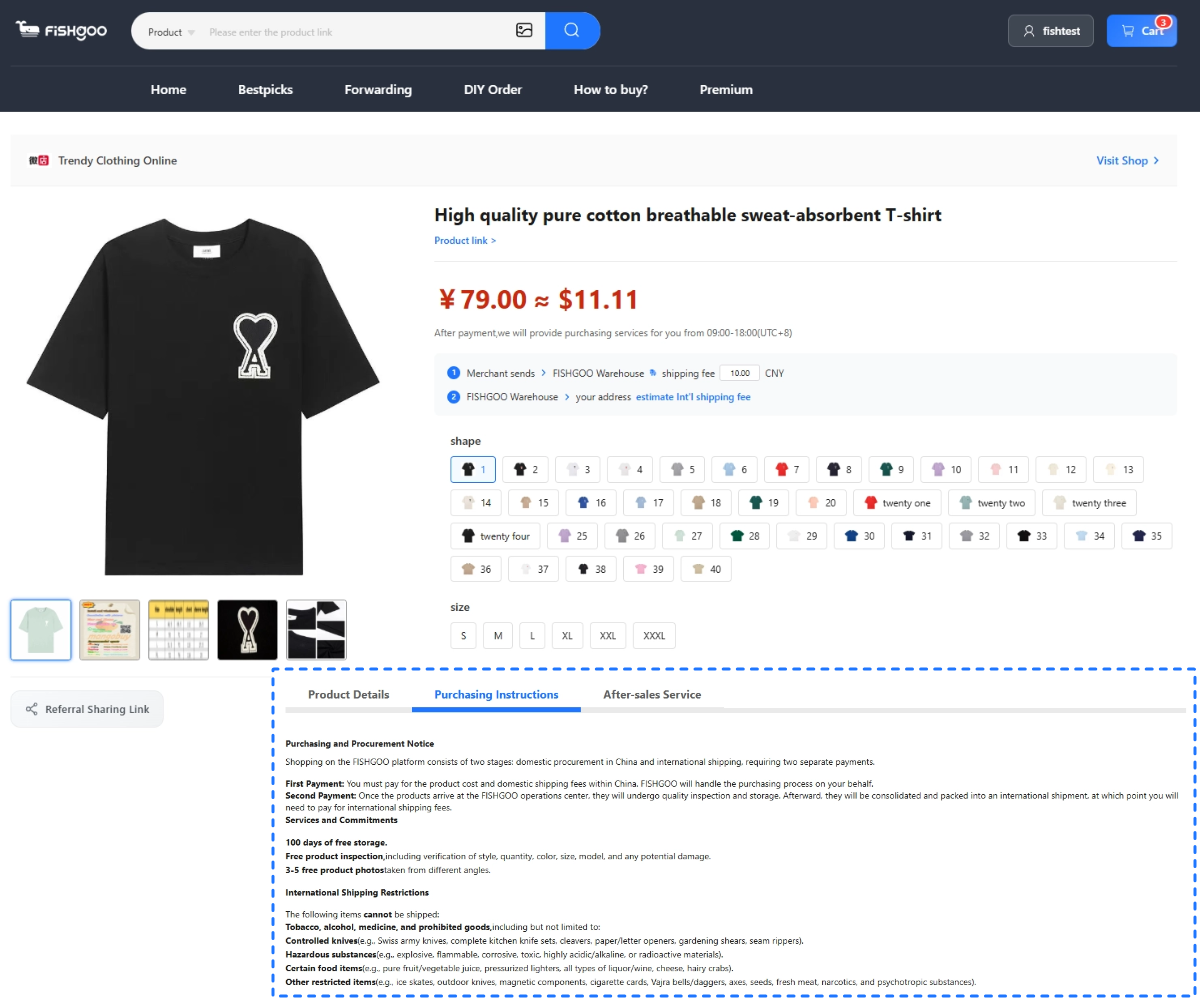
- Fishgoo quotes you the item price plus the seller’s domestic shipping, in euros.
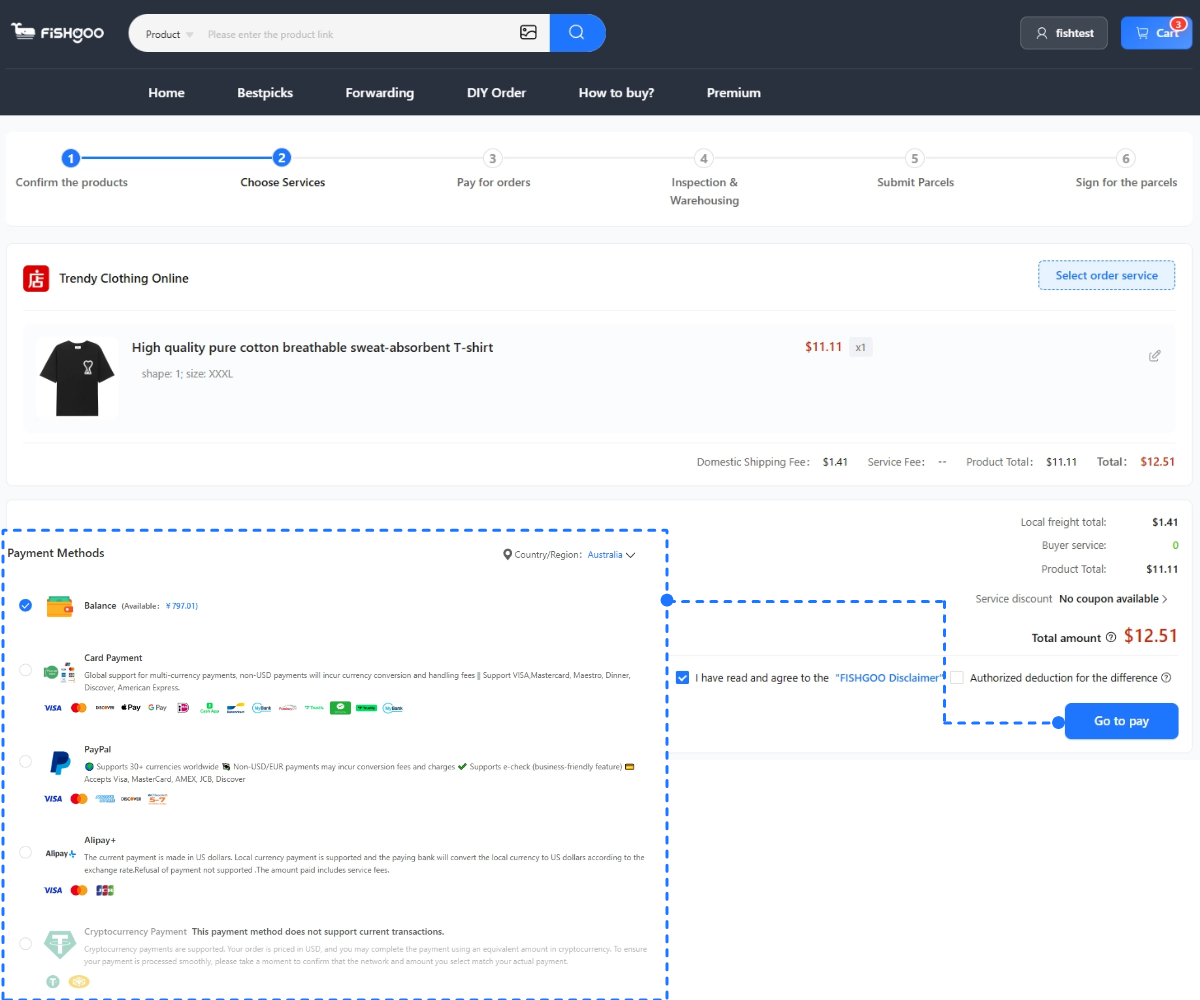
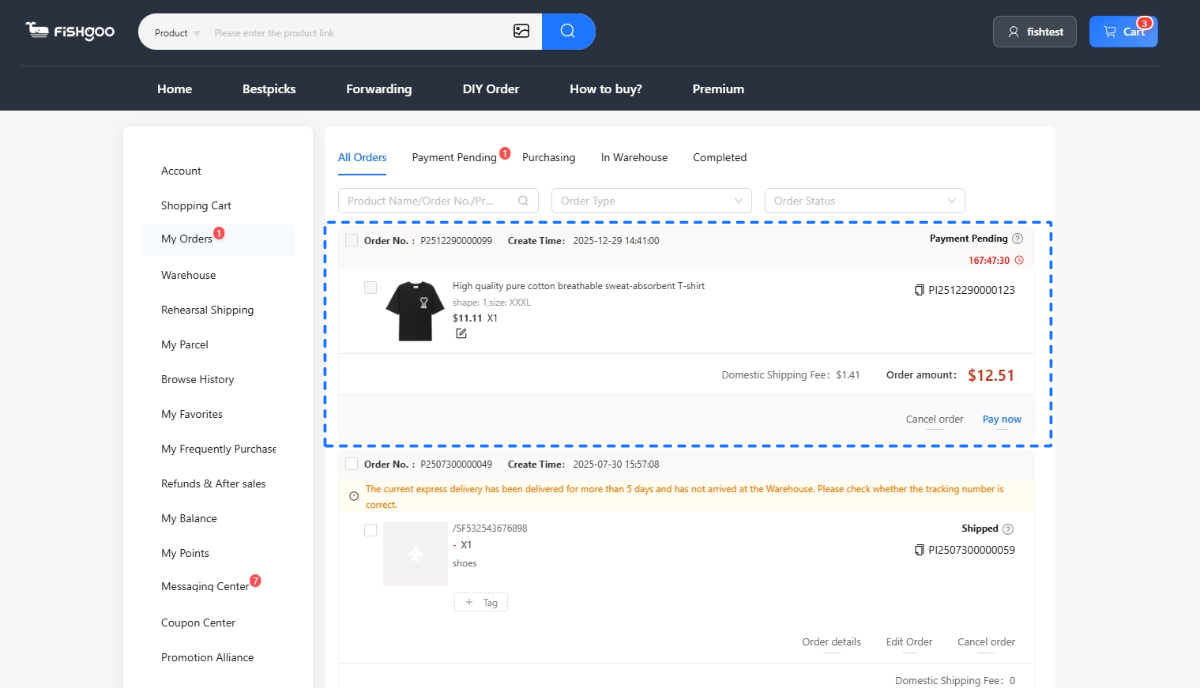
- You pay for the purchase. The team buys it and it ships to the warehouse.
- You get QC photos. Approve them, or raise an issue if the condition is off.
- Choose your international shipping line, pay the postage, and track the parcel to your door.
First haul nerves are normal. Start with one cheap item to see the whole loop run before you commit to a bigger order.
Goofish agent fees: what you actually pay in 2026
The honest answer: your bill has four or five parts, and the agent’s own cut is the part most services quietly inflate. Fishgoo runs a zero service fee model, so you’re not paying a percentage on top of every purchase. Here’s the full breakdown, then a worked example so nothing surprises you at checkout.
- Product price — whatever the seller lists, in CNY (¥), converted to euros. At the time of writing the rate sits around ¥7.7 to €1, though it moves week to week.
- Domestic shipping — seller to warehouse inside China. Often ¥8–15, sometimes free.
- Agent service fee — €0 with Fishgoo. This is the line other agents load with a 5–10% commission.
- QC photos & consolidation — included.
- International shipping — warehouse to your address, priced by weight and courier after repack.
- Import VAT/duty — charged by your own country, not the agent. More on that below.
Worked example — a typical two-item Goofish haul shipped to France, using 2026 figures. Treat these as illustrative; swap in live numbers for your own order.
| Cost line | Detail | Approx. in EUR |
|---|---|---|
| Second-hand sneakers | ¥450 | €58 |
| Used jacket | ¥180 | €23 |
| Domestic shipping (2 sellers) | ¥24 total | €3 |
| Agent service fee | Fishgoo zero-fee | €0 |
| QC photos + consolidation | Included | €0 |
| International shipping | ~1.8 kg after repack, mid-tier line | €32 |
| Import VAT (France, ~20%) | On goods and duty | €17 |
| EU customs duty (since July 2026) | Flat €3 per item: 2 item types | €6 |
| Total landed cost | ~€139 |
Two things worth sitting with. First, the international shipping and the VAT are usually a bigger slice than people expect — the item price is rarely the whole story, which is why consolidation pays off the moment you’re buying more than one thing. Second, the zero service fee isn’t a gimmick on a small order; on a €400 haul, the commission agents like Superbuy or Sugargoo add would be €20–32 you simply don’t pay here.
Import charges vary by country and by what you’re buying. Rather than guess, run your parcel through our import duty calculator — it walks through duty, VAT and shipping per unit so you see the landed cost before you buy.
What’s worth buying on Goofish?
Goofish shines for anything used, discontinued, or one-of-a-kind — the stuff you can’t just reorder new. These are the categories buyers keep coming back for.
- Second-hand sneakers. The deals here are the reason a lot of people find Goofish in the first place. Deadstock, worn-once pairs, hard-to-find colourways. We go deep on this in the buying sneakers on Goofish guide, including how to read a seller’s condition photos.
- Cameras and lenses. China’s second-hand camera market is huge and well-priced, and QC photos let you inspect glass and body before shipping.
- Trading cards and TCG. Singles and sealed product, often below the going rate elsewhere.
- Figures, collectibles, and gaming handhelds. Discontinued releases surface here constantly.
- Pre-owned streetwear. Individual sellers clearing their closets, which is where the genuine bargains hide.
What Goofish is not ideal for is buying ten of the same new item — that’s retail territory, and you’re better off comparing platforms like Taobao vs 1688 or Taobao vs DHgate for bulk or new stock. Goofish is a treasure hunt, not a wholesale counter.
Is Goofish safe? The real risks and how QC protects you
Goofish itself is a legitimate Alibaba platform, so the app isn’t the risk — individual sellers and second-hand condition are. Because you’re buying used goods from private people, two things can go wrong: the item’s condition isn’t what the listing implied, or a seller is flaky. QC photos neutralise the first one and a good agent screens for the second.
The condition gap is the big one. A listing might say “like new” and arrive with a scuff the photos hid. This is precisely why the QC photo step exists: you approve what actually turned up, at the warehouse, while you still have options. If it’s wrong, you deal with it before €30 of postage is spent sending it to Europe. That single checkpoint is the difference between a marketplace you can trust from abroad and a gamble.
For a fuller rundown of scams to watch and how disputes work, see is Goofish safe. The same instincts that keep you safe on Taobao apply here — check the seller’s rating, read the real reviews, and never skip the QC approval.
Goofish shipping to Europe: options and times
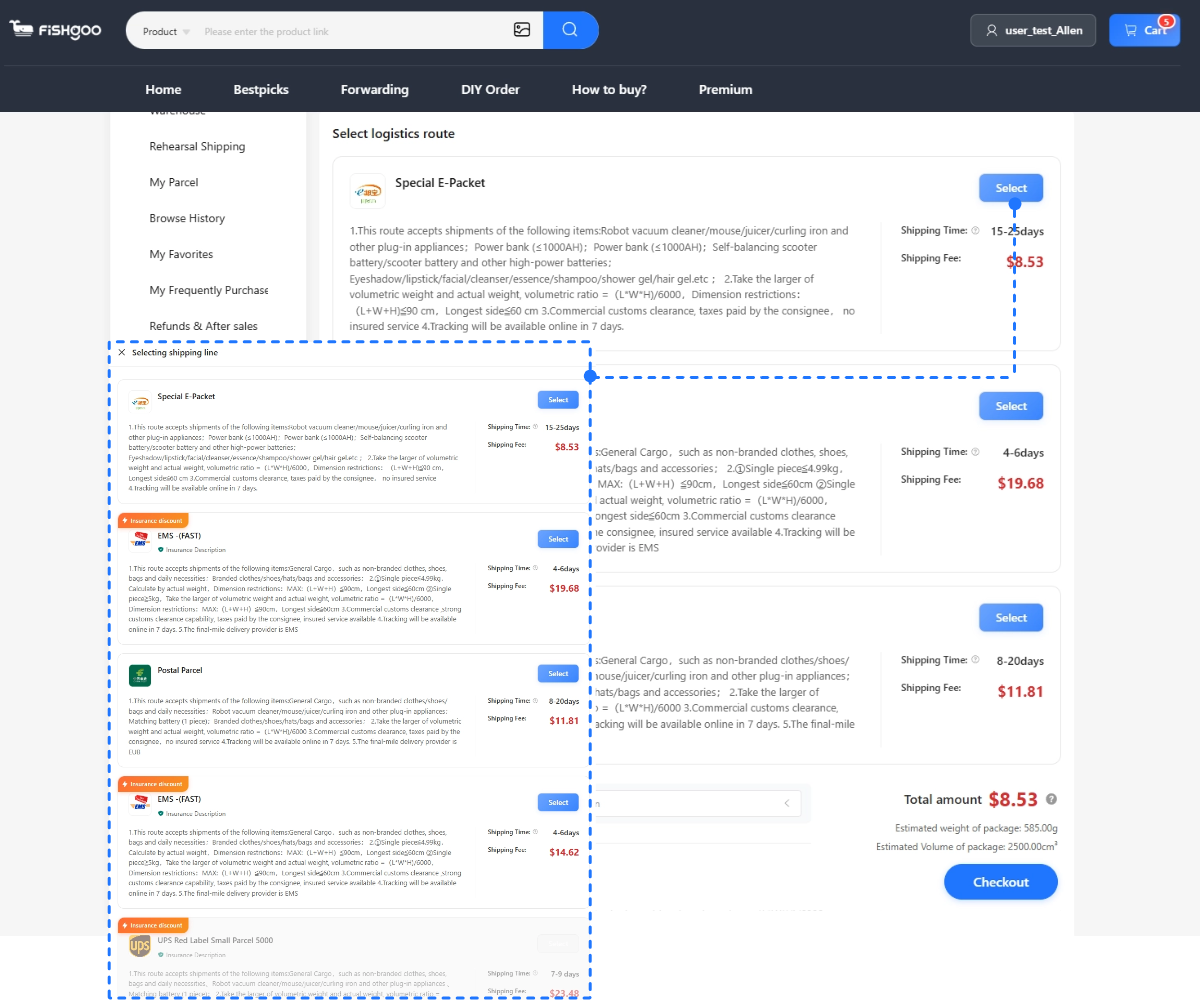
Once your items are consolidated, you pick a shipping line based on the trade-off you care about — cost versus speed. Rough shape of the options:
- Economy lines — cheapest per kilo, slower, typically two to four weeks to most of Europe.
- Standard express — a middle ground on price and speed, often around one to two weeks.
- Premium couriers — fastest and priciest, a handful of days, worth it for high-value or time-sensitive parcels.
Repacking matters more than most people realise, because couriers bill on volumetric weight — the size of the box, not just the mass. Stripping a bulky shoebox down can meaningfully drop your postage. We break down real courier costs and delivery windows by country on the Goofish shipping to Europe page, and if you’re weighing the whole platform against another, Xianyu vs Goofish clears up the naming confusion first.
Goofish vs Taobao: which should you use?
Use Goofish for used, rare, and one-off items; use Taobao for new retail goods you want in a specific size or quantity. They overlap less than you’d think. Goofish is individuals selling their stuff, so pricing is negotiable and stock is unpredictable. Taobao is a proper marketplace of shops with consistent inventory.
Plenty of buyers use both in a single order — a second-hand find from Goofish and a couple of new pieces from Taobao, all consolidated into one parcel. If you’re still mapping the landscape, our best Taobao agent comparison and the platform breakdowns — Taobao vs AliExpress, Taobao vs Temu and Taobao vs Shein — are good next reads. Weidian shoppers, there’s a parallel Weidian agent guide too — start with how to buy from Weidian, since a lot of the same sellers run stores there.
Tips for buying second-hand on Goofish
A few habits that separate a smooth haul from a headache:
- Read the seller’s rating and history, not just the listing. A long track record beats a slick photo.
- Ask for extra condition shots through your agent before buying, not after. Fishgoo can message the seller in Chinese for you.
- Negotiate. Prices on Xianyu are often soft, and a polite offer through the agent frequently lands.
- Bundle your buys so consolidation does its job. Two weeks of patience gathering a few items can halve your postage.
- Always approve QC before shipping. It’s the one step you never rush.
- Sort out sizing early on clothing and shoes — Chinese sizing runs different. Our size converter takes the guesswork out.
Ready to buy from Goofish?
The wall of Chinese, the Alipay lock, the domestic-only shipping — none of it has to be your problem. A Goofish agent turns Xianyu into something you can shop from your sofa in Lyon or Berlin, with a condition check before anything leaves China and one consolidated parcel at the end. And with a zero service fee model, the deal you found stays the deal you pay.
Start your first Goofish order with Fishgoo →
Already know how it works and just deciding who to order with? See our comparison of the best Xianyu (Goofish) agents in 2026.
Frequently asked questions
Is Goofish the same as Xianyu?
Yes. Xianyu (闲鱼) is the original Chinese name and Goofish is the name used internationally — same Alibaba-owned second-hand marketplace, same app. If you want the full explanation of why two names exist, see our Xianyu vs Goofish guide.
Do I need a Chinese account or Alipay to buy from Goofish?
Not when you use an agent. Fishgoo has the verified Chinese account, Alipay, and a domestic warehouse address, so you buy through them without registering on the platform yourself or owning a mainland bank card.
How long does Goofish shipping to Europe take?
It depends on the line you choose. Economy runs roughly two to four weeks, standard express around one to two weeks, and premium couriers a few days. Domestic delivery to the warehouse and QC add a couple of days before international shipping starts.
Can I return a second-hand item bought on Goofish?
Returns on private second-hand sales are limited, which is exactly why QC photos matter. You inspect the item’s real condition at the warehouse and approve it before it ships, so problems get caught while you still have options rather than after it reaches Europe.
Is Goofish cheaper than buying new on Taobao?
For used and discontinued items, usually yes, sometimes dramatically so. For new retail goods, Taobao is the better fit. Many buyers shop both and consolidate everything into one parcel — see our best Taobao agent comparison for the retail side.


Start with one product, sample or restock task
Send the product link or description, approximate quantity and destination. Review the scope before any paid purchasing work begins.