Monthly Archives: April 2026

Taobao to Amazon FBA: The Small Seller’s Sourcing Shortcut Nobody Talks About


Source products from Taobao and 1688 for Amazon FBA

Every Amazon FBA course starts the same way: “Go to Alibaba. Find a supplier. Order 500 units. Ship to Amazon.” The investment: $2,000-5,000. The timeline: 6-8 weeks before you see a single unit. The assumption: the product will actually sell. That assumption is where most first-time FBA sellers lose their money — because they validate nothing before committing everything.

My first FBA product launch used a different approach. I ordered 30 units of a bamboo desk organizer from 1688 through Fishgoo for about €45 total. Shipped to myself in 18 days. Inspected every unit (5 free QC photos had already filtered out 2 defective pieces at the warehouse). Photographed the product with a €3 lightbox from Taobao. Added a branded insert card (€0.03 each from Taobao). Sent 25 units to Amazon FBA. They sold in 6 weeks at €16.99 each. Revenue: €425. Profit after all FBA fees: about €180.

Then I scaled. Same 1688 seller, 200 units at wholesale pricing — €1.20 per unit instead of €1.50. Better margin. Proven product. Zero guesswork. The Taobao/1688 test order had de-risked the entire FBA launch for €45 instead of €2,000.

General importing guide: how to start importing from China

Alternative sales channel: selling on Etsy from Taobao


The Validation-First FBA Path

FBA product validation path Taobao 1688 then Alibaba

The standard FBA path (Alibaba → production → ship to FBA → hope it sells) has a massive validation gap. You’re investing $2,000-5,000 and 6-8 weeks before you have any data on whether customers want your product.

The Taobao/1688 validation path closes that gap:

Phase Platform Units Investment Timeline Purpose
1. Validate Taobao or 1688 via Fishgoo 20-50 €30-150 2-4 weeks Prove the product sells
2. Optimize 1688 via Fishgoo 50-200 €80-400 2-4 weeks Better unit price, refined listing
3. Scale Alibaba (direct factory) 200-1,000+ €400-2,000+ 4-8 weeks Maximum margin, custom branding

Each phase builds on validated data from the previous phase. You never invest $2,000 on a guess. By the time you reach Alibaba quantities, you know: the product sells at your target price, the quality meets customer expectations, and the margin covers all FBA fees. The only question at Phase 3 is “how many units?” — not “will this work?”


FBA Fee Structure: Know Your Numbers

Amazon takes a significant share of every sale. Your sourcing cost must account for all fee layers to calculate a true margin:

Fee type Rate On a €16.99 product
Referral fee 15% of selling price €2.55
FBA fulfillment fee (small standard) €2.50-3.50 per unit €3.00
Monthly storage €0.50-1.00 per unit/month €0.75 (avg 6-week sell-through)
Total Amazon fees €6.30 (37%)

On a €16.99 selling price with €6.30 in Amazon fees: you have €10.69 remaining. Your landed cost (product + shipping from China per unit) needs to fit within that €10.69 while still leaving profit. At a €3 landed cost (achievable through 1688 wholesale + Fishgoo zero fee + consolidated shipping): profit = €7.69 per unit. Net margin: 45%.

The critical formula: Landed cost ≤ 25% of selling price for healthy FBA margins. At 30%+ landed cost, margins get thin. At 20% or below, margins are excellent. Fishgoo’s zero service fee and 1688’s wholesale pricing make the 20-25% threshold achievable for most lightweight product categories.

Full profit margin calculator with worked examples


The FBA Launch Workflow

Step 1: Product research

Use Amazon’s BSR (Best Seller Rank), Jungle Scout, or Helium 10 to identify products with 300-3,000 monthly sales and fewer than 200 reviews (indicating a market with demand but room for new entrants). Then image search the product on Taobao to find the source pricing.

The viability test: if the Taobao/1688 source price is ≤25% of the Amazon selling price after shipping, the product is worth testing. If source price is 30%+ of selling price, margins are too thin for FBA.

Step 2: Test order through Fishgoo

Order 20-50 units from Fishgoo — Taobao for retail pricing or 1688 for wholesale. QC every unit. Zero service fee means your test budget goes entirely to product and shipping. At €30-150 total investment, you can test 1-3 products simultaneously.

Step 3: Ship to yourself first

For your first order, do not ship directly to Amazon. Ship to your home address. Why:

  • You need to physically inspect the product — QC photos catch 90% of issues, but holding the product catches the rest
  • You need to photograph it for your Amazon listing — professional-quality images using your Taobao photo setup
  • You need to add branded inserts (thank-you card, product guide, review request card — all sourced from Taobao at €0.03-0.10 each)
  • You need to prep and label units to Amazon’s FBA requirements (FNSKU labels, poly bagging if required)

Step 4: Create Amazon listing and send to FBA

Create your product listing in Seller Central with professional photos, keyword-optimized title and bullet points, and competitive pricing. Create an FBA shipment, print FNSKU labels, prep units, and ship to the assigned Amazon fulfillment center.

Step 5: Validate demand

Launch with PPC (Pay-Per-Click) advertising at €5-10/day to drive initial visibility. If 20-30 units sell in 4-6 weeks at your target price without heavy discounting, the product is validated. If they sit for 8+ weeks with minimal sales despite advertising, the product doesn’t have sufficient demand at your price point.

Step 6: Scale

Reorder 100-500 units from the same 1688 seller at improved wholesale pricing. For Phase 3 volumes (500+), consider Alibaba direct factory contact using the 1688 seller as a reference — many 1688 sellers operate factories that also list on Alibaba at better pricing for larger orders.

For reorders of validated products, ask Fishgoo support about FBA forwarding — some shipping routes can deliver directly from the Chinese warehouse to Amazon fulfillment centers, cutting out the “ship to yourself” intermediate step. This saves 5-10 days and reduces handling.


Best FBA Product Categories From Taobao/1688

Category Source cost (1688) FBA selling price FBA fees Net margin
Phone stands / holders €0.80-2 €10-16 €4-6 35-45%
Desk organizers €1-3 €12-20 €5-7 30-40%
Kitchen gadgets €0.50-2 €8-15 €4-5.50 30-40%
Cable management products €0.50-1.50 €8-14 €3.50-5 35-45%
Storage / organization €1-3 €12-22 €5-7.50 30-40%
Pet accessories €0.50-2 €8-15 €3.50-5.50 30-40%
Beauty tools €0.50-2 €10-18 €4-6 35-45%
LED accessories €1-3 €12-20 €5-7 25-35%

Avoid for FBA: Oversized items (FBA fees scale dramatically with package size), fragile items (breakage in Amazon warehouses = customer returns), seasonal-only items (storage fees pile up off-season), and anything requiring regulatory compliance (electronics with CE/UL, baby products with CPSIA).

Categories to avoid when importing from Taobao


FBA Direct Shipping vs Ship-to-Self

Ship to yourself first FBA forwarding (direct)
Best for First orders, new products Reorders of validated products
Timeline +5-10 days (your inspection + FBA inbound) Direct to FBA, faster
Quality control Full physical inspection Relies on warehouse QC photos
Branding/inserts You add personally May need pre-insertion at warehouse
FBA labeling You print and apply FNSKU May need warehouse labeling service
Risk level Lowest (you verify everything) Moderate (trusting QC photos)

For your first 1-3 FBA product launches, always ship to yourself. The physical inspection step is worth the extra days. For reorders of proven products where you trust the supplier’s consistency, FBA forwarding saves time and handling.


My FBA Launch Numbers: Real Example

Metric Phase 1 (test) Phase 2 (optimize) Phase 3 (scale)
Units ordered 30 100 300
Source (1688 via Fishgoo) €45 (€1.50/unit) €120 (€1.20/unit) €300 (€1.00/unit)
Shipping to me/FBA €18 €35 €75
Landed cost per unit €2.10 €1.55 €1.25
Amazon selling price €16.99 €16.99 €15.99
FBA fees per unit €6.30 €6.30 €6.10
PPC ad cost per unit €2.50 €1.50 €0.80
Net profit per unit €6.09 €7.64 €7.84
Units sold (1st month) 25 80 250
Monthly profit €152 €611 €1,960

Phase 1 at €45 investment → €152 first-month profit = 3.4x return. Phase 3 at €375 investment → €1,960 first-month profit = 5.2x return. The economics improve at every phase because unit costs decrease (wholesale volume), PPC costs decrease (organic ranking builds), and FBA’s fixed-cost structure rewards higher volume.

The key: Phase 1 cost only €45 and took 4 weeks. If the product had failed, I’d have lost €45 and learned something. On Alibaba, the same failed experiment would have cost €1,500+ and taken 8+ weeks. The validation-first approach isn’t just cheaper — it’s faster and more informative.


Private Labeling: When and How

Private labeling — putting your own brand name on a product — increases perceived value by 20-40% and prevents direct price comparison with generic alternatives. On Amazon specifically, Brand Registry (requires a registered trademark) unlocks A+ Content, brand store pages, and protection against listing hijackers.

When to start private labeling: After Phase 2 — when you’ve proven demand with 50-100 generic units. Adding a brand before validation is premature expense.

How to private label through Taobao/1688: Many sellers offer custom labeling — a brand tag sewn into clothing, a sticker on packaging, a printed logo on a product surface. Cost: typically ¥0.5-3 per unit (€0.07-0.40). Add the request to your Fishgoo order notes: “Please add [brand name] label to each unit.” The seller produces custom-labeled units alongside their standard production run.

For more advanced private labeling (custom packaging boxes, product design modifications, color customization), 1688 factory sellers can accommodate — but minimum order quantities increase to 100-500+ for custom work. This is Phase 3 territory.

Reseller and private label strategy guide


Common FBA-Specific Mistakes

Mistake 1: Skipping Phase 1. Going directly to Alibaba for 500 units of an unvalidated product. Fix: test 20-50 units from Fishgoo first. €50-150 of validation prevents €2,000 of wasted inventory.

Mistake 2: Ignoring FBA fee structure. Your product costs €2 and sells for €10 — “5x margin, amazing!” Then Amazon takes €4.50 in fees. Your actual margin: €3.50 (35%). Still good, but very different from the 5x you imagined. Calculate all cost layers before committing.

Mistake 3: Launching without PPC. New Amazon listings have zero organic visibility. Without PPC advertising (€5-15/day for the first 4-8 weeks), nobody sees your product. Budget €200-400 for launch PPC as part of your initial investment.

Mistake 4: Poor listing photos. Amazon buyers make purchase decisions based on photos — not descriptions, not reviews (initially). Professional product photography using a €3 lightbox from Taobao converts 2-3x better than phone snapshots. The €3 photo setup investment pays for itself on the first sale.

Mistake 5: Not reading Amazon’s FBA prep requirements. Each product category has specific prep requirements (poly bagging, bubble wrap, suffocation warnings). Sending improperly prepped units gets them rejected at the fulfillment center. Read Amazon’s prep guidelines before shipping.

12 universal Taobao importing mistakes


Search Terms for FBA-Suitable Products

Amazon category Taobao search 1688 search (wholesale)
Phone accessories 手机支架 批发 手机支架 工厂直销
Desk organization 桌面收纳 简约 办公收纳 工厂
Kitchen tools 厨房小工具 创意 厨房用品 厂家
Cable management 理线器 收纳 数据线收纳 工厂
Pet accessories 宠物用品 批发 宠物用品 厂家
Beauty tools 美容工具 套装 美容仪器 工厂
Home storage 家居收纳 北欧 收纳盒 工厂直销
LED accessories LED灯 USB 创意 LED灯 工厂

All search methods

Image search for product sourcing


FAQ

  • Can I ship directly from China to Amazon FBA?

    For reorders of validated products — yes, some routes support FBA forwarding. For first orders — ship to yourself first. The physical inspection and photography step is essential for new product launches. Ask Fishgoo support about FBA-direct shipping options for your specific warehouse.

  • Do I need a brand to sell on Amazon?

    Not initially — you can sell as “generic” or under a temporary name. For long-term growth, register a trademark and enroll in Amazon Brand Registry. This unlocks A+ Content (enhanced product pages), brand store, and listing protection. Trademark registration takes 6-12 months — start the process once you have a validated product.

  • What’s the minimum investment for an FBA launch?

    Through the Taobao/1688 validation path: €50-150 for product test order + €200-400 for PPC launch budget = €250-550 total. Compare to the Alibaba-first path: €2,000-5,000 for product alone. The validation path is 75-90% less capital for the same information.

  • How long until my FBA product is profitable?

    Phase 1 (test batch) can be profitable within 4-6 weeks of sending inventory to FBA — if the product has demand. Phase 2 (optimization) improves margins over the following 2-3 months as PPC costs decrease and organic ranking builds. Most validated products reach stable monthly profitability by month 3-4 from initial order.

  • Taobao/1688 vs Alibaba — when do I switch?

    Switch to Alibaba when you need 200+ units per order and want custom branding, packaging, or product modifications that Taobao/1688 sellers can’t accommodate. For standard unbranded products at 50-200 unit quantities, 1688 through Fishgoo remains the most cost-effective option with the fastest turnaround.


→ Validate your FBA product — Fishgoo, zero fee, 1688 access, QC photos

→ Complete importing starter guide

→ Alternative: sell on Etsy

→ 688 wholesale sourcing

→ Profit margin calculator

→ DIY product photography

→ Reseller strategy

→ Complete agent overview

How to Sell Taobao Products on Etsy: Build a Curated Shop With 50-65% Margins

Selling Taobao products on Etsy curated shop strategy

An Etsy shop I admired for over a year — beautiful minimalist jewelry, every piece €15-30, hundreds of 5-star reviews, editorial-quality photography — turned out to be sourcing entirely from Taobao. I discovered this accidentally when I image-searched one of their bestselling earring listings and found the exact same product on Taobao for ¥8 (€1.10). They were selling it for €22. That’s a 20x markup on the raw product.

I’m not calling them out. Their photos were gorgeous. Their branding was cohesive. Their packaging included tissue paper, a thank-you card, and a branded sticker. Their customer service was clearly excellent based on the reviews. They added genuine value through curation and presentation — value that transformed a €1.10 factory product into a €22 shopping experience. The gap between those two numbers — between product cost and experience value — is where the entire Etsy-from-Taobao business model lives.

That discovery was 14 months ago. I now run a small Etsy shop using the same model. Three product categories, 25 active listings, roughly €350-500/month in profit from about 6 hours of weekly work. This article is the playbook — product selection, sourcing workflow, photography, pricing, and the specific economics that make this model work.

General importing guide: how to start importing from China


Best Etsy Categories for Taobao Sourcing

Best Etsy product categories for Taobao sourcing

Not every Taobao product works on Etsy. Etsy’s audience expects curated, aesthetic, “boutique-feeling” items — not cheap-looking commodity products. The categories that convert best are ones where Taobao’s factory pricing is dramatically below the perceived value that good photography and branding create.

CategoryTaobao source costEtsy selling priceNet margin (after all fees)Why it works on Etsy
925 silver jewelry€1-8€15-4550-65%Photographs beautifully, high perceived value, giftable
Hair accessories€0.30-2€5-1545-60%Trending on TikTok, impulse purchase, repeat buyers
Home decor accents€1-5€10-3040-55%Pinterest-driven demand, seasonal refreshes
Stationery / journals€0.50-3€6-1840-55%Planner community, back-to-school, gift-giving
Watch straps€1-5€10-2545-60%Watch enthusiast niche, repeat purchasers
Skincare tools€1-3€10-2550-60%Self-care trend, wellness audience, giftable sets
Phone accessories€0.50-2€6-1545-55%High volume, trend-driven, customizable
Wedding accessories€1-5€12-4050-65%Emotional purchasing, high willingness to pay
Makeup tools€0.30-2€5-1545-60%Beauty community, starter kit bundles

Jewelry and accessories dominate because they’re lightweight (cheap to ship to Etsy customers), high-margin, and photography-friendly. A single ring that costs €2 on Taobao, photographed on a marble tray with natural light, sells for €18-25 on Etsy. The customer sees a curated piece from a boutique shop. You see a 9-12x markup on a product you sourced for the cost of a coffee.


The Complete Workflow: Taobao → Fishgoo → You → Etsy Customer

Step 1: Source products

Find products on Taobao or 1688 through Fishgoo. Order 10-20 units of 3-5 products. Start with Taobao for your first test batch — prices are retail-level but minimums are 1 unit. Once you validate a product, switch to the same item on 1688 for wholesale pricing (30-50% below Taobao).

Zero service fee on Fishgoo means your entire budget goes to product and shipping. A 5% fee on a €200 sourcing order = €10 gone. At zero percent, that €10 stays in your margin. Over a year, the difference compounds to €100-300 in preserved profit.

Step 2: QC every unit

This isn’t optional for Etsy sellers — it’s essential. Every unit you send to an Etsy customer is your brand reputation. A tarnished ring or a crooked setting = negative review = damaged shop credibility. Through Fishgoo’s 5 free QC photos per item, inspect every piece before it enters your inventory. Reject anything defective — returns within China are free.
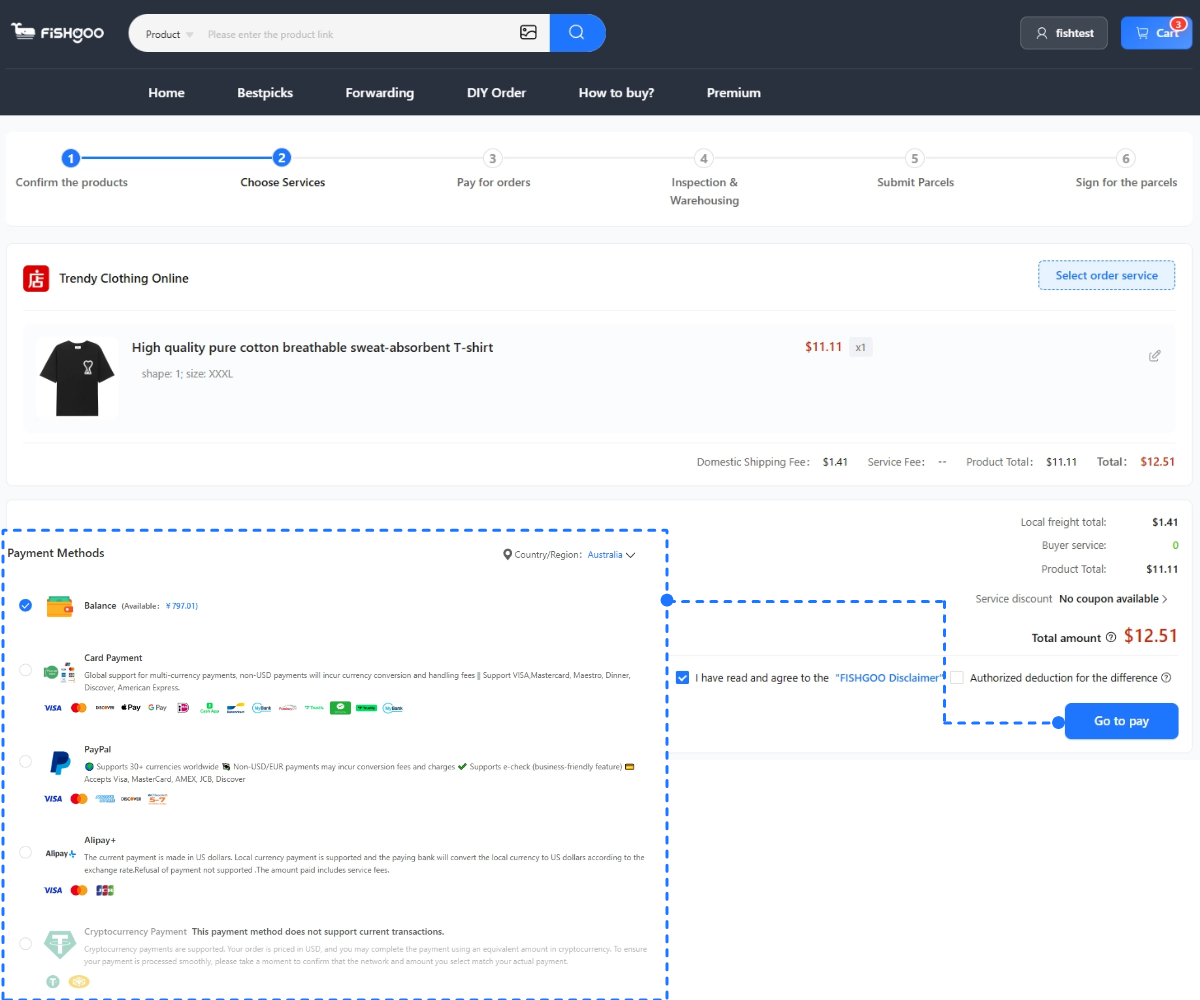
For jewelry specifically: check stone settings, clasp mechanisms, chain links, and surface finish. For accessories: check color accuracy, stitching, hardware quality. Two minutes per item in QC review prevents the one negative review that tanks your conversion rate for weeks.

Step 3: Ship to yourself

Consolidate via haul to your home address. Product inventory + packaging supplies (tissue paper, thank-you cards, small boxes — all from Taobao at €0.10-0.30 per order set) ship in one parcel. Receive in 2-3 weeks via economy shipping.

Step 4: Photograph professionally

This is where you add the value that justifies the markup. Products from Taobao look generic in their listing photos. Your photos make them look curated, intentional, premium.

Minimum setup (€5-10 from Taobao): lightbox for white-background shots, marble-look backdrop for lifestyle shots, one dried flower prop, natural window light. Phone camera is fine — post-2020 phones produce adequate product photos in good lighting.

Three photo types per listing: clean white background (Etsy thumbnail requirement), lifestyle flatlay (shows the product in context — on a tray, next to a plant, draped on fabric), and in-use shot (on a wrist, on an ear, on a desk). These three angles convert browsers into buyers.

Step 5: List on Etsy

Write descriptions that emphasize material, craftsmanship, and styling — not source. “925 sterling silver minimalist hoop earrings, polished finish” is accurate, searchable, and appealing. Price at 4-8x your total landed cost (product + shipping per unit + packaging).

Etsy SEO matters: use the full 13 tag slots with relevant search terms. Title should include the primary keyword naturally. Fill out all attributes (material, color, occasion). Well-optimized listings appear in Etsy search within 24-48 hours of publishing.

Step 6: Ship to customer

From your home, in branded packaging. Tissue paper (€0.01/sheet from Taobao), a thank-you card (€0.03 each), a small branded sticker on the box (€0.02 each). Total packaging cost per order: €0.10-0.30. These tiny additions transform a plastic mailer into a “boutique experience” that generates 5-star reviews and repeat customers.


Etsy Fee Reality Check

Etsy takes a meaningful cut. Your margin calculation must account for all fee layers:

Fee typeAmountOn a €22 sale
Listing fee€0.20 per listing (renewed every 4 months or at sale)€0.20
Transaction fee6.5% of sale price€1.43
Payment processing4% + €0.30€1.18
Offsite ads (if enrolled)12-15% of sale price (optional but auto-enrolled above $10K revenue)€0-3.30
Total Etsy fees (without offsite ads)€2.81 (12.8%)

On a €22 sale with €2.81 in Etsy fees, €3 in domestic shipping, €0.30 in packaging, and a €3 landed product cost (Taobao product + international shipping share via Fishgoo): total cost = €9.11. Profit = €12.89. Net margin: 58.6%.

At 30 sales per month (roughly 1/day — achievable for a 6-month-old shop with good SEO): €386.70/month profit. At 60 sales/month: €773. These are realistic, data-grounded numbers — not aspirational projections.


What Etsy Allows (And What Gets You Banned)

Etsy’s policies accommodate sourced products with clear rules:

Allowed:

  • Sourcing products from manufacturers and selling as curated collections
  • Using your own photography and descriptions
  • Labeling accurately: “sterling silver ring” (material truth), not “handmade by me” (process lie)
  • Listing in “Handmade” category if you’ve designed the item or significantly modified it
  • Listing in “Craft Supplies” or general categories without handmade claims

Will get you banned:

  • Claiming products are “handmade by me” when they’re factory-produced (fraud)
  • Using trademarked brand names in listings (“Tiffany-style ring” = trademark violation)
  • Selling obvious counterfeits with brand logos
  • Reusing the seller’s Taobao listing photos instead of taking your own
  • Mass-listing hundreds of products without curation (Etsy’s algorithm deprioritizes this)

The line is simple: be honest about what you’re selling, take your own photos, and don’t use brand names. Thousands of legitimate Etsy shops operate exactly this model. The value you add — curation, photography, customer service, presentation — is real and genuine.


Building a Brand vs Flipping Products

There are two Etsy-from-Taobao models. The one you choose determines your long-term trajectory:

Model A: Product flipper. Find cheap products, list them, sell them. No brand identity, no customer relationship, no moat. Vulnerable to anyone who finds the same Taobao listing and undercuts you. Short-term profit, no long-term value.

Model B: Curated brand. Build a shop identity — consistent aesthetic, cohesive product selection, branded packaging, customer communication, social media presence. Your shop becomes a destination, not a commodity listing. Customers buy from “your shop” not from “a listing.” They come back. They refer friends. They follow your Instagram.

Model B takes more upfront effort but creates durable competitive advantage. A curated brand can charge 20-40% more than a flipper for the same products because the experience is the product, not just the physical item.

My Etsy shop follows Model B. Consistent sage-green-and-marble aesthetic across all photos. A “brand card” in every package. An Instagram presence that shows lifestyle shots, not product catalogs. The Taobao sourcing is invisible to customers — they see a boutique. Building this took about 2 weeks of focused effort and roughly €20 in props and packaging supplies from Taobao.

DIY product photography setup for €10


Sourcing Workflow Optimization

After 14 months, my sourcing rhythm is systematic:

Monthly cycle:

  1. Week 1: Review sales data. Which products sold well? Which are low stock? Any new product ideas from image searching trending items?
  2. Week 1-2: Place restock order through Fishgoo. Proven products from 1688 (better unit price), test products from Taobao (smaller quantity).
  3. Week 2-3: QC review as items arrive at warehouse. Reject defects. Approve and consolidate.
  4. Week 3-4: Inventory arrives. Photograph new products. List on Etsy. Restock existing listings.

This cycle runs on autopilot now — about 6 hours total per month for sourcing and inventory management. The remaining weekly hours go to: customer messages (1 hour), shipping orders (2 hours), and photography for new products (1 hour).

Key efficiency: 100-day warehouse storage. I don’t rush orders. Items accumulate at the Fishgoo warehouse until I have a full haul ready to consolidate. This patience saves 30-40% on shipping versus rushing small parcels whenever a product runs low.


Seasonal Strategy for Etsy Sellers

Etsy’s traffic spikes predictably around gift-giving occasions. Smart sourcing aligns with these peaks:

SeasonEtsy traffic peakOrder from Taobao byBest categories
Valentine’s DayLate January – Feb 14Early JanuaryJewelry, couple items, self-care kits
Mother’s DayApril-MayMarchJewelry, skincare tools, home decor
Back to SchoolJuly-AugustJuneStationery, desk accessories
HalloweenSeptember-OctoberAugustThemed accessories, decor
ChristmasOctober-December (biggest)Late SeptemberEverything giftable

Christmas is the money season — many Etsy sellers make 30-50% of their annual revenue in November-December. Stock up with 11.11 sale pricing (late October order) for maximum margins during peak demand.

11.11 buying strategy

Full Taobao sale calendar


Real Etsy Shop Economics: My Monthly Numbers

MetricMonth 3Month 6Month 12
Active listings122028
Monthly sales153555
Average order value€18€20€22
Revenue€270€700€1,210
Product cost (Fishgoo, 0% fee)€45€105€165
Shipping from China (consolidated)€20€35€50
Etsy fees€35€91€157
Domestic shipping€45€105€165
Packaging€5€10€16
Net profit€120€354€657
Hours per week567

The growth curve isn’t linear — it compounds as you add listings, build search authority, accumulate reviews, and develop repeat customers. Month 12 revenue is 4.5x month 3, but hours worked only increased 40%. The per-hour return improves dramatically over time because the systems (photo templates, shipping workflow, sourcing rhythm) get built once and reused.


Search Terms for Etsy-Friendly Products on Taobao

Etsy categoryTaobao search term1688 search term (wholesale)
Minimalist jewelry925银饰 极简925银饰 工厂 极简
Hair clips / scrunchies发夹 ins风 / 发圈 丝绒发饰 厂家直销
Decorative candle holders烛台 北欧风烛台 工厂
Stationery sets文具套装 ins风文具 工厂 礼盒
Gua sha / skincare sets刮痧板 礼盒装刮痧板 工厂 套装
Dried flower arrangements干花 家居装饰干花 批发
Leather watch straps真皮表带 复古表带 工厂 真皮
Wax seal sets火漆印章 套装火漆印章 厂家

Pro tip: add “ins风” (Instagram style) to any Taobao search to filter for products with the minimalist, aesthetic look that performs best on Etsy. Add “礼盒” (gift box) to find products that come in presentable packaging — saves you the cost of sourcing boxes separately.

All search methods

Image search for product sourcing


FAQ

  • What if customers find the same product on AliExpress?

    Some will. But your photos are better, your shipping is faster (from local stock, not 3-week China transit), your packaging creates a gift-worthy experience, and your shop has reviews that build trust. Most Etsy buyers prefer paying €5 more for a curated experience over navigating AliExpress. That preference is your competitive moat.

  • How many products do I need to start?

    15-20 listings with 5-10 units each across 3-5 product types. A focused shop with 20 excellent listings consistently outperforms a scattered shop with 200 mediocre ones. Etsy’s algorithm rewards listing quality (photos, reviews, conversion rate) over listing quantity.

  • What’s the startup cost?

    €50-150 total: €30-80 for initial product inventory (through Fishgoo, zero fee), €15-25 for consolidated shipping, €5-10 for photography props, and €5-10 for packaging supplies. Etsy listing fees are €0.20 per listing — negligible. The entire setup costs less than a single wholesale purchase from a domestic supplier.

  • How long until I see my first sale?

    With good photos and proper Etsy SEO: typically 1-3 weeks after listing. Etsy’s search algorithm needs time to index and test your listings. First month is always slowest. By month 3, if your products and photos are solid, expect 10-20 sales/month. By month 6, 25-40 is realistic for an actively managed shop.

  • Do I need to disclose that products are from China?

    You need to be truthful if asked, but Etsy doesn’t require origin disclosure on listings. List accurate materials (“925 sterling silver”), accurate descriptions, and use your own photos. Customers are buying your curation and presentation, not a geographic origin story. If a customer specifically asks where products are made, answer honestly.


→ Source your Etsy inventory — Fishgoo, zero fee, 1688 wholesale access

→ Complete importing starter guide

→ 1688 wholesale sourcing

→ DIY product photography

→ Profit margin calculator

→ Reseller strategy

→ Complete agent overview

→ First order checklist

How to Start Importing From China: The $50 Side Hustle That Scaled Into a Real Business

How to start importing products from China small business

My first “import business” was 10 silicone phone cases I ordered from Taobao for €8 total. I listed them on Vinted at €4 each, half-expecting nothing to happen. They sold in 11 days. All ten. Total revenue: €40. Profit after the original purchase and shipping: about €18. Not life-changing money, but it answered the question I’d been asking myself for months: can you actually make money buying cheap stuff from China and selling it locally?

The answer — which took me roughly 2 hours of work and €22 of risk to discover — was unambiguously yes. The margin between Chinese factory prices and European consumer expectations is enormous, and most people don’t know how to bridge it. That gap is the business.

That phone case experiment was 18 months ago. It led to watch straps, then desk accessories, then seasonal items, then a small but consistent business generating €400-600 per month in profit from about 8 hours of weekly work. I haven’t quit my job. I don’t plan to — not yet. But I’m paying my car insurance, gym membership, and dining-out budget entirely from Taobao margins. All from a €22 initial test batch that I placed during a lunch break.

This article is the practical starter guide. Not the “passive income guru” fantasy where someone shows you their Lamborghini and claims you’ll be rich in 30 days. Real numbers, real timeline, real mistakes, and the actual amount of work involved — which is more than influencers admit but less than most people fear.

Never used Taobao? Start with how to buy from Taobao


Why Taobao/1688, Not Alibaba (For Your First Order)

Taobao and 1688 vs Alibaba for beginners

Every “how to import from China” guide on YouTube tells you to go to Alibaba.com. Contact a factory. Negotiate a price. Order 500 units minimum. Invest $2,000-5,000. Wait 6-8 weeks for production and ocean freight. Then discover whether anyone actually wants to buy your product.

That’s the established path. It’s also the riskiest possible way to start. You’re committing thousands of dollars to an unvalidated product from an unverified factory with a 2-month feedback loop. If the product is wrong, if the quality is poor, if the market doesn’t want it — you’ve lost $2,000-5,000 and 2 months of waiting.

There’s a better entry point that nobody in the Alibaba-centric import world talks about: Taobao and 1688 through a zero-fee agent.

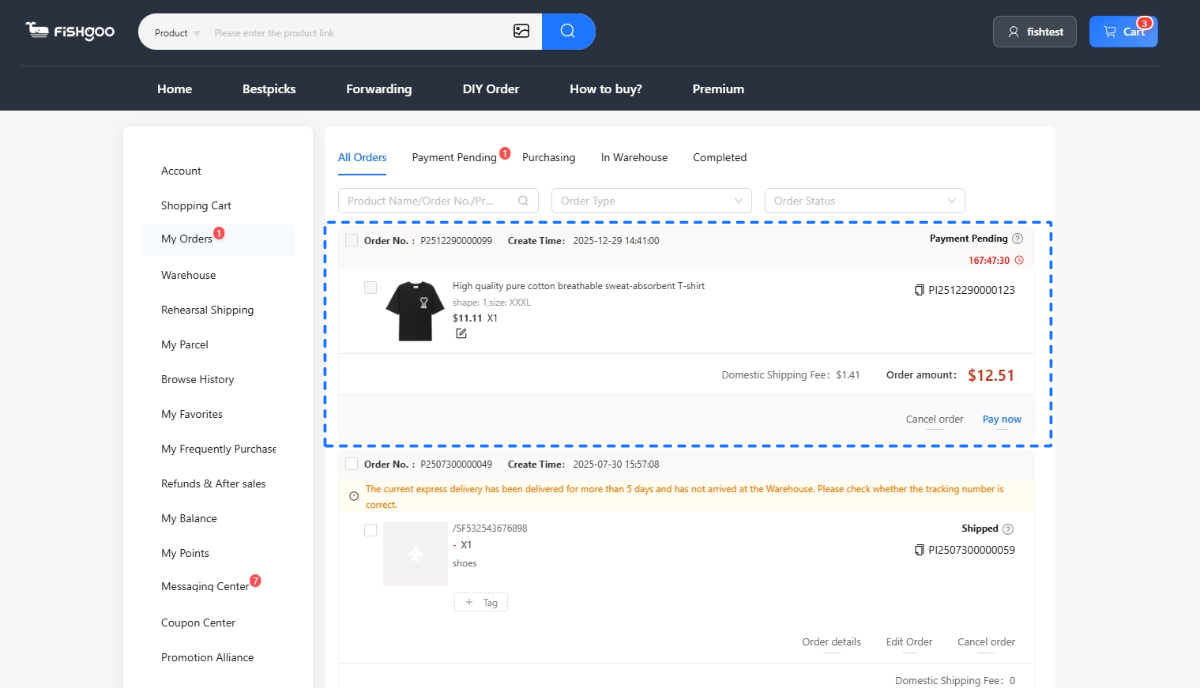
Taobao/1688 (via Fishgoo)Alibaba.com
Minimum order1-50 units100-1,000+ units
Minimum investment€30-200€500-5,000+
Quality verification before shipping5 free QC photos per itemUsually 0 (you see the product when it arrives)
Agent/service fee0% (Fishgoo)N/A (direct negotiation)
Time to first units in hand2-4 weeks4-8 weeks (production + shipping)
Risk if product fails market test€30-200 lost€500-5,000 lost
Product variety for testingTest 5 products simultaneouslyUsually commit to 1 product per order
Payment protectionPayPal 180-day buyer protectionTrade Assurance (limited coverage)

The smart path isn’t Taobao or Alibaba. It’s Taobao/1688 first, Alibaba after validation. Test with 10-50 units at minimal risk. Prove the product sells. Then scale to Alibaba quantities with confidence. Don’t skip step one.


Phase 1: Product Research (Week 1-2, €0 Cost)

Before spending a single euro, identify products with three characteristics that predict resale viability:

Characteristic 1: High source-to-retail markup (3x minimum, 5-10x ideal). Your total landed cost (product + shipping ÷ units + agent fee + customs) needs to be 30% or less of your selling price for healthy margins after platform fees. On Taobao, products at €1-5 that sell locally at €8-25 hit this threshold easily.

Characteristic 2: Lightweight (under 200g per unit). Shipping cost is per-kilogram. Heavy items (ceramic, glass, metal) eat into margins. Lightweight items (accessories, textiles, small tools) ship for pennies per unit when consolidated. A 30-unit order of phone cases (30g each = 900g total) adds maybe €5-8 in shipping. The same quantity of ceramic mugs (300g each = 9kg) adds €40-60.

Characteristic 3: Not brand-dependent. If customers buy the item because of what it is (a minimalist ring, a leather desk mat, a phone stand) rather than whose name is on it, you can source unbranded from Taobao. If customers buy it specifically for the brand (Nike sneakers, Apple accessories), you can’t compete because you can’t offer the brand.

Best starter categories (ranked by margin × weight × ease)

CategoryTaobao source costTypical resale priceMargin multiplierWeight per unitResale platform fit
Phone cases / accessories€0.50-1.50€4-84-8x30geBay, Vinted, Amazon
Watch straps€1-5€8-254-8x25gEtsy, eBay, own site
925 silver jewelry€2-8€15-454-7x10-20gEtsy, boutiques, Instagram
Hair accessories€0.30-2€4-125-10x10-30gEtsy, Vinted, market stalls
Desk accessories€1-5€8-204-8x50-200gAmazon, Etsy, office supply
Skincare tools€1-3€8-255-8x50-100gEtsy, beauty platforms, spas
LED accessories€1-4€8-154-8x50-100gAmazon, eBay, home décor
Makeup brushes/tools€0.30-2€5-155-10x10-50gEtsy, beauty platforms
Stationery / planners€0.50-3€5-154-8x30-100gEtsy, bookstores, school supply

During Phase 1, don’t buy anything. Research. Browse Taobao using image search and keyword search. Check prices on your target resale platforms (Etsy, eBay, Amazon). Calculate the margin gap. Build a shortlist of 5-10 product ideas with estimated margins above 4x. This research costs nothing and prevents the expensive mistake of importing a product nobody wants.

Best product categories on Taobao


Phase 2: Test Order (Week 2-3, €50-200 Investment)

First test order from Taobao for resale

Order 5-20 units of your top 2-3 product picks through Fishgoo. Why Fishgoo specifically for a resale operation:

  • Zero service fee — critical for margin-sensitive businesses. A 5% agent fee on your cost basis directly reduces your profit margin on every unit, forever. Over a year of importing, zero fee versus 5% means hundreds of euros kept as profit instead of paid as commission.
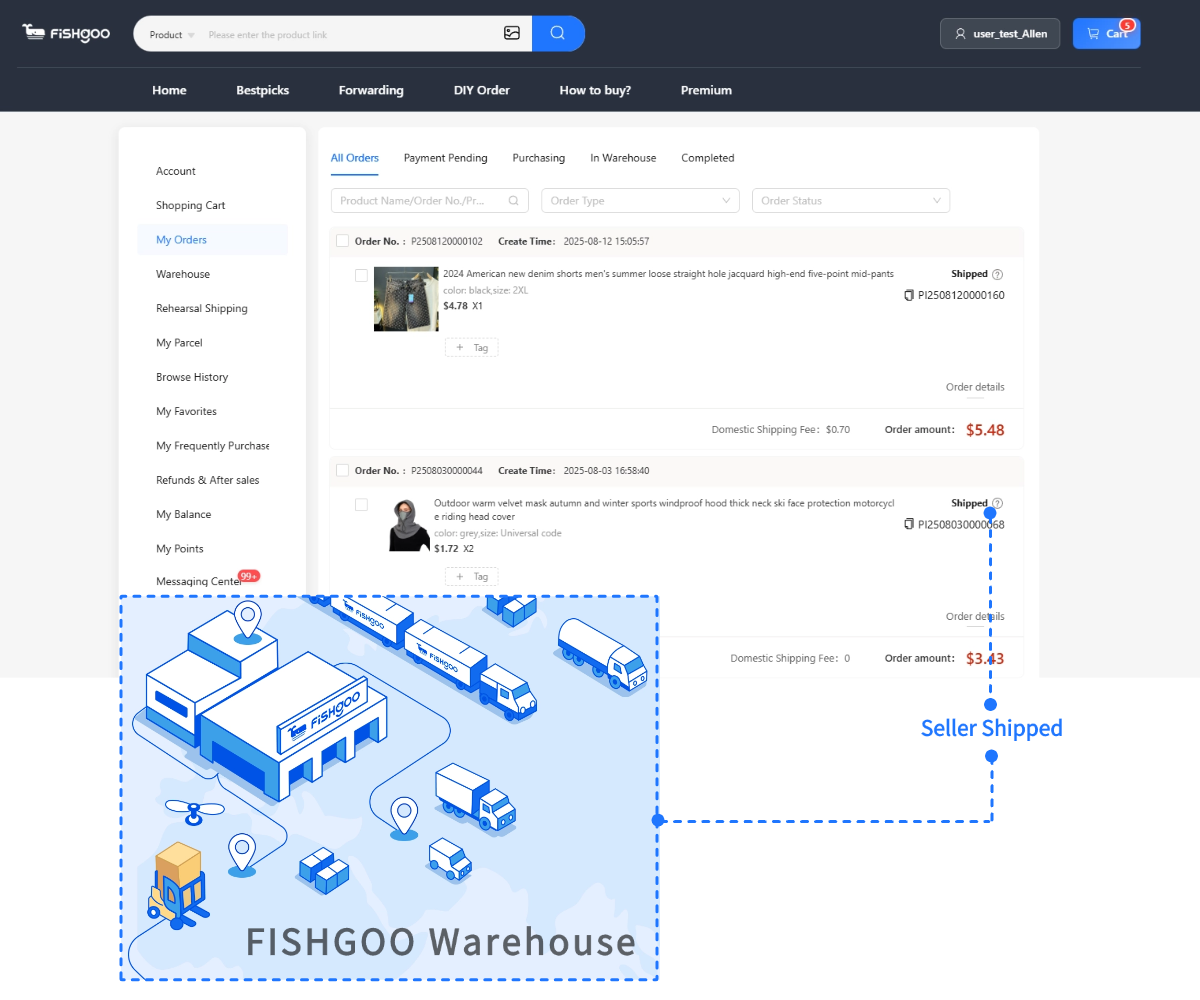
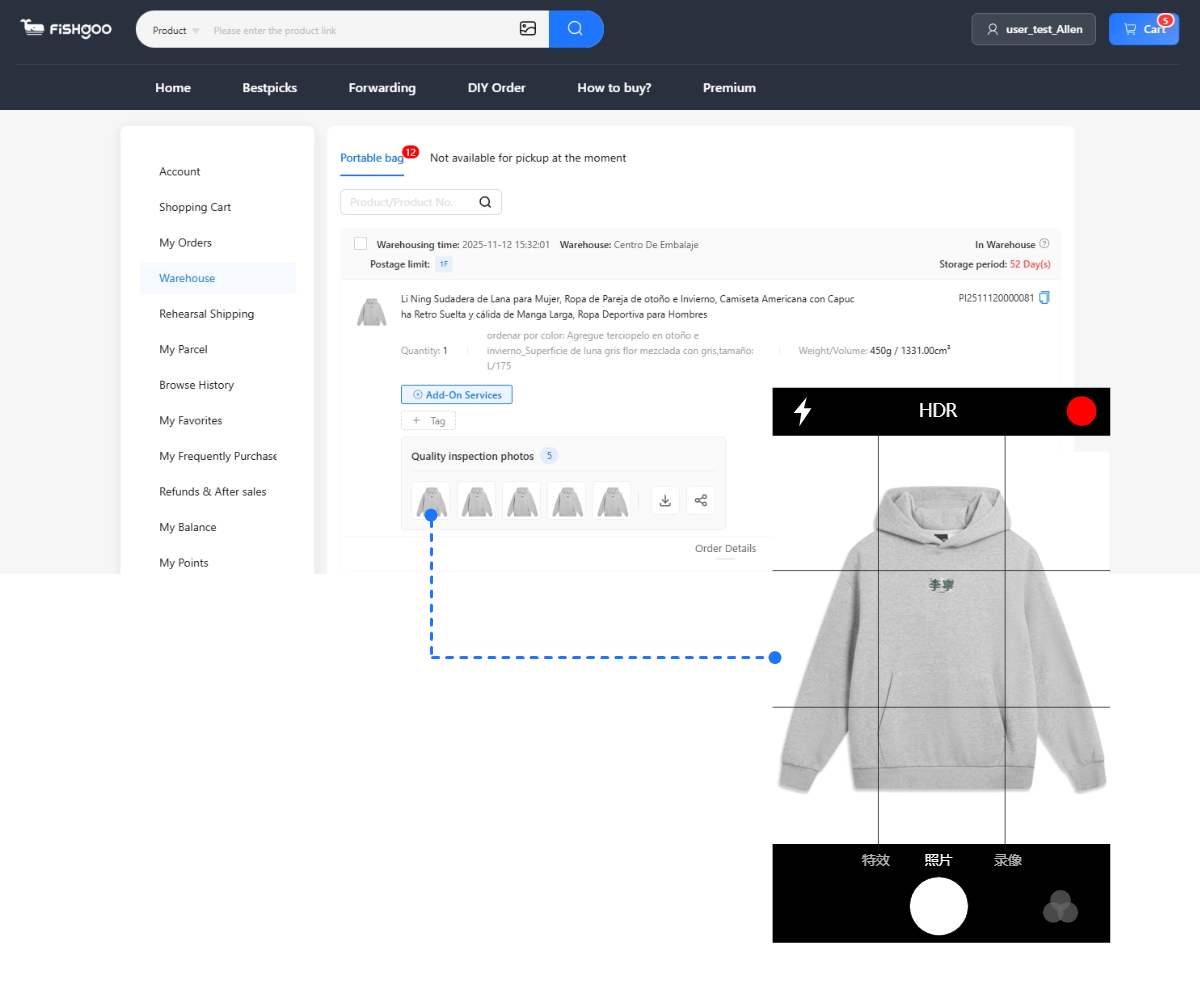
  • 5 free QC photos per item — verify product quality unit-by-unit before committing to selling it to customers. A defective product sent to a customer = refund + bad review + reputation damage. QC photos are your quality gate.
  • 1688 access — same dashboard as Taobao but at wholesale pricing (30-50% below Taobao retail). Once you validate a product on Taobao, reorder from the same product on 1688 at better unit economics.
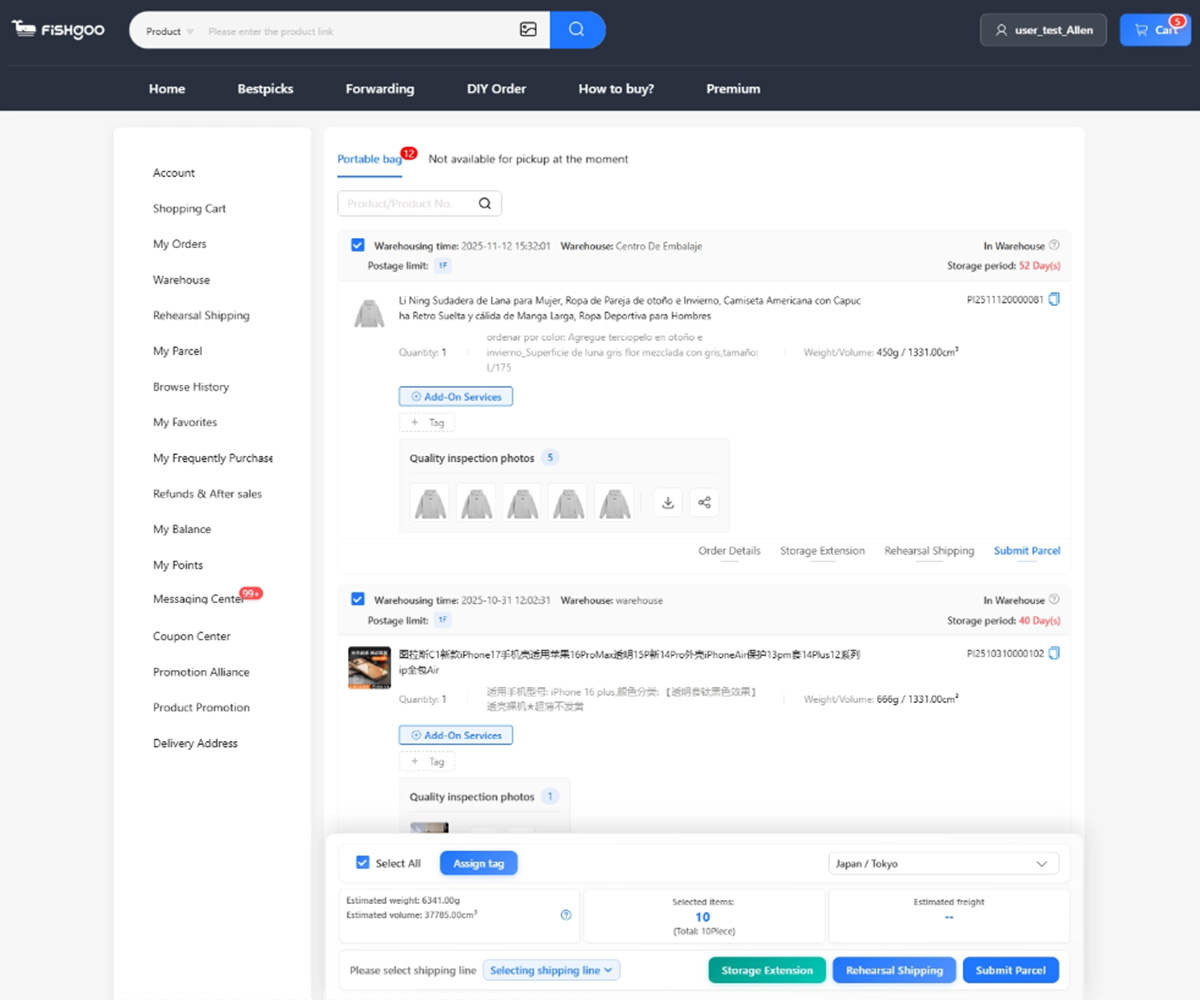
  • 100-day warehouse storage — accumulate multiple product tests in the warehouse and ship in one consolidated parcel. This lets you test 3-5 products in one shipping cost instead of five.
  • Multi-platform support — Taobao, Tmall, 1688, and Weidian links all work in the same dashboard. Source from any Chinese platform without switching agents.

Your test order validates four things:

  1. Actual product quality (not listing photos — the real thing under warehouse lighting in QC photos)
  2. Shipping timeline (how long from order to your doorstep)
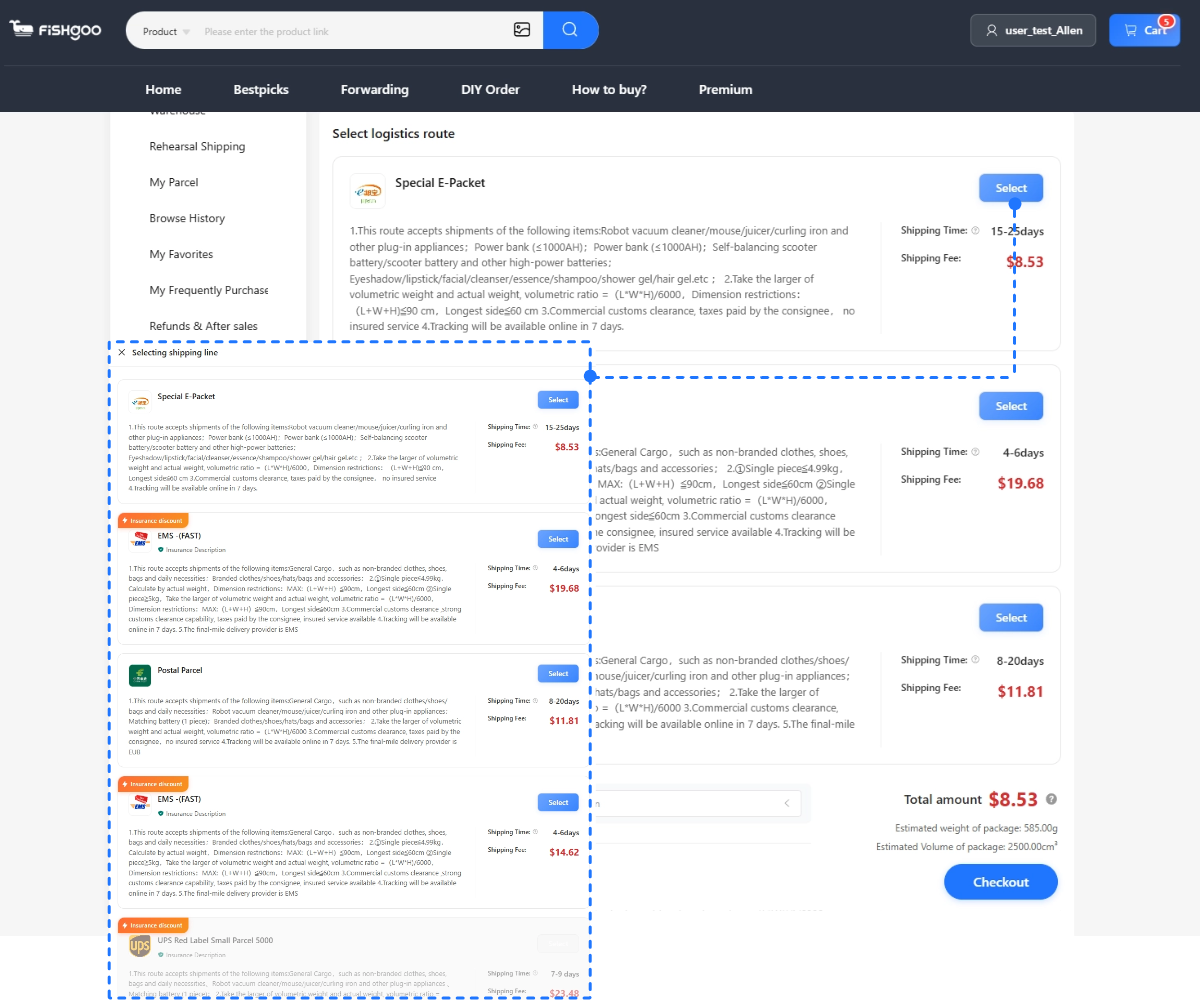
  3. Landed cost per unit (product + shipping ÷ units = your true cost basis)
  4. Customer demand (do people actually buy this at your target price?)

A test order of 10 units across 2 product types might cost €40-80 in products plus €15-25 in consolidated shipping. Total risk: €55-105. If both products validate, you’ve launched a business for under €100. If neither validates, you’ve lost less than a night out and gained valuable market data.

First order checklist — every step

How to build a consolidated haul


Phase 3: Test Selling (Week 4-6)

Your test inventory is in hand. You’ve inspected every unit through QC photos and in person. Now find out if anyone besides you thinks these products are worth buying.
List on 1-2 platforms to start. Each platform has a different audience and pricing dynamic:

Vinted / Depop — Lowest barrier to entry. Fashion-conscious audience. List in 2 minutes. No listing fees on Vinted (buyer pays service fee). Best for: clothing accessories, jewelry, bags, trendy items. Price sensitivity: moderate (buyers expect deals but accept 3-5x markup on unique items).

eBay — Widest general audience. Established buyer trust. Small listing fees. Best for: phone accessories, tech gadgets, desk accessories, broad-appeal items. Price sensitivity: high (eBay buyers comparison-shop aggressively).

Etsy — Curated, boutique-oriented audience. Buyers pay premium for aesthetics and presentation. Higher fees (~13-15% total) but higher average order value. Best for: jewelry, skincare tools, home decor, stationery, anything that photographs well. Price sensitivity: low (Etsy buyers pay for perceived quality and curation).

Facebook Marketplace / Instagram — Zero listing fees. Direct customer relationship. Requires more marketing effort (you’re driving traffic, not riding a platform’s audience). Best for: local sales, niche communities, repeat customers.

Pricing rule: Set your price at 3-5x your total landed cost (product + shipping per unit). If your 10 watch straps cost €30 landed (€3/unit including shipping share), price at €10-15 each. If they sell within 2 weeks at that price, the product is validated. If they sit for a month with zero interest, either the price is wrong, the photos are wrong, or the product doesn’t have demand — iterate or move on.
Photography matters more than product. The same €2 ring photographed on a kitchen counter looks like a €3 trinket. The same ring on a marble tray in window light looks like a €25 artisan piece. Invest 30 minutes per product in decent photos — phone camera, natural light, clean background. This single variable determines whether your markup is 3x or 8x.

DIY product photography with €10 of Taobao props


Phase 4: Scale Winners, Kill Losers (Month 2-3)

After 4-6 weeks of test selling, you’ll have data. Some products sold quickly. Some didn’t. The data tells you what to do next.

If a product sold out in 2-3 weeks: Reorder immediately. This time, source from 1688 instead of Taobao for wholesale pricing. A product that worked at 10 units from Taobao at €3/unit might cost €1.80/unit from 1688 at 50 units. Your margin expands 40%+ just from the sourcing platform change. Order 30-50 units through the same Fishgoo account — 1688 links work in the same dashboard.

If a product sold slowly (50% sold in 4 weeks): Before killing it, try: better photos, lower price by 10-15%, listing on a different platform, different product description. Sometimes a product with real demand just needs a presentation adjustment. Give it one more iteration before abandoning.

If a product didn’t sell: Drop it. No attachment, no sunk-cost fallacy. Use the remaining inventory as gifts, keep them for personal use, or sell at cost to recoup. The €15-30 you “lost” bought you the knowledge that this product doesn’t work. That knowledge is cheap at the price.

Build a portfolio of 3-5 proven products rather than constantly chasing new ideas. Depth beats breadth in the early stages. A shop with 3 products that reliably sell 15 units/month each is more profitable and less work than a shop with 15 products that each sell 2 units/month.


Phase 5: Systematize (Month 3+)

Once you have repeatable products and reliable channels, the game shifts from “experimenting” to “operating”:

Reorder triggers. When stock drops below 10 units (or whatever your 2-week supply is), place a reorder through Fishgoo. Build a rhythm: order the first week of the month, receive by the third week, sell during weeks 3-4 while the next order is in transit. This pipeline keeps you in stock continuously.

Better product photos. Once a product is validated, invest 1-2 hours in professional-quality photography. A lightbox (€3 from Taobao), some textured backdrops (€1-2), and good window light produce images that increase conversion rate by 30-50% versus phone snapshots. Full photography guide here.

Expand sales channels. A product that sells on Etsy probably also sells on Amazon, eBay, and your own Shopify site. Each additional channel multiplies revenue without multiplying sourcing work. If volume justifies it, consider Amazon FBA for the fulfillment automation.

Consider private labeling. Adding your own brand tag, packaging, or custom design to an existing product increases perceived value by 20-30% and prevents direct price comparison with generic alternatives. Many Taobao and 1688 sellers offer custom labeling at minimal additional cost (usually ¥0.5-2 per unit for a brand tag or sticker).

Track your numbers. Use a simple spreadsheet or the profit calculator framework to track: product cost, shipping cost per unit, platform fees, return rate, and net profit per product per month. The numbers tell you which products to double down on and which to sunset.


Real Numbers: My First 6 Months

Real import business results first 6 months
MonthProducts soldRevenueCost (product + shipping)Platform feesProfitHours/week
110 phone cases€40€22€0 (Vinted)€182
225 mixed (cases + straps)€180€68€12€1005
340 items (3 categories)€340€115€22€2036
455 items (3 categories + seasonal)€460€155€30€2757
565 items€520€175€35€3108
675 items€580€185€38€3578
6-month total270 items€2,120€720€137€1,263avg 6

Not glamorous numbers. Not “quit your job” numbers. But €1,263 in cumulative profit over 6 months from an average of 6 hours per week is €8.10/hour of actual work — a decent return for something I do from my couch while watching Netflix. And the trajectory was upward: months 7-12 averaged €450-600/month as I found better products, optimized listing photos, and built repeat customer relationships.

The key insight from these numbers: profit scaled faster than effort. Month 1 took 2 hours for €18. Month 6 took 8 hours for €357. The per-hour return improved 5x because the systems (sourcing, photography, listing templates) were built once and reused. The work shifted from “figuring things out” to “executing a repeatable process.”


The 7 Mistakes That Cost Me Money (So They Don’t Cost You)

Mistake 1: Starting with Alibaba. My very first import attempt — before the phone case experiment — was a Alibaba order of 200 bamboo phone stands. €380 investment. They arrived 7 weeks later. The quality was adequate but the market was saturated. I sold maybe 60 over 4 months at thin margins and donated the rest. The same test through Taobao would have cost €25 for 10 units and taught me the same lesson in 3 weeks instead of 4 months.

Mistake 2: Using an agent with service fees. For my first 4 months I used an agent charging 5%. On €720 of product purchases, that was €36 in commission — not catastrophic, but not nothing. Switching to Fishgoo at zero fee immediately improved margins on every future order. That €36 could have bought 18 more phone cases worth €72 in revenue.

Mistake 3: Bad product photos. My first Etsy listings used photos taken on my kitchen table under ceiling light. They looked terrible. Sales were near zero. I spent €3 on a Taobao lightbox and €1 on a marble-look backdrop, reshot everything, and sales jumped from 2/week to 8/week on the same products at the same prices. Photography is the multiplier that most beginners underinvest in.

Mistake 4: Ignoring QC photos. Month 2, I approved a batch of 20 rings without checking QC photos carefully. Three had visible tarnish, two had crooked settings. I shipped all 20 to customers. Three got returned with negative reviews. The QC photos — which I had access to for free — showed the defects clearly. I just didn’t look. Two minutes of QC review per batch prevents hours of customer service headaches.

Mistake 5: Selling only one product. Month 3, my phone case sales slowed because a competitor started undercutting by 20%. If cases were my only product, the business would have died. Having watch straps and desk accessories as backup meant the business survived while I adjusted pricing. Never depend on a single product line.

Mistake 6: Not calculating landed cost accurately. I forgot to include Etsy’s payment processing fee (4% + €0.30) in my margin calculation for the first 2 months. My “60% margin” was actually 48% after all fees. Still profitable, but the pricing mistake meant I’d undercharged by roughly €0.80/unit on 50 sales = €40 in missed profit. Calculate all cost layers before setting prices.

Mistake 7: Ordering during Chinese New Year. I placed a restock order on January 28 without checking the Taobao calendar. CNY holiday: January 25 – February 10. Nothing shipped for 3 weeks. I ran out of stock on my best-selling product during the entire Valentine’s gift window. Plan orders around Chinese holidays.

12 common Taobao mistakes


The Zero-Fee Advantage for Business Users

Agent service fees matter exponentially more for resellers than for personal shoppers. Here’s why:

Annual sourcing volume5% agent feeFishgoo (0%)Annual savings
€500 (hobbyist)€25€0€25
€2,000 (side hustle)€100€0€100
€5,000 (active seller)€250€0€250
€10,000 (serious business)€500€0€500
€20,000 (scaling operation)€1,000€0€1,000

At €5,000 annual sourcing — a realistic number for a 6-month-old side hustle — the zero-fee advantage is €250/year. That’s 50-100 extra units of free inventory, or roughly one month’s profit preserved. At €20,000 annual sourcing, you’re saving €1,000 — enough to fund an entire product line expansion.

The exchange rate margin (~1-1.5% on Fishgoo) is the only agent-related cost, and it’s the lowest in the industry. Combined with zero service fee, Fishgoo delivers the lowest total cost basis of any Taobao/1688 agent — which matters enormously when your margins are your business.

Full agent fee comparison

Cheapest agent breakdown


Legal and Tax Basics (Not Legal Advice, Just Orientation)

I’m not a lawyer or accountant. These are general orientations — consult a professional for your specific situation.

Do you need a business license? For small-scale personal imports under your country’s duty-free threshold (US: $800 per shipment, EU: €150 product value per shipment), no license is typically required. Once you’re importing regularly and selling commercially, most countries require business registration. The threshold varies: in France, auto-entrepreneur status starts at €0 in registration fees and takes 15 minutes online. In the US, a sole proprietorship or LLC is similarly straightforward.

Do you owe taxes on resale income? Yes — resale income is taxable in virtually every jurisdiction. Track your revenue and expenses from day one. The good news: your Taobao purchases, shipping costs, platform fees, packaging supplies, and photography props are all deductible business expenses that reduce your tax liability. A simple spreadsheet separating revenue from expenses is sufficient for small-scale operations.

Customs and import duties. For US buyers under $800 per shipment — no duty. For French / German / EU buyers under €150 product value per shipment — VAT applies (handled by tax-free shipping lines) but no customs duty. Structuring orders to stay under these thresholds is standard practice and completely legal.

Understanding all cost layers including customs


Scaling Beyond Side Hustle: The Inflection Points

The transition from “side hustle” to “real business” happens at predictable inflection points:

Inflection 1: €500/month profit (month 4-8). You’ve proven the model. 3-5 validated products. Consistent weekly sales. At this point, you start thinking about: business registration (for tax purposes), dedicated bank account, and possibly your own brand identity.

Inflection 2: €1,000/month profit (month 6-12). The business pays meaningful bills. You start considering: quitting a part-time job, hiring help for packaging/shipping, expanding to Amazon FBA for automation, or developing private-label products with your own branding.

Inflection 3: €2,000+/month profit (month 12+). This is where the Alibaba path opens up naturally. You have data on what sells, established customer relationships, and enough volume to justify Alibaba’s minimum orders. The factory-direct pricing at 100-500 unit quantities drops your cost basis another 20-40% below 1688 pricing, compounding your margins further.

Not everyone reaches Inflection 3 — and not everyone should try. A stable €500-800/month side hustle that runs on 6-8 hours/week is a perfectly valid end state. The point is that the option to scale exists because you built the foundation on validated products and reliable sourcing.


Search Terms for Product Research on Taobao

Product categoryTaobao search term1688 search term
Phone cases手机壳 批发手机壳 工厂直销
Watch straps表带 批发表带 厂家
Silver jewelry925银饰 批发925银饰 工厂
Hair accessories发饰 批发发饰 厂家直销
Desk accessories桌面收纳 批发办公用品 工厂
Skincare tools美容工具 刮痧板刮痧板 工厂
LED accessoriesLED灯带 批发LED灯带 工厂
Makeup brushes化妆刷 批发化妆刷 厂家
Stationery文具 ins风 批发文具 工厂直销

Add “批发” (wholesale) to Taobao searches to surface sellers offering better per-unit pricing on larger quantities. On 1688, add “工厂” (factory) or “厂家直销” (factory direct) to find manufacturers rather than resellers.

All Taobao search methods

Image search for product sourcing


FAQ

  • Do I need a business license to start importing?

    Not for initial test orders under personal import thresholds (US $800, EU €150 per shipment). For ongoing commercial activity, register a business — it’s inexpensive and fast in most countries (€0 for French auto-entrepreneur, $50-500 for US LLC depending on state). Start selling first, register when you have consistent revenue.

  • How much money do I realistically need?

    €50-100 for a first test batch through Fishgoo (zero fee = entire budget goes to product and shipping). €200 gives you enough for 3-5 product tests simultaneously. Compare to Alibaba’s €500-5,000 minimum. The Taobao/1688 entry point is accessible to virtually anyone.

  • Should I use Taobao or 1688 for reselling?

    Both — in sequence. Taobao for initial test orders (5-10 units at retail pricing). 1688 for scale orders (20+ units at wholesale pricing, 30-50% below Taobao). Both accessible through the same Fishgoo account.

  • What’s the realistic timeline to profit?

    First profit: month 1 (test batch sells). Sustainable €200-400/month: month 3-4. Scaling to €500+: month 5-8 depending on product validation speed and time invested. This is not passive income — it requires consistent weekly effort of 4-8 hours. The effort compounds as systems get built.

  • What if my products don’t sell?

    A €30-50 test batch that fails teaches you what the market doesn’t want — valuable data at a low price. Use the remaining inventory as gifts, keep for personal use, or sell at cost. Then test a different product. Most successful importers test 5-10 products before finding their first consistent winner. The Taobao/1688 model keeps each test cheap enough that multiple failures don’t drain your budget.


→ Start your first import test — Fishgoo, zero fee, 1688 access, PayPal protected

→ Selling on Etsy from Taobao

→ Taobao to Amazon FBA

→ Small quantity wholesale from 1688

→ Profit margin calculator

→ Reseller strategy guide

→ Complete agent overview

→ First order checklist

Makeup Storage From Taobao: How €15 Transformed My Chaotic Vanity Into a Beauty Display


Cheap makeup organizers and beauty storage from Taobao

My “vanity” used to be a bathroom shelf with everything piled in a heap — palettes stacked on lipsticks buried under brushes tangled with hair ties. Finding my everyday foundation required an archaeological dig through layers of products I’d forgotten I owned. The irony of spending 20 minutes on a careful skincare routine while my products lived in chaos was not lost on me.

The acrylic rotating organizer that fixed everything cost ¥35 on Taobao — about €5. Clear acrylic, 360° rotation, compartments sized for lipsticks, foundations, serums, and brushes. I’d seen the exact same organizer at Sephora for €35 and on Amazon.fr for €22. Same dimensions. Same acrylic thickness. Same rotating mechanism. Same factory — the Yiwu manufacturing district that produces roughly 80% of the world’s plastic and acrylic storage products.

The difference was the price: 7x at Sephora, 4.5x at Amazon. For a transparent plastic box on a turntable. At those markups, it’s not a storage solution — it’s a branding exercise. On Taobao, it’s a €5 product that does its job quietly and well.

Makeup tools: brushes at 85-95% off

Skincare tools: gua sha and devices at factory prices


Beauty Storage Pricing: Every Category

Makeup storage and organizer price comparison

Item Taobao Amazon / Sephora / Muji Savings
Rotating acrylic organizer (standard) €4-8 €20-45 78-82%
Rotating acrylic organizer (large, multi-tier) €8-15 €35-65 77-80%
Acrylic drawer set (3-drawer) €5-10 €22-45 77-78%
Acrylic drawer set (6-drawer) €10-18 €40-80 78%
Lipstick holder (24-slot acrylic) €2-4 €10-22 80-82%
Lipstick holder (36-slot rotating) €3-6 €15-30 80%
Brush holder (acrylic cylinder) €1-3 €6-15 80-83%
Brush holder (multi-compartment) €2-5 €10-22 77-80%
Palette organizer / rack €2-5 €10-22 77-80%
Travel makeup bag (waterproof) €2-5 €10-25 80%
Travel makeup bag (large, compartmented) €4-8 €18-40 80%
Hanging travel organizer €2-5 €10-25 80%
Empty magnetic palette (for depotting) €1-3 €8-18 83-87%
Vanity mirror with storage base €5-15 €25-60 75-80%
Countertop tray (marble-look) €2-5 €10-25 80%

Organization Systems by Collection Size

Not every collection needs a full vanity setup. Match the system to your actual needs:

Minimalist (10-20 products) — €7-10 investment

You own a foundation, concealer, a palette or two, 5-6 lip products, a few brushes, and basic skincare. You need a single organized station, not a storage empire.

The solution: One rotating organizer (€5) + one brush holder (€2). Total: €7. The rotating organizer holds all face and lip products in a 15cm footprint that sits on any bathroom shelf or desk corner. Everything visible, everything accessible, zero visual clutter.

Medium collection (20-40 products) — €15-20 investment

Multiple palettes, a full lip collection, separate skincare and makeup sections, travel products alongside daily drivers. You need categorized storage with some visual appeal.

The solution: Acrylic 3-drawer set (€8) + palette rack (€3) + brush holder (€2) + countertop tray for daily essentials (€2). Total: €15. Drawers organize by category (top: daily face, middle: eyes, bottom: lips/tools). Palette rack keeps palettes upright and visible. The tray holds your 3-4 most-used items within arm’s reach.

Full collection (40+ products) — €25-35 investment

You’re a beauty enthusiast with palettes from 5+ brands, a serious brush collection, a skincare toolkit, seasonal lip rotations, and backup stock. You need a system that scales.

The solution: Large rotating tower (€10) + 6-drawer set (€15) + wall-mounted palette display (€4) + dedicated brush roll (€3) + travel bag (€4). Total: €36. This is professional-level storage that a makeup artist would recognize — and it costs less than a single mid-range palette at Sephora.

All three systems cost less than a single organizer from a branded home goods store. At Taobao prices, you’re buying the system that fits your actual collection rather than compromising on a “one size fits some” solution because the €45 organizer is the only one in your budget.


Travel Beauty Storage: The Unsung Hero Category

Travel makeup bags and beauty organizers from Taobao

Taobao’s travel beauty bag selection is where price arbitrage meets practical innovation. Chinese manufacturers have iterated on travel organizer design more aggressively than any Western brand because Chinese domestic travelers — the largest travel market in the world — demand better portable storage at lower prices.

The result: Taobao has travel bags with design features (compartmented interiors, detachable pouches, magnetic closures, built-in mirrors, waterproof linings, transparent TSA-friendly sections) that don’t exist in Western retail at any price, and certainly not at €2-6.

Travel bag types ranked by utility

Hanging organizer (€2-5): Unfolds on a hotel bathroom hook. All compartments visible at once. Clear pockets for liquids, zippered sections for palettes and tools, elastic loops for brushes and pencils. This is the travel bag that converts everyone who tries it — I own three in different sizes for different trip lengths.

Compartmented train case (€4-8): Rigid or semi-rigid construction. Protects palettes and glass bottles from crushing. Internal dividers keep products separated. The €5 Taobao version performs identically to the €25 Caboodles or €30 travel cases at Sephora.

Clear TSA-compliant pouch (€0.50-2): For carry-on liquids under 100ml. Every international traveler needs one. At €0.50 on Taobao, it’s essentially free to include in any haul.

Brush travel roll (€1-4): Protects brushes during transit with individual slots that prevent bristle damage. More compact than a brush holder, purpose-built for suitcases. A brush roll from Sigma costs €15-25. The Taobao equivalent: €2-4.

I keep a permanently packed hanging organizer in my travel bag with mini duplicates of my skincare routine. The organizer cost €3 and has survived 15+ flights. The Muji hanging organizer my travel partner uses: €18. Same construction. Same nylon. Different continent of purchase.


Magnetic Depotting Palettes: The Customization Hack

For makeup enthusiasts who “depot” — removing pressed eyeshadow or blush pans from bulky brand packaging into a single custom palette — Taobao’s empty magnetic palettes are the essential tool.

An empty magnetic palette (fits 12-28 standard pans) costs €1-3 on Taobao. The Z Palette or MAC equivalent: €8-18. The function is identical — a magnetic base that holds depotted pans in place with an acrylic or cardboard cover. At €1-3, you can build multiple custom palettes: one for warm tones, one for cool tones, one for travel, one for smoky eyes.

This pairs naturally with Taobao brush sets — the same haul that brings your brushes can include 2-3 empty palettes and a depotting tool (€0.50-1) for a complete customization kit at €5-8 total.


QC Checklist for Acrylic Organizers

Through Fishgoo‘s 5 free QC photos, verify these before shipping:

Acrylic clarity. Should be crystal clear, not cloudy, yellowed, or hazy. Budget-tier organizers sometimes have slightly opaque acrylic — adequate for closet storage but not ideal for display. Mid-tier and above should be optically clear.

Edge finishing. Polished smooth with no sharp edges or rough-cut surfaces. Run your finger along the edges mentally (or ask the agent to check in notes) — sharp acrylic edges are both a safety hazard and a quality indicator.

Joint quality. Where acrylic panels join, the adhesive bond should be nearly invisible or fully invisible. Visible glue residue or air bubbles in the joints indicate budget construction. Mid-tier and above: clean, seamless joints.

Drawer operation. Drawers should slide smoothly without catching. Request the agent to test drawer operation (add to order notes: “please verify drawers slide smoothly”). A sticking drawer on a €5 organizer is worth returning — there are hundreds of alternative listings.

Rotation mechanism (if rotating). Should spin freely on the base without wobble. Uneven rotation usually means the turntable base is warped — a QC reject.

At the €5-10 tier, all of these quality checks should pass easily. Below €4, expect minor cosmetic imperfections (slight cloudiness, visible joints) that are functional but not display-grade.

Understanding quality tiers by price


The Complete Beauty Storage Haul

Item Cost Weight Purpose
Rotating acrylic organizer €6 350g Daily makeup station
3-drawer acrylic set €8 500g Categorized storage
Brush holder (multi-compartment) €3 120g Brush organization
Palette rack €3 100g Upright palette display
Travel hanging organizer €3 80g Trip-ready storage
Clear TSA pouch €0.50 15g Carry-on liquids
Empty magnetic palette (2x) €3 60g Custom depotting
Countertop marble-look tray €2.50 150g Daily essentials display
Total €29 1,375g

€29 for a complete beauty storage system — vanity organizer, drawer storage, brush holder, palette display, travel solution, and customization tools. The retail equivalent: €120-220. Through Fishgoo, zero service fee.

Shipping note: Acrylic organizers are the heaviest items in this haul at 350-500g each. The full storage haul at 1,375g adds roughly €8-10 in shipping when consolidated with lighter items. Ship alongside clothing and accessories for optimal per-item economics. The organizers arrive partially disassembled (drawers separate) which reduces volume and protects against transit damage.

For French buyers: beauty organizers classify as “rangement” — no customs restrictions, no special inspection. Tax-free shipping includes TVA. Well under the €150 douane threshold.

Full shipping cost and weight guide


Gifting: Beauty Storage as Presentation-Ready Presents

An acrylic organizer or a travel beauty bag makes an excellent gift for anyone who uses makeup or skincare — which is a significant portion of the population. The gift looks premium (clear acrylic, clean design, functional luxury) while costing €5-12 on Taobao.

The best gift combinations from Taobao’s beauty cluster:

  • Starter beauty kit: Rotating organizer + brush set + gua sha = €12-20 total, looks like €50-80 gift
  • Travel beauty set: Hanging organizer + brush roll + clear TSA pouch = €5-10, perfect practical gift
  • Vanity upgrade: Drawer set + palette rack + countertop tray = €12-18, transforms any bathroom shelf

Christmas gift ideas

50 gifts under €10


Search Terms for Beauty Storage on Taobao

Product Taobao search term Notes
Rotating makeup organizer 旋转化妆品收纳盒 Most popular category
Acrylic drawer organizer 亚克力化妆品收纳 抽屉 Specify drawer count
Lipstick holder 口红收纳盒 亚克力 24/36-slot options
Brush holder 化妆刷收纳筒 Cylinder or multi-compartment
Palette organizer 眼影盘收纳架 Upright rack style
Travel makeup bag (large) 化妆包 大容量 防水 “防水” = waterproof
Travel hanging organizer 旅行洗漱包 挂钩 “挂钩” = with hook
Empty magnetic palette 空盘 磁铁 眼影 For depot enthusiasts
Vanity tray (marble) 大理石纹托盘 化妆品 Display surface
Makeup mirror with storage 化妆镜 收纳 LED Mirror + organizer combo

Or use image search: screenshot any organizer from Pinterest, Amazon, or a beauty YouTuber’s vanity tour and upload to Taobao. The algorithm recognizes acrylic storage shapes with high accuracy.

All Taobao search methods


FAQ

  • Will acrylic organizers break during international shipping?

    Rarely. Acrylic is impact-resistant (same material as aircraft windows). Most organizers ship with drawers removed and packed separately, reducing stress on joints during transit. Through QC photos, verify the organizer arrived intact at the Fishgoo warehouse. If damaged during domestic shipping to warehouse, free return and replacement.

  • What’s the best organizer for a small bathroom?

    Rotating tower. It stores vertically with a 15x15cm footprint (smaller than a tissue box) and gives 360° access to 30+ products. For extremely tight spaces, a wall-mounted shelf organizer (€3-5 on Taobao, adhesive mount, no drilling) keeps products off the counter entirely.

  • Acrylic vs bamboo vs fabric organizers?

    Acrylic: best for display, easy to clean, shows all products. Bamboo: warmer aesthetic, good for shelf storage, slightly heavier. Fabric: best for drawers and travel, foldable, lightweight. Most people use acrylic for vanity display and fabric for travel/drawer organization. All three are available on Taobao at similar savings.

  • How do I clean acrylic organizers?

    Wipe with a soft cloth dampened with warm water. For makeup residue, use a cotton pad with micellar water. Avoid abrasive cleaners or rough sponges — they scratch acrylic permanently. For deep cleaning, remove products, wipe all compartments, air dry. Takes 5 minutes every 2-3 months.

  • What size should I buy?

    Always buy slightly larger than your current collection — collections grow faster than you expect. If you own 20 products, buy an organizer for 30. If you own 40, buy for 50+. On Taobao, the price difference between sizes is €2-5, so oversizing costs almost nothing and prevents having to rebuy in 6 months.


→ Organize your vanity — Fishgoo, zero fee, 5 QC photos

→ Makeup brushes from Taobao

→ Skincare tools

→ C-beauty brands

→ Full home organization guide

→ How to plan a haul

→ Complete agent overview

→ First order checklist

Chinese Skincare Brands Worth Trying: 5 C-Beauty Brands Competing With K-Beauty at Half the Price


Best Chinese skincare brands C-beauty 2026

K-beauty gets all the hype. J-beauty has its dedicated following. But C-beauty — Chinese skincare brands — is the market that ingredient-conscious skincare enthusiasts are completely sleeping on. Not because the products are inferior. Because the brands don’t have English-language marketing teams targeting Western audiences. Their products sell to 900 million Chinese consumers who are, by virtually every metric, the most ingredient-literate skincare market on the planet. Chinese beauty consumers read INCI lists like nutritional labels. They cross-reference formulations on chemistry forums. They demand clinical data before they’ll trust a new active ingredient.

The brands that have survived and thrived in this hyper-informed market have done so by producing genuinely excellent formulations — not by winning on packaging or influencer marketing. And because they price for the Chinese domestic market (average income significantly below Western Europe or North America), their products cost 40-70% less than equivalent formulations from K-beauty or Western clinical brands.

I discovered C-beauty about a year ago through a French-Chinese friend who was bemused that I was paying €45 for a retinol serum from a Korean brand while she was getting a comparable (arguably better) formulation from a Chinese brand for ¥138 (€19). She showed me the ingredient lists side by side. Same retinol concentration. Same encapsulation technology. Same supporting ingredients (niacinamide, peptides, hyaluronic acid). Different price by a factor of 2.5x.

That comparison sent me down a rabbit hole. This article is what I found — five brands that deliver serious skincare science at prices that reflect Chinese domestic economics, not Western luxury markup.

Critical distinction upfront: This article covers verified brands purchased exclusively through Tmall flagship stores (天猫旗舰店). These stores require brand authorization verified by Alibaba — the same authentication mechanism that Sephora uses to verify its brand portfolio. Through Fishgoo, Tmall links work identically to Taobao links — same dashboard, same zero service fee, same QC photos. Do not buy skincare from random Taobao marketplace sellers. The distinction matters enormously for product safety.

For skincare tools (not products): gua sha, rollers, and devices at 85-95% off


Why C-Beauty Is Having Its Moment

Three structural shifts are driving C-beauty’s rise:

1. R&D investment. Chinese skincare brands have poured billions into research partnerships with universities and hospitals. Winona collaborates with Kunming Medical University. Proya operates its own cosmetic chemistry lab with 200+ researchers. HBN was founded by a dermatologist with clinical trial methodology baked into product development. This isn’t marketing — these are brands where the science precedes the product launch, not the other way around.

2. Consumer sophistication. The Chinese beauty consumer is the world’s most demanding. Xiaohongshu (China’s Instagram-meets-review-platform) has millions of users who post detailed ingredient analyses, pH test results, and before-after documentation for new products. A brand that launches a subpar formulation gets dissected publicly within 48 hours. This evolutionary pressure produces better products than markets where consumers primarily judge by packaging and influencer recommendations.

3. Regulatory rigor. China’s NMPA (National Medical Products Administration) has tightened cosmetic regulations significantly since 2021, including mandatory efficacy testing, complete ingredient disclosure, and safety assessments that approach EU SCCS standards. The “wild west” reputation of Chinese cosmetics is a decade out of date — current regulatory requirements are rigorous.


5 Brands to Know

1. Winona (薇诺娜) — Sensitive Skin Specialist

Winona Chinese skincare brand sensitive skin

Developed in partnership with Kunming Medical University. Clinically tested on sensitive and reactive skin populations. Winona occupies the space between dermatological skincare (La Roche-Posay, Avène) and clinical actives (SkinCeuticals) — at a fraction of the price of either.

Signature ingredient: Centella asiatica extract (Asian pennywort), standardized at high concentration. China’s Yunnan province is the primary global source for centella — Winona has direct supply chain control that European brands can’t match.

Hero product: Soothing and Moisturizing Special Cream — ¥128 (€18) for 50ml on Tmall. Designed for compromised barrier repair, redness reduction, and post-procedure skin calming.

Western equivalent: Dr. Jart+ Cicapair Tiger Grass Cream — €35-45 for 50ml. Same centella-based approach, similar clinical positioning, 2x the price.

Who should try it: Anyone with sensitive, reactive, or rosacea-prone skin who’s currently paying €30-50 for centella-based products. Winona delivers comparable soothing efficacy at half the cost with the backing of university-level clinical testing.

2. Proya (珀莱雅) — Active Ingredients at Scale

China’s largest domestic skincare company by revenue. Proya’s research division employs over 200 cosmetic chemists and invests roughly 3% of revenue into R&D (comparable to Estée Lauder’s R&D spend ratio). Their retinol and niacinamide lines deliver pharmaceutical-grade actives at drugstore-adjacent prices.

Hero product: Double Anti-Aging Essence (retinol + six peptides) — ¥189 (€26) for 30ml. Uses encapsulated retinol for reduced irritation with high efficacy. The peptide complex (including Matrixyl 3000 equivalent) targets expression lines.

Western equivalent: Drunk Elephant A-Passioni Retinol Cream — €72 for 30ml. Similar retinol concentration and supporting peptide complex. Proya at €26 delivers roughly the same active ingredient payload.

Who should try it: Anti-aging seekers currently paying €50-90 for retinol serums. Proya’s encapsulation technology makes their retinol gentler than many Western alternatives at equivalent concentrations.

3. HBN — Retinol Authority

Founded by a dermatologist, HBN built its entire brand identity on retinol science. Their proprietary encapsulation technology (called “dual-delivery retinol” in their marketing) releases retinol gradually over 8-12 hours, reducing the irritation spike that causes most retinol intolerance.

Hero product: Retinol Anti-Wrinkle Serum — ¥159 (€22) for 30ml. Consistently ranked top-5 in Tmall’s skincare anti-aging charts.

Western equivalent: SkinCeuticals Retinol 0.5 — €65-80 for 30ml. Both use stabilized retinol with controlled-release technology. HBN at €22 represents a 70-73% price reduction for comparable science.

Who should try it: Retinol enthusiasts who’ve experienced irritation with other brands. The gradual release makes HBN’s formula more tolerable than immediate-release alternatives, even at higher concentrations.

4. CHANDO (自然堂) — Himalayan Botanical Innovation

Uses proprietary botanical extracts from the Tibetan Plateau and Himalayan region — a genuinely unique ingredient source that no K-beauty or Western brand replicates. Their snow lotus, glacial mineral water, and high-altitude plant extracts offer differentiated formulations rather than just cheaper versions of existing products.

Hero product: Snow Lotus Brightening Serum — ¥139 (€19) for 30ml. Snow lotus extract (Saussurea involucrata) has documented antioxidant and skin-brightening properties in Chinese pharmacological research.

Western equivalent: No direct equivalent — CHANDO’s ingredient source is genuinely unique. The closest positioning is Sulwhasoo’s ginseng line (Korean, €60-120) or Fresh’s botanical serums (€50-80), but the specific botanicals differ.

Who should try it: Skincare enthusiasts interested in novel ingredients beyond the standard retinol/vitamin C/niacinamide rotation. CHANDO offers something genuinely different, not just a cheaper copy of an existing formulation.

5. Florasis (花西子) — Heritage Meets Modern Science

The most visually distinctive brand in C-beauty — their packaging draws from Chinese porcelain, embroidery, and traditional craft aesthetics. But Florasis isn’t just packaging: their formulations incorporate traditional Chinese herbal medicine (TCM) ingredients — peony extract, lotus seed, ginseng, licorice root — validated through modern cosmetic chemistry.

Hero product: Loose Setting Powder with Peony Extract — ¥149 (€21). Contains skincare-active botanical ingredients in a makeup product — the powder sets makeup while delivering antioxidant benefits from the peony extract. It’s the C-beauty concept of “skincare-first makeup.”

Western equivalent: Charlotte Tilbury Airbrush Flawless Finish Powder — €45. Both are finely milled setting powders with skin-benefit claims. Florasis at €21 versus €45, with arguably more interesting active ingredients.

Who should try it: Makeup users who appreciate “skincare-first” products and want to explore TCM-inspired formulations. Also: anyone who appreciates beautiful packaging — Florasis products are display-worthy objects.


C-Beauty vs K-Beauty vs Western: Complete Price Comparison

Product category C-Beauty (Tmall price) K-Beauty (Olive Young / Sephora) Western clinical (Sephora / dermatologist)
Retinol serum (30ml) €18-26 €25-40 €50-90
Vitamin C serum (30ml) €12-20 €18-30 €35-70
Centella / cica cream (50ml) €15-22 €25-40 €35-50
Sunscreen SPF50+ (50ml) €8-15 €12-22 €20-40
Niacinamide toner (200ml) €10-18 €15-25 €25-40
Hyaluronic acid serum (30ml) €8-15 €15-25 €30-60
Eye cream (15ml) €12-22 €20-35 €40-80
Setting powder (10g) €15-22 €18-30 €35-50

C-beauty consistently underprices K-beauty by 30-50% and Western clinical by 50-70% for equivalent active ingredient concentrations and clinical positioning. The gap exists because Chinese brands price for a domestic market of 900 million consumers at Chinese purchasing power — the same structural advantage that makes all Chinese platform shopping cheaper than international alternatives.

9 tactics to save even more across all categories


How to Buy Safely: The Tmall Flagship Store Rule

How to buy C-beauty safely through Tmall flagship stores

This cannot be overstated: buy skincare from Tmall flagship stores (天猫旗舰店) only, never from random Taobao marketplace sellers.

The distinction:

Tmall Flagship Store Random Taobao Seller
Brand authorization Verified by Alibaba None required
Product authenticity Guaranteed genuine Unknown
Expiry management Systematic, within date May sell expired stock
Returns Brand-backed return policy Seller-dependent
Price premium vs marketplace 10-20% higher Cheapest listings
Risk level Minimal (Sephora-equivalent) High for skincare

The 10-20% price premium for Tmall flagship is the insurance premium for knowing what you’re putting on your face. On a €20 product, that’s €2-4 extra for authenticity assurance. This is not the category where you chase the absolute lowest price.

Through Fishgoo: Paste the Tmall flagship store URL → same zero-fee checkout as regular Taobao → QC photos verify sealed packaging, holographic authenticity stickers, and expiry dates → ship with confidence through tax-free shipping.

Why unbranded skincare is on the “don’t buy” list


Ingredient Verification: Reading Chinese INCI Lists

Tmall flagship listings include full ingredient lists (成分表) in Chinese INCI format. Here’s how to decode them without reading Chinese:

Method 1: Google Translate camera mode. Point your phone camera at the QC photo showing the ingredient list. The translation is rough but captures the key actives — “视黄醇” (retinol), “烟酰胺” (niacinamide), “透明质酸” (hyaluronic acid), “维生素C” (vitamin C).

Method 2: CosDNA and INCI Decoder. These websites accept Chinese ingredient names and return full ingredient analysis with safety ratings, irritation potential, and function classification. Copy the Chinese text from the Tmall listing and paste it in.

Method 3: Xiaohongshu reviews. Search the product name on Xiaohongshu (小红书) — Chinese users post detailed ingredient analyses with pH measurements, concentration estimates, and texture reviews. Google Translate handles these posts adequately for getting the key information.

For the five brands recommended in this article, independent ingredient analyses have been published on English-language skincare forums (r/AsianBeauty, r/SkincareAddiction) confirming the active ingredient claims.

Using Chinese platforms without reading Chinese


Shipping Skincare Products

Skincare products ship well internationally with a few considerations:

Liquids are fine. Serums, toners, and creams in sealed containers pass through international shipping without issues. Most skincare products are under 100ml per container — well within carrier limits.

Glass packaging adds weight. Serum bottles (glass dropper) weigh 150-300g each including product. Factor this into your haul weight calculation. A 3-product skincare order might add 500-800g.

Request sealed packaging verification in QC. Ask in your order notes: “Please verify product is factory sealed and check expiry date.” The QC photo should show an intact seal and a date that’s 12+ months out.

Customs classification. Skincare products classified as “cosmétiques” in France or “Kosmetik” in Germany don’t trigger special inspection when shipped via tax-free lines in personal-use quantities (1-3 of each product). Bulk quantities (10+ identical units) may be flagged as commercial import.

Full shipping guide


My C-Beauty Routine: Monthly Cost vs Previous Routine

Step C-Beauty product (Tmall) Monthly cost (30-day supply) Previous product Previous monthly cost
Cleanser Winona Gentle Foam (150ml, ¥89) €4/month La Roche-Posay Toleriane (€14/150ml) €7/month
Toner Proya Niacinamide Toner (200ml, ¥109) €3/month Paula’s Choice BHA (€32/118ml) €8/month
Serum (AM) CHANDO Vitamin C (30ml, ¥119) €5.50/month Drunk Elephant C-Firma (€82/30ml) €27/month
Serum (PM) HBN Retinol (30ml, ¥159) €7.30/month SkinCeuticals Retinol (€65/30ml) €22/month
Moisturizer Winona Barrier Cream (50ml, ¥128) €6/month Dr. Jart+ Cicapair (€38/50ml) €13/month
Monthly total €25.80 €77
Annual total €310 €924

€310/year versus €924/year for a complete skincare routine. Annual savings: €614. And the C-beauty routine is not a downgrade — if anything, the retinol (HBN’s encapsulation) causes less irritation than the SkinCeuticals I was using, and the Winona moisturizer calms my redness-prone skin more effectively than the Dr. Jart+.

These products ship through Fishgoo from Tmall flagship stores with zero service fee. I order a 3-month supply every quarter — 5 products in one consolidated haul, usually alongside clothing and accessories. The skincare products add maybe 1-1.5kg and €6-8 in shipping.


Cruelty-Free and Sustainability Status

An important consideration for many international buyers: China removed the mandatory animal testing requirement for domestically manufactured cosmetics in 2021. This means:

  • Newer brands (HBN, Florasis): Generally cruelty-free from inception — they launched after the regulatory change.
  • Established brands (Proya, Winona, CHANDO): May have historical animal testing data from pre-2021 requirements. Current production for domestic sale does not require animal testing. However, some brands continue testing for specific claims or for export to markets that require it.
  • Leaping Bunny / PETA certification: Most C-beauty brands have not sought Western cruelty-free certifications (the application process is Western-facing and most Chinese brands don’t prioritize international certification). The absence of certification doesn’t necessarily indicate testing — it indicates the brand hasn’t applied to Western certification bodies.

For buyers for whom cruelty-free status is a strict requirement: check individual brand statements on their Tmall flagship pages. The information is increasingly available as Chinese brands become aware of international consumer expectations.


Search Terms for C-Beauty on Taobao/Tmall

Brand Tmall search term Notes
Winona 薇诺娜旗舰店 “旗舰店” = flagship store
Proya 珀莱雅旗舰店 Largest C-beauty brand by revenue
HBN HBN旗舰店 English brand name used in Chinese market
CHANDO 自然堂旗舰店 Himalayan botanical specialist
Florasis 花西子旗舰店 Also known for makeup products
Any brand + retinol [品牌名] 视黄醇 精华 “视黄醇” = retinol, “精华” = essence/serum
Any brand + vitamin C [品牌名] 维C 精华 Use “维C” as shorthand for vitamin C
Any brand + sunscreen [品牌名] 防晒霜 “防晒霜” = sunscreen

Always search with “旗舰店” (flagship store) included to filter for authorized Tmall stores only. Paste the Tmall URL into Fishgoo‘s search bar — the checkout process is identical to regular Taobao purchases.

All search methods for Chinese platforms


FAQ

  • Are Chinese skincare ingredients safe?

    From NMPA-regulated brands on Tmall flagship stores — yes. China’s 2021 regulatory overhaul brought cosmetic ingredient safety requirements in line with EU SCCS standards. Major brands undergo clinical safety testing, full INCI disclosure, and adverse event reporting requirements. The risk is from unregulated marketplace sellers, not from established brands.

  • Can I find ingredient lists in English?

    Tmall listings show Chinese INCI lists. Use Google Translate’s camera mode on QC photos of packaging, or paste Chinese ingredient names into CosDNA or INCI Decoder for full English analysis. The English-language r/AsianBeauty subreddit has analyzed most popular C-beauty products in detail.

  • Is C-beauty cruelty-free?

    China removed mandatory animal testing for domestic cosmetics in 2021. Newer brands (post-2021) are generally cruelty-free. Established brands may have historical testing data. Check individual brand policies on their Tmall pages — cruelty-free information is increasingly disclosed as brands target international consumers.

  • How do I know the products are genuine from Tmall?

    Tmall flagship stores require brand authorization — verified by Alibaba’s compliance team. Products include holographic authenticity stickers, sealed packaging, and batch-traceable expiry dates. Through Fishgoo’s QC photos, you can verify all three before international shipping. This is the same authentication level as buying from Sephora.com.

  • Will C-beauty products interact with my current routine?

    Same rules as any skincare: introduce one new product at a time, wait 2 weeks between introductions, and patch-test new actives (retinol, vitamin C, AHAs) on inner forearm before facial application. C-beauty formulations follow the same cosmetic chemistry as Western products — no unique interaction risks from the geographic origin.


→ Try C-beauty through Fishgoo — Tmall access, zero fee, sealed packaging verified

→ Skincare tools (gua sha, rollers, LED devices)

→ Makeup brushes from Taobao

→ Beauty storage and organization

→ How to plan a haul

→ 9 money-saving tactics

→ Complete agent overview

→ First order checklist

Skincare Tools From Taobao: The €1-5 Gua Sha and Rollers Behind Every “Self-Care Sunday” Post


Cheap gua sha jade roller skincare tools from Taobao

A beauty influencer I follow posted her “self-care essentials” last autumn — staged on a marble tray with a candle, a face mask, and a rose quartz gua sha from a boutique brand called something like “Luna Jade Wellness.” Price: €35 for a shaped piece of stone. I looked at it and had a thought that changed my skincare budget permanently: that’s a piece of quartz that someone carved in a factory. China produces 70% of the world’s quartz and jade products. There’s no way the factory price is anywhere near €35.

I searched Taobao for “玫瑰石英刮痧板” (rose quartz gua sha) and found roughly 500 listings. Prices: ¥8-30 (€1-4). I ordered three — one for myself, one for my sister, one for a friend’s birthday — plus a jade roller and an ice roller. Total for all five items: ¥78 (€11). The influencer’s single gua sha cost more than my entire skincare tool kit.

When the package arrived, I compared my €1.50 gua sha to photos of the €35 boutique version. Same pink quartz. Same heart-shaped profile. Same edge radius for jaw sculpting. Same smooth finish. The only difference was packaging — mine came in a cloth pouch, hers came in a linen box with a brand card. That linen box and brand card cost her customers an extra €33.50.

Skincare tools are the beauty category where Taobao’s value proposition is most absurd, because the products are literally geological objects with minimal manufacturing. A gua sha is a stone, shaped and polished. A jade roller is two polished stones on a metal frame. The raw material costs what it costs — the 10-20x markup at Sephora or Goop pays for the brand story, the Instagram aesthetic, and the retail shelf at Le Bon Marché.

Makeup tools guide: brushes at 85-95% off


Complete Skincare Tool Pricing

Skincare tool price comparison Taobao vs Sephora Goop

Tool Taobao Sephora / Goop / Retail Savings
Gua sha (rose quartz, heart shape) €1-3 €20-45 90-95%
Gua sha (jade, traditional shape) €1-3 €18-40 90-94%
Gua sha (bian stone, medical grade) €2-5 €25-50 90-92%
Gua sha (stainless steel, modern) €1-3 €15-30 90-93%
Jade roller (dual-ended) €1.50-4 €15-35 89-90%
Rose quartz roller €2-5 €18-40 88-89%
Ice roller (stainless steel head) €1-3 €8-18 83-88%
Cryo globe set (2pc, glass) €3-8 €20-50 84-85%
Derma roller (0.25mm, cosmetic) €0.50-2 €8-20 90-94%
Silicone face scrubber (manual) €0.30-1 €5-10 90-94%
Silicone cleansing brush (electric, USB) €3-8 €20-60 85-87%
LED face mask (red + blue light) €8-20 €50-200 84-90%
LED face mask (7-color, professional) €15-35 €100-350 85-90%
Facial steamer (nano mist, USB) €3-8 €15-40 80%
Reusable eye mask (gel, hot/cold) €0.50-2 €5-12 83-90%
Eye mask (steam, single-use, 10-pack) €2-4 €10-20 80%
Facial hair removal spring €0.30-1 €5-8 88-94%
Makeup remover pads (reusable, 10-pack) €1-2 €8-15 87-88%
Headband (skincare routine, spa style) €0.50-1.50 €4-10 85-88%

The pattern: 83-95% savings across every tool type. These percentages are higher than any other Taobao category because skincare tools are among the simplest manufactured products — shaped stone, molded silicone, or basic LED circuits. The markup at Western retail is almost entirely branding and packaging.


Stone Quality: How to Verify Real vs Fake Through QC Photos

The most common concern for international buyers: “Is my €2 gua sha actually stone, or is it resin/glass/plastic?” Through Fishgoo‘s 5 free QC photos, genuine stone shows clear visual markers:

Signs of real stone (good — approve shipment)

  • Natural color variation. Real jade and quartz have slight color inconsistencies — lighter and darker zones, subtle veins, occasional inclusions (tiny dark spots or crystalline structures). No two pieces are identical. If the QC photo shows a gua sha with perfectly uniform pink throughout, it’s likely dyed resin or reconstituted stone.
  • Surface texture. Real polished stone has a depth to its surface — the polish is smooth but you can sense the mineral structure underneath. Resin looks flat and uniform, with a slightly warmer surface appearance in photos.
  • Weight check. If the Fishgoo warehouse records the item weight (visible in your dashboard for some items), a real stone gua sha weighs 50-80g. Real jade roller: 100-150g. If weight seems under 30g for a standard-size gua sha, it’s almost certainly resin or glass.
  • Cool appearance. Stone appears cool-toned in warehouse lighting. Resin and glass tend to appear slightly warmer or shinier.

Price as quality indicator

  • ¥8-25 (€1-3.50): Genuine stone from standard quarries. This is the sweet spot for everyday skincare use. The stone is real, the polish is smooth, the edges are properly rounded for skin contact.
  • ¥25-60 (€3.50-8): Higher-grade stone — better color consistency, more transparent quartz, or certified Xiuyan jade. Premium presentation but the functional skincare benefit is identical to the €1-3.50 range.
  • Below ¥5 (under €0.70): Likely resin, reconstituted stone, or dyed glass. At this price, the material cost alone doesn’t support genuine stone. Avoid.

The practical truth: at ¥12-25 (€1.70-3.50), you’re getting the same geological material that boutique brands repackage and sell for €25-45. The Xiuyan jade region in Liaoning Province supplies the global market — both the Taobao seller and the “Luna Jade Wellness” brand are buying from the same source. One adds a linen box and a brand story. The other gives you the stone.

Understanding quality tiers across all categories


LED Devices: What Works, What’s Worth It, What to Avoid

LED face mask devices from Taobao

LED light therapy is the skincare tool category where Taobao’s pricing advantage meets real science. The specific wavelengths used in LED skincare — red (633nm), blue (415nm), near-infrared (830nm) — are backed by peer-reviewed dermatological research. The devices work. The question is whether you need to pay €150-350 for a branded one or €8-20 for the Taobao equivalent.

How LED therapy actually works

Red light (620-660nm): Stimulates fibroblast activity → increases collagen production → reduces fine lines over 8-12 weeks of consistent use (3-4 sessions per week, 10-20 minutes each). This is the most evidence-backed LED wavelength for anti-aging.

Blue light (400-420nm): Kills Propionibacterium acnes bacteria → reduces active acne breakouts. Clinical studies show 50-75% reduction in inflammatory acne after 4-8 weeks of regular use.

Near-infrared (780-850nm): Penetrates deeper than visible red light → promotes wound healing, reduces inflammation, may support cell regeneration. Less visible effect than red or blue but supported by research for skin repair and recovery.

Taobao LED devices: what you’re actually getting

Budget LED mask (€8-15): 30-60 LED diodes covering face area. Usually 3 wavelength options (red, blue, combo). USB or battery powered. Build quality: plastic frame, soft silicone contact. This delivers the correct wavelengths at lower intensity than professional devices — you’ll need longer sessions or more frequent use, but the light therapy is real.

Mid-tier LED mask (€15-25): 100-150 LED diodes, better facial coverage. 5-7 wavelength options. More consistent light output across the mask surface. Closer to the intensity of branded home devices like Dr. Dennis Gross or Omnilux.

Premium LED mask (€25-50): 200+ diodes, professional-grade coverage and intensity. Some include neck coverage panel. At this tier, the device competes with the CurrentBody LED mask (€300+) in LED count and wavelength accuracy. The difference is brand, packaging, and warranty — not photon quality.

What to avoid

  • Microcurrent devices (NuFace alternatives): These deliver electrical current to facial muscles. Calibration matters — poorly calibrated current can cause muscle twitching or uneven stimulation. Buy from verified brands only, not random Taobao sellers.
  • RF (radiofrequency) devices: Deliver heat energy to deeper skin layers. Requires proper temperature control and safety shutoffs. Too risky from unverified sellers.
  • “Medical grade” claims from non-medical sellers: Any Taobao seller claiming their device is “医疗级” (medical grade) without evidence should be treated with skepticism. For LED masks (which are safe by nature), this doesn’t matter much. For devices that deliver energy to skin, it matters a lot.

The simple rule: passive tools (stone, manual) and light-based tools (LED) = safe from Taobao. Energy-delivery tools (microcurrent, RF, ultrasound) = buy from verified brands.

Full guide on what to avoid


The Complete Self-Care Kit: €15 for Everything

Item Cost Weight Retail equivalent
Rose quartz gua sha €2 65g €25-35
Jade roller (dual-ended) €3 120g €18-35
Ice roller (stainless steel) €2 80g €10-18
Silicone face scrubbers (3-pack) €1 30g €8-15
Reusable gel eye masks (2-pack) €1.50 40g €6-12
Derma roller (0.25mm) €1 20g €8-15
Makeup remover pads (reusable, 10-pack) €1.50 35g €8-15
Spa headband €0.80 25g €4-8
Cotton storage bag (for the kit) €0.50 15g €3-5
Total €13.30 430g €90-173

€13.30 for a complete skincare tool kit. The retail equivalent: €90-173. Added to a clothing haul, the 430g adds roughly €3-4 in shipping through economy shipping. Through Fishgoo: zero service fee, 5 QC photos per item to verify stone quality and device function.

This kit makes one of the best gift packages available on Taobao. A gua sha + jade roller + eye masks in a drawstring pouch: €5-7 cost, €30-50 perceived value. I’ve given this exact combination as birthday gifts four times. Every recipient immediately used it that evening and texted me photos.

Christmas gift ideas from Taobao

50 gifts under €10


Does This Stuff Actually Work? The Evidence

I want to be honest here because the skincare tool market is full of exaggerated claims. Here’s what’s supported by research versus what’s marketing:

Gua sha facial massage: supported. The scraping motion promotes lymphatic drainage (reducing facial puffiness) and increases blood circulation (temporary glow). Multiple dermatological studies confirm these effects. The stone material (jade vs quartz vs steel) doesn’t matter scientifically — it’s the massage action, not the crystal energy. A €2 stone delivers the same massage as a €35 stone because physics doesn’t care about branding.

Jade rollers: partially supported. The rolling motion provides similar lymphatic drainage to gua sha but with less pressure, so the effect is milder. The cooling sensation of stone against skin provides temporary pore-tightening (similar to applying any cold surface). Jade rollers are relaxing and provide modest benefits — not transformative, but genuinely pleasant and mildly effective.

LED light therapy: well-supported. Red and blue LED therapy have extensive clinical evidence for collagen stimulation and acne reduction respectively. The evidence is strong enough that dermatologists recommend LED devices as part of anti-aging and acne protocols. The home devices on Taobao deliver the correct wavelengths — the intensity is lower than clinical devices, which means slower results but the same biological mechanism.

Derma rolling (0.25mm, cosmetic): moderately supported. Shallow needle penetration (0.25mm) enhances product absorption — serums and moisturizers penetrate slightly deeper after micro-channeling. Does not stimulate collagen at this depth (that requires 1.0mm+ which should only be done professionally). At €0.50-1 per roller, treating them as single-use after 3-5 sessions is the hygienic approach.

Facial steaming: weakly supported. Opens pores temporarily, which may help with product absorption and extraction. The long-term skin benefit is debatable, but the experience is pleasant and the risk is zero. At €3-8 for a USB nano steamer from Taobao, it’s a low-risk comfort purchase.

The bottom line: skincare tools provide real but modest benefits. They’re not miracles in stone form. But at Taobao prices, the cost-to-benefit ratio is absurdly favorable — you’re paying €1-3 for tools that deliver genuine (if incremental) skincare improvements.


Important: Tools vs Skincare Products — The Safety Line

This article covers physical tools only. Tools are inert objects — no ingredient safety concerns regardless of where they’re manufactured. A stone gua sha is a stone. A silicone scrubber is silicone. These don’t touch your skin as a chemical product.

Skincare products (serums, creams, cleansers, masks) are different. For products that go on your skin:

  • Buy from Tmall flagship stores of verified brands — same quality assurance as Sephora
  • Avoid unbranded skincare from random Taobao marketplace sellers
  • The savings on tools are so extreme (85-95%) that you don’t need to compromise on product safety to reduce your beauty budget

What NOT to buy from Taobao


Search Terms for Skincare Tools on Taobao

Product Taobao search term Notes
Gua sha (rose quartz) 刮痧板 玫瑰石英 Heart or wing shape most popular
Gua sha (jade) 玉石刮痧板 Green jade traditional
Gua sha (bian stone) 砭石刮痧板 Black stone, TCM tradition
Gua sha (stainless steel) 不锈钢刮痧板 Modern alternative, stays cool
Jade roller 玉石滚轮 美容 Dual-ended versions best value
Ice roller 冰敷美容滚轮 Stainless steel head, keep in freezer
Derma roller 微针滚轮 0.25mm Specify needle length
LED face mask LED美容面罩 Check LED count in listing
LED face mask (professional) 光子嫩肤仪 面罩 7-color, higher LED count
Facial steamer 蒸脸仪 纳米 USB powered recommended
Silicone face brush 硅胶洁面仪 Manual or electric options
Eye mask (gel, reusable) 眼罩 凝胶 冷热 Hot and cold dual-use
Reusable cotton pads 可水洗卸妆棉 Bamboo or microfiber

Or use Taobao image search: screenshot any gua sha or roller from Instagram, Pinterest, or Sephora.com and upload. The algorithm recognizes skincare tool shapes with high accuracy.

All Taobao search methods

Using Taobao without Chinese


Shipping Skincare Tools

Item Weight Fragility Shipping notes
Gua sha (stone) 50-80g Medium (stone can chip) Request bubble wrap in order notes
Jade roller 100-150g Medium (stone + metal frame) Ensure protective packaging
Ice roller 60-100g Low All metal, durable
Silicone scrubber 20-40g None Perfect filler
LED face mask 200-400g Low-Medium Flexible LED panel, relatively durable
Facial steamer 150-250g Medium Glass/plastic water tank — request padding
Eye masks (gel) 30-50g None Ultra-light filler

Most skincare tools are lightweight — a full kit at 430g barely registers in a clothing haul. The exception is LED masks (200-400g) and facial steamers with water reservoirs. These are still manageable but should be factored into your haul weight calculation.

For French buyers: skincare tools classify as “accessoires de soins” — no special customs restrictions, no elevated inspection risk. Well under the €150 douane threshold with tax-free shipping.

For US buyers: easily under the $800 de minimis threshold. Zero duty.

Full shipping guide


FAQ

  • Are gua sha stones actually beneficial for skin?

    The massage action promotes lymphatic drainage (reduces puffiness) and increases blood circulation (temporary glow). These effects are supported by dermatological research. Whether the stone type (jade vs quartz vs steel) matters is debated — the consensus is that the massage motion is what works, not the specific mineral. A €2 stone delivers identical massage action to a €35 stone.

  • How often should I use skincare tools?

    Gua sha: 3-5 times per week, 5-10 minutes per session. Jade roller: daily if desired, 3-5 minutes. LED mask: 3-4 times per week, 10-20 minutes per session. Derma roller (0.25mm): every 3-5 days, allow skin to recover between sessions. There’s no harm in daily use of passive tools (gua sha, roller) — adjust frequency based on how your skin responds.

  • Can I bring skincare tools as gifts?

    Absolutely — gua sha + roller sets are one of the best gift categories on Taobao. At €5-8 for a set, they look like €30-50 gifts. Add a small drawstring pouch (€0.50 on Taobao) and the presentation is complete. More gift ideas here.

  • What’s the difference between jade and rose quartz gua sha?

    Functionally: nothing. Both are hard stones that deliver the same massage action. Aesthetically: jade is green, quartz is pink. Some traditional Chinese medicine practitioners assign different properties to each, but dermatological research shows no measurable difference in skin outcomes between stone types. Choose based on color preference.

  • Do I still need skincare products if I use these tools?

    Yes — tools enhance product absorption and provide mechanical benefits (massage, light therapy). They don’t replace cleansers, moisturizers, or SPF. Use tools as the application method for your existing products: apply serum, then use gua sha to massage it in. The tools amplify what products do; they don’t replace them. For product recommendations, see C-beauty brands on Tmall.


→ Start your self-care kit — Fishgoo, zero fee, 5 QC photos

→ Makeup brushes from Taobao

→ C-beauty skincare brands

→ Beauty storage and organization

→ Room decor from Taobao

→ How to plan a haul

→ Complete agent overview

→ First order checklist

Makeup Brushes From Taobao: I Replaced My Entire Collection for the Price of One MAC Brush

Cheap makeup brushes and beauty tools from Taobao comparison

My MAC 217 blending brush cost €24. It’s a nice brush. I’ve had it for three years and it’s been through hundreds of eye looks. But when I accidentally dropped it behind the bathroom cabinet and couldn’t fish it out without moving the entire unit, I needed a replacement — and couldn’t justify spending another €24 on a single brush that I’d already proven I could lose to a gap between furniture and wall.

So I searched Taobao for “眼影刷套装” (eyeshadow brush set) and found a 12-piece eye brush set — including two 217-style blending brushes — for ¥35. About €5. For twelve brushes. My MAC had cost €24 for one.

They arrived three weeks later via Fishgoo. I expected disposable quality — the kind of brushes you’d find in a Christmas cracker. What I got was genuinely good. The bristles were dense and soft. The ferrules were tight against the handles with no wobble. The handles had weight — not hollow plastic, but solid wood with a matte lacquer finish. Two years later I still use them daily. The MAC 217 eventually emerged from behind the cabinet during a deep clean. I did an honest side-by-side comparison: bristle density was comparable, blending performance was comparable, and the Taobao brush was about 85% of the MAC at 4% of the price.

That comparison changed how I think about makeup tools entirely. Here’s the thing nobody in the beauty industry wants you to know: makeup brush manufacturing is concentrated in two Chinese cities — Shenzhen and Qingdao. The same factories that hold production contracts with MAC, Sigma, Morphe, Real Techniques, and BH Cosmetics sell their unbranded output directly on Taobao. The bristle fibers come from the same DuPont or Toray suppliers. The ferrule crimping machines are the same. The handle turning lathes are the same. What you’re paying for at Sephora is the brand stamp on the handle — not superior brush engineering.

New to Taobao? How to buy from Taobao


Brush Set Pricing: The Numbers That End the Debate

Makeup brush price comparison Taobao vs retail brands
ProductTaobaoDrugstore (Real Techniques / ELF)Mid-range (Sigma / Morphe)Prestige (MAC / Bobbi Brown)
Foundation brush (single)€0.30-1€8-12€15-25€25-40
Powder brush (single, large)€0.50-1.50€8-12€18-28€30-50
Eyeshadow brush set (8-12pc)€3-8€15-25€30-60€100-200
Full face + eye set (15-20pc)€5-15€25-45€60-120€200-400
Kabuki brush (single)€0.50-2€6-10€12-20€25-35
Fan brush (single)€0.30-1€5-8€10-18€20-30
Lip brush (retractable)€0.30-1€4-8€8-15€15-25
Beauty blender (single)€0.30-1€6-8€8-12 (original BB)
Beauty blender (5-pack)€1-3€15-25€25-40
Brush cleaning mat (silicone)€0.50-2€5-10€8-15
Brush drying rack€1-3€8-15€12-20
Brush roll / travel case€1-4€8-15€15-25€25-40

A complete makeup toolkit — 15-20 brushes, 5 beauty blenders, cleaning mat, drying rack, travel roll — costs €12-28 on Taobao. The Sephora equivalent: €150-400. This isn’t a minor discount. It’s a different order of magnitude. The per-brush economics make branded brushes look like a pricing error.

More savings tactics across all categories


Quality Tiers for Makeup Brushes: What Each Price Level Actually Delivers

Like every Taobao category, brushes follow the four-tier quality pattern. But with brushes, the quality gap between tiers is smaller than with clothing or bags — because a brush is a mechanically simple object. A ferrule, fibers, and a handle. The engineering ceiling is low, which means the quality floor is surprisingly high even at budget prices.

Budget tier (€0.20-0.50/brush, sets under €3)

Functional but basic. Bristles are slightly coarser than mid-tier — you can feel the difference when you run your finger across the tips. May shed 2-3 fibers during the first wash (rinse thoroughly before first use). Handles are lightweight, sometimes hollow. Ferrules are crimped but not as tight as higher tiers — after 6-12 months of heavy use, a slight wobble might develop.

Perfect for: Beginners learning application techniques without investing. Travel kits you don’t mind losing. Single-use event sets (Halloween, cosplay). Testing whether you actually need a specific brush shape before investing in a better one.

Not ideal for: Daily driver brushes used 300+ times per year. Cream product application (budget bristles don’t blend creams as smoothly). Professional or semi-professional use.

Mid-tier (€0.50-1/brush, sets €3-8) — THE SWEET SPOT

This is the tier where I stopped feeling any need to own branded brushes. Dense, soft bristles that don’t shed after the first wash. Handles with solid weight — you feel the brush in your hand, not a toy. Ferrules tight and secure after months of daily use. Blending performance that’s genuinely comparable to drugstore-to-mid-range brands.

The specific quality markers I check through Fishgoo’s QC photos: bristle density (should look full and packed, not sparse), ferrule-to-handle join (no visible gap or adhesive), handle finish (smooth, consistent, no rough spots), and brush shape (should match the listing photo — a flat foundation brush that arrives bent is a QC reject).

Perfect for: Daily use. 90% of makeup users. Anyone who wants good performance without premium pricing. Building a full collection across face, eye, lip, and cheek categories without the per-brush cost adding up.

Premium tier (€1-2/brush, sets €8-20)

Genuinely excellent. Bristles labeled “nano fiber” or “microfiber” — ultrasoft, zero shedding from day one, excellent color pickup and blending. Solid wood or metal handles with substantial weight. Matches Sigma, mid-range MAC, and IT Cosmetics in feel and performance.

At this tier, the difference between the Taobao brush and the €25 branded brush is brand perception — not functional quality. In a blind comparison (something I’ve done with friends who are makeup artists), the premium Taobao brush was consistently rated as “professional quality” by people who assumed it cost €15-20.

Perfect for: Daily-use brushes you want to last 3+ years. Eye detail brushes where bristle precision matters. Anyone who’s used to prestige brushes and wants the same experience at 90% less.

Luxury tier (€2-5/brush, sets €20+)

Boutique-quality. Natural hair options (goat, squirrel, pony) for powder application specialists who prefer traditional Japanese Fude-style brush construction. Handcrafted handles in wood, bamboo, or lacquered finishes. The kind of brushes that makeup artists display on their stations.

Taobao’s luxury brush tier competes with Japanese Fude brands (Hakuhodo, Chikuhodo) at 60-80% less. A Hakuhodo powder brush costs €50-80. A comparable natural-hair Taobao brush costs €8-20. For professional MUAs or dedicated enthusiasts, this tier delivers genuine luxury at accessible pricing.


Beyond Brushes: Every Beauty Tool That Costs Almost Nothing on Taobao

Beauty tools and makeup accessories from Taobao
ToolTaobao priceSephora / Retail priceSavings
Eyelash curler (standard)€0.50-2€6-1583-87%
Eyelash curler (heated)€2-5€12-2580-83%
LED makeup mirror (foldable)€2-6€12-3080-83%
LED makeup mirror (desktop, 10x magnification)€4-10€20-5078-80%
False eyelashes (10-pair box)€1-3€8-2085-88%
False eyelash applicator€0.30-1€4-888-93%
Eyelash glue (latex-free)€0.50-1.50€5-1085-90%
Makeup bag (waterproof, compartmented)€1-4€8-2080-88%
Powder puffs (5-pack)€0.50-2€5-1080-90%
Silicone makeup palette (mixing)€0.50-1.50€5-1085-90%
Facial hair removal spring€0.30-1€5-888-94%
Makeup sponge holder (silicone)€0.30-1€3-683-90%
Empty magnetic palette (for depotting)€1-3€8-1883-88%

Beauty blenders deserve special mention

The original BeautyBlender sponge retails for €20 and should be replaced every 3 months (per brand recommendation). That’s €80/year for a sponge. Taobao’s equivalent latex-free sponges use the same open-cell foam technology at €0.30-1 each. I buy them 5 at a time for €2, replace monthly (because I’m more aggressive about hygiene than the brand’s 3-month cycle), and my annual sponge cost is about €5. The branded alternative: €80-120/year for the exact same routine.

At €0.30 per sponge, treating them as single-use is financially viable. Use once for a special event, discard. No cleaning, no bacteria, no compromise. That’s the level of disposability that Taobao pricing enables — options that are economically impossible at Western retail prices.

False eyelashes at €0.10-0.30 per pair

A 10-pair box of mink-effect or natural-style false lashes costs €1-3 on Taobao. The same lash styles on French beauty sites: €8-15 per pair. At €0.10-0.30 per pair from Taobao, lashes become genuinely single-use — wear once, discard, grab the next pair from the box. No cleaning, no reshaping, no dried glue residue. Fresh lashes every application.

The lashes are manufactured in Qingdao — the same city that produces for Ardell, Eylure, and most Western lash brands. The fiber is the same. The band construction is the same. The packaging is different and the price is 90% less.

Skincare tools from Taobao (gua sha, rollers, LED devices)


The Complete Beauty Tool Kit: Build One for €20

ItemCostWeight
Face brush set (8pc, mid-tier)€5120g
Eye brush set (6pc, mid-tier)€360g
Beauty blenders (5-pack)€240g
Brush cleaning mat (silicone)€150g
Brush drying rack€1.5080g
LED mirror (foldable)€3150g
False eyelashes (10-pair)€1.5015g
Eyelash curler€130g
Brush travel roll€260g
Total€20605g

€20 for a complete beauty tool collection. Retail equivalent at Sephora or equivalent beauty retailers: €120-250. Through Fishgoo, zero service fee. The 605g total adds roughly €4-5 in shipping when consolidated with a clothing haul. QC photos verify every brush and tool before international shipping.

This kit makes an incredible gift. A brush set + beauty blenders + cleaning mat in a travel roll, wrapped in tissue paper with a ribbon — total cost €12-15. Perceived gift value: €50-80. I’ve given this exact combination to three friends. Each one assumed it was a Sephora purchase.

Gift ideas from Taobao

50 gifts under €10


Critical Distinction: Tools vs Cosmetics — The Safety Line

This article covers tools only — physical objects that don’t go on your skin as product. Brushes, sponges, organizers, mirrors, applicators. These are inert items with no ingredient safety concerns. A silicone brush cleaning mat is a silicone brush cleaning mat whether it’s made in Shenzhen or Stuttgart.

Cosmetics (makeup products, skincare, lip products) are a completely different category with real ingredient safety considerations. For cosmetic products:

  • Buy from Tmall flagship stores of verified brands — these have the same quality assurance as Sephora
  • Avoid unbranded cosmetics from random Taobao marketplace sellers — unknown ingredients on your face is not a risk worth taking at any price
  • The savings on tools are so enormous that there’s no need to compromise on product safety to reduce your beauty budget

The line is clear: tools from Taobao (85-95% savings, zero safety risk), products from verified brands only.

Full guide on what to avoid buying from Taobao


QC Checklist for Makeup Brushes

Through Fishgoo‘s 5 free HD QC photos, verify these before approving international shipment:

Bristle density. The brush head should look full and packed in the QC photo, not sparse or thin. A sparse brush at any price tier is a QC reject — density is the single most important quality indicator.

Ferrule tightness. The metal band connecting bristles to handle should be flush against both surfaces with no visible gap. Loose ferrules = wobbly brush head = poor control during application.

Handle finish. Should be smooth, consistent color, no paint chips or rough spots. For wood handles, the grain should be visible and the lacquer even. For metal handles, the finish should be uniform.

Brush shape. The brush head should match the listing photo — a flat foundation brush should be flat, a round powder brush should be round, a tapered blending brush should be tapered. Manufacturing defects sometimes produce misshapen heads that won’t perform as intended.

Set completeness. Count the brushes in the QC photo. A “12-piece set” should show 12 brushes. Missing pieces happen with multi-item sets — better to catch it at the warehouse than after delivery.

The 2 minutes of QC review per brush set prevents the scenarios that give Taobao beauty purchases a bad reputation. Most negative reviews of Taobao brushes come from buyers who didn’t use QC photos and received defective units they could have rejected for free.


How to Find Brushes on Taobao

What you wantTaobao search termNotes
Makeup brush set (full)化妆刷套装Returns face + eye sets
Eye brush set only眼影刷套装Blending, smudge, liner, crease
Foundation brush (single)粉底刷Flat, round, or stippling options
Powder brush (large)散粉刷 大号Fluffy, loose powder application
Contour brush修容刷Angled or flat contour shapes
Beauty blender / sponge美妆蛋Search by pack size for better value
Brush cleaning mat洗刷垫 硅胶Silicone textured mat
Brush drying rack晾刷架Tree-style or flat rack options
LED makeup mirror化妆镜 LEDSpecify magnification (5x, 10x)
False eyelashes (natural)假睫毛 自然款“自然” = natural look
False eyelashes (dramatic)假睫毛 浓密“浓密” = full/dramatic
Brush travel roll化妆刷收纳包Roll or bag options
Empty magnetic palette空盘 磁铁 DIYFor depotting pressed shadows

Or skip Chinese entirely: screenshot any brush set from Sephora, Amazon, or a beauty YouTuber’s flatlay and upload to Taobao image search. The algorithm recognizes brush shapes and returns matching sets instantly.

All Taobao search methods explained

Using Taobao without Chinese


Shipping Beauty Tools

Makeup tools are ideal for international shipping — lightweight, non-fragile, no liquid restrictions:

ItemWeightFragilityShipping notes
Brush set (8-15pc)80-200gNoneShips in roll or pouch, compact
Beauty blenders (5-pack)30-50gNoneCompressible, negligible volume
Cleaning mat40-60gNoneFlat, fits between clothing
LED mirror120-200gLow-MediumRequest bubble wrap for glass mirror surface
False eyelashes10-20g per boxNonePerfect ultra-light filler
Eyelash curler25-40gNoneFits in any gap in the parcel

A complete beauty tool kit adds roughly 600g to a haul — less than a single hoodie. The marginal shipping cost through economy shipping is €3-5. For French buyers: beauty tools are classified as “accessoires de beauté,” no special customs inspection, well under the €150 douane threshold with tax-free shipping.

Full shipping comparison


My Actual Brush Evolution: From MAC to Taobao

Year 1 of makeup: Bought brushes one at a time from Sephora. €25 here, €18 there, €12 for a travel set. Annual brush spending: roughly €120. Owned maybe 8 brushes total.

Year 2: Discovered Real Techniques at the drugstore. Better value but still €8-12 per brush. Annual spending: roughly €60. Owned about 12 brushes.

Year 3: First Taobao brush order through Fishgoo. 20-piece set for €8. Replacement beauty blenders (10-pack) for €2. Cleaning mat for €1. Total: €11. Owned 30+ brushes. Annual spending dropped to €15-20 (occasional replacements and experiments).

The quality progression from Real Techniques to mid-tier Taobao was lateral — not a downgrade. The price progression was vertical — an 80% drop. The collection size quadrupled because per-brush costs dropped enough to justify owning specialized shapes (fan brush, smudge brush, detail liner) that I’d never have bought at €12 each but happily explored at €0.50 each.

More brushes = better application options = better makeup. The irony: Taobao’s cheap prices improved my makeup more than Sephora’s expensive brushes ever did, because I could finally afford to own the right tool for every technique.

When Taobao beats local shopping — full comparison


FAQ

  • Will cheap brushes ruin my makeup application?

    At the mid-tier (€3-8 per set): no. Brush quality at this price delivers smooth blending, adequate product pickup, and minimal shedding. Budget tier may streak slightly with liquid foundation but works perfectly for powder products. Premium tier is functionally indistinguishable from prestige brands in application performance.

  • Do Taobao brushes shed bristles?

    Budget brushes may shed 2-3 fibers during the first wash — normal even for branded brushes (it’s loose manufacturing fibers, not structural failure). Wash before first use. After the first wash, shedding stops. Mid-tier and above: minimal to zero shedding from day one.

  • Are Taobao beauty blenders as good as the original BeautyBlender?

    At €0.50-1 each: about 80-90% of the original’s bounce and blend quality. The material is slightly denser on cheaper sponges (means slightly less product absorption but slightly less waste). At €0.30: functional but noticeably firmer. Given the original costs €20 and should be replaced quarterly, even the cheapest Taobao sponge delivers absurd value per use.

  • Natural hair or synthetic brushes?

    Synthetic is the modern default recommendation — works with all formula types (cream, liquid, powder), easier to clean, doesn’t trap bacteria as easily, and is cruelty-free. Natural hair (goat, squirrel, pony) is preferred by powder specialists and traditional Fude brush enthusiasts. Taobao sells both, with synthetic dominating at budget-to-premium tiers and natural hair available at premium-to-luxury.

  • How often should I replace Taobao brushes?

    Mid-tier brushes with proper cleaning (weekly wash with gentle shampoo): 1-2 years easily. Premium tier: 2-3 years. Budget tier: 6-12 months. At Taobao prices, replacement is a minor expense — a full replacement set costs €5-8 versus €50-100 for branded equivalents.


→ Build your brush collection — Fishgoo, zero fee, 5 QC photos

→ Skincare tools from Taobao

→ C-beauty skincare brands

→ Makeup storage and organization

→ Room decor from Taobao

→ How to plan a haul

→ Complete agent overview

→ First order checklist

LED Lights From Taobao: The €2 Room Upgrade Behind Every TikTok Room Tour


Cheap LED strip lights and ambient lighting from Taobao

I watched my roommate transform her bedroom from “student box” to “boutique hotel” in 20 minutes with a single purchase: a 5-meter LED strip stuck behind her bed frame. Warm white glow bouncing off the wall. Overhead light off. The room went from clinical to cinematic. I asked how much. “Three euros.” She pulled up the Taobao listing. ¥22 with a remote control, color-changing RGB, USB-powered.

The same strip on Amazon.fr — identical chip type, identical adhesive, identical remote — was listed at €18.99 under the Govee brand. Six times the price. For an LED strip. A product with essentially zero brand differentiation because the light either comes on or it doesn’t, and the color either matches your wall or it doesn’t. There’s no “premium LED photon” that Govee produces and Shenzhen doesn’t.

That evening I ordered 4 strips — one for behind the TV, one for under the kitchen cabinets, one for my desk, and one for the ceiling edge in the bedroom. Total: ¥88 (€12). Added to a clothing haul that was already shipping, the extra weight was maybe 200 grams. The strips essentially shipped for free as lightweight fillers. Three weeks later, every room in the apartment had ambient lighting. The overhead fixtures haven’t been turned on since.

LED lighting is the single highest-impact, lowest-cost home upgrade available on Taobao — and possibly on any platform anywhere. This article covers every type, the real quality differences (spoiler: they’re minimal), safety considerations, placement strategy, and the exact products behind those viral room tours you keep bookmarking.

Full room decor guide: how I decorated my apartment for €47


LED Product Types: Complete Pricing Breakdown

LED light types available on Taobao with pricing

Product Taobao price Amazon / Retail price Savings Power type
RGB strip (5m, remote, USB) €2-4 €15-25 84-87% USB 5V
RGB strip (5m, remote, 12V adapter) €3-6 €18-30 80-83% 12V DC
Warm white strip (5m, USB) €1.50-3 €10-18 83-85% USB 5V
Cool white strip (5m, USB) €1.50-3 €10-18 83-85% USB 5V
Smart WiFi strip (Tuya/Alexa, 5m) €5-10 €25-45 78-80% 12V/WiFi
COB strip (seamless light, no dots) €4-8 €18-35 77-78% 12V DC
Neon flex sign (standard text) €8-18 €50-120 84-85% 12V DC
Neon flex sign (custom text) €12-30 €80-200 85% 12V DC
Fairy lights (3m, battery) €0.50-1.50 €5-10 85-90% Battery
Fairy lights (10m, USB) €1-3 €8-15 80-88% USB 5V
Cotton ball string lights (3m) €2-4 €10-20 80% Battery/USB
Moon lamp (3D printed, 15cm) €3-6 €15-30 80% USB rechargeable
Sunset projection lamp €2-5 €12-25 80-83% USB
Star projector (galaxy ceiling) €4-10 €20-40 75-80% USB
Motion sensor cabinet light €2-4 €8-18 78-80% USB rechargeable
LED connectors (10-pack) €0.50-1 €4-8 88%

Notice the pattern: across every LED product type, Taobao pricing is 78-90% below retail. This consistency exists because LED lighting is a commodity — the chip technology is standardized, the manufacturing is concentrated in Shenzhen, and the only variables are adhesive quality (which ranges from “adequate” to “good”) and controller sophistication (which matters only for smart strips).


USB vs 12V vs Smart: The Complete Decision Guide

This is the question that trips up most first-time buyers. All three power types produce the same light. The differences are practical.

USB-powered (5V) — my default recommendation

Plugs into any USB port: laptop, TV USB port, phone charger, power bank. No special adapter needed. No safety certification concerns because USB is universally standardized at 5V.

Brightness: Adequate for ambient and accent lighting. Not bright enough for task lighting (kitchen work surfaces, reading). Perfect for behind-TV bias lighting, under-bed glow, decorative wall accents, and mood lighting.

Length limit: USB power can reliably drive about 5 meters of strip. Beyond 5m, the far end dims noticeably. For longer runs, use 12V.

Who should buy USB: First-time LED buyers. Renters who don’t want to deal with adapters. Anyone who wants plug-and-play simplicity. Students in dorms. People putting strips behind TVs and monitors (most TVs have a USB port on the back — the strip literally plugs into the TV and turns on/off with it).

12V adapter-powered — brighter, longer runs

Requires a DC adapter that plugs into a wall outlet. Brighter than USB, can reliably drive 10-15m of strip from one power source. Better for long ceiling runs, kitchen under-cabinet lighting, and any application where you need actual illumination rather than just ambiance.

Safety note: The LED strip itself is 12V (safe). The adapter converts mains voltage (220V in Europe, 110V in US) to 12V. This adapter is the one component where certification matters. Options:

  • Use the included adapter if it shows CE marking (most Taobao adapters do for the EU market)
  • Buy a certified 12V adapter locally (€3-5 at any electronics store) and use only the Taobao strip
  • Choose USB-powered to avoid the adapter question entirely

Who should buy 12V: Anyone doing ceiling runs over 5m. Kitchen under-cabinet installations. Anyone who needs real brightness, not just ambiance.

Smart WiFi (Tuya platform) — voice and app control

Connects to your WiFi network. Controllable through the Tuya or Smart Life app (free, available on iOS and Android). Compatible with Alexa (“turn on bedroom lights”) and Google Home voice commands. Schedule timers, sync to music, create scenes.

The Taobao versions use the Tuya platform — the same backend that Govee, LIFX, and dozens of other “smart lighting brands” use. When you buy a Govee WiFi strip, you’re paying €25-45 for Tuya chips in Govee packaging. The Taobao strip uses the same Tuya chips without the branded packaging for €5-10.

Who should buy smart: Anyone already in the Alexa/Google Home ecosystem. People who want timer-based automation (lights on at sunset, off at midnight). Music-sync enthusiasts (party/gaming mode). Anyone who’s used the Tuya app before — the setup is identical.

COB strips — the premium option

COB (Chip-on-Board) strips have LEDs packed so closely together that the light appears as a continuous line rather than individual dots. The result: smooth, even illumination with no visible LED hotspots. This is the technology used in high-end architectural lighting installations.

On Taobao: €4-8 for 5m. Western equivalent: €18-35. The visual difference from standard SMD strips is immediately noticeable — COB looks professional, SMD looks decorative. For ceiling cove lighting or any visible installation where the strip itself is partially exposed, COB is worth the small premium.


Where to Put LED Strips: Ranked by Visual Impact per Euro

Best LED strip placement locations for room transformation

Not all placements are equal. Some spots transform a room with 2 meters of strip. Others need 10 meters for marginal impact. Here’s the ROI ranking based on my own installations across two apartments:

#1: Behind the TV or monitor (€2-3, impact: 10/10)

The single highest-impact LED placement in any home. A warm white or soft RGB strip stuck to the back of your TV creates a bias glow that:

  • Reduces eye strain during evening viewing (the ambient light reduces the contrast between bright screen and dark room)
  • Makes the TV look dramatically more expensive and “installed”
  • Transforms the entire wall into a visual feature

Use a USB-powered strip — most TVs have a USB port on the back. The strip turns on and off with the TV automatically. No separate switch, no adapter, no wiring. Peel, stick, plug, done. Two minutes.

I did this with a €300 TV and three people independently asked if I’d upgraded to a new TV. I hadn’t. I’d added €2.50 worth of LED strip.

#2: Under the bed frame (€2-4, impact: 9/10)

Creates a floating-bed illusion that looks wildly expensive. The glow emanates from under the bed frame, illuminating the floor with a soft wash. In a dark bedroom, this is the only light source you need — warm and ambient without being bright enough to prevent sleep.

Warm white is the only correct color here. RGB is too stimulating for a bedroom (unless you specifically want a gaming/party aesthetic). Stick the strip to the inside edge of the bed frame, facing downward. If your bed has legs, the light washes across the floor beautifully. If it sits directly on the floor, the light creates a subtle halo around the perimeter.

#3: Ceiling edge / cove lighting (€4-8 for room perimeter, impact: 8/10)

The professional interior design trick that costs thousands when done by an electrician: indirect ceiling lighting. LED strips face upward behind a ceiling ledge, crown molding, or even a simple wooden batten. The light bounces off the ceiling, creating soft, diffused illumination that replaces harsh overhead fixtures.

This requires more strip length (a room perimeter is 12-16m) so 12V is recommended for consistent brightness. Use warm white (2700-3000K) for living areas and bedrooms. Cool white (4000-6000K) for kitchens and bathrooms.

My living room cove lighting uses 14m of warm white COB strip from Taobao. Cost: €10. The electrician quote for the same effect with hardwired fixtures: €400+. The light quality is identical.

#4: Inside closets and cabinets (€2-4 per unit, impact: 7/10)

Motion-sensor LED strips inside closets activate when you open the door and turn off automatically after 15-30 seconds. This is both functional (you can actually see your clothes) and premium-feeling (it’s the kind of detail you notice in hotel closets and high-end kitchens).

Taobao sells self-contained motion-sensor LED bars at €2-4 each. USB-rechargeable, magnetic mount (sticks to any metal surface inside a closet), and the motion sensor works reliably in my experience across 6+ months of daily use.

I have one in my wardrobe and one inside the bathroom cabinet. The bathroom one illuminates at 3 AM without blinding me — a luxury I didn’t know I needed until I had it.

#5: Under kitchen cabinets (€2-4, impact: 7/10)

Task lighting that illuminates countertops for food prep. Warm white or neutral white (4000K) works best here — you want to see actual food colors accurately, which RGB or warm-only can’t deliver.

Adhesive-mount under the upper cabinets, facing downward. A 1.5-2m strip covers the main prep area. Use a USB strip plugged into a wall adapter mounted inside the cabinet, or a motion-sensor strip that activates when you stand at the counter.

#6: Desk backlighting (€1.50-3, impact: 6/10)

A strip behind or under your desk creates ambient lighting for evening work. Reduces the screen-vs-dark contrast that causes eye strain during late-night sessions. RGB options let you match your setup’s color scheme (the r/battlestations aesthetic).

#7: Bathroom mirror surround (€1.50-3, impact: 6/10)

A warm white strip around or behind a bathroom mirror creates the vanity-mirror effect. Flattering, diffused light for skincare routines and makeup application. Significantly better than overhead bathroom lighting for face visibility.


Neon Signs: Custom for the Price of Basic

Custom LED neon signs from Taobao

LED neon signs are one of Taobao’s most extreme arbitrage categories. The product is mechanically simple — LED flex tube bent to shape on a clear acrylic backing. The “craft” is a CNC bending machine, not a human artisan. French Etsy sellers charge €80-200 for custom neon because the perceived value is high and the consumer doesn’t know what the production cost is.

The production cost is €8-20 on Taobao. That’s 85-90% below the Etsy/boutique price for the same product.

Standard designs (in stock, ships immediately)

Common words and shapes: “hello,” “love,” “good vibes,” hearts, moons, stars, coffee cups, music notes. €8-15 on Taobao. These are mass-produced and ship from stock within 24-48 hours.

Custom text (fabricated to order)

Your text, your font, your color: “chez moi,” “bienvenue,” a name, a date, a short quote, a business name. €12-30 on Taobao depending on size and complexity.

How to order custom neon through Fishgoo:

  1. Search “霓虹灯定制” (custom neon) on Taobao
  2. Choose a seller with 500+ transactions
  3. In the Fishgoo order notes, specify: text, approximate size (cm), color preference
  4. The agent communicates your specs to the seller in Chinese
  5. Seller provides a digital mockup within 24 hours (visible in your Fishgoo dashboard)
  6. Approve the mockup → seller fabricates in 3-5 days → ships to warehouse
  7. QC photos verify the sign works and the text is correct before international shipping

Custom neon signs make excellent gifts — a personalized “chez moi” sign for a friend’s new apartment costs €15 and looks like a €80 boutique gift. I’ve given 4 custom neon signs as housewarming presents. Every recipient hung it the same day.

Gift ideas from Taobao


Specialty Lighting: Moon Lamps, Sunset Lamps, Star Projectors

Beyond strips and neon, Taobao’s specialty lighting covers every Instagram-viral product:

Moon lamps (月球灯) — 3D-printed spheres with moon-surface texture, warm/cool color switching, USB rechargeable. The same product that went viral in 2020 and still sells steadily. €3-6 on Taobao (15cm diameter). €15-30 on Amazon. Makes a fantastic gift.

Sunset projection lamps (日落灯) — projects a warm circular gradient on the wall or ceiling that mimics golden-hour sunlight. The €2-5 Taobao version produces the same projection effect as the €15-25 branded versions. USB-powered, rotatable angle. The single most photographed lighting product on Instagram.

Star/galaxy projectors (星空投影灯) — projects a moving starfield pattern across the ceiling. Some include nebula effects and laser stars. €4-10 on Taobao versus €20-40 retail. Perfect for bedrooms, kids’ rooms, and the “galaxy ceiling” aesthetic that TikTok popularized.

All three are USB-powered, lightweight (100-200g each), and make ideal lightweight haul fillers. They also make excellent gifts at their price point — a moon lamp for €4 looks like a €20 present.


LED Quality Tiers on Taobao

Applying the four-tier quality framework to LED products:

Tier Price (5m strip) Quality markers Best for
Budget €1-2.50 Thinner adhesive (may need reinforcement after 6 months), basic IR remote, standard LED density Short-term use, rented rooms, experimentation
Mid-tier €2.50-5 Strong 3M-style adhesive, responsive remote, good color accuracy, 60 LEDs/meter Permanent installations, daily use
Premium €5-10 High-density 120 LEDs/meter, excellent adhesive, WiFi/smart capability, COB option Visible installations, smart-home integration
Luxury €10-20 COB with aluminum channel, architectural-grade diffusion, professional controller Cove lighting, commercial spaces, permanent installations

For most home use, mid-tier (€2.50-5) is the sweet spot. The adhesive lasts, the colors are accurate, and the remote works from across the room. Budget tier works fine for behind-TV and under-bed where the strip is hidden and adhesive longevity matters less.


Installation Tips (Learned from 30+ Meters of Personal Experience)

Clean the surface before sticking. Wipe with rubbing alcohol. This single step doubles adhesive lifespan. Dust, grease, or moisture on the surface causes strips to fall off within weeks.

Don’t stretch around tight corners. LED strips can curve gently but not make sharp 90° turns without potentially damaging internal wiring. For corners, cut the strip at the corner point and use an L-shaped connector (€0.50 for 10 on Taobao) to make a clean right angle.

Plan your power source location. The USB or adapter end is where the strip starts. Think backward from where the strip ends to where the nearest USB port or outlet is. Nothing ruins a clean installation like a visible cable running across a wall to reach a distant outlet.

Consider clip-on mounting channels. For visible installations (ceiling coves, shelf edges), clear plastic mounting channels (€1-3 for 2m on Taobao) create a cleaner look than exposed adhesive-backed strips. The channel diffuses the light slightly, eliminating visible LED hotspots. This is the “upgrade” that makes a €3 strip look like a €50 installation.

Test before installing. Plug in and verify every strip works before sticking it anywhere. Removing a stuck strip, exchanging it, and resticking is a hassle. Thirty seconds of testing prevents thirty minutes of frustration.


Shipping LED Products to Europe

LED strips are ideal for international shipping:

  • Weight: 50-100g per 5m strip. Negligible in a consolidated haul.
  • Fragility: Low. Strips coil flat. No breakage risk.
  • Customs: Classified as “LED lighting accessories” — no special restrictions in any country.
  • For French buyers: Tax-free shipping lines include TVA. No surprise charges on delivery. LED products easily stay under the €150 douane threshold.
  • For German buyers: Same tax-free line advantage. LED strips are not classified as restricted electronics — no special Zoll inspection.
  • For US buyers: Falls well under the $800 de minimis threshold. Zero duty, zero tax.

I add 1-2 LED strips to every clothing haul as fillers. At 50-100g each, they add maybe €0.50-1 in marginal shipping cost. The strips themselves cost €2-5. The room transformation they deliver is worth 50x that.

Shipping methods and costs compared


The Complete Ambient Lighting Haul: €22 for Every Room

Item Cost Placement Weight
RGB strip 5m, USB (behind TV) €3 Living room 80g
Warm white strip 3m, USB (under bed) €2 Bedroom 50g
Warm white strip 2m, USB (under kitchen cabinets) €1.50 Kitchen 40g
Motion sensor bar (inside closet) €3 Closet 60g
Motion sensor bar (bathroom cabinet) €3 Bathroom 60g
Fairy lights 3m (bedroom wall) €1 Bedroom accent 20g
Moon lamp 15cm (shelf display) €4 Living room / gift 180g
Sunset lamp (ambiance) €3 Any room 120g
LED connectors 10-pack €0.50 Utility 15g
Mounting clips 20-pack €1 Utility 30g
Total €22 Every room 655g

€22 for ambient lighting across the entire apartment. Retail equivalent: €100-180. Total weight: 655g — barely more than a hoodie. Added to a clothing haul through Fishgoo, the marginal shipping cost is roughly €5. Zero service fee. QC photos verify every strip and lamp works before shipping.

This is the haul I recommend to literally everyone I know. Not because I’m trying to promote Taobao — because €22 for a complete lighting transformation is so disproportionately good that not doing it feels like leaving money on the table.

Home organization guide

When Taobao beats local shopping


Search Terms for LED Products on Taobao

Product Taobao search term Notes
LED strip (RGB, USB) LED灯带 USB RGB Most popular starting search
LED strip (warm white) LED灯带 暖白 For ambient/bedroom
LED strip (cool white) LED灯带 白光 For kitchen/bathroom
Smart LED strip (WiFi) 智能灯带 WiFi Tuya/Alexa compatible
COB LED strip COB灯带 Seamless light, no dots
Neon sign (custom) 霓虹灯定制 Specify text in order notes
Fairy lights 星星灯串 Battery or USB options
Moon lamp 月球灯 Specify size (cm)
Sunset lamp 日落灯投影 USB powered
Star projector 星空投影灯 Laser + nebula options
Motion sensor light 人体感应灯 充电 USB rechargeable versions
LED connector 灯带连接器 For cutting and reconnecting
Mounting channel 灯带铝槽 For visible installations

Copy-paste directly into Fishgoo‘s search bar. Or skip Chinese entirely — screenshot any LED setup from TikTok or Pinterest and upload to Taobao image search. The algorithm recognizes LED products with high accuracy.

All Taobao search methods explained

Using Taobao without Chinese


FAQ

  • Are Taobao LED strips safe?

    LED strips at 5V (USB) or 12V are low-voltage and completely safe — comparable to any USB-powered device. The only safety consideration is the 12V power adapter: use one with CE/UL marking or buy a certified adapter locally (€3-5) and use only the Taobao strip itself. USB-powered strips eliminate adapter concerns entirely. Full electronics safety guide.

  • How long do cheap LED strips last?

    15,000-30,000 hours (5-10 years at 8 hours/day). LED chip lifespan is determined by the semiconductor, not the brand. The SMD 5050 and 2835 chips in Taobao strips come from the same suppliers as branded alternatives. Adhesive may need reinforcement on budget strips after 6-12 months; mid-tier adhesive lasts 2+ years.

  • Can I use LED strips in a bathroom?

    Standard LED strips are not waterproof. For bathrooms, search for “防水灯带” (waterproof LED strip) — these have a silicone coating rated IP65 or IP67. They cost €1-2 more than standard strips but handle moisture and splashes. Don’t submerge any LED strip in water regardless of rating.

  • What’s the difference between SMD 5050 and SMD 2835 chips?

    5050 chips are larger and brighter — better for primary accent lighting. 2835 chips are smaller and use less power — better for subtle ambient effects and longer battery-powered runs. For most home use, either works fine. If you want maximum brightness, filter for 5050. If you want efficiency, filter for 2835.

  • Do I need a diffuser/channel for LED strips?

    Only if the strip is visible (not hidden behind furniture). A clear or frosted mounting channel (€1-3 for 2m on Taobao) diffuses individual LED dots into a smooth, continuous light line. For hidden installations (behind TV, under bed, inside cabinets), bare strip is fine — nobody sees the dots when the strip faces a wall.


→ Light up your space — Fishgoo, zero fee, 5 QC photos

→ Full room decor guide

→ Home organization

→ Desk setup guide

→ Dorm room essentials

→ How to plan a haul

→ Complete agent overview

→ First order checklist

Home Organization From Taobao: How €35 Fixed Every Messy Corner of My Apartment


Cheap home organization and storage from Taobao

There’s a drawer in my kitchen that was a war zone for two years. Batteries rolling into zip ties tangled around takeaway menus buried under scissors I could never find. Every time I opened it, I’d rummage for 30 seconds, close it in defeat, and grab scissors from the bathroom instead.

Then I spent ¥15 — about €2 — on a set of bamboo drawer dividers from Taobao. Adjustable, expandable, fit the drawer perfectly. Installation: drop them in. Time: 10 seconds. That drawer is now organized by category (tools / batteries / pens / tape / keys) and has stayed organized for 8 months. Two euros solved a two-year frustration.

This experience repeated across every room. A €3 closet organizer that turned my pile-of-t-shirts into a visible grid of folded options. A €1.50 cable management box that made the rats’ nest behind my TV disappear. A €4 under-sink organizer that doubled my bathroom storage without any installation.

The absurdity isn’t that these products exist on Taobao. It’s that the exact same products — same molds, same materials, sometimes literally the same SKU — sell on Amazon.fr for €10-25 and at Muji for €15-35. The markup on organizational products is one of the most aggressive in all of retail, because storage solutions feel like a necessity when you need them and people don’t price-compare necessities the way they compare luxuries.


Room-by-Room Organization Breakdown

Closet and wardrobe

Item Taobao IKEA / Muji / Amazon.fr Savings
Drawer dividers (adjustable set) €1-3 €8-15 80-87%
Stackable shirt organizer (5-pack) €2-5 €12-25 80-83%
Hanging closet shelf organizer €2-4 €10-20 80%
Velvet hangers (20-pack) €3-6 €12-20 70-75%
Shoe storage boxes (clear, 6-pack) €5-10 €18-35 71-72%
Vacuum storage bags (5-pack) €2-5 €10-20 75-80%
Scarf/belt hanger (multi-hook) €1-2 €5-12 80-83%

The closet category is where Taobao organization savings hit hardest for daily life quality. A messy closet wastes 10-15 minutes every morning in outfit searching. A €10-15 Taobao closet upgrade — dividers, shirt folders, a hanging organizer — gives you back that time permanently.

Stackable shirt organizers are my single favorite organizational purchase ever. Each one folds a t-shirt into a visible rectangle that sits upright like a file in a filing cabinet. Instead of a pile where you can only see the top shirt, you see every shirt at once. The Japanese organizing community popularized this method — Taobao sells the specific folding boards for €0.40-1 each.

Kitchen

Item Taobao Retail
Bamboo drawer dividers (adjustable) €2-4 €10-18
Spice rack (tiered, cabinet-mounted) €3-6 €12-25
Under-shelf basket (2-pack) €2-4 €8-15
Pot lid organizer €2-4 €8-15
Fridge organizer bins (4-pack) €3-6 €12-25
Wrap/foil dispenser €1-3 €8-12

Kitchen organization from Taobao is safe and practical — these are plastic, bamboo, or stainless steel items that hold other things. No food-contact safety concerns for organizers that hold bottles and utensils rather than touching food directly.

Bathroom

Item Taobao Retail
Over-toilet shelf unit €5-12 €20-45
Shower caddy (adhesive mount) €2-5 €10-20
Under-sink organizer (stackable) €3-6 €12-25
Toothbrush holder (wall-mounted) €1-3 €5-12
Hair tool organizer €2-4 €8-18

Adhesive-mount shower caddies from Taobao are remarkable. The same adhesive technology used by Command strips — holds 5-10kg without drilling — at €2 instead of €12. I have three in my shower (shampoo, body wash, accessories) that have held firm for over a year on glossy tiles.

Desk and workspace

Item Taobao Retail
Cable management box €1.50-4 €8-18
Cable clips (20-pack, adhesive) €0.50-1.50 €5-10
Monitor stand / riser €4-10 €15-35
Desktop organizer (multi-compartment) €2-6 €10-25
Headphone stand €2-5 €8-20

The cable management box is the most underrated home product on Taobao. It’s a simple box with cord-routing holes that hides your power strip, chargers, and cables. The visual difference is dramatic — your desk goes from “tech disaster” to “tech minimalist” in one step. €2 on Taobao versus €10-15 at Fnac or Amazon.

Complete room decor guide


The Complete Organization Haul

Here’s a real whole-apartment organization order I placed last autumn:

Item Cost Room
Drawer dividers (bamboo, 2 sets) €4 Kitchen + bedroom
Stackable shirt organizers (10-pack) €4 Closet
Hanging closet shelf organizer €3 Closet
Shoe boxes (clear, 6-pack) €6 Entryway
Cable management box €2 Desk
Cable clips (20-pack) €1 Desk + TV area
Shower caddies (3x adhesive) €5 Bathroom
Under-sink stackable bins (2x) €4 Bathroom
Fridge organizer bins (4-pack) €4 Kitchen
Desktop organizer €3 Home office
Total €36 Every room

€36 organized my entire apartment. The retail equivalent: roughly €150-250 across IKEA, Muji, and Amazon. Shipping added about €10 (these items are mostly lightweight plastic and bamboo — total weight roughly 2.5kg). Delivered to Lyon in 20 days via tax-free shipping.

Through Fishgoo: zero service fee. QC photos verified every item before shipping. The shower caddies arrived with adhesive pre-attached. The drawer dividers fit perfectly because I measured my drawers in cm and matched to the listing’s adjustable range. The shoe boxes stacked exactly as the listing promised.


How to Find Organization Products on Taobao

What you need Taobao search term
Drawer organizer 抽屉收纳分隔
Closet organizer 衣柜收纳
Shirt folding board 叠衣板
Shoe box (clear) 透明鞋盒
Cable management 电线收纳盒
Shower caddy 浴室置物架 免打孔
Kitchen organizer 厨房收纳
Under-sink storage 水槽下置物架
Fridge organizer 冰箱收纳盒
Desktop organizer 桌面收纳

Or skip Chinese: screenshot any organization product from Pinterest, Instagram, or Amazon and upload to Taobao image search. The algorithm is excellent at recognizing storage products.


FAQ

  • Are Taobao organizers safe for food contact?

    For fridge bins and dry-food containers, check the listing for “食品级” (food-grade) material certification. Most major Taobao sellers specify this. For non-food organizers (closet, desk, cable), material safety is irrelevant — these items hold objects, not food.

  • Will adhesive mounts stick to my walls/tiles?

    On smooth, non-porous surfaces (tiles, glass, glossy paint) — yes, reliably. On textured walls, plaster, or wallpaper — adhesion is weaker. Clean the surface with alcohol before mounting. The same adhesive technology is used by 3M Command strips, which work identically.

  • Should I buy from Taobao or IKEA for storage?

    For specific items you can see and touch in-store (like the KALLAX bookshelf system), IKEA wins on immediacy and certainty. For small organizational accessories — drawer dividers, bins, hangers, caddies — Taobao delivers the same products at 75-90% less. Most people do both: IKEA for furniture, Taobao for everything that goes inside it.

  • How heavy are organization products to ship?

    Most are lightweight plastic or bamboo — 50-200g per item. A full-apartment organization haul (10-12 items) typically weighs 2-3kg total. Combined with a clothing haul, the marginal shipping cost is €8-12 through economy shipping.


→ Organize your home for less — Fishgoo, zero fee

→ Room decor from Taobao

→ Find products via image search

→ How to plan a haul

→ 9 money-saving tactics

→ Complete agent overview

→ First order checklist

Cheap Room Decor From Taobao: How I Made My Apartment Look Expensive for Under €50


Cheap aesthetic room decor from Taobao

Last September I moved into a new apartment in Lyon. Bare white walls, cold overhead lighting, zero personality. I had about €200 budgeted for “making it feel like home” — which, if you’ve ever walked through Maisons du Monde or IKEA’s decorative section, covers roughly one shelf and a candle.

Instead of spending that €200 on 3-4 items from a French store, I spent €47 on Taobao and decorated the entire living room, bedroom, and entryway. Cloud shelves. A gallery wall with 8 frames. LED strip lights behind the TV. Floating bookshelves. A set of ceramic vases I’d seen on Pinterest for €35 each — got three for €9 total. A neon sign that says “chez moi” that would’ve cost €80-120 custom from a French Etsy seller — €12 on Taobao.

When friends came over for the first time, two of them asked if I’d hired a decorator. I showed them the Taobao invoices. Nobody believed the numbers. The vases that “look like Zara Home” cost €3 each. The gallery frames — the ones that look like they came from a boutique in Le Marais — were €1.20 per frame. The LED strips running behind every piece of furniture? €2.50 for 5 meters.

Home decor is the most extreme price arbitrage category on Taobao — even more extreme than clothing. The products you see on Pinterest, Instagram, and TikTok room tours are manufactured in the same Yiwu and Shenzhen factories that sell directly on Taobao. Every “aesthetic room” influencer is showing you products that cost €2-8 at source. Western retailers buy from these factories, add branding and packaging, and sell to you at 5-10x markup.

This article is the complete guide to bypassing that markup.


The Room Makeover Math

Let me lay out what a typical “Pinterest aesthetic” living room upgrade costs across three sources:

Item Taobao (via Fishgoo) IKEA / Maisons du Monde Amazon / Etsy
Cloud shelf (set of 3) €4-8 €25-45 €30-50
Gallery wall frames (8-pack) €8-15 €40-70 €35-60
LED strip lights (5m, RGB) €2-5 €15-25 €12-20
Ceramic vases (set of 3) €6-12 €30-60 €25-50
Floating shelves (pair) €5-10 €20-40 €18-35
Decorative mirror (irregular shape) €4-10 €25-50 €20-45
Throw pillow covers (4-pack) €4-8 €20-40 €15-30
Desk organizer set €3-6 €15-25 €12-20
Neon sign (custom text, small) €10-18 €60-120 €50-100
Total room makeover €46-92 €250-475 €217-410

Taobao delivers the same aesthetic for 70-85% less. And I’m not comparing cheap-looking alternatives to premium retail — these are literally the same products. Same molds, same materials, same factories. The only difference is who you buy from and how many middlemen take a cut before it reaches your shelf.

More savings tactics


The “I Saw It on Pinterest” Method

Using Pinterest and Taobao image search for room decor

This is the single most effective way to find room decor on Taobao, and it requires zero Chinese:

Step 1. Find a room photo you love — Pinterest board, Instagram post, TikTok room tour, apartment therapy article. Screenshot it.

Step 2. Crop to just one item — the cloud shelf, the vase, the mirror. One item per search.

Step 3. Open Taobao image search. Upload the cropped photo. Results appear in 2-3 seconds.

Step 4. Browse results. Sort by sales volume to find the most-purchased (and therefore most-validated) versions. Note the price in ¥ (divide by 7.2 for euros).

Step 5. Copy the product URL. Paste into Fishgoo. Add to cart. Repeat for every item in the room photo.

I’ve reverse-engineered entire Pinterest room photos this way. That “Scandinavian minimalist bedroom” with 15,000 saves? I identified and sourced every visible item through Taobao image search in about 20 minutes. Total cost for all visible decor: roughly €35. The Pinterest aesthetic isn’t expensive — it’s just been sold to you at expensive prices.


Room Decor Categories That Work Best From Taobao

Wall decor (art, shelves, mirrors)

The highest-impact, lowest-weight category. Wall items transform a room instantly and ship beautifully because most are flat-packed.

  • Gallery wall frame sets (€1-2 per frame) — black, white, or natural wood. Multiple sizes for asymmetric layouts. The exact same frames sold as “gallery wall kits” on Amazon for €40-70.
  • Cloud shelves / geometric shelves (€3-8 each) — hexagonal, circular, or cloud-shaped floating shelves. Arrive flat-packed with mounting hardware. Installation: 4 screws per shelf.
  • Irregular mirrors (€4-15) — the wavy, organic-shaped mirrors that dominate Instagram right now. Acrylic (lightweight, unbreakable) or glass (heavier, more premium look). Specify in QC photos whether you want to verify the mirror surface for distortion.
  • Wall art prints (€1-4 per print) — abstract, botanical, minimalist line art. Canvas-mounted or poster-style. Note: you’re buying the physical print, not a digital file. Ship flat in clothing hauls with zero breakage risk.

Lighting (LED, lamps, ambiance)

Lighting accounts for 70% of a room’s atmosphere. Bad overhead fluorescent = cold and clinical. Warm LED strips behind furniture = instant coziness. Taobao’s lighting category is massive.

  • LED strip lights (€2-5 for 5m, RGB with remote) — the single most impactful room upgrade per euro spent. Stick behind your TV, under your bed frame, along your desk, behind your headboard. Same product as the Govee strips sold for €15-25.
  • Neon signs (€8-20 for standard designs, €12-30 for custom text) — “hello,” “chez moi,” “good vibes,” or custom words. LED flex neon on acrylic backing. The French Etsy equivalent: €60-120.
  • Moon lamps / planet lamps (€3-8) — the 3D-printed moon-texture lamp that went viral in 2020 and is still selling. €3 on Taobao, €15-30 on Amazon.
  • Fairy lights / cotton ball lights (€1-3 for 3-5m) — the classic bedroom accent. Budget-tier fairy lights perform identically to the branded versions because there’s almost nothing to differentiate — they’re LEDs on a wire.

Note: avoid buying mains-voltage lamps or plug-in fixtures from Taobao — certification matters for mains power. USB-powered and battery-powered lighting is completely safe.

Soft furnishings (pillows, throws, rugs)

  • Throw pillow covers (€1-3 each) — velvet, linen, bouclé texture, geometric patterns. Covers only (stuff with your existing pillows or buy inserts locally). A set of 4 coordinating covers for €5-10 transforms a sofa.
  • Small accent rugs (€5-15) — doormat to bedside size. Geometric, abstract, or solid. Note: large area rugs (2x3m+) are heavy and expensive to ship — stick to small accent pieces.
  • Blanket throws (€4-10) — chunky knit, waffle weave, fleece. Draped over a sofa arm, they add texture and color for almost nothing.

Desk and shelf accessories

  • Bookends (€2-5/pair) — marble-look, geometric metal, or minimalist acrylic.
  • Desk organizers (€2-6) — acrylic pen holders, wooden trays, multi-compartment sorters.
  • Decorative objects (€1-5) — ceramic figurines, abstract shapes, faux marble trays, brass-look accent pieces. The “shelf styling” items that interior designers use to fill empty surfaces.
  • Fake plants (€1-5) — artificial eucalyptus, succulents, monstera leaves. Zero maintenance, permanent greenery. The good Taobao fakes are genuinely hard to distinguish from real plants at room distance.

QC for Home Decor: What Actually Matters

Decor items don’t need the same QC intensity as clothing (no sizing issues) or watches (no precision tolerances). But a few checks prevent disappointment:

Color accuracy. “Marble white” on a seller’s studio photo might be “slightly grey” in reality. QC photos under warehouse lighting show the true color. For items where exact color matters (pillow covers matching your sofa, for example), compare QC photos to your existing furnishings.

Dimensions. A “large vase” might be 15cm or 30cm — huge visual difference. Always check the listing dimensions in cm before ordering. If the QC photos include a reference object (the warehouse worker’s hand, a ruler), even better.

Fragile item condition. For ceramic vases, glass mirrors, or anything breakable, check QC photos for cracks, chips, or damage from domestic shipping. If an item arrived at the Fishgoo warehouse broken, return it for free before it ever enters an international parcel.

Material quality at different tiers. A €1 pillow cover and a €3 pillow cover have noticeably different fabric density. At €1, the fabric is thin — fine for decorative pillows that sit on a bed and get moved twice a day. At €3, it’s a fabric you’d actually want to lean against. Match your quality tier expectations to the use case.


Shipping Decor Items: Weight and Fragility Planning

Home decor items vary wildly in weight and fragility. Plan your haul accordingly:

Category Typical weight per item Fragility Shipping notes
Pillow covers 50-100g None Perfect lightweight filler
Wall art prints 30-80g None (rolled or flat) Ship flat alongside clothing
LED strips 50-100g Low Coiled, compact packaging
Frames (each) 100-250g Medium (glass) Request bubble wrap
Ceramic vases 200-500g High Extra padding, add order note
Small shelves 200-400g Low Usually flat-packed
Mirrors 150-400g High (glass) / Low (acrylic) Acrylic recommended for shipping
Neon signs 300-600g Medium LED flex is durable; acrylic backing needs padding

Strategy: Build decor hauls around a core of lightweight items (pillow covers, prints, LED strips, small accessories) with 1-2 heavier statement pieces (a vase, a mirror, a neon sign). This keeps total parcel weight manageable while delivering maximum visual impact per euro of shipping.

For fragile items, add order notes: “Please wrap ceramic vase in extra bubble wrap for international shipping.” Fishgoo’s warehouse team follows these notes — the €0.10 worth of extra bubble wrap prevents a €5 replacement.

Full shipping weight and cost guide


My Actual €47 Living Room Makeover: Full Breakdown

Item Cost Impact
8x gallery wall frames (mixed sizes) €10 Filled the entire wall above the sofa
3x cloud shelves €7 Display shelf trio above the desk
LED strip (5m, warm white) €3 Behind the TV — instant ambiance
3x ceramic vases (white, different shapes) €9 Window sill + coffee table + shelf
“chez moi” neon sign €12 Entryway statement piece
4x throw pillow covers (sage green) €6 Transformed the grey sofa
Product total €47
Fishgoo service fee €0
Shipping (consolidated with clothing haul) ~€8 marginal
Total delivered ~€55

€55 total. The same items at Maisons du Monde or Zara Home: roughly €250-350. At Amazon.fr: €180-280. The apartment looks like I spent my entire deposit on furniture. I spent less than a dinner for two in the 1st arrondissement.

For French buyers: this order is well under the €150 douane threshold. Tax-free shipping with TVA included. Delivered in 18-25 days.

When Taobao beats local shopping — full comparison


Search Terms for Home Decor on Taobao

What you want Taobao search term
Cloud shelf 云朵置物架
Gallery wall frames 照片墙相框组合
LED strip lights LED灯带
Ceramic vase 陶瓷花瓶 北欧
Neon sign 霓虹灯定制
Throw pillow cover 抱枕套 北欧风
Floating shelf 墙上置物架
Irregular mirror 异形镜子 装饰
Fake plants 仿真植物
Desk organizer 桌面收纳盒

Copy-paste directly into Fishgoo‘s search bar. Or skip Chinese entirely — use image search with any Pinterest screenshot and get matching results in 3 seconds.

All Taobao search methods


FAQ

  • Is Taobao home decor the same quality as IKEA?

    At the mid-tier price range (€3-10 per item), yes — and sometimes better because you’re choosing from thousands of designs instead of IKEA’s curated 50. At budget tier (€1-3), quality is simpler but perfectly adequate for decorative items that sit on a shelf.

  • Will fragile items break during shipping?

    Rarely, with proper packaging. Add order notes requesting extra protection. Fishgoo’s 5 free QC photos verify items arrived intact at the warehouse. If something breaks during domestic transit to the warehouse, free return and refund — the risk is on the seller, not you.

  • What home decor should I NOT buy from Taobao?

    Large furniture (too heavy/expensive to ship), mains-voltage electrical items like plug-in lamps without CE certification, and large area rugs (weight makes shipping uneconomical). Everything else — wall decor, lighting, textiles, accessories, small furniture — is ideal for Taobao sourcing.

  • Can I furnish an entire apartment from Taobao?

    Decorative items, yes. Functional furniture (beds, sofas, tables), buy locally — the shipping weight makes Taobao uneconomical for large pieces. The sweet spot: buy furniture locally at IKEA or secondhand, then decorate entirely from Taobao. The decoration is what makes a room look expensive — and that’s where Taobao’s price advantage is most extreme.


→ Start your room makeover — Fishgoo, zero fee, 5 QC photos

→ Find any decor item via image search

→ How to plan a haul

→ 9 money-saving tactics

→ Ship to France tax-free

→ Complete agent overview

→ First order checklist

iPhone 17 Pro
$140 Gift Pack
$140 Gift Pack
Free Nike Jordans
$140 Gift Pack
Free QC Photos
PS5 Pro Gaming
10% Discount
$140 Gift Pack
iPad Air Tablet
$140 Gift Pack
Free Packing
Get your chance to win a price!
Test your luck today! Enter your email to unlock exclusive prizes. 100% Winning Rate - No one leaves empty-handed!
Our in-house rules:
  • One game per user
  • Cheaters will be disqualified.
How to Buy from China with Fishgoo
Fishgoo User Center Fishgoo Discord Shipping Calculator Telegram Contact WhatsApp Contact