Taobao Product Quality Tiers: What You Actually Get at Every Price Level
I’ve been ordering from Taobao for three years. In that time I’ve bought maybe 300 individual items across every price range — from $0.40 phone cases to $110 replica jackets. And somewhere around order number 80, I stopped being surprised by quality. Not because everything was good. Because I’d finally figured out the pattern.
Taobao quality isn’t random. It’s predictable. Almost every product on the platform falls into one of four quality tiers, and each tier behaves consistently across categories. A $5 hoodie and a $5 pair of sunglasses have more in common with each other — in terms of construction quality, material grade, and expected lifespan — than a $5 hoodie and a $25 hoodie from the same seller.
Once you understand which tier you’re buying from, you stop getting disappointed. You also stop overpaying. This article maps out the four tiers with specific quality markers, price ranges, and the verification tools that help you confirm what you’re actually getting before it crosses an ocean.
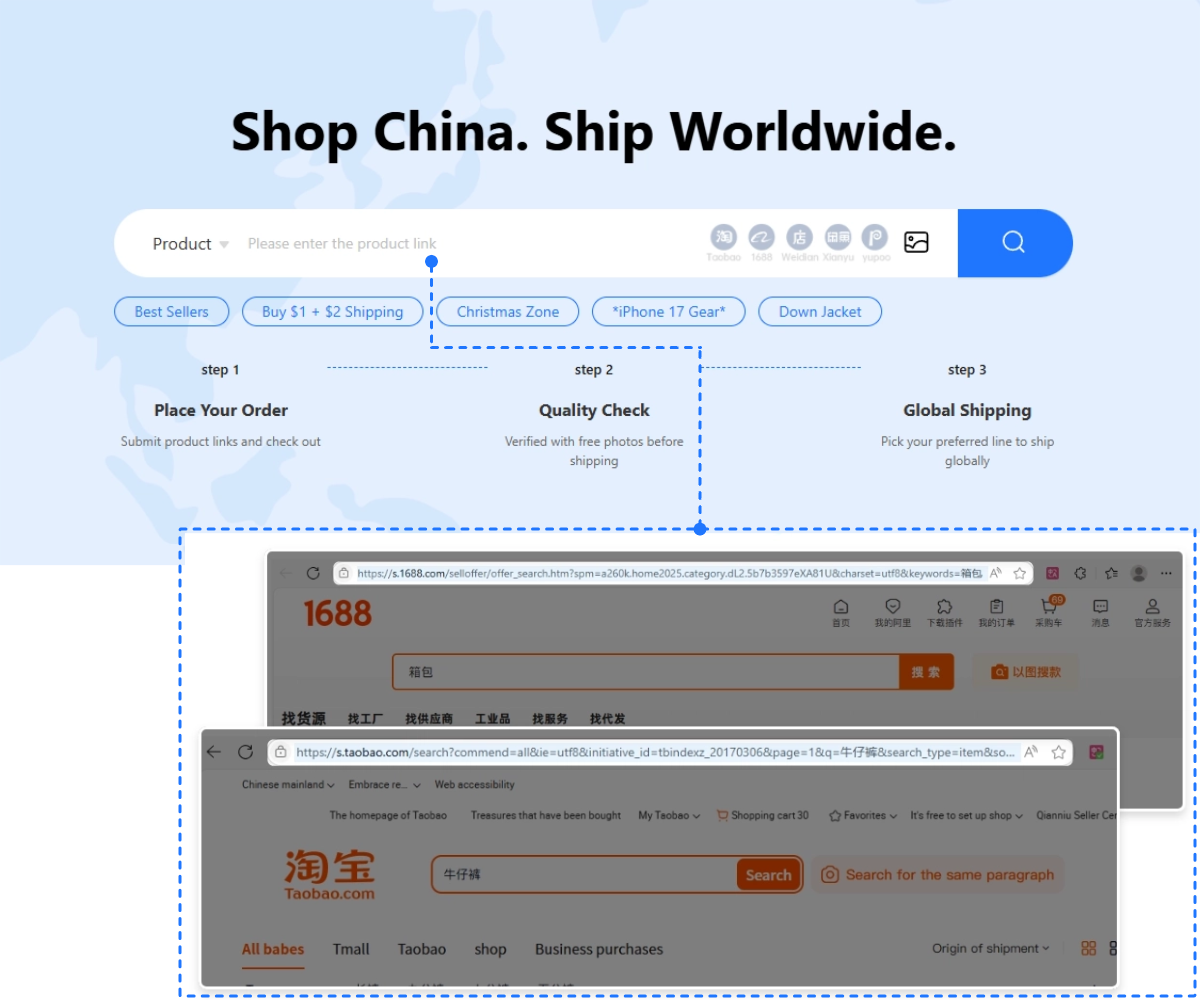
→ New to Taobao? How to buy from Taobao
The Four-Tier Framework
| Tier | Price range (typical item) | Construction quality | Expected lifespan | Western equivalent |
|---|---|---|---|---|
| Budget | $1-8 | Single-layer, thin, basic stitching | 1-6 months regular wear | Shein / Primark |
| Mid-tier | $8-25 | Double-stitched, better fabric weight | 6-18 months | H&M / Uniqlo |
| Premium | $25-60 | Solid construction, real materials | 1-3 years | Zara / COS / Nike |
| Luxury-grade | $60+ | High-density stitching, quality hardware | 3+ years | Approaches designer quality |
These ranges are for clothing and accessories. Jewelry and sneakers have their own tier structures, but the same logic applies: price predicts quality with surprising consistency on Taobao because you’re buying close to the factory cost curve.
Tier 1: Budget ($1-8) — Disposable Done Right
Budget tier is where most people start on Taobao, and it’s also where most disappointment happens. Not because the products are bad — they’re exactly what the price suggests — but because buyers apply Western retail expectations to a $4 hoodie. A $4 hoodie is not trying to be a North Face. It’s trying to be a $4 hoodie, and at that, it usually succeeds.
What to expect
Thin single-layer fabric. Basic stitching that holds up for casual wear but won’t survive a washing machine marathon. Prints that look decent out of the package and start cracking after 15-20 washes. Sizing that’s consistent within a batch but may not match the listing photo’s apparent fit exactly. Colors that are close to the listing but may shift slightly — the seller spent $0.02 on product photography and $0 on color calibration.
What budget tier is perfect for
- Trendy pieces you’ll wear for one season and discard — that TikTok-viral shirt, a specific graphic print, a cosplay base layer
- Gym clothes, sleep clothes, house clothes where nobody sees the label
- Basic staples in bulk — plain tees, socks, underwear
- Phone accessories, cable organizers, desk items, stationery
- Testing a style before committing to a better version
How to verify budget quality before shipping
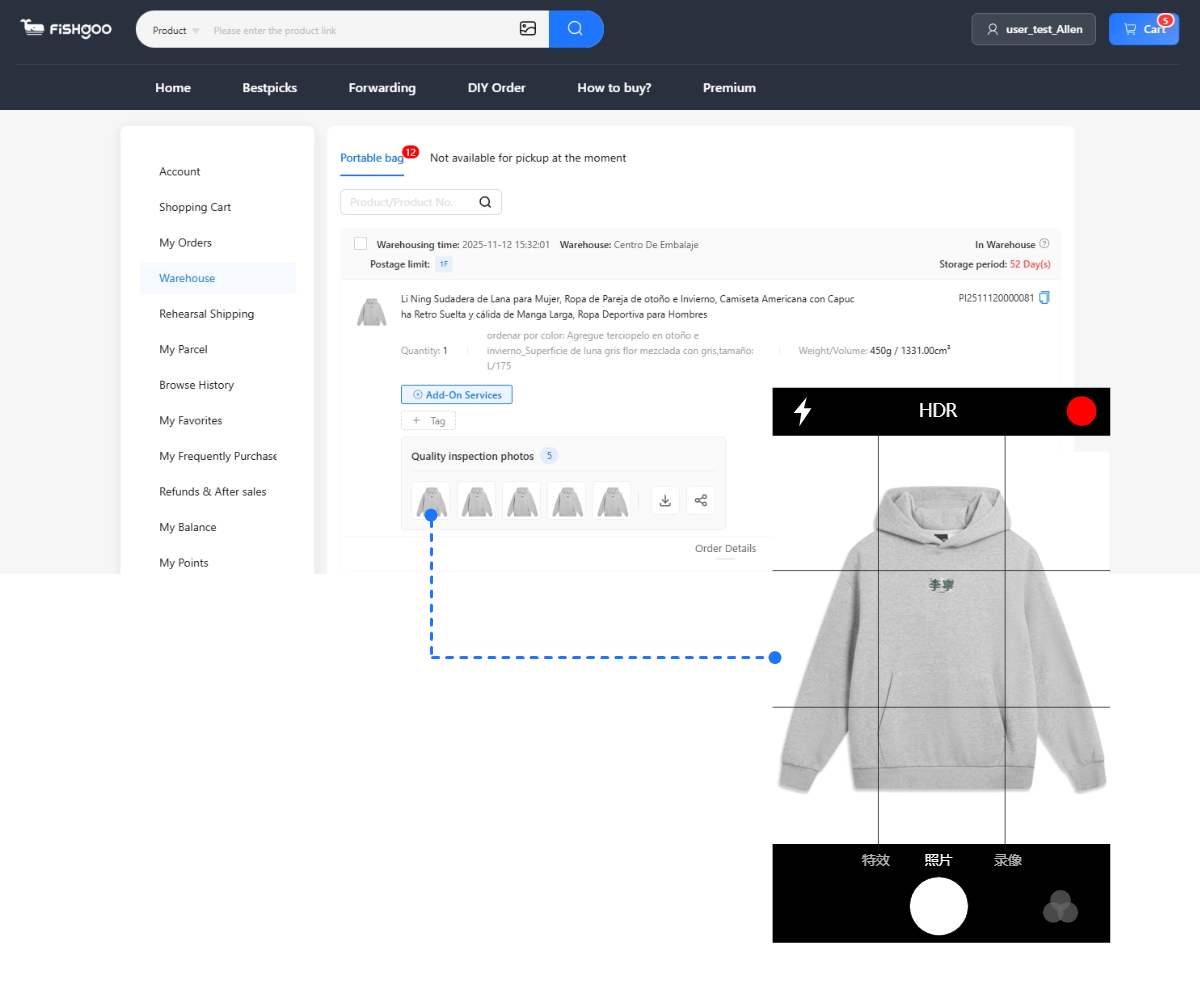
Your QC photos from Fishgoo tell you everything at this tier. Check for: print alignment (is the graphic centered?), obvious construction defects (hanging threads, uneven seams), and color accuracy (roughly matches the listing?). Don’t spend time examining stitching density on a $4 shirt — it’s budget tier and the stitching will be basic. That’s fine.
The return threshold at budget tier: only return if the item is genuinely defective (wrong size shipped, missing print, stain, hole). Minor quality variations are expected and not worth the return processing time on items under $5.
Tier 2: Mid-Tier ($8-25) — The Sweet Spot
This is where Taobao becomes genuinely dangerous for your wallet. Mid-tier items deliver H&M or Uniqlo-equivalent quality at 40-60% of those brands’ prices. The construction is noticeably better than budget: double-stitched seams, heavier fabric weight, more accurate sizing, prints that survive 30+ washes.
Most experienced Taobao buyers spend 60-70% of their budget in this tier. It hits the intersection of quality, value, and variety that makes hauls satisfying.
Quality markers to look for
Fabric weight. You can sometimes tell from QC photos — mid-tier cotton drapes differently than budget polyester. The fabric won’t look shiny or translucent under warehouse lighting.
Seam construction. Mid-tier items typically show clean, consistent seams in QC close-ups. No puckering. No uneven tension. This is the tier where construction starts looking intentional rather than rushed.
Sizing consistency. Mid-tier sellers use standardized size charts that actually match the product. If the chart says chest 110cm, the item measures 108-112cm. At budget tier, the same chart might produce a 104-116cm range.
Review quality. Sellers at this tier have extensive buyer reviews with uploaded photos. These photos match the listing more closely than at budget tier — what you see is closer to what you get.
Best mid-tier categories
Hoodies ($10-18), button-down shirts ($12-22), denim ($14-25), sneakers ($18-30), cosplay costumes ($20-50 for mid-complexity), bags and backpacks ($8-20), outerwear ($18-25).
At this tier, the gap between Taobao and Western retail is most dramatic. A $15 Taobao hoodie and a $45 H&M hoodie are genuinely comparable in construction. The H&M markup is brand, retail space, and marketing — not superior fabric.
Tier 3: Premium ($25-60) — Real Quality, Factory Prices
Premium tier is where Taobao stops being a budget platform and starts being an insider’s source. Items at this price point are manufactured with the same equipment, materials, and often the same factories that produce for Western mid-to-premium brands. The difference is you’re paying the factory’s margin instead of the brand’s margin.
A $40 jacket from a premium Taobao seller and a $120 jacket from COS or Massimo Dutti may literally come from the same production line. This isn’t speculation — the r/FashionReps community has traced specific factories to specific Western brands on multiple occasions.
What premium construction looks like in QC photos
Material quality. Real cotton with visible texture. Genuine leather that shows natural grain variation. Suede with consistent nap. Metal hardware with weight — not the hollow tin feel of budget accessories. Through Fishgoo’s 5 free HD QC photos, you can zoom in on material texture and make a confident call.
Stitching density. Premium items show tight, even stitching with no gaps. Seam reinforcement at stress points (underarms, cuffs, collar). On sneakers, the upper-to-sole bond is clean with no visible glue excess.
Detail accuracy. Buttons are securely attached. Zippers open smoothly (request the agent to test if you’re unsure). Labels are printed cleanly rather than screen-printed crookedly. Interior finishing is tidy — no raw edges or visible thread tails.
Where premium tier shines
Technical outerwear ($35-60), quality sneakers ($40-80), structured bags ($25-45), 925 sterling silver jewelry ($10-40), premium cosplay ($50-110), Chinese streetwear brands like Roaringwild and Randomevent ($25-50).
At premium tier, QC photo review becomes more important, not less. You’re paying real money — $40-60 per item — and the gap between “premium done well” and “overpriced mid-tier” is visible in the construction details. Five HD photos per item let you catch the difference before committing to international shipping.
Tier 4: Luxury-Grade ($60+) — Approaching Designer Construction
Luxury-grade Taobao exists. It’s small, it’s specialized, and it’s not what most people picture when they think “Taobao shopping.” These are sellers producing items at near-designer construction standards — thick leather goods, perfectly tensioned stitching, heavy custom hardware — at prices that are still 60-80% below retail equivalent.
This tier is dominated by two categories: high-end replica fashion (bags, sneakers, and accessories from communities like r/DesignerReps) and authentic Chinese premium brands sold through Tmall flagship stores.
How to verify luxury-grade quality
At this price point, QC photos aren’t optional — they’re the entire decision framework. Through Fishgoo‘s 5 free photos, specifically request:
- Close-up of stitching density and thread tension
- Hardware macro shot (zipper pulls, buckles, magnetic clasps)
- Interior lining and finishing
- Logo/stamp accuracy and depth
- Material texture under natural warehouse lighting
Community cross-referencing is essential here. Before ordering luxury-grade items, check the seller’s reputation on r/FashionReps or r/DesignerReps. Community members share detailed QC comparisons against retail versions. A seller with 50+ positive community reviews at the luxury tier is significantly safer than an unvetted seller at any price.
→ How to verify sellers and avoid scams
The Tier System Applied to Specific Categories
The same four-tier logic maps to every product category, just with different absolute price points:
| Category | Budget | Mid-tier | Premium | Luxury-grade |
|---|---|---|---|---|
| Hoodies | $4-8 | $10-18 | $25-45 | $50-90 |
| Sneakers | $8-15 | $18-35 | $40-80 | $85-150 |
| Jewelry | $0.50-5 | $5-15 | $15-40 (silver) | $40+ (gold) |
| Bags | $3-8 | $10-22 | $25-50 | $55-200 |
| Outerwear | $10-18 | $20-35 | $40-80 | $90-200 |
| Phone cases | $0.40-1.50 | $2-5 | $5-12 | $15+ (leather) |
| Cosplay | $12-25 | $30-50 | $55-110 | $120+ (custom) |
Notice how budget sneakers start at $8 while budget phone cases start at $0.40 — the tiers scale with the category’s material complexity. But within each category, the four-tier pattern holds: each price step up delivers predictably more construction quality.
How to Use This Framework When Shopping
Before adding any item to your haul, ask two questions:
Question 1: What tier am I buying? Check the price against the category table above. If a “premium quality” hoodie is priced at $6, the seller is lying about the tier. If a “$50 luxury” bag is from a seller with 12 transactions and no community reviews, the price doesn’t guarantee the tier.
Question 2: Are my expectations matched to this tier? If you’re buying budget-tier items and expecting premium construction, you’ll be disappointed every time. If you’re buying mid-tier items and comparing them to fast-fashion retail, you’ll be pleasantly surprised every time. The framework eliminates surprise by calibrating expectations before purchase.
The practical decision tree
- Trendy, seasonal, disposable? → Budget tier. Don’t overthink it. $4-8 and move on.
- Daily wear, 6-12 months expected use? → Mid-tier. Sweet spot. Spend $10-25.
- Wardrobe staple, 1-3 year investment? → Premium tier. Worth the $30-60 for items you’ll wear constantly.
- Statement piece, specific brand-quality goal? → Luxury-grade. Research the seller thoroughly first. Community-vetted only.
I build my hauls with a deliberate tier mix: 40% mid-tier (core of the haul), 30% budget (lightweight fillers and experiments), 20% premium (a few key pieces I actually care about), 10% luxury-grade (one special item per haul at most). This mix keeps the total cost reasonable while ensuring every haul includes items I’ll genuinely love wearing.
Seller Signals That Predict Quality Tier
Price alone isn’t enough. These seller-level signals help confirm which tier you’re actually getting:
Transaction count. Budget sellers often have 10,000+ transactions on cheap items. Mid-tier sellers range 1,000-10,000. Premium and luxury-grade sellers often have fewer transactions (200-2,000) but with higher review quality. Very high transaction count on a “premium priced” item can actually indicate the seller raised prices on a mid-tier product.
Buyer review photos vs listing photos. At budget tier, buyer photos look noticeably worse than listing photos. At mid-tier, they’re similar but not identical. At premium and luxury, buyer photos closely match or sometimes look better than listings because the product quality holds up in casual phone photography.
Store age and consistency. Premium and luxury sellers tend to have stores operating 2+ years with a focused product range. Budget sellers often have huge catalogs (5,000+ listings across unrelated categories) with high listing turnover. The focused, consistent store usually indicates a genuine quality commitment.
Price relative to category average. On Taobao, search for the item type and sort by sales volume. The price cluster where most sales happen tells you the category’s “normal” mid-tier price. Items 50%+ above that cluster are either premium tier or overpriced mid-tier. Items 50%+ below are budget tier. The cluster itself is mid-tier.
→ How to search Taobao effectively
QC Photos: The Tier Verification Tool
Everything I’ve described about quality markers is theoretical until you see actual QC photos. That’s why agents with adequate photo counts matter more than agents with the lowest shipping rates.
Fishgoo includes 5 free HD QC photos per item — enough to verify tier-appropriate quality across all categories. For context:
- Budget tier QC (30 seconds): Glance at color accuracy, check for obvious defects, confirm size label. Done. Don’t over-inspect a $4 shirt.
- Mid-tier QC (1-2 minutes): Check seam quality, fabric appearance, print accuracy, sizing label, overall shape. Return anything that looks budget-tier at mid-tier prices.
- Premium tier QC (2-3 minutes): Examine stitching density, material texture, hardware quality, label accuracy, construction details. Compare against listing photos and community references.
- Luxury-grade QC (3-5 minutes): Full inspection of every detail. Cross-reference against community photos. Request specific angle close-ups if the 5 standard photos don’t cover a critical area. Post to r/FashionReps for community GL/RL feedback.
The time-per-item scales with tier because the cost of a wrong decision scales with tier. Catching a defect on a $60 jacket saves you $60 plus replacement shipping. Catching a defect on a $4 phone case saves you $4 and isn’t worth the return processing time.
Common Mistakes by Tier
Budget mistake: expecting longevity. A $5 hoodie is not an investment. It’s a consumable. Expecting it to last 3 years is like expecting gas station sushi to compete with a proper restaurant. Calibrate expectations and budget tier becomes excellent value.
Mid-tier mistake: not checking sizing. Mid-tier is where sizing accuracy starts mattering because you actually plan to wear these items regularly. Skipping the size chart verification at this tier costs you more than at budget, because the item is worth keeping and a wrong size is genuinely annoying.
Premium mistake: trusting price alone. Price indicates tier probability, not tier certainty. A $45 listing from an unvetted seller with 30 transactions might deliver mid-tier quality at premium prices. Verify through seller signals, community reviews, and QC photos — never through price alone.
Luxury-grade mistake: skipping community research. At $80-150 per item, a wrong choice is expensive. The 20 minutes spent reading Reddit reviews of the specific seller can save you $100+ on a single item.
→ First order checklist (start here if new)
→ Is using a Taobao agent safe?
Why Zero Agent Fees Matter More at Higher Tiers
Here’s a math problem nobody talks about. Agent service fees are percentage-based — 3-5% of product cost. As you move up quality tiers, the absolute fee amount grows proportionally:
| Item tier | Item cost | 5% agent fee | 3% agent fee | Fishgoo (0%) |
|---|---|---|---|---|
| Budget hoodie | $5 | $0.25 | $0.15 | $0 |
| Mid-tier hoodie | $15 | $0.75 | $0.45 | $0 |
| Premium jacket | $45 | $2.25 | $1.35 | $0 |
| Luxury-grade bag | $120 | $6.00 | $3.60 | $0 |
On a haul mixing tiers — 3 budget items, 5 mid-tier, 3 premium, 1 luxury — the total product cost might hit $250. At a 5% fee agent, you’re paying $12.50 in commission. Through Fishgoo, that $12.50 stays in your pocket. Over a year of 5 hauls with mixed tiers, the annual saving approaches $60-100 — roughly the cost of an entire extra premium item per year.
→ How agent fees actually work
FAQ
-
What quality tier is Shein equivalent to?
Mostly budget to low-mid tier. Shein products sit roughly in the $5-12 quality range on Taobao’s tier system. Through Taobao you can get the same quality for 30-50% less, or step up to genuine mid-tier for the same money Shein charges.
-
Does paying more always mean better quality?
Usually yes, up to the premium tier (~$60). Above that, you enter luxury-grade territory where price reflects brand association and detail perfection rather than fundamental quality jumps. A $200 Taobao item isn’t 4x better than a $50 one — it’s 30% better in details that matter to specific buyers.
-
How do I verify quality without reading Chinese?
Three tools: buyer-uploaded review photos (visual, no language needed), QC photos from your agent (5 free with Fishgoo), and English-language community reviews on Reddit. Between these three, Chinese literacy is never required.
-
Should I buy all budget or all premium?
Neither. Mix tiers deliberately. My standard split: 30% budget (fillers, experiments), 40% mid-tier (core pieces), 20% premium (key items), 10% luxury (one special piece). This optimizes both total cost and overall haul satisfaction.
-
Which agent is best for mixed-tier hauls?
Fishgoo — zero service fee preserves margin across all tiers, 5 free QC photos let you calibrate inspection depth by tier, and 100 days free storage allows patient haul building across price levels.
→ Verify quality at every tier with Fishgoo — 5 QC photos, zero fee


Start with one product, sample or restock task
Send the product link or description, approximate quantity and destination. Review the scope before any paid purchasing work begins.