Taobao Seller Ratings 2026: Why Store Crowns Don’t Protect You — and the 5 Signals That Do
The third Taobao seller I ever ordered from had a crown rating, a beautiful storefront, and professional listing photos that made everything look like a magazine shoot. The product I received looked like it had been assembled during an earthquake. Different color, asymmetric stitching, fabric so thin I could read a newspaper through it. The seller’s overall store rating was excellent. The specific product? Zero buyer-uploaded photos. Two text reviews. Both suspiciously generic.
That’s when I learned the most important lesson in Taobao shopping: store-level ratings mean almost nothing. Product-level signals mean everything.
A seller can have 50,000 store transactions and a crown rating, but if the particular item you’re buying has 8 sales and no buyer photos, you’re gambling. Meanwhile, a smaller store with a diamond rating might have one listing with 3,000 transactions and hundreds of buyer photos — that specific listing is one of the safest purchases you can make on the entire platform.
This article teaches you exactly which signals to read and which to ignore, so you stop trusting the wrong indicators and start trusting the right ones.
→ Understanding quality by price? Read the quality tier framework first.
Signal 1: Product Transaction Count (The Only Number That Matters)
Forget store-level metrics. The number that actually predicts your experience is the transaction count on the specific product listing you’re about to buy.
Here’s why: a store might sell 200 different products. 190 of them could be solid mid-tier items with thousands of happy buyers. But the 10 newer listings might be untested, sourced from a different factory, or just poorly made. The store’s overall rating reflects the 190 good products. Your order is from one of the 10 questionable ones. Store reputation doesn’t protect you.
The thresholds I use
| Transaction count | Risk level | When I’d buy |
|---|---|---|
| 0-50 | High risk | Only if the item is very cheap ($1-3) and I don’t care about quality |
| 50-200 | Moderate risk | If buyer photos look good and there are at least 5 photo reviews |
| 200-1,000 | Low risk | Standard comfort zone for most items |
| 1,000-5,000 | Very safe | High confidence — thousands of buyers have validated this exact product |
| 5,000+ | Extremely safe | Mass-validated. Buy without hesitation. |
For your first few Taobao orders, staying above 500 transactions is the simplest way to avoid problems. Once you’ve developed QC photo review skills and know what to look for, you can drop to the 100-200 range and still be fine.
For premium and luxury-grade items ($40+), I wouldn’t go below 200 transactions regardless of experience. The cost of getting it wrong is too high.
Signal 2: Buyer-Uploaded Review Photos (The Real Product Preview)
Seller photos are marketing. Buyer photos are reality. The gap between the two tells you more about a product than any rating number.
On every Taobao listing, scroll past the seller’s professional images to the review section. Tap the photo icon to filter reviews that include images. These are photos taken by real buyers — on their kitchen tables, in their bedrooms, under harsh bathroom lighting. Unflattering? Sometimes. Honest? Almost always.
What to look for in buyer photos
Color accuracy. Does the item look roughly the same color as the listing? Slight variation is normal (different phone cameras, different lighting). Completely different shade is a red flag.
Construction quality. Are the seams straight? Does the fabric look like it has actual weight? Is the print crisp or blurry? You can usually tell within 2-3 buyer photos whether the product matches its claimed quality tier.
Consistency across buyers. Look at photos from 5+ different buyers. If they all look similar, the product is consistent across batches. If quality varies wildly between buyer photos, the seller has inconsistent sourcing — risky even if some photos look great.
Fit on real people. Buyer photos often show items being worn. This gives you a much more honest sense of fit and drape than the seller’s model photos. Combined with your cm measurements, this cuts sizing risk significantly.
Red flag: no buyer photos at all
A listing with 500+ transactions but zero buyer-uploaded photos is unusual. Possible explanations: the seller might have recently relisted the product (resetting reviews), or the product is so cheap that buyers don’t bother photographing it, or the reviews are manipulated. For items over $10, I skip listings with zero buyer photos regardless of transaction count.
Signal 3: Store Profile Analysis
While store ratings aren’t the primary indicator, certain store-level characteristics do correlate with reliability:
Store age. Stores operating 3+ years are significantly safer than stores opened in the last 6 months. Use the Taobao app to check the store’s founding date — it’s displayed on the store profile page in Chinese, but the year number is easy to read.
Category focus. A store selling exclusively sneakers (50 listings, all footwear) is more likely to deliver quality sneakers than a store selling 8,000 products across clothing, electronics, kitchen tools, and pet supplies. Focused stores have deeper supplier relationships and better category expertise.
Listing detail level. Reliable sellers invest in their product pages. Multiple photos from different angles, detailed size charts with specific cm measurements, material descriptions, and washing instructions. Lazy listings with one photo and no sizing information come from sellers who don’t expect you to care — and often don’t care themselves.
The heart/diamond/crown system. For reference:
| Icon | Level | Meaning |
|---|---|---|
| ❤️ Hearts (1-5) | New seller | 4-250 positive ratings. Early stage. Higher risk. |
| 💎 Diamonds (1-5) | Established | 251-10,000 positive ratings. Proven track record. |
| 👑 Crowns (1-5) | Top-tier | 10,001+ positive ratings. Major seller. |
Diamond and above indicates a proven seller, but remember: this is store-level reputation. A crown seller can still have poorly-made new listings. Always cross-reference with product-level transaction count and buyer photos.
Signal 4: Community Reputation
This is the secret weapon that separates experienced buyers from newcomers. English-speaking communities have collectively verified hundreds of Taobao and Weidian sellers, creating what amounts to a crowdsourced trust database.
Where to check
r/FashionReps — The largest community. Search the subreddit for the seller’s store name or a product description. Posts from multiple users over multiple months indicate genuine reliability. A seller mentioned only in one recent post by a new account could be astroturfing.
r/RepSneakers — Sneaker-focused. Maintains curated lists of “trusted sellers” in pinned posts. These lists are updated by moderators based on sustained community feedback.
Discord servers — Fashion, cosplay, and hobby-specific Discord communities share seller links with real-time feedback. Often the first place new sellers get evaluated before information reaches Reddit.
Reddit agent reviews — While these primarily cover agents, comment threads often include seller-specific recommendations from experienced buyers.
Community trust scoring
I mentally assign community trust scores like this:
- High trust: Multiple Reddit posts spanning 6+ months, from established accounts, with QC photos showing consistent quality. This seller has been battle-tested.
- Medium trust: A few Reddit mentions, some QC photos, limited history. Worth trying on a budget item as a test order.
- Low trust: One or two mentions from new accounts, possibly promotional. Treat like an unverified seller.
- No data: Zero community presence. Not necessarily bad, but unverified. Use the test-order method below.
Signal 5: The Test Order Method
When signals 1-4 don’t give a clear answer — maybe the seller has decent transactions but no community reputation, or strong buyer photos but is relatively new — there’s one more tool: the test order.
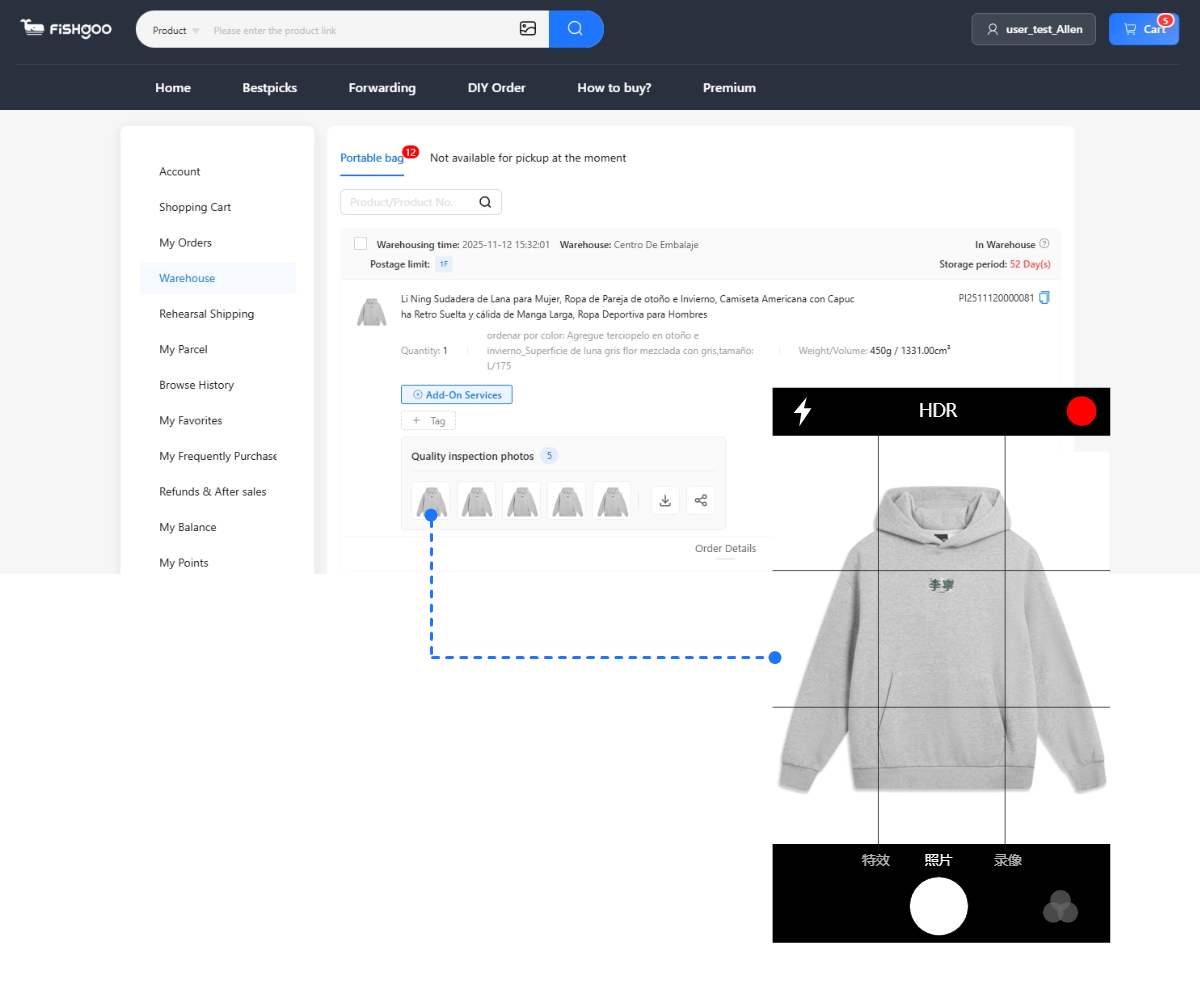
Buy one inexpensive item ($5-15) from the seller through your agent. Review the QC photos carefully. Does the product match the listing? Is the construction consistent with its quality tier? Did it arrive at the warehouse in the stated timeframe?
Through Fishgoo, this test costs:
- Product cost: $5-15
- Agent fee: $0 (zero service fee)
- Shipping: $0 (leave at warehouse until you add it to a future haul)
Total risk: just the product cost. If it passes QC, you’ve validated the seller and can order confidently in the future. If it fails, you’ve lost $5-15 and gained valuable information. Either way, you know.
I test-order from 2-3 new sellers per month. Maybe 80% pass. The 20% that don’t save me from making much larger mistakes later. It’s the cheapest insurance in Taobao shopping.
→ If a test order fails QC: how the return process works
Putting It All Together: My Decision Process
When I find a product I want to buy, I run through the signals in order. Takes about 90 seconds per item.
Step 1: Check product transaction count. Under 100? I need strong signals elsewhere or I skip. Over 500? Move to step 2.
Step 2: Look at buyer-uploaded photos. At least 5 photo reviews? Check color accuracy, construction, consistency. Zero photos? I skip unless the item is under $5.
Step 3: Glance at store profile. 3+ years, focused category, diamond or crown? Good. Brand new store, 8,000 random products, hearts only? Caution.
Step 4: Quick Reddit/Discord search. Seller has community mentions with QC photos? High confidence. No mentions? Not disqualifying, but I stay cautious.
Step 5: If steps 1-4 are mixed or unclear, and I still want the item, I make it a test order. One unit, cheap item, evaluate through QC.
This process has dropped my QC rejection rate from maybe 15-20% (my first year) to under 5% (now). The five minutes of seller checking saves hours of return processing and dollars of wasted product.
Seller Red Flags to Walk Away From
Some patterns should make you close the tab immediately:
Listing photos stolen from another seller. Right-click the listing photo and reverse-image-search it. If the exact same photos appear on 20 other Taobao stores, the seller probably isn’t the manufacturer — they’re a reseller who may not even have the product in stock until you order it.
Prices wildly below category average. If every other seller offers a product for $15-25 and one seller lists it at $4, something is off. Either the quality is dramatically lower, or the listing is bait-and-switch. Refer to the quality tier framework — $4 puts you in budget tier regardless of what the listing claims.
Fake review patterns. Dozens of 5-star text reviews posted within the same week, all with similar wording, all from accounts with no profile photos. Real reviews trickle in over weeks and months and vary in length, tone, and detail.
“Guaranteed authentic” claims on non-Tmall stores. Authentic branded products are sold through Tmall flagship stores with brand authorization. A regular Taobao marketplace seller claiming “100% authentic Nike” is almost certainly lying. Know which category you’re buying — authentic vs replica — and don’t let misleading claims confuse you.
No size chart on clothing. A clothing seller who doesn’t provide a cm size chart either doesn’t care about returns or doesn’t care about accuracy. Both are bad signs. Skip to a seller who provides one.
→ Agent scam warning (applies to sellers too)
→ Is using a Taobao agent safe?
Special Cases: Weidian and 1688 Sellers
Weidian sellers operate differently from Taobao sellers. Weidian stores are often smaller, more specialized, and have lower transaction counts by default because the platform is less mainstream. A Weidian seller with 200 transactions may be as reliable as a Taobao seller with 2,000 transactions — the user base is simply smaller.
For Weidian, community reputation (Signal 4) becomes the primary verification tool. Most Weidian sellers found through r/FashionReps or r/RepSneakers have been vetted through dozens of QC photo reviews.
1688 sellers are wholesale suppliers. Transaction counts reflect B2B order volume, which is different from consumer patterns. A 1688 seller with 50 transactions may have shipped 5,000 units across those 50 wholesale orders. Check buyer review photos and order a small test quantity (2-5 units) before scaling up.
FAQ
-
Can I communicate with Taobao sellers directly?
Not easily — seller chat is in Chinese. Through your Taobao agent, you can leave order notes asking the agent to communicate specific questions to the seller. Fishgoo’s team handles this in Chinese on your behalf.
-
Do seller ratings change over time?
Yes. Taobao updates ratings based on ongoing transaction feedback. A previously reliable seller can decline if they switch factories or cut corners. Always check recent reviews (last 1-3 months), not just overall rating.
-
Is a crown seller always safe?
No. Crown indicates high store-level volume, not product-level quality. Always verify at the product listing level using transaction count and buyer photos. A crown seller can have poorly-made new listings alongside excellent established ones.
-
How do I check sellers if I can’t read Chinese?
Transaction numbers are universal (digits, no translation needed). Buyer photos are visual. Store age displays as a year number. Community checks happen on English Reddit/Discord. Between these, Chinese literacy is unnecessary for seller verification.
-
What if a seller sends the wrong item?
Your QC photos catch this before international shipping. Through Fishgoo, returns are handled for free within China. The seller ships a replacement or issues a refund, processed by the agent in Chinese.
→ Verify every seller with Fishgoo’s 5 free QC photos before shipping


Start with one product, sample or restock task
Send the product link or description, approximate quantity and destination. Review the scope before any paid purchasing work begins.