How to Read Taobao Reviews Without Speaking a Word of Chinese
I used to skip Taobao reviews entirely. Open the listing, look at the seller photos, check the price, add to cart. The review section? A wall of Chinese characters I couldn’t read, so why bother scrolling through it?
That approach cost me roughly $200 in bad purchases over six months. Items that looked great in the listing but turned out to be cheap garbage. Colors that were completely different from what the seller showed. Sizes that might as well have been from a different planet. Every single one of those problems was visible in the buyer review photos — I just never looked.
Here’s the thing most international buyers don’t realize: you don’t need to read Chinese to use Taobao reviews effectively. The three most valuable pieces of information in any review — buyer photos, star ratings, and transaction count — are all visual or numerical. The Chinese text adds nuance, but photos alone give you roughly 80% of what you need to make a confident purchase decision.
This article teaches you how to extract maximum value from Taobao reviews using only your eyes, no translation required. Combined with QC photos from your agent, you’ll have a two-layer verification system that catches problems before they cost you money.
→ Evaluating sellers more broadly? See the seller rating verification walkthrough
Layer 1: Buyer-Uploaded Photos (80% of the Value)
On any Taobao product page, scroll past the seller’s listing photos to the review section. You’ll see a tab or icon for photo reviews — tap it and you’re looking at images uploaded by real buyers. Kitchen table photos. Bathroom mirror selfies. Desk shots under fluorescent lighting. Unflattering, unfiltered, honest.
These photos are your pre-purchase intelligence. Here’s exactly how to read them:
Color check
Compare buyer photos against the listing photos. Some color shift is normal — the seller used professional lighting, the buyer used a phone camera. What you’re looking for is direction of shift, not exact match. Is the “navy blue” hoodie actually navy blue in buyer photos, or does it lean purple? Is the “off-white” actually off-white, or is it closer to grey? One or two buyer photos might mislead you due to lighting conditions, but if 5+ buyers all show the same color shift, that’s the real color.
I once ordered what the listing showed as a “forest green” jacket. Every single buyer photo showed it as teal. I ordered anyway because I wanted to believe the listing. It arrived teal. Lesson: when buyer photos disagree with the listing, the buyer photos win. Every time.
Material appearance
Fabric looks different in studio photography versus real-world photos. In buyer photos, look for:
- Sheen level. Budget polyester has a noticeable artificial shine. Cotton and cotton blends look matte. If the listing shows matte cotton but buyer photos show shiny fabric, you’re getting polyester.
- Thickness cues. Can you see the outline of the buyer’s hand through the fabric? It’s thin. Does the fabric hold its own shape in the photo? It has weight. These visual cues tell you more about material quality than any translated review text.
- Texture. Knit patterns, ribbing, weave density — all visible in close-up buyer photos. A $6 hoodie and a $18 hoodie have visibly different fabric textures even in phone photos.
→ Understanding what quality to expect at each price: quality tier framework
Construction quality
Zoom into buyer photos and check seams, prints, and assembly:
- Seam lines. Straight and consistent = properly manufactured. Wavy or bunched = rushed production.
- Print quality. Sharp edges = quality screen print. Fuzzy or offset = cheap transfer print that’ll crack after 10 washes.
- Symmetry. Collars centered? Pockets aligned? Logos straight? Asymmetric construction is one of the clearest visual signals of budget manufacturing.
Fit on real people
This is the goldmine that seller photos can never give you. Buyer selfies and mirror shots show how an item actually fits on a normal human body — not on a 6-foot model in a professional studio with strategic lighting and pins holding the fabric in back.
Pay attention to: shoulder drop (does the seam sit on the actual shoulder or droop?), length (where does the hem hit on real waists?), and overall silhouette (is the “oversized” actually oversized, or just boxy and awkward?). Combined with your cm measurements, buyer fit photos eliminate most sizing surprises.
Consistency across buyers
This is the meta-signal. If photos from 10 different buyers all show roughly the same product — same color, same quality, same fit — the product is consistent across manufacturing batches. If buyer photos vary wildly (some show great quality, others show obvious defects), the seller has inconsistent sourcing. Consistent buyer photos = safe purchase. Inconsistent = gamble.
Layer 2: Star Ratings (But Not the Way You Think)
Taobao uses a 1-5 star system. Simple, right? Not really. Star ratings on Taobao behave completely differently from Amazon or Google reviews, and misreading them is one of the most common international buyer mistakes.
The star inflation problem
Average Taobao product ratings cluster between 4.7 and 4.9 stars. This isn’t because everything on Taobao is excellent — it’s because Chinese review culture and seller incentive systems push ratings upward:
- Many sellers offer ¥2-5 coupons for leaving a 5-star review
- Chinese consumers tend to leave reviews only when satisfied; unhappy buyers more often just don’t review at all
- Some sellers actively manage ratings through purchased positive reviews
The result: the Taobao star scale is compressed. What looks like a small difference in stars actually represents a large quality gap:
| Taobao stars | Rough Amazon equivalent | What it actually means |
|---|---|---|
| 4.9-5.0 | 4.5-5.0 | Genuinely good. Safe purchase. |
| 4.7-4.8 | 4.0-4.3 | Acceptable. Most products sit here. Fine. |
| 4.5-4.6 | 3.5-3.8 | Below average for Taobao. Proceed with caution. |
| Below 4.5 | Below 3.0 | Concerning. Something is wrong. Skip. |
On Amazon, a 4.2-star product is perfectly acceptable. On Taobao, a 4.2-star product has serious issues that drove ratings below the platform’s inflated norm. The threshold for concern is roughly 4.5 stars — anything below that warrants extra scrutiny or just skipping to a better-rated alternative.
The three sub-ratings
Taobao actually shows three separate sub-ratings for each seller store (not per product):
- 描述相符 (Description accuracy) — Does the product match the listing?
- 服务态度 (Service quality) — How responsive is the seller?
- 物流服务 (Shipping speed) — How fast does domestic shipping arrive?
You don’t need to read the Chinese labels — the numbers are universal. Three scores, each out of 5.0, displayed on the seller’s store page. For international buyers, the first score (描述) matters most because it directly predicts whether what you receive matches what was shown. The third score (物流) is less relevant because your agent handles international shipping regardless of seller speed.
Layer 3: Transaction Count and Review Volume
Pure numbers. No translation needed. Transaction count appears on every listing as a prominent digit — you literally cannot miss it.
I covered the specific thresholds in the seller rating walkthrough, but the review-specific angle is this: the ratio of reviews to transactions tells you about engagement quality.
- High transactions + high photo reviews = buyers care enough about this product to share their experience. Strongly positive signal.
- High transactions + very few reviews = buyers are purchasing but not engaging. Neutral signal — product is probably fine but unremarkable.
- Low transactions + detailed reviews = niche product with dedicated buyers. Worth reading more carefully. Often found on Weidian specialty sellers.
- Low transactions + no reviews = unverified. Use the test-order method if you still want to try it.
Layer 4: Google Translate (Optional but Helpful)
If you want to go deeper than visual signals, Google Translate can give you rough meaning from review text. It’s imperfect — fashion terminology translates badly and nuance gets lost — but it catches the big patterns.
How to use it efficiently
On desktop: Open the Taobao product page in Chrome. Right-click → Translate to English. Scroll to reviews. The translations will be rough but readable. Look for repeating positive or negative themes rather than trying to understand individual reviews.
On mobile: Screenshot a review. Open Google Translate. Use the camera/photo mode to translate text from the image. Takes about 10 seconds per review.
Useful Chinese review phrases you’ll see often
| Chinese | Pinyin | Meaning | Signal |
|---|---|---|---|
| 质量好 | zhìliàng hǎo | Good quality | Positive |
| 颜色有色差 | yánsè yǒu sèchā | Color differs | Warning |
| 偏小 | piān xiǎo | Runs small | Size warning |
| 偏大 | piān dà | Runs large | Size warning |
| 物超所值 | wù chāo suǒ zhí | Worth more than paid | Strong positive |
| 差评 | chà píng | Bad review | Negative |
| 退货 | tuìhuò | Returned | Strong negative |
| 面料薄 | miànliào báo | Thin fabric | Quality warning |
| 做工好 | zuògōng hǎo | Good workmanship | Construction positive |
| 线头多 | xiàntóu duō | Loose threads | Construction warning |
You absolutely don’t need to memorize this table. Bookmark this page and reference it when you’re screening a product. After a few months of Taobao shopping, you’ll start recognizing the common characters naturally.
→ More on using Taobao in English
Detecting Fake Reviews
Fake reviews exist on Taobao just like they exist on Amazon. Here’s how to spot them:
Temporal clustering. Real reviews trickle in over weeks and months. Fake reviews often appear in bursts — 20 five-star reviews in the same week, then silence. Scroll through the review dates. If you see an unnatural cluster, the seller likely paid for a review boost.
Identical wording. Run a few reviews through Google Translate. If multiple reviews use suspiciously similar phrasing (“Great product, fast delivery, will buy again” repeated verbatim across 10 accounts), they’re templated fakes.
No-photo uniformity. Real engaged buyers who bother writing a review often include a photo. A product with 50 text-only five-star reviews and zero photos is suspicious. Real satisfaction tends to generate some visual sharing.
New reviewer accounts. On Taobao, you can sometimes see the reviewer’s account age or purchase history. Fresh accounts with only one review (for this product) are likely purchased review accounts.
Incentivized review indicators. Some honest reviews will mention receiving a coupon or discount for leaving a review. This doesn’t make the review fake — the buyer actually received the product — but it means the rating is biased upward. Factor this in.
When reviews feel unreliable
If you can’t tell whether reviews are genuine, fall back on your two backup verification systems:
- Community references. Search r/FashionReps or r/RepSneakers for the seller or product. Community-posted QC photos from real international buyers are harder to fake than Taobao reviews.
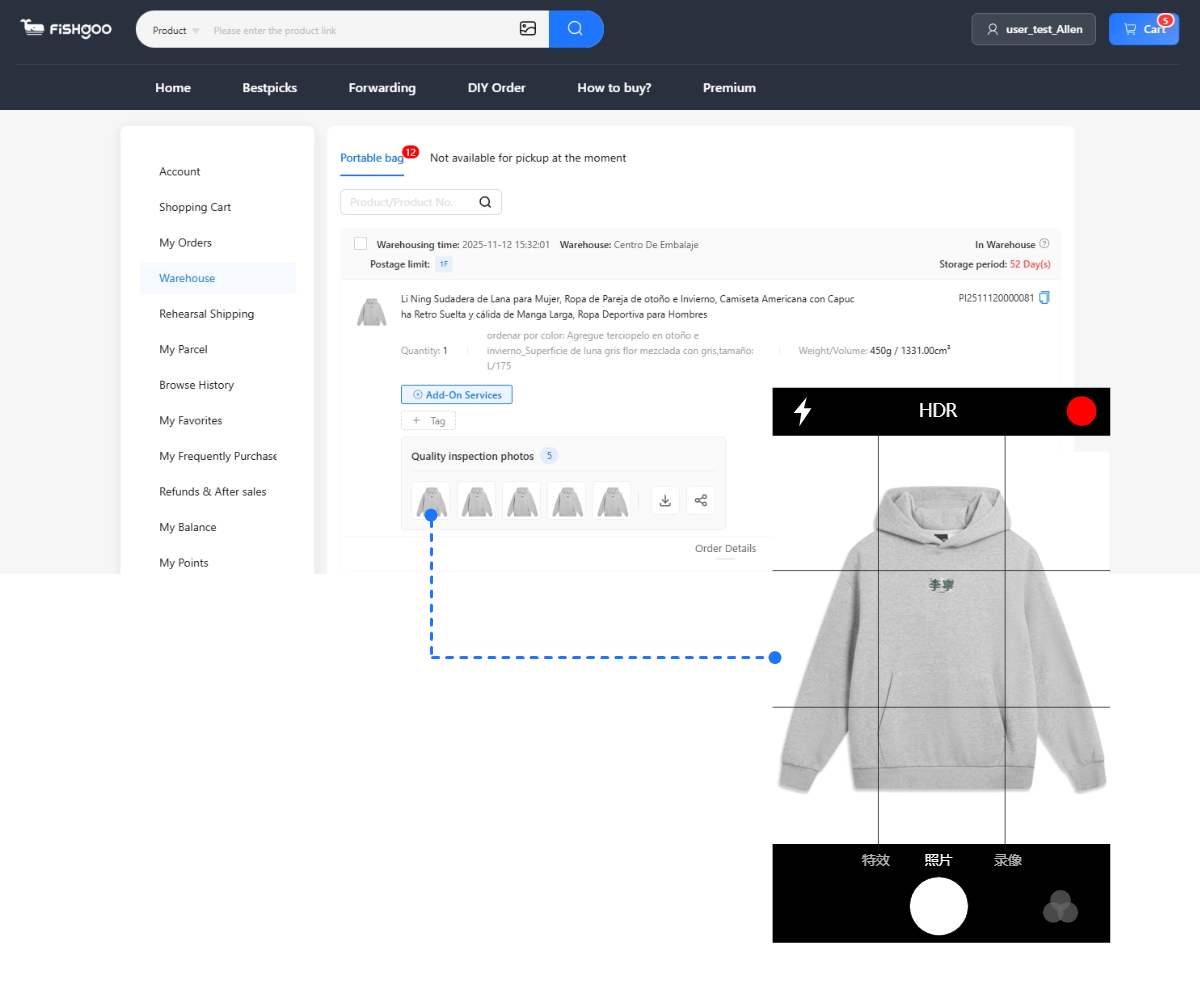
- Agent QC photos. Even if every review on the listing is fake, your own QC photos from Fishgoo show you the actual item. This is the ultimate truth layer — 5 HD photos of the specific unit you purchased, taken under neutral warehouse lighting.
→ Scam detection for agents and sellers
The Two-Layer Verification System
Smart Taobao shopping uses reviews and QC photos together, not one or the other. Each covers a different gap:
| What it tells you | Taobao reviews | Agent QC photos |
|---|---|---|
| General product quality | ✅ Multiple buyers’ experience | ⚠️ Only your specific unit |
| Your specific unit’s condition | ❌ Reviews are about past units | ✅ Photos of your exact item |
| Color accuracy | ✅ Buyer photos show real colors | ✅ Warehouse lighting confirms |
| Sizing on real bodies | ✅ Buyer selfies show fit | ⚠️ Can request flat measurements |
| Batch consistency | ✅ Multiple months of data | ❌ Only current batch |
| Defects on your unit | ❌ No way to know in advance | ✅ Catches before shipping |
Reviews tell you whether the product is generally good. QC photos tell you whether your specific unit is good. You need both layers because Taobao products can vary between batches — a product that was great three months ago might have shifted factories or cut material costs. Reviews reflect the past. QC photos reflect right now.
Through Fishgoo, the QC layer costs nothing extra — 5 free HD photos per item, included with every order. Combined with 2 minutes of review photo scanning before you add to cart, you’ve built a verification stack that catches problems from both directions.
My 90-Second Review Scanning Routine
Here’s my exact process for every product before I add it to a haul. Takes about 90 seconds total:
0:00-0:15 — Check transaction count. Under 100? Extra caution. Over 500? Proceed.
0:15-0:45 — Tap photo reviews. Scan 5-8 buyer photos. Quick color check (matches listing?), material check (looks like the right fabric?), fit check (looks like expected sizing?). If buyer photos diverge significantly from listing, I stop here and skip the product.
0:45-1:00 — Check star rating. Above 4.7? Good. Between 4.5-4.7? Acceptable if photos look fine. Below 4.5? Skip unless there’s a very compelling reason.
1:00-1:15 — Glance at 2-3 text reviews via Google Translate (optional). Look for repeating complaints: “runs small,” “thin fabric,” “color different.” One mention is noise. Three mentions of the same issue is signal.
1:15-1:30 — Quick fake review check. Review dates spread over months? Good. All clustered in one week? Suspicious. Multiple photos from different buyers? Good. Zero photos? Less confident.
If the product passes all five checkpoints, it goes in the cart. If it fails any one, I look for an alternative listing with better signals. This routine has cut my QC rejection rate from about 15% to under 4%. Ninety seconds of prevention saves hours of returns and dollars of wasted product.
→ Complete first order checklist
→ How to find products on Taobao
FAQ
-
Can I leave a review on Taobao as an international buyer?
Not directly. Taobao reviews require a verified Chinese account. However, you can share your experience through your agent’s QC photos on Reddit communities like r/FashionReps, which serves the same purpose for other international buyers.
-
Are Weidian reviews reliable?
Weidian has a thinner review ecosystem than Taobao because the platform has fewer users. Rely more heavily on community references and QC photos for Weidian purchases. A Weidian product with even 5-10 genuine buyer photos is a relatively strong signal.
-
Should I trust reviews more than QC photos?
They serve different functions. Reviews tell you about the product generally (is it worth ordering?). QC photos tell you about your specific unit (is this exact item defect-free?). Use reviews before ordering, QC photos before shipping. Neither replaces the other.
-
How do I find photo reviews on the Taobao app?
On any product page, scroll down to the review section. Look for a camera icon or “图片” (photos) tab. Tap it to filter reviews that include buyer-uploaded images. On the Taobao app, this icon is usually near the top of the review section.
-
Do I still need QC photos if reviews are excellent?
Yes. Excellent reviews mean the product is generally good, but batch variation means your specific unit might have a defect. Through Fishgoo, QC photos are free — there’s zero cost to verifying your specific item even when everything looks positive in reviews.
→ Verify every purchase with Fishgoo’s 5 free QC photos


Start with one product, sample or restock task
Send the product link or description, approximate quantity and destination. Review the scope before any paid purchasing work begins.