Taobao Agent Shipping Guide 2026: Costs, Delivery Times, and How to Actually Save Money
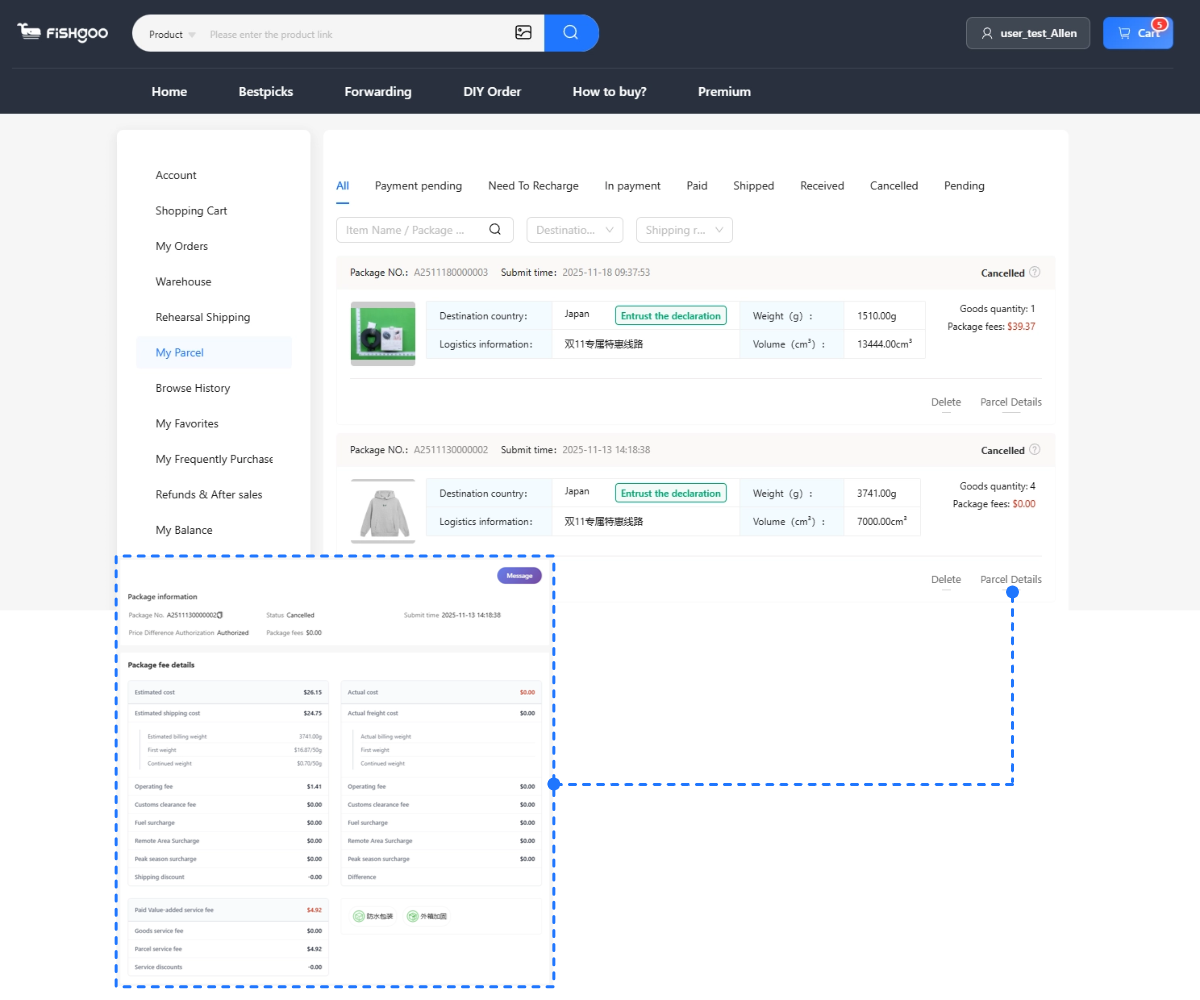
You pay twice: once for the items, then again for international shipping after everything reaches the agent’s warehouse. The second bill is priced on chargeable weight, the higher of actual weight and volumetric weight, where volumetric weight is length by width by height in centimetres divided by the route’s divisor (most Fishgoo routes use 8000; express lines often use 5000). A light bulky parcel can therefore cost more than a heavy compact one.
What is a Taobao shipping calculator?
A Taobao shipping calculator quotes the second bill: international shipping from an agent’s China warehouse to your country, before you pay it. You enter a destination and a parcel weight, and it lists the routes on sale with a price and a delivery window. Fishgoo’s public version is the China shipping cost estimator.
Carriers bill chargeable weight, the higher of actual weight and volumetric weight. Volumetric weight is length times width times height in centimetres, divided by that route’s divisor. Most Fishgoo routes use 8000. Express lines often use 5000. Some use 6000 or 7000, and a few postal lines bill on actual weight only.
The estimator lists those quotes for nine countries at 1, 2, 3 and 5 kg, in US dollars and yuan. It is rebuilt from a fresh Fishgoo calculator capture each week. Duties and VAT are not included. For an exact weight and box size, open the estimator, then the Fishgoo calculator.
Shipping with Fishgoo: 2,000+ international routes to compare on cost, speed and customs handling — plus 100 days of free warehouse storage to consolidate orders into one parcel, and a 0% purchasing service fee on the items themselves.
Let me tell you about the $47 I spent shipping a single pair of slides that cost $6.
It was early in my Taobao journey. I’d found a pair of slides I liked, ordered them through an agent, and the moment they hit the warehouse I got excited and shipped them — alone, via DHL Express, to the US. The slides were fine. Comfy, even. But when I looked at what I’d paid in total — $6 product, $47 shipping — I realized I’d made every rookie mistake in the book.
I didn’t consolidate. I picked the fastest carrier without checking alternatives. I left the shoe box in. And I shipped to the US via DHL when an economy line would’ve taken two extra weeks for a third of the price.
That experience made me obsess over shipping economics, and three years later, I can confidently say that understanding China shipping is where the real savings are when you’re buying from China. The products are cheap. Shipping is where you either save a fortune or bleed money unnecessarily.
This guide covers everything: how shipping is priced, what each carrier type actually delivers, real cost estimates by region, customs duties you might face, and the specific tactics that have cut my shipping bills by 40-60% over the years.
→ New to agents entirely? Start with our Complete Taobao Agent Guide first.
Table of Contents
- Why You Pay Twice: Item Cost First, Shipping Later
- How Shipping Pricing Actually Works
- Carrier Types Explained
- Real Cost Estimates by Region
- Delivery Times: What to Realistically Expect
- Customs Duties — The Hidden Cost Nobody Warns You About
- 9 Proven Ways to Cut Your Shipping Bill
- Why Shipping Routes Matter (The Fishgoo Advantage)
- FAQ
Why You Pay Twice: Item Cost First, Shipping Later
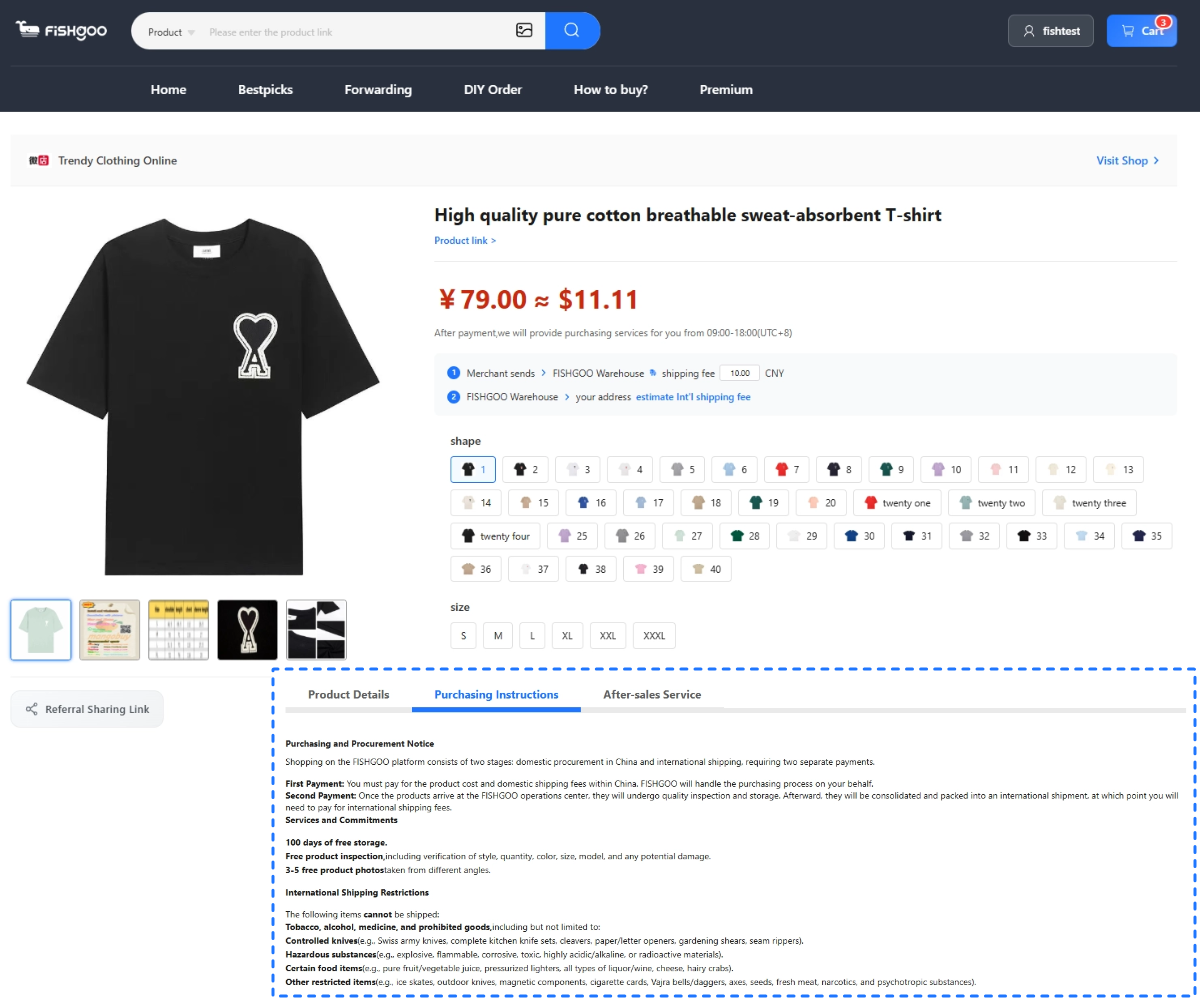
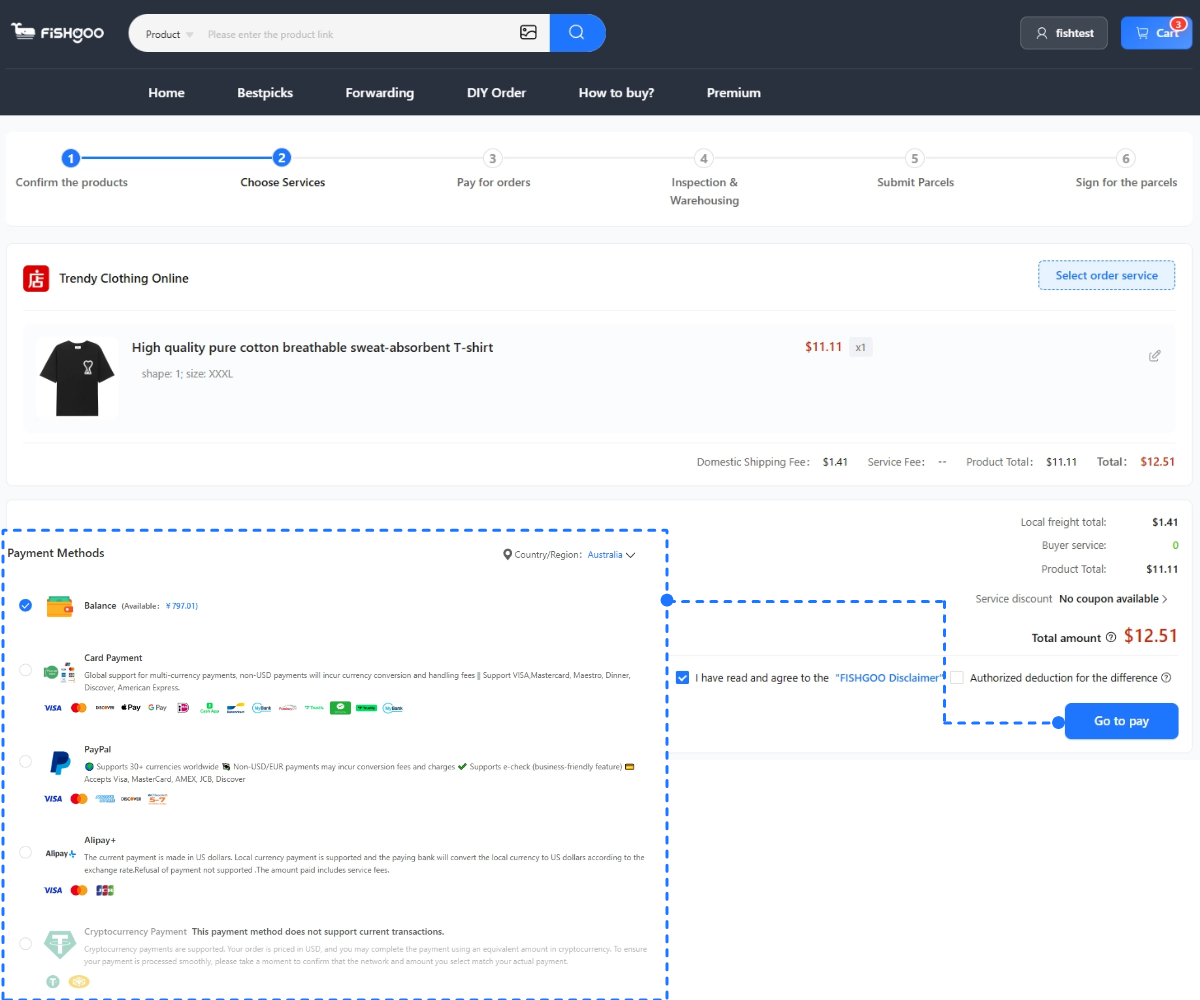
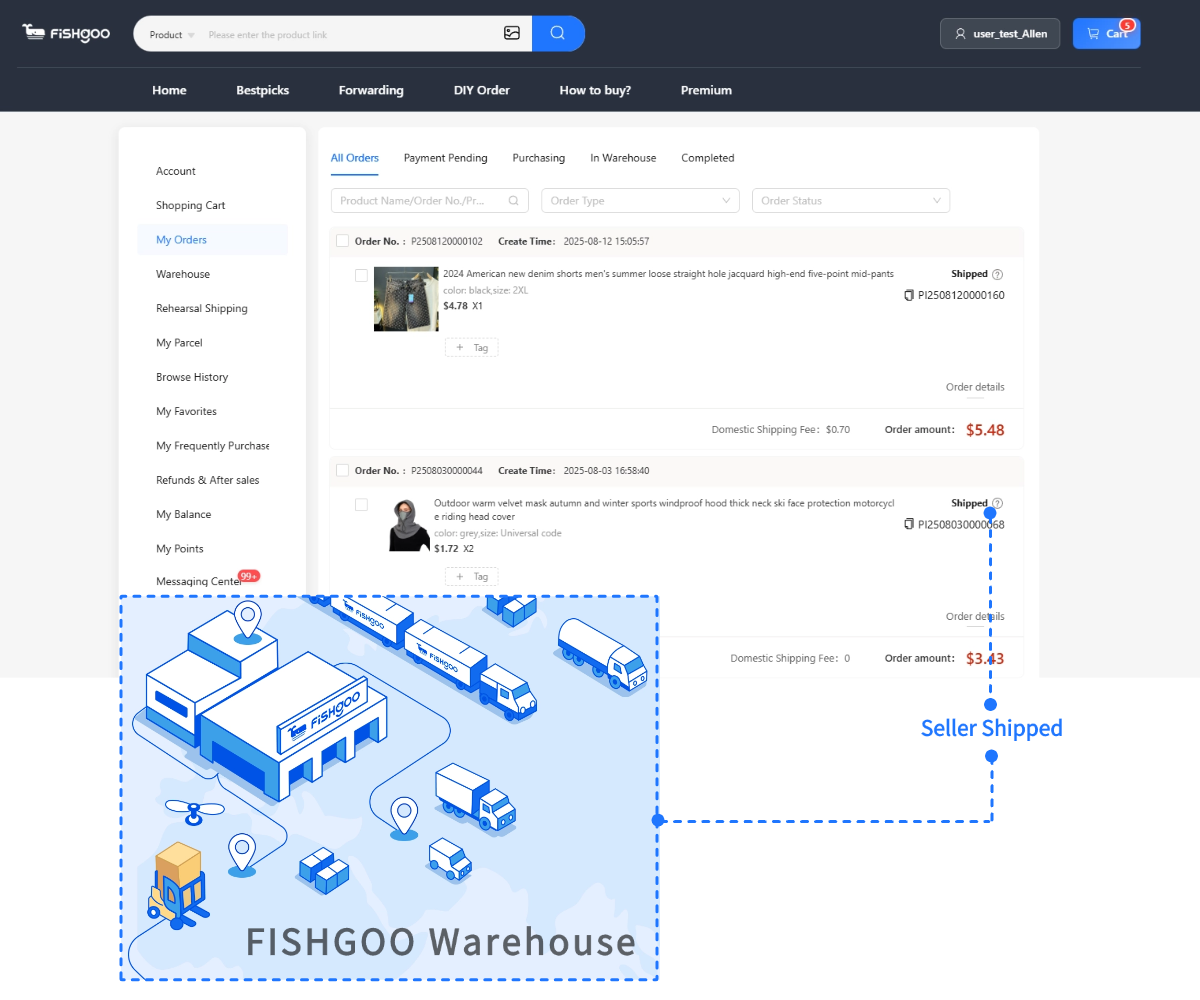
Quick answer: You pay a Taobao agent in two separate steps because the two costs become known at different times. The first payment covers the item price — the agent needs funds to actually buy from the Chinese seller. The second payment covers international shipping, and that number cannot exist until every item has physically arrived at the warehouse, been weighed, and been packed into one box. No agent can quote you an exact shipping cost before your parcel physically exists.
This trips up almost every first-time buyer. You pay, you think you’re done, and weeks later a second invoice appears. It looks like a hidden fee. It isn’t — but you deserve to know exactly what each payment covers.
What the first payment covers
The product price, plus domestic Chinese shipping from the seller to the agent’s warehouse (usually a few yuan, often free). That’s it. At this point nobody — not the agent, not you — knows what the parcel will weigh, because the items haven’t arrived yet and you may still add more.
What the second payment covers
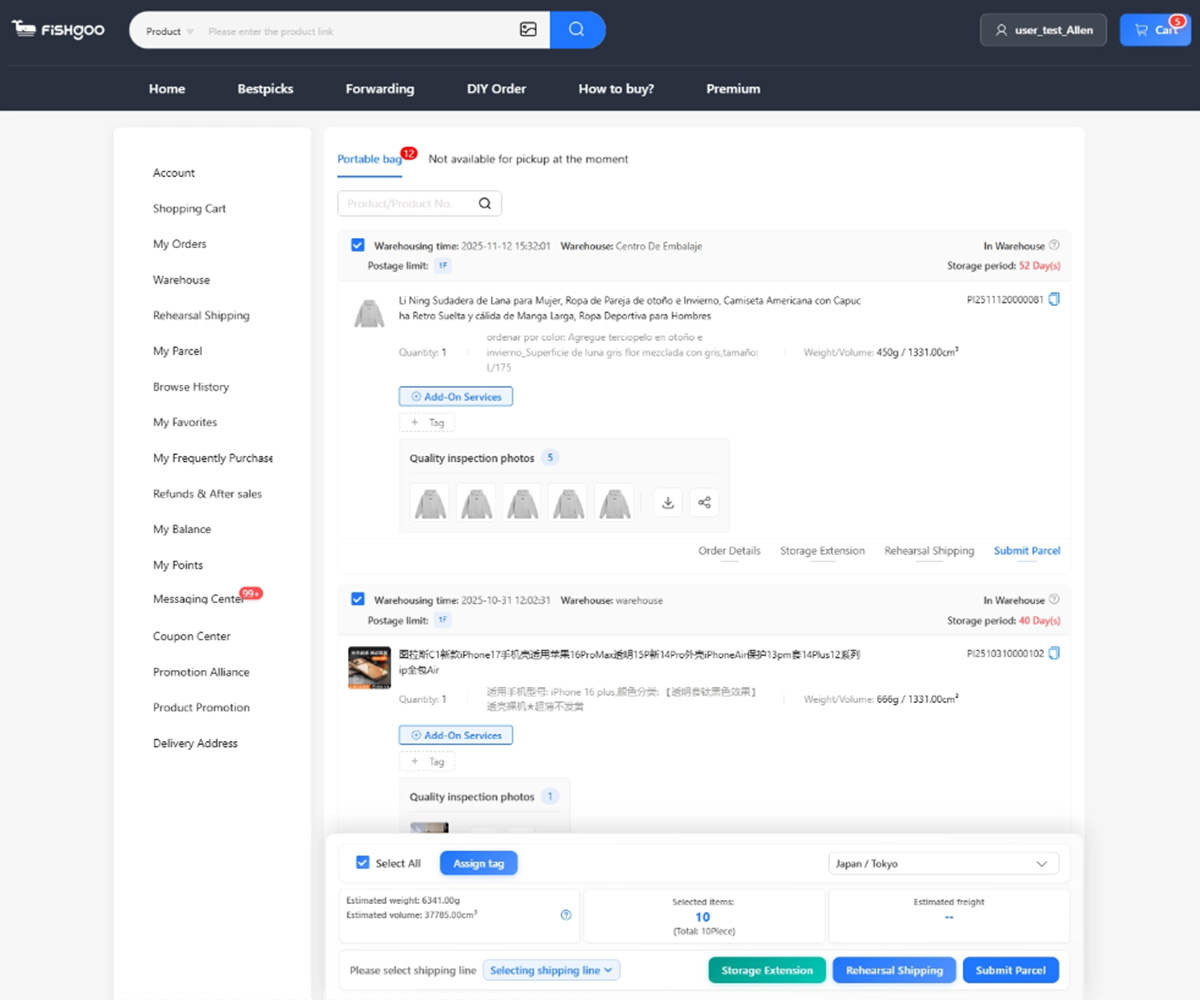
International shipping, calculated from the finished parcel: its chargeable weight (the higher of actual and volumetric — see how pricing works below), the route you pick, and the destination country. Optional extras go here too if you asked for them: additional QC photos, reinforced packing, removing shoe boxes to save volume, insurance.
Why agents don’t just bundle it into one payment
They could quote an estimate upfront, but an estimate on an unbuilt parcel is a guess. Guess too low and they invoice you again later anyway. Guess too high and they hold your money for weeks. Charging the real number once the box exists is the more honest structure — it just needs explaining, which most agents never bother to do.
The gap between the two payments is the part worth using
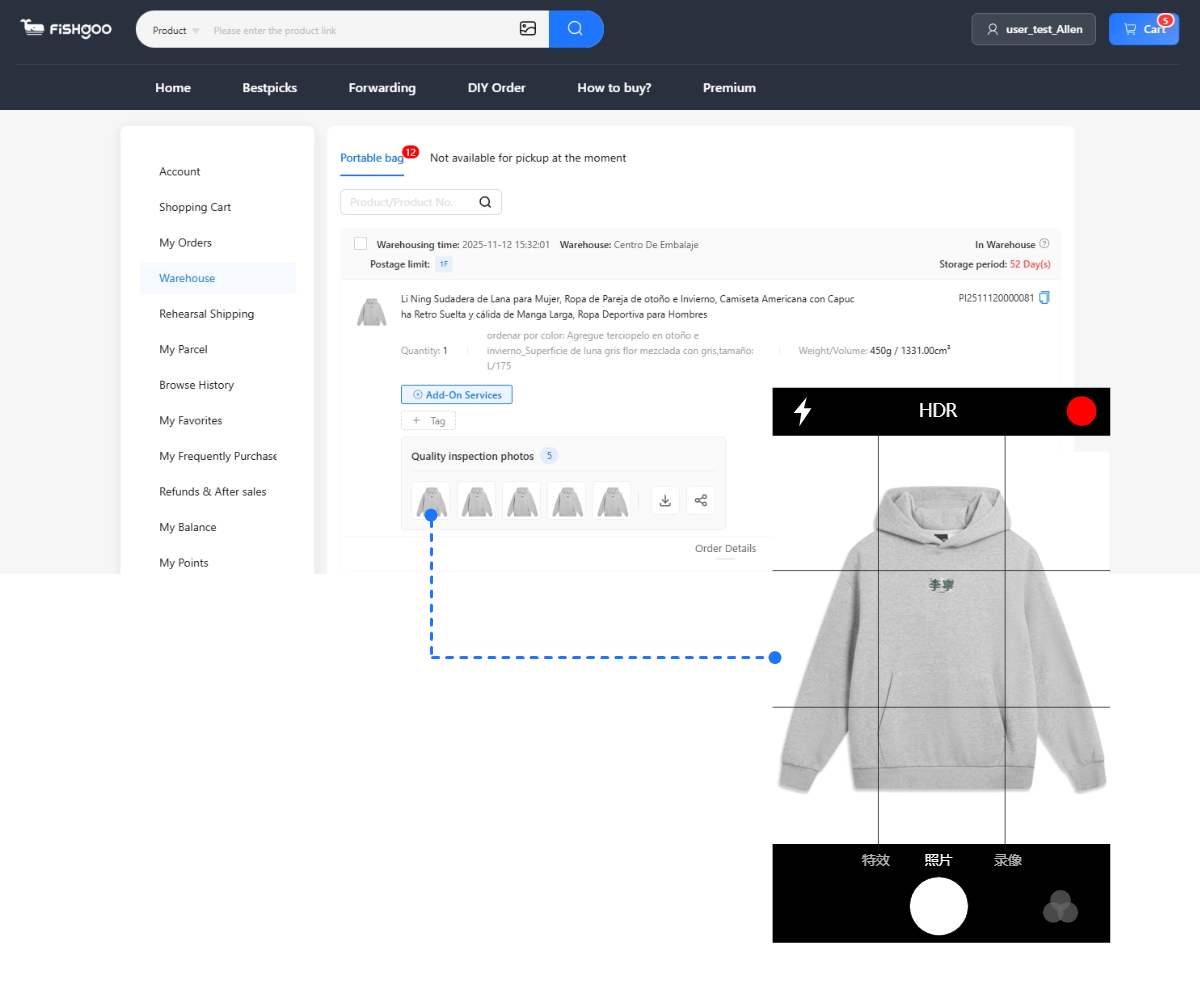
Between payment one and payment two, your items sit in the warehouse. That waiting period is not dead time — it is the entire reason agent shopping beats buying direct. You can keep ordering from different sellers, let everything pile up, and ship it all as one parcel instead of paying international postage five separate times. Fishgoo stores your items free for 100 days, so building a haul over several weeks costs nothing extra.
What should actually worry you
Not the second payment itself — that is how the model works everywhere. Watch for these instead:
- A service fee appearing on the second invoice that was not disclosed on the first. Fishgoo charges a 0% purchasing service fee, so the second invoice is shipping plus any extras you chose.
- Storage charges starting sooner than advertised — check the free storage window before you start consolidating.
- An exchange rate that shifts between the two payments with no explanation.
- No shipping calculator available before you commit — you should be able to estimate the second payment yourself once you know roughly what you are buying.
1. How Shipping Pricing Actually Works
Before you can save money on shipping, you need to understand how carriers decide what to charge you. It’s not as simple as “heavier package = more expensive.” There are two numbers in play, and carriers bill you for whichever is higher.
Actual weight
Your parcel on a scale. Straightforward. A 2kg package has an actual weight of 2kg.
Volumetric weight
This is the one that catches people off guard. Volumetric weight measures how much space your package occupies, because carriers don’t just care about heaviness — they care about how many parcels fit in the plane or truck.
The formula:
Volumetric weight (kg) = Length (cm) × Width (cm) × Height (cm) ÷ divisor
The divisor is set by the route, not by you, and it matters as much as the dimensions do. Express couriers have long used 5000. Most Fishgoo routes use 8000, some use 6000 or 7000, and a handful of postal lines bill on actual weight only — you can see which routes apply what in our China shipping cost estimator.
So let’s say you’re shipping a puffy winter jacket. It’s light — maybe 0.6kg on the scale. But in its box, the dimensions are 40cm × 35cm × 25cm. Plug that in: 40 × 35 × 25 = 35,000. On a 5000 divisor that is 7kg volumetric; on the 8000 divisor most Fishgoo routes use, 4.4kg.
Either way you are billed for several times what the jacket actually weighs. That gap is the whole reason dimensions matter.
This is why experienced buyers obsess over package dimensions. And it’s the reason every smart shopper requests that their Taobao agent remove shoe boxes, strip outer packaging, and vacuum-pack soft items before international shipping. Shrinking the box dimensions is literally the same as reducing the weight for billing purposes.
First weight vs. additional weight
Most shipping lines have a “first weight” charge — a base price for the first 0.5kg or 1kg — and then a lower per-unit rate for every additional half-kilo or kilo after that. This means the first item in your parcel is always the most expensive per gram. Every item you add after that dilutes the base cost across more products.
This is the mathematical reason order consolidation saves so much money. You pay that expensive first-weight charge once, not five or ten times.
A quick example
Let’s say a shipping line charges $8 for the first 0.5kg and $3 per additional 0.5kg:
| Scenario | Weight | Cost | Per-item cost |
|---|---|---|---|
| 1 t-shirt shipped alone | 0.3kg | $8.00 | $8.00 |
| 5 t-shirts consolidated | 1.5kg | $14.00 | $2.80 |
| 10 items consolidated | 3.0kg | $23.00 | $2.30 |
Same shipping line, same destination. The per-item cost drops from $8 to $2.30 just by batching orders together. That’s a 71% reduction. Not a theoretical number — that’s roughly what I see on my real orders.
2. Carrier Types Explained
Not all shipping lines are created equal. Each category serves a different need, and picking the right one for your specific situation is probably the second most impactful thing you can do after consolidation.
Express couriers (DHL, FedEx, UPS)
The fast lane. 5-10 days to most destinations. Full tracking with frequent updates. Package handling is generally careful.
The downside? Price. Express shipping typically costs 2-4x more than standard options. A 3kg parcel to the US might run $50-70 via DHL versus $20-30 via EMS.
Use express when: Your order is high-value and you want it insured and tracked closely. You need something by a specific date. The contents are fragile or irreplaceable. You’re shipping to a country where economy lines have poor delivery rates.
Skip express when: You’re shipping inexpensive clothing or accessories. There’s no deadline. You have ten other things in your life to worry about besides when your hoodie arrives.
Standard postal (EMS, ePacket)
EMS is the sweet spot for most people. 10-20 days delivery. Reasonable tracking. Handled by national postal services at the destination, which means familiar delivery — your regular mail carrier brings it to your door.
ePacket is similar but designed for lighter packages (usually under 2kg). Slightly cheaper than EMS, slightly slower. Works well for small items like phone cases, accessories, or jewelry.
Use standard when: You want a balance between cost and speed. You’re shipping mid-value items. You’re patient enough to wait two or three weeks but not five.
Economy and tax-free lines
This is where the real savings hide. Economy lines are operated by freight consolidators who batch shipments together for lower per-package rates. Delivery takes 15-35 days — longer than EMS, shorter than sea freight.
Tax-free lines (taxes-included: import charges are prepaid in the route price) deserve special attention. These route your package through commercial import channels that handle customs differently — often reducing or completely avoiding import duties at your destination. Incredibly popular with EU buyers, where customs thresholds are painfully low. More on that in the customs section below.
Use economy/tax-free when: You’re not in a rush. Budget matters more than speed. You’re shipping to an EU country and want to minimize customs headaches. Your order is clothing, shoes, or accessories that aren’t time-sensitive.
Sea freight
The slowest option. 30-60 days. Sometimes longer. But for heavy or bulky shipments — furniture, large electronics, bulk wholesale orders — sea freight can be 70-80% cheaper than air shipping.
Most casual Taobao buyers will never need sea freight. It’s primarily for business buyers sourcing inventory from 1688 in bulk, or anyone shipping items that are too heavy for air freight to make financial sense.
Use sea freight when: Your parcel exceeds 10-15kg. You’re a reseller shipping inventory. You have two months of patience and want the absolute lowest cost per kilo.
Quick comparison
| Carrier Type | Speed | Cost Level | Tracking | Best For |
|---|---|---|---|---|
| DHL / FedEx / UPS | 5-10 days | $$$$ | Excellent | Urgent, high-value |
| EMS | 10-20 days | $$ | Good | Most people, most orders |
| ePacket | 15-25 days | $-$$ | Basic | Small, light items under 2kg |
| Economy lines | 15-35 days | $ | Varies | Budget-conscious, no rush |
| Tax-free lines | 15-30 days | $-$$ | Varies | EU buyers, customs avoidance |
| Sea freight | 30-60 days | $ | Basic | Heavy/bulk shipments |
3. Real Cost Estimates by Region
Every price in this section comes from the Fishgoo shipping calculator as it stood on September 20, 2026 — not from industry averages. The estimator below is built from that same capture and is rebuilt weekly, so the figures here and the ones you see when you go to quote a parcel are the same numbers. What they cannot include is your parcel’s final shape: international shipping is billed on the finished box, so the chargeable weight is the higher of actual and volumetric weight, and duties or VAT at your border are separate.
What a parcel actually costs today
These are prices our own calculator showed on September 20, 2026, not industry averages. Pick a destination and a weight to see the cheapest route on sale, a balanced one, and the quickest.
| Destination | 1 kg | 2 kg | 3 kg | 5 kg | Routes on sale at 2 kg |
|---|---|---|---|---|---|
| 🇺🇸 United States | $26.17 ¥164 | $43.73 ¥274 | $61.29 ¥384 | $94.96 ¥595 | 13 |
| 🇬🇧 United Kingdom | $13.41 ¥84 | $23.62 ¥148 | $33.84 ¥212 | $41.82 ¥262 | 11 |
| 🇮🇹 Italy | $17.96 ¥112 | $38.97 ¥244 | $53.02 ¥332 | $81.11 ¥508 | 16 |
| 🇩🇪 Germany | $24.15 ¥151 | $37.23 ¥233 | $50.32 ¥315 | $60.65 ¥380 | 15 |
| 🇫🇷 France | $24.26 ¥152 | $38.62 ¥242 | $52.99 ¥332 | $71.82 ¥450 | 15 |
| 🇪🇸 Spain | $22.34 ¥140 | $37.51 ¥235 | $52.67 ¥330 | $60.65 ¥380 | 15 |
| 🇨🇦 Canada | $20.43 ¥128 | $35.91 ¥225 | $50.91 ¥319 | $80.92 ¥507 | 7 |
| 🇦🇺 Australia | $18.83 ¥118 | $31.60 ¥198 | $45.65 ¥286 | $65.91 ¥413 | 14 |
| 🇳🇱 Netherlands | $23.94 ¥150 | $36.71 ¥230 | $49.48 ¥310 | $74.85 ¥469 | 15 |
Cheapest route on sale in the Fishgoo calculator on September 20, 2026, in USD with the yuan price the calculator showed alongside it. These are quotes for the finished parcel, before any duty or VAT your own customs may charge. Routes and promotions change week to week — the estimator above and the full shipping cost estimator are rebuilt from a fresh capture every week.
United States
| Tier · route | 1 kg | 2 kg | 3 kg | 5 kg |
|---|---|---|---|---|
| Lowest price Economy Tax-Free Small Parcel (FedEx / UNINI) | $26.17 ¥164 | $43.73 ¥274 | $61.29 ¥384 | $96.40 ¥604 |
| Balanced General Cargo Express Line | — | $47.56 ¥298 | $73.42 ¥460 | $125.13 ¥784 |
| Also available US Apparel Special Line | $30.40 ¥190 | $55.14 ¥346 | $79.88 ¥500 | $129.36 ¥810 |
Each route is picked at 2 kg and then priced across the other weights, so you can see how one route scales. At another weight the cheapest route may be a different one — the table at the top of this section shows the cheapest at each weight. “—” means the route was not on sale at that weight. Transit windows are not reprinted for US routes — run a quote in the calculator to see the window each route carries.
Heads up: the US ended its $800 de minimis exemption in 2025, so duties can now apply to US-bound parcels regardless of value — factor duties into landed cost.
United Kingdom
| Tier · route | 1 kg | 2 kg | 3 kg | 5 kg | Transit (business days) |
|---|---|---|---|---|---|
| Lowest price UK Duty-Free Special (Lowest Price for General Goods) | $13.41 ¥84 | $23.62 ¥148 | $33.84 ¥212 | $54.26 ¥340 | 9-16 |
| Balanced UK Beauty & Cosmetics Special Line | $14.36 ¥90 | $25.54 ¥160 | $36.71 ¥230 | $59.05 ¥370 | 7-14 |
| Fastest DPD Express for General Goods | $19.79 ¥124 | $31.92 ¥200 | $44.05 ¥276 | $68.31 ¥428 | 5-10 |
Each route is picked at 2 kg and then priced across the other weights, so you can see how one route scales. At another weight the cheapest route may be a different one — the table at the top of this section shows the cheapest at each weight.
Post-Brexit, the UK applies VAT on imports above £135. Tax-free lines can help significantly here.
EU (Germany, France, Netherlands, etc.)
| Destination | Cheapest route on sale | 2 kg | 5 kg | Transit (business days) | Routes on sale at 2 kg |
|---|---|---|---|---|---|
| 🇩🇪 Germany | DE Economic General Small Parcel (Actual Weight) | $37.23 ¥233 | $76.50 ¥479 | 12-20 | 15 |
| 🇫🇷 France | FR Economic General Small Parcel (charged by actual weight) | $38.62 ¥242 | $81.72 ¥512 | 12-20 | 15 |
| 🇳🇱 Netherlands | DHL Apparel Parcel (Actual Weight) | $36.71 ¥230 | $75.01 ¥470 | 10-16 | 15 |
| 🇮🇹 Italy | DHL Lightweight Special Line-F | $38.97 ¥244 | $81.11 ¥508 | 10-16 | 16 |
| 🇪🇸 Spain | ES Economy Small Parcel | $37.51 ¥235 | $82.99 ¥520 | 12-20 | 15 |
The EU essentially eliminated its €22 duty-free threshold — meaning virtually every import triggers VAT. Tax-free shipping lines were designed exactly for this situation. If you're in the EU and not using a tax-free route, you're probably overpaying on duties.
Australia
| Tier · route | 1 kg | 2 kg | 3 kg | 5 kg | Transit (business days) |
|---|---|---|---|---|---|
| Lowest price AU Economy Packet | $18.83 ¥118 | $31.60 ¥198 | — | — | 18-22 |
| Balanced AU Cosmetics Special Line | $25.22 ¥158 | $35.43 ¥222 | $45.65 ¥286 | $66.07 ¥414 | 7-15 |
| Fastest Lightweight General Cargo Duty-Free | $24.74 ¥155 | $41.50 ¥260 | $58.25 ¥365 | $91.77 ¥575 | 6–10 |
Each route is picked at 2 kg and then priced across the other weights, so you can see how one route scales. At another weight the cheapest route may be a different one — the table at the top of this section shows the cheapest at each weight. “—” means the route was not on sale at that weight.
Australia's $1,000 AUD de minimis threshold is among the most generous outside the US. Most personal hauls cruise through customs without any duty charges.
Southeast Asia (Malaysia, Singapore, Philippines, Thailand)
| Destination | Cheapest route on sale | 2 kg | 5 kg | Transit (business days) | Routes on sale at 2 kg |
|---|---|---|---|---|---|
| 🇲🇾 Malaysia | West Malaysia Duty-Free Sea Shipping | $10.69 ¥67 | $17.40 ¥109 | 15-18 | 8 |
| 🇸🇬 Singapore | Singapore Duty-Free Sea Shipping | $9.90 ¥62 | $14.68 ¥92 | 12-20 | 5 |
| 🇵🇭 Philippines | Philippines Duty-Free Preferential | $33.04 ¥207 | $74.21 ¥465 | 5-7 | 5 |
| 🇹🇭 Thailand | Thailand Duty-Free Special Line | $23.30 ¥146 | $27.45 ¥172 | 8-12 | 3 |
Proximity to China means faster transit and lower cost. The route list is also shorter than for Europe: Fishgoo had 3 to 8 routes on sale to each of these four on September 20, 2026, against 17 to most EU destinations. Fewer routes means less to compare, but also less room to trade speed against price.
Middle East (UAE, Saudi Arabia)
| Destination | Cheapest route on sale | 2 kg | 5 kg | Transit (business days) | Routes on sale at 2 kg |
|---|---|---|---|---|---|
| 🇦🇪 United Arab Emirates | EUB | $23.56 ¥148 | $52.91 ¥332 | 10-20 | 2 |
| 🇸🇦 Saudi Arabia | EUB | $29.73 ¥186 | $131.91 ¥826 | 10-20 | 4 |
→ Wondering which agent gives you the best rates? Cheapest Taobao Agent 2026
4. Delivery Times: What to Realistically Expect
The total time from "I clicked buy" to "I'm holding it" breaks into three phases. Understanding each one keeps your expectations realistic and your blood pressure manageable.
Phase 1: Domestic shipping (seller → agent warehouse)
3-7 days for most items. Some sellers ship in 24 hours. Others — especially for custom, made-to-order, or pre-sale items — take 7-14 days. Your agent's dashboard shows real-time tracking for this leg.
Nothing you can really do to speed this up. It depends entirely on the seller.
Phase 2: Warehouse processing
1-3 days after all your items arrive. This covers quality inspection, QC photos upload, your review and approval, order consolidation, and packing. If you're quick to approve your QC photos, this phase can be as short as a single day.
The bottleneck here is usually you — the sooner you review your QC photos and submit the shipping request, the sooner the parcel goes out.
Phase 3: International transit
This is the variable one:
- Express: 5-10 days
- Standard (EMS): 10-20 days
- Economy / tax-free: 15-35 days
- Sea freight: 30-60 days
Total realistic timelines
| Shipping method | Best case | Typical | Worst case |
|---|---|---|---|
| Express | 9 days | 12-17 days | 22 days |
| Standard | 14 days | 18-27 days | 35 days |
| Economy | 20 days | 25-40 days | 50 days |
"Worst case" usually means your parcel got stuck in customs for a few days, or a holiday (Chinese New Year, Golden Week) slowed warehouse processing. It's not common, but it happens. Don't panic if your economy parcel takes 35 days — that's within normal range.
When shipping slows down
Chinese New Year (late January - mid February): Many sellers shut down for 1-3 weeks. Agent warehouses operate with skeleton staff. Carrier capacity drops. If you place orders in January, expect significant delays.
11.11 and 12.12 shopping festivals (November-December): Massive order volumes overwhelm domestic logistics. Sellers ship late. Warehouses get backed up. International carriers sometimes raise rates temporarily.
Summer (July-August): Generally calm. Fast processing, normal transit times. This is the sweet spot for shipping if you have the flexibility.
5. Customs Duties — The Hidden Cost Nobody Warns You About
Here's a scenario that plays out thousands of times every day: a buyer places a ¥500 order, pays $25 shipping, feels great about the deal — then the doorbell rings and the delivery person says "that'll be $18 in customs charges before I hand this over."
Nobody told them about import duties. And suddenly that great deal feels a lot less great.
Every country has its own rules about taxing imports. Here's what you need to know for the most common destinations:
United States
Heads up: the US ended its $800 de minimis exemption in 2025. Duties can now apply regardless of parcel value — check current CBP guidance and ask your agent how your chosen route handles customs.
European Union
The bad news: the EU effectively eliminated its low-value exemption. Virtually every import — even a $5 phone case — can trigger VAT (typically 19-25% depending on the country). On a $100 order, you might owe $20-25 in VAT on delivery.
Customs duty changed too: since 1 July 2026, parcels worth €150 or less pay a flat €3 customs duty per item until 1 July 2028 (goods of the same type count as one item), and more valuable parcels pay the normal rate for each product.
This is where tax-free shipping lines help EU buyers. On these taxes-included lines, import charges are prepaid in the route price, so the courier does not ask you to pay on delivery. They don't lower the tax you owe, and availability depends on your country and the items in your parcel. Fishgoo's route network includes taxes-included lines for several EU countries; check what each route covers before you pay.
United Kingdom
Post-Brexit, the UK charges 20% VAT on imports from the first pound, and customs duty on goods worth more than £135. As in the EU, taxes-included lines prepay import charges in the route price. Declare the real contents and value: under-declaring a parcel can lead to seizure, extra charges and penalties.
Australia
A$1,000 threshold for customs duty, which is generous: most personal orders pay no duty. The 10% GST still applies to low-value imports.
Canada
$20 CAD de minimis — one of the lowest among developed countries. Even modest orders can trigger duties and GST/HST. Budget 15-20% extra on larger orders.
How to handle customs smartly
Know your threshold. Before ordering, Google "[your country] import duty threshold." Knowing the rules helps you budget for import charges before you pay for shipping.
Use tax-free lines where available. If your country has low thresholds (EU, UK, Canada), tax-free shipping isn't a luxury — it's a necessity.
Don't split orders to dodge customs. It doesn't work reliably and usually costs more: you pay several shipping base rates, customs may flag repeated small parcels, and in the EU each parcel can add its own €3 duty per item. Consolidate and declare honestly.
Keep invoices. If customs asks for proof of value, having your agent invoice ready speeds up clearance and avoids arbitrary revaluations.
6. 9 Proven Ways to Cut Your Shipping Bill
These aren't theoretical suggestions. Every single one of these has saved me real money on real orders. Sorted roughly by impact — the first three are the biggest movers.
1. Consolidate aggressively
By now you know this one. But I want to put a number on it. On my last consolidated haul — 14 items from 7 different sellers — I paid $58 for economy shipping to the US. That's $4.14 per item. If I'd shipped each item separately? The first-weight charges alone would've totaled over $110. Consolidation saved me 47%.
Aim for at least 5 items per shipment. 10-15 is the sweet spot where per-item cost really bottoms out.
2. Remove all non-essential packaging
Shoe boxes are the worst offender. A single shoe box adds 400-600g of weight and can double the volumetric size of a shoe shipment. Brand boxes for jewelry, electronics, accessories — same story. Unless you specifically need the box (gifting, collecting), tell your agent to toss it.
Most agents including Fishgoo have a "remove packaging" option when you submit your shipping request. One checkbox. Potentially $5-15 saved.
3. Vacuum-pack clothing
Remember the volumetric weight trap? Vacuum packing is the antidote. Hoodies, jackets, puffer coats — anything soft and bulky — gets compressed flat. I've seen the volumetric weight on a winter jacket haul drop from 8kg to 3.5kg after vacuum sealing. At $3-5 per half-kilo on economy lines, that's $13-22 saved on one shipment.
Most agents offer this as a free or very cheap add-on service. Always request it for clothing orders.
4. Actually compare carriers
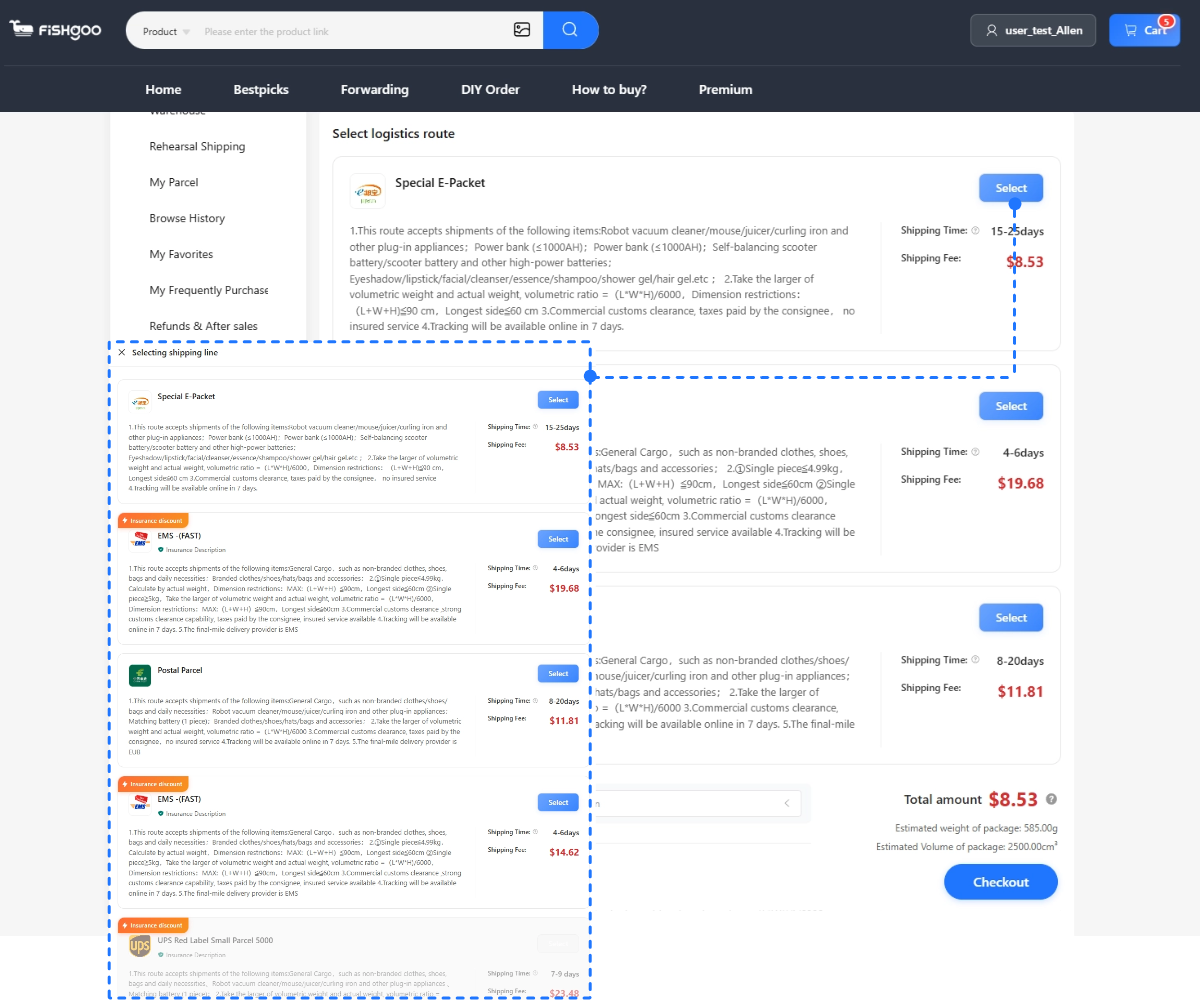
It takes two minutes. Open your agent's shipping calculator. Plug in your country and parcel weight. Look at all the options — not just the first one in the list.
The price gap between carriers for the same route can be staggering. I've seen a 3kg parcel to the US quoted at $68 (DHL) and $19 (economy line) simultaneously. Same destination, same parcel. The only difference was speed (7 days vs 25 days) and a 72% price difference.
Fishgoo's intelligent recommendation system helps here — it ranks routes by a blend of price, speed, and historical delivery success rate, so you're not blindly picking the cheapest option only to find out it has terrible tracking or a high failure rate to your country.
5. Time your shipments
Avoid shipping in late January through mid-February (Chinese New Year) and November (11.11 aftermath). Warehouse backlogs, reduced carrier capacity, and sometimes temporary rate increases eat into your savings.
March-June and August-October are the calm months. Faster processing, normal rates, fewer headaches.
6. Use tax-free lines for EU/UK orders
If you're in Europe or the UK, the customs duty you pay on delivery can add 20-25% to your total cost. A tax-free line might cost $3-5 more in shipping than the cheapest economy option, but save you $15-30 in duties. Net win every time.
7. Check for coupons and promotions before shipping
This sounds obvious but I forget to do it roughly every third shipment, and it annoys me every time. Agents run shipping discounts constantly — new user coupons, seasonal promotions, cashback events. Fishgoo has them regularly. Spend 30 seconds checking your dashboard or the agent's blog before you hit "submit parcel."
8. Declare value accurately but strategically
Many agents let you set the declared value on your customs form. Declaring too high invites unnecessary duties. Declaring too low risks customs flagging and inspecting your parcel. Aim for realistic but conservative — the actual amount you paid for the products, which on Taobao is usually already quite low.
9. Choose the right agent in the first place
Shipping rates vary between agents even for the same carrier. Some agents negotiate better bulk discounts. Some add a markup on top of carrier rates. The difference on a single shipment might be $3-8, but over a year of regular ordering, it compounds.
Agents with more routes (like Fishgoo with 2,000+) tend to have more competitive options for a wider range of destinations. Agents with limited routes often charge more simply because you have fewer alternatives.
→ Best Taobao Agent 2026 ranking
7. Why Shipping Routes Matter (The Fishgoo Advantage)
I keep mentioning route count throughout this guide, and I want to explain why it matters beyond being a marketing number.
An agent with 50 shipping routes has made deals with maybe 10-15 carriers. For popular destinations like the US and UK, that's probably enough — you'll have a handful of options at different price points. Fine.
But what about shipping to Poland? To Brazil? To the Philippines? To Saudi Arabia? An agent with 50 routes might have one option — or none — for your country. You either take the single expensive route or you can't ship at all.
Fishgoo operates with over 2,000 routes across 200+ countries and regions. That breadth means:
- More options to compare. Even for common destinations, having 8-10 carrier options instead of 3 means more price competition working in your favor.
- Coverage for less-served destinations. Buyers in Africa, South America, Central Asia, and smaller island nations actually have viable shipping options — not just a single overpriced line.
- Intelligent recommendations. Fishgoo's system doesn't just sort by price. It factors in historical delivery success rate — how often that carrier actually delivers to your specific country without issues. A $2 cheaper line with a 15% failure rate isn't actually cheaper. The recommendation engine filters those out.
- Tax-free variety. Multiple tax-free lines for different EU countries means better coverage and pricing than agents with a single tax-free option.
For US and UK buyers, route count matters less (though it still helps with pricing). For everyone else? It can be the difference between Taobao shopping being affordable and Taobao shopping being prohibitively expensive.
FAQ
How much does Taobao agent shipping cost?
A consolidated 2-3kg parcel costs roughly $14-25 via economy, $20-35 via EMS, or $35-70 via express depending on your destination. Per-item costs drop significantly the more items you consolidate. Use your agent's calculator for exact quotes — Fishgoo lets you estimate before committing.
Which shipping method should I pick?
EMS is the default safe choice — good speed, decent price, reliable tracking. Choose express only for urgent or high-value orders. Choose economy for anything where you can afford to wait 3-4 weeks. Choose a taxes-included line if you're in the EU or UK and want import charges prepaid instead of paying on delivery.
How do I check shipping costs before ordering?
Most agents have a shipping calculator. On Fishgoo, enter your destination country and estimated parcel weight. The system shows all available carriers with prices and estimated delivery times. Do this before you buy — not after your items are sitting in the warehouse.
What's volumetric weight and why is my shipping so expensive?
Carriers charge actual weight or volumetric weight, whichever is higher. Volumetric weight = L × W × H (cm) ÷ the route's divisor — most Fishgoo routes use 8000, express lines often 5000. Bulky but light items get hit hard by this. Solution: remove boxes, vacuum-pack soft items, and let the agent repack tightly. To see the divisor and price for a specific route, use the shipping cost estimator.
Will I have to pay customs duties?
Depends where you live. US buyers can now face duties at any value (the $800 exemption ended in 2025). EU buyers almost always face VAT. Australian buyers are safe under $1,000 AUD. Tax-free shipping lines help in high-duty countries.
Which agent has the cheapest shipping?
Fishgoo and CSSBuy consistently rank lowest. Fishgoo has the advantage of far more routes (2,000+ vs ~100), which means more options and competitive pricing for a wider range of destinations.
How do I track my package?
Your agent provides a tracking number when the parcel ships. Track it through the agent's dashboard or the carrier's website directly. Express shipments update frequently. Economy lines may show sparse updates — sometimes nothing for a week, then suddenly "out for delivery." Patience.
What if my package gets stuck in customs?
Don't panic. Most "stuck" packages clear within 3-7 business days. If customs requests documentation, your agent can provide invoices. If a package is seized or returned (rare with reputable carriers), contact your agent's support team — they deal with this regularly and can advise on next steps.
Can I ship items from Taobao, 1688, and Weidian in one parcel?
Absolutely. That's the whole point of using a shopping agent. Items from Taobao, Tmall, 1688, Weidian, and other sources all converge at the same warehouse. One consolidation, one parcel, one international shipping fee.
Why do Taobao agents charge international shipping after the first payment?
Because international shipping is priced on the finished parcel, and that parcel does not exist yet when you pay for your items. The first payment buys the goods and gets them to the agent’s China warehouse; the second is calculated once everything has arrived, been weighed and packed into one box, using the higher of actual and volumetric weight plus the route you choose. It is the standard structure across every Taobao agent, not an extra fee — what you should check is that no undisclosed service fee rides along on that second invoice, and how long free storage lasts while you consolidate.
Next Steps
Shipping doesn't have to be the part of buying from China that stresses you out. Consolidate your orders, pick the right carrier for your situation, remove the unnecessary packaging, and use an agent with enough routes to give you genuine options.
The difference between a smart shipper and a careless one? Easily 40-60% on the shipping bill. Over a year of regular ordering, that's hundreds of dollars.
→ Start shopping with Fishgoo (zero service fee, 2,000+ routes)
→ The complete Taobao Agent Guide
→ Best Taobao Agent 2026 ranking


Start with one product, sample or restock task
Send the product link or description, approximate quantity and destination. Review the scope before any paid purchasing work begins.