How to Sell Taobao Products on Etsy: Build a Curated Shop With 50-65% Margins
An Etsy shop I admired for over a year — beautiful minimalist jewelry, every piece €15-30, hundreds of 5-star reviews, editorial-quality photography — turned out to be sourcing entirely from Taobao. I discovered this accidentally when I image-searched one of their bestselling earring listings and found the exact same product on Taobao for ¥8 (€1.10). They were selling it for €22. That’s a 20x markup on the raw product.
I’m not calling them out. Their photos were gorgeous. Their branding was cohesive. Their packaging included tissue paper, a thank-you card, and a branded sticker. Their customer service was clearly excellent based on the reviews. They added genuine value through curation and presentation — value that transformed a €1.10 factory product into a €22 shopping experience. The gap between those two numbers — between product cost and experience value — is where the entire Etsy-from-Taobao business model lives.
That discovery was 14 months ago. I now run a small Etsy shop using the same model. Three product categories, 25 active listings, roughly €350-500/month in profit from about 6 hours of weekly work. This article is the playbook — product selection, sourcing workflow, photography, pricing, and the specific economics that make this model work.
→ General importing guide: how to start importing from China
Best Etsy Categories for Taobao Sourcing
Not every Taobao product works on Etsy. Etsy’s audience expects curated, aesthetic, “boutique-feeling” items — not cheap-looking commodity products. The categories that convert best are ones where Taobao’s factory pricing is dramatically below the perceived value that good photography and branding create.
| Category | Taobao source cost | Etsy selling price | Net margin (after all fees) | Why it works on Etsy |
|---|---|---|---|---|
| 925 silver jewelry | €1-8 | €15-45 | 50-65% | Photographs beautifully, high perceived value, giftable |
| Hair accessories | €0.30-2 | €5-15 | 45-60% | Trending on TikTok, impulse purchase, repeat buyers |
| Home decor accents | €1-5 | €10-30 | 40-55% | Pinterest-driven demand, seasonal refreshes |
| Stationery / journals | €0.50-3 | €6-18 | 40-55% | Planner community, back-to-school, gift-giving |
| Watch straps | €1-5 | €10-25 | 45-60% | Watch enthusiast niche, repeat purchasers |
| Skincare tools | €1-3 | €10-25 | 50-60% | Self-care trend, wellness audience, giftable sets |
| Phone accessories | €0.50-2 | €6-15 | 45-55% | High volume, trend-driven, customizable |
| Wedding accessories | €1-5 | €12-40 | 50-65% | Emotional purchasing, high willingness to pay |
| Makeup tools | €0.30-2 | €5-15 | 45-60% | Beauty community, starter kit bundles |
Jewelry and accessories dominate because they’re lightweight (cheap to ship to Etsy customers), high-margin, and photography-friendly. A single ring that costs €2 on Taobao, photographed on a marble tray with natural light, sells for €18-25 on Etsy. The customer sees a curated piece from a boutique shop. You see a 9-12x markup on a product you sourced for the cost of a coffee.
The Complete Workflow: Taobao → Fishgoo → You → Etsy Customer
Step 1: Source products
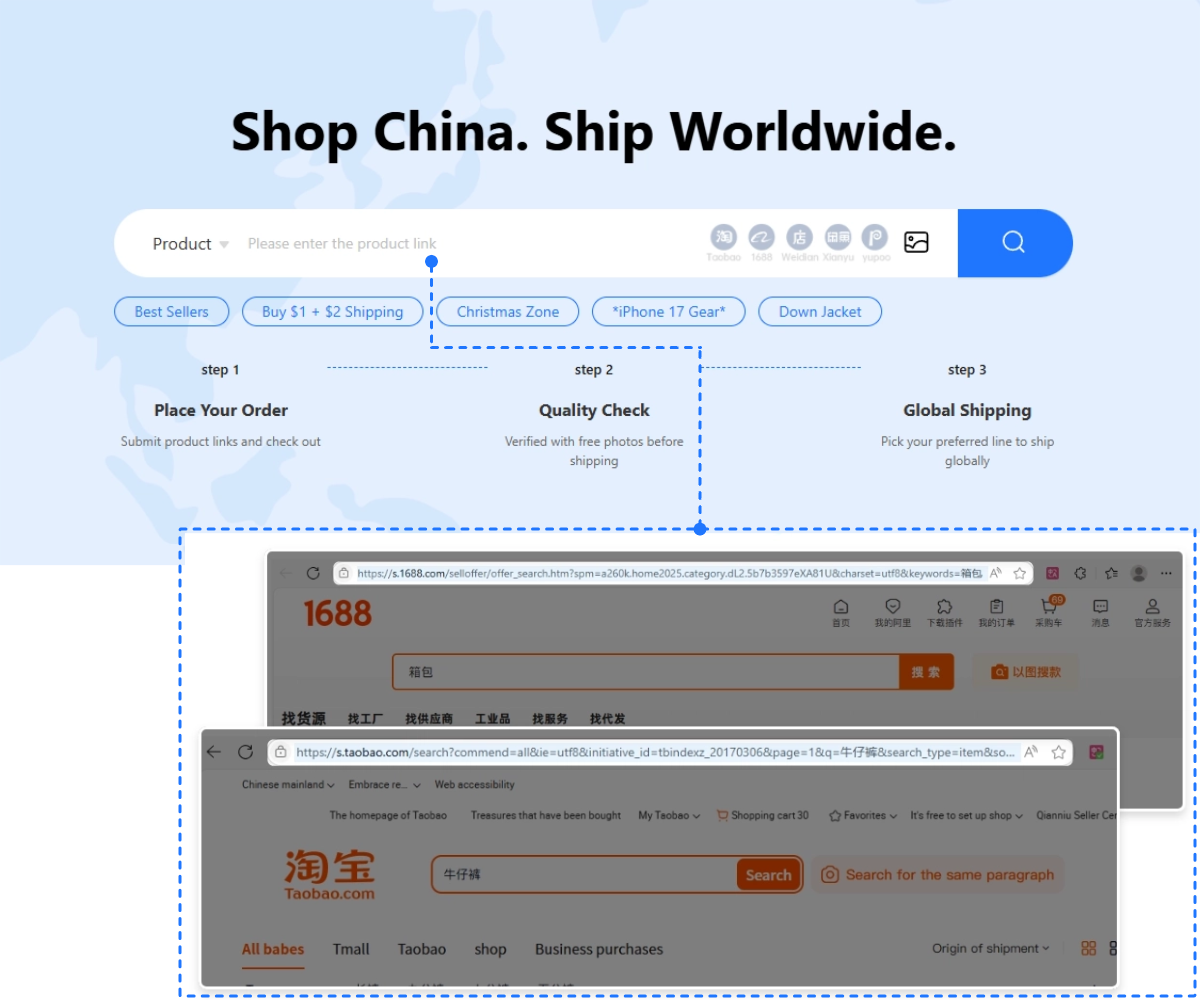
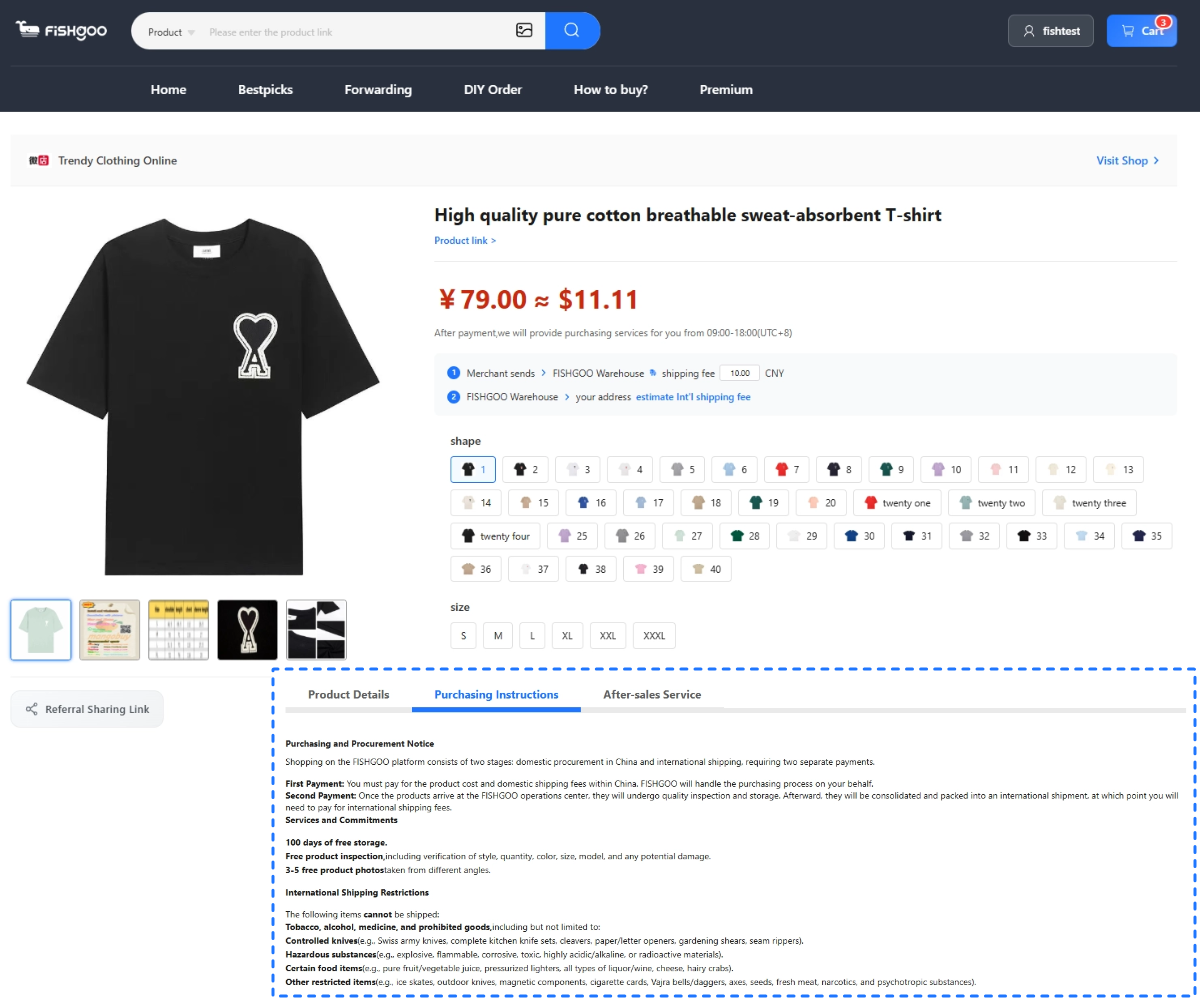
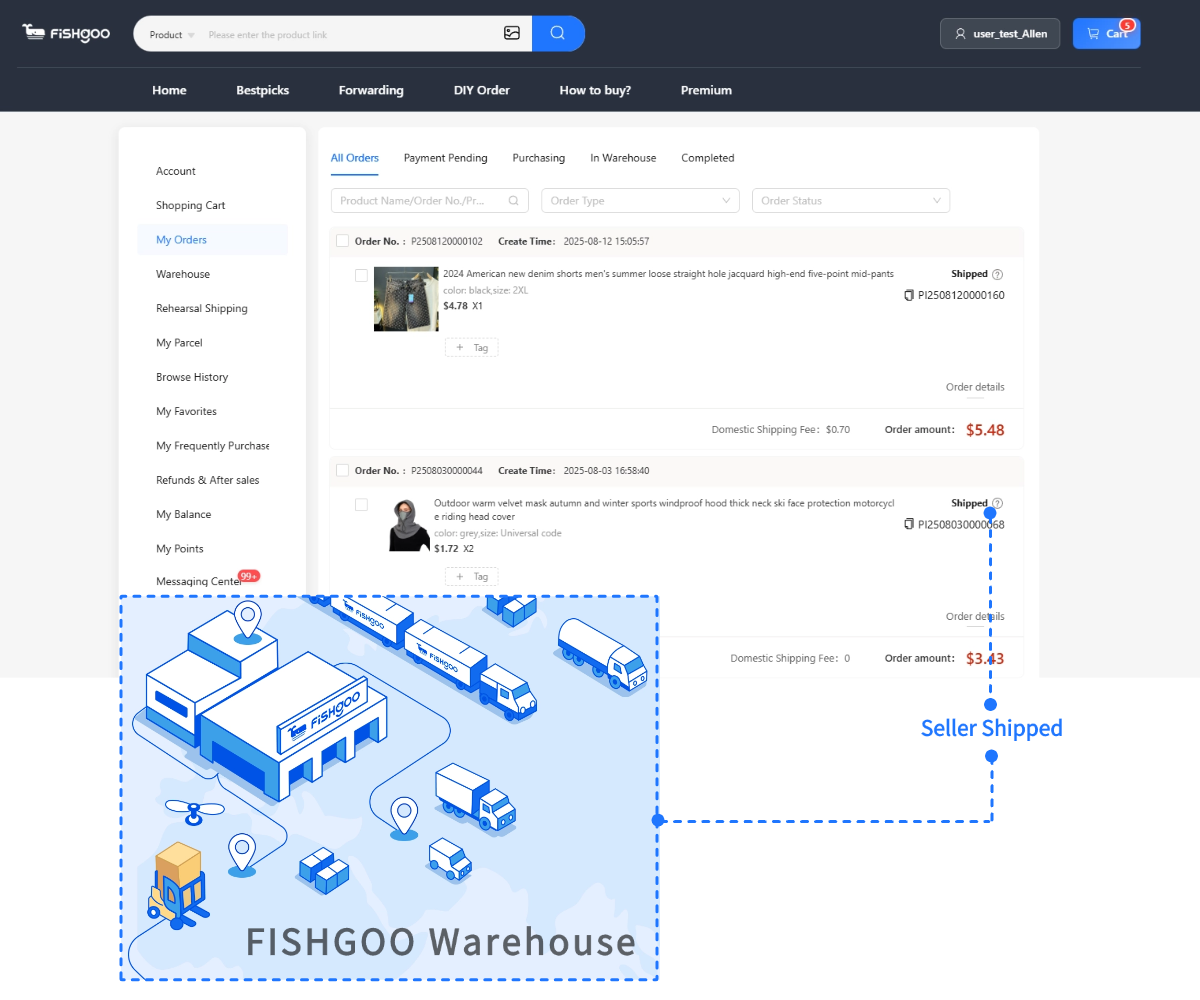
Find products on Taobao or 1688 through Fishgoo. Order 10-20 units of 3-5 products. Start with Taobao for your first test batch — prices are retail-level but minimums are 1 unit. Once you validate a product, switch to the same item on 1688 for wholesale pricing (30-50% below Taobao).
Zero service fee on Fishgoo means your entire budget goes to product and shipping. A 5% fee on a €200 sourcing order = €10 gone. At zero percent, that €10 stays in your margin. Over a year, the difference compounds to €100-300 in preserved profit.
Step 2: QC every unit
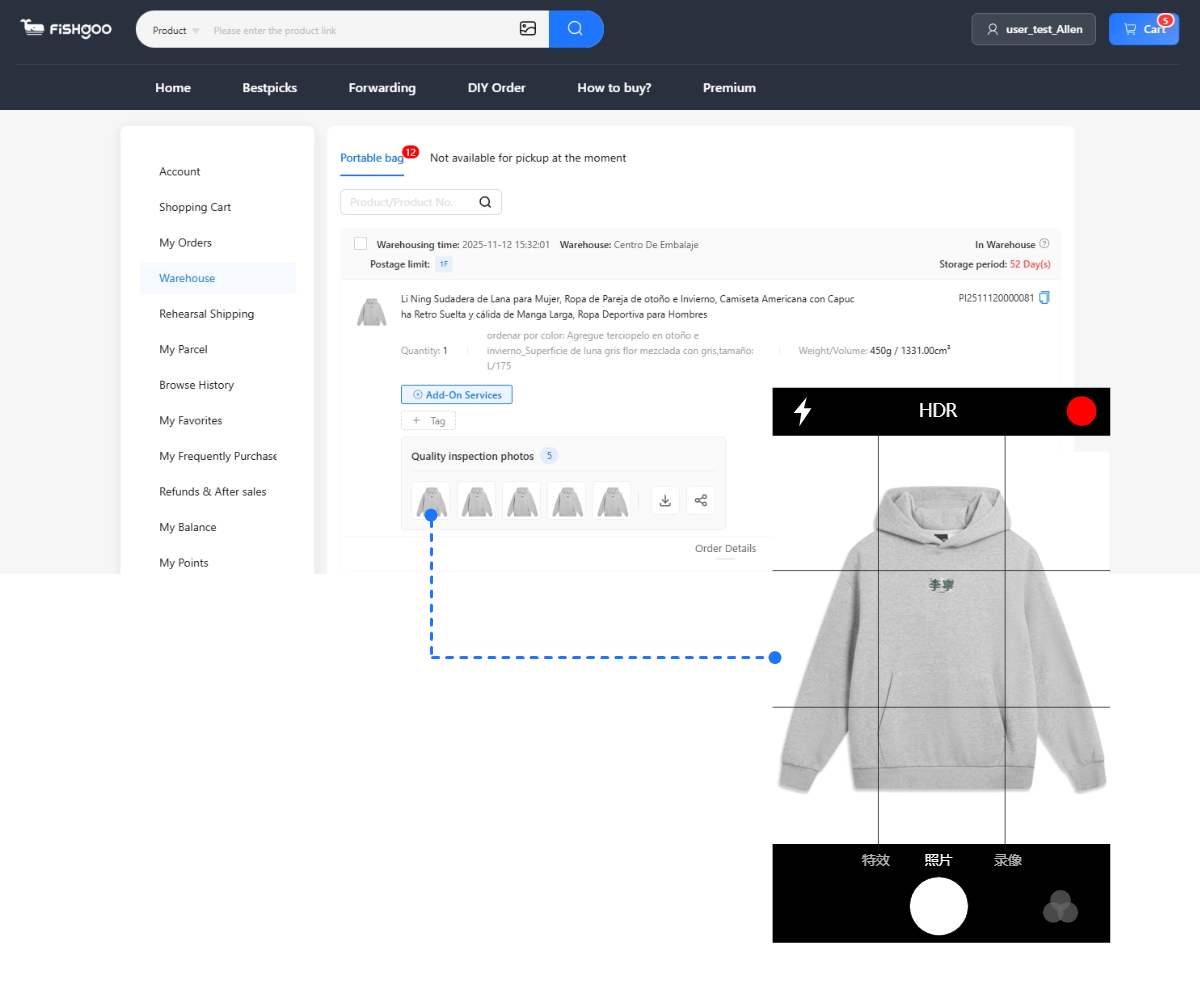
This isn’t optional for Etsy sellers — it’s essential. Every unit you send to an Etsy customer is your brand reputation. A tarnished ring or a crooked setting = negative review = damaged shop credibility. Through Fishgoo’s 5 free QC photos per item, inspect every piece before it enters your inventory. Reject anything defective — returns within China are free.
For jewelry specifically: check stone settings, clasp mechanisms, chain links, and surface finish. For accessories: check color accuracy, stitching, hardware quality. Two minutes per item in QC review prevents the one negative review that tanks your conversion rate for weeks.
Step 3: Ship to yourself
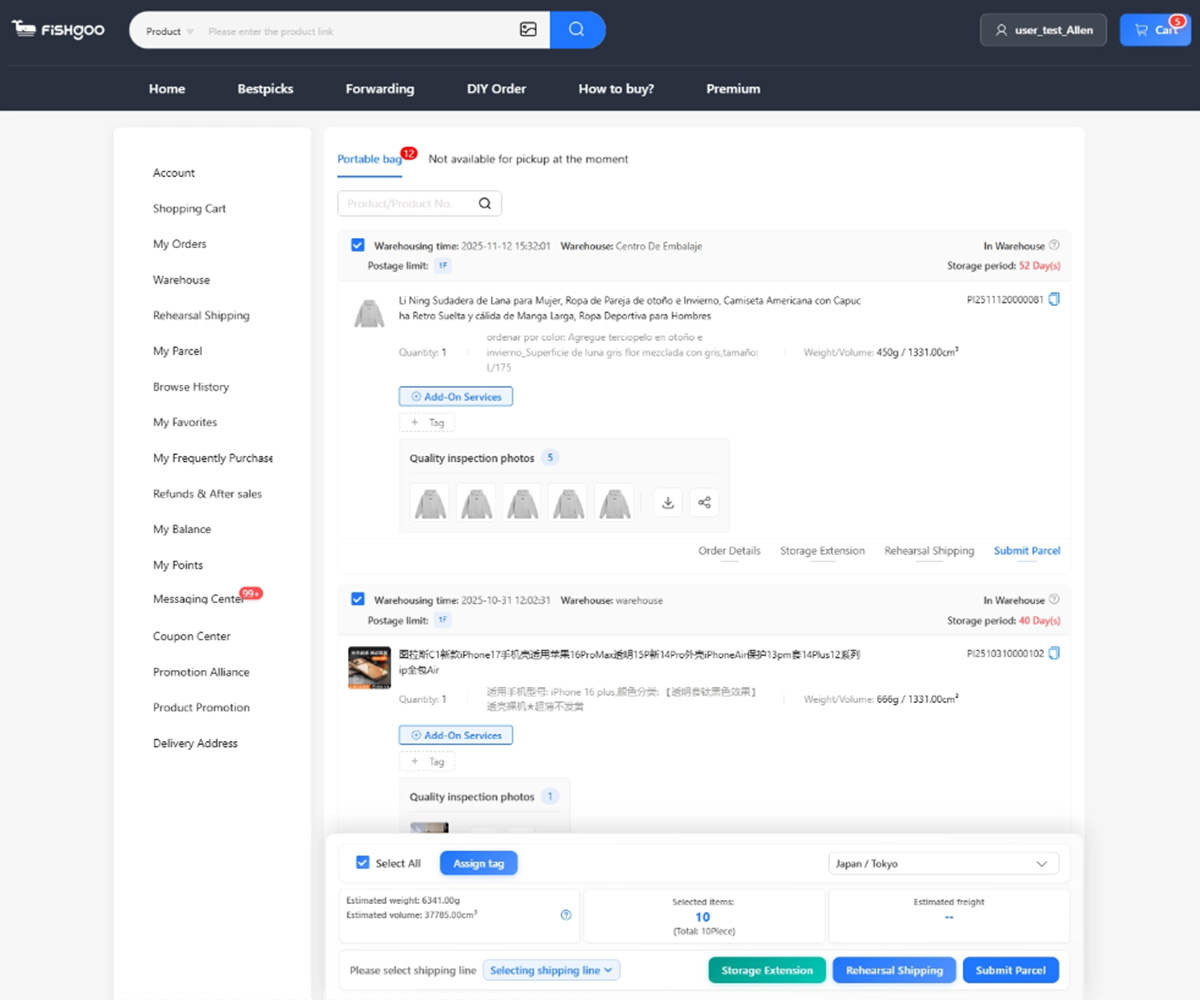
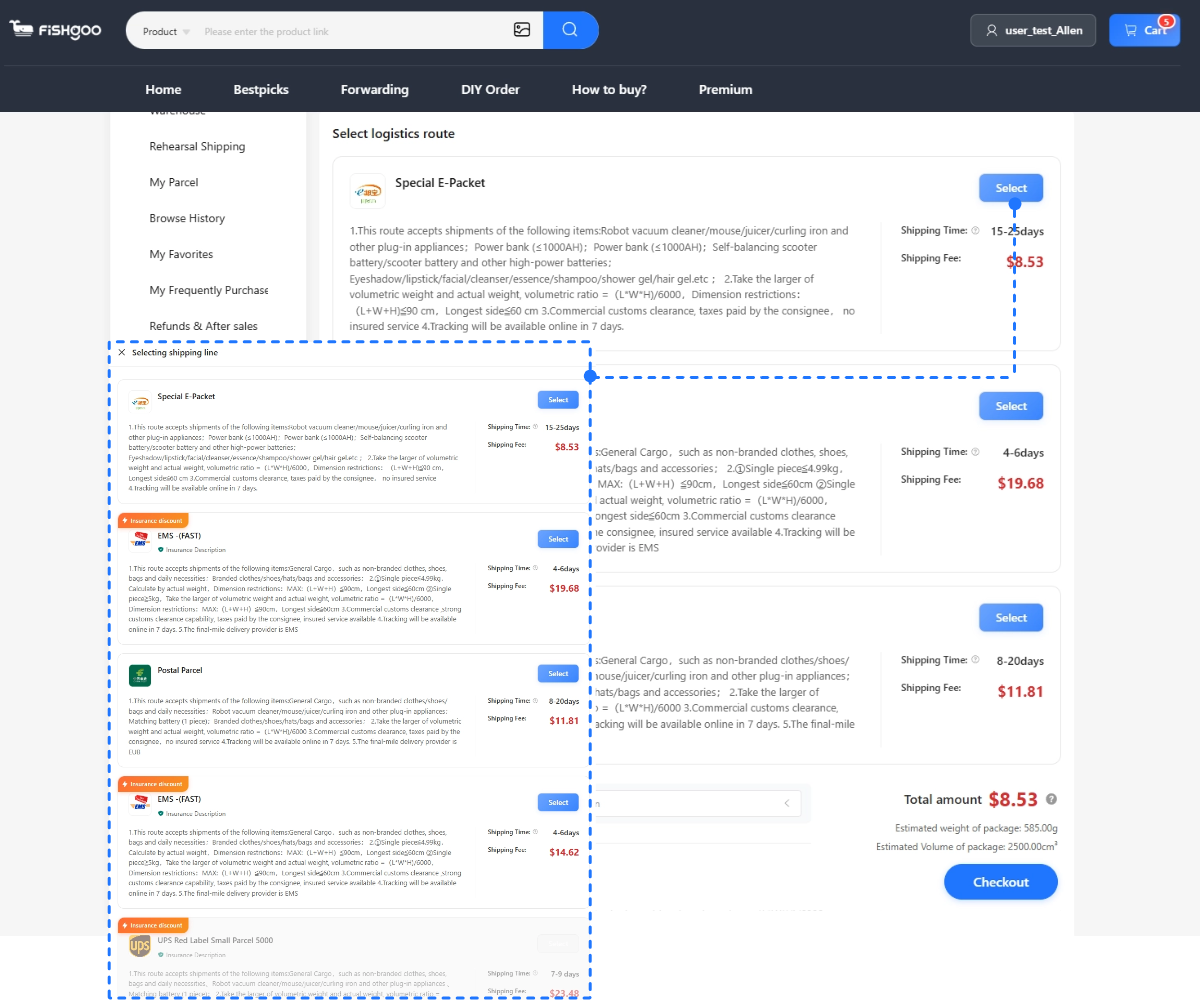
Consolidate via haul to your home address. Product inventory + packaging supplies (tissue paper, thank-you cards, small boxes — all from Taobao at €0.10-0.30 per order set) ship in one parcel. Receive in 2-3 weeks via economy shipping.
Step 4: Photograph professionally
This is where you add the value that justifies the markup. Products from Taobao look generic in their listing photos. Your photos make them look curated, intentional, premium.
Minimum setup (€5-10 from Taobao): lightbox for white-background shots, marble-look backdrop for lifestyle shots, one dried flower prop, natural window light. Phone camera is fine — post-2020 phones produce adequate product photos in good lighting.
Three photo types per listing: clean white background (Etsy thumbnail requirement), lifestyle flatlay (shows the product in context — on a tray, next to a plant, draped on fabric), and in-use shot (on a wrist, on an ear, on a desk). These three angles convert browsers into buyers.
Step 5: List on Etsy
Write descriptions that emphasize material, craftsmanship, and styling — not source. “925 sterling silver minimalist hoop earrings, polished finish” is accurate, searchable, and appealing. Price at 4-8x your total landed cost (product + shipping per unit + packaging).
Etsy SEO matters: use the full 13 tag slots with relevant search terms. Title should include the primary keyword naturally. Fill out all attributes (material, color, occasion). Well-optimized listings appear in Etsy search within 24-48 hours of publishing.
Step 6: Ship to customer
From your home, in branded packaging. Tissue paper (€0.01/sheet from Taobao), a thank-you card (€0.03 each), a small branded sticker on the box (€0.02 each). Total packaging cost per order: €0.10-0.30. These tiny additions transform a plastic mailer into a “boutique experience” that generates 5-star reviews and repeat customers.
Etsy Fee Reality Check
Etsy takes a meaningful cut. Your margin calculation must account for all fee layers:
| Fee type | Amount | On a €22 sale |
|---|---|---|
| Listing fee | €0.20 per listing (renewed every 4 months or at sale) | €0.20 |
| Transaction fee | 6.5% of sale price | €1.43 |
| Payment processing | 4% + €0.30 | €1.18 |
| Offsite ads (if enrolled) | 12-15% of sale price (optional but auto-enrolled above $10K revenue) | €0-3.30 |
| Total Etsy fees (without offsite ads) | €2.81 (12.8%) |
On a €22 sale with €2.81 in Etsy fees, €3 in domestic shipping, €0.30 in packaging, and a €3 landed product cost (Taobao product + international shipping share via Fishgoo): total cost = €9.11. Profit = €12.89. Net margin: 58.6%.
At 30 sales per month (roughly 1/day — achievable for a 6-month-old shop with good SEO): €386.70/month profit. At 60 sales/month: €773. These are realistic, data-grounded numbers — not aspirational projections.
What Etsy Allows (And What Gets You Banned)
Etsy’s policies accommodate sourced products with clear rules:
Allowed:
- Sourcing products from manufacturers and selling as curated collections
- Using your own photography and descriptions
- Labeling accurately: “sterling silver ring” (material truth), not “handmade by me” (process lie)
- Listing in “Handmade” category if you’ve designed the item or significantly modified it
- Listing in “Craft Supplies” or general categories without handmade claims
Will get you banned:
- Claiming products are “handmade by me” when they’re factory-produced (fraud)
- Using trademarked brand names in listings (“Tiffany-style ring” = trademark violation)
- Selling obvious counterfeits with brand logos
- Reusing the seller’s Taobao listing photos instead of taking your own
- Mass-listing hundreds of products without curation (Etsy’s algorithm deprioritizes this)
The line is simple: be honest about what you’re selling, take your own photos, and don’t use brand names. Thousands of legitimate Etsy shops operate exactly this model. The value you add — curation, photography, customer service, presentation — is real and genuine.
Building a Brand vs Flipping Products
There are two Etsy-from-Taobao models. The one you choose determines your long-term trajectory:
Model A: Product flipper. Find cheap products, list them, sell them. No brand identity, no customer relationship, no moat. Vulnerable to anyone who finds the same Taobao listing and undercuts you. Short-term profit, no long-term value.
Model B: Curated brand. Build a shop identity — consistent aesthetic, cohesive product selection, branded packaging, customer communication, social media presence. Your shop becomes a destination, not a commodity listing. Customers buy from “your shop” not from “a listing.” They come back. They refer friends. They follow your Instagram.
Model B takes more upfront effort but creates durable competitive advantage. A curated brand can charge 20-40% more than a flipper for the same products because the experience is the product, not just the physical item.
My Etsy shop follows Model B. Consistent sage-green-and-marble aesthetic across all photos. A “brand card” in every package. An Instagram presence that shows lifestyle shots, not product catalogs. The Taobao sourcing is invisible to customers — they see a boutique. Building this took about 2 weeks of focused effort and roughly €20 in props and packaging supplies from Taobao.
→ DIY product photography setup for €10
Sourcing Workflow Optimization
After 14 months, my sourcing rhythm is systematic:
Monthly cycle:
- Week 1: Review sales data. Which products sold well? Which are low stock? Any new product ideas from image searching trending items?
- Week 1-2: Place restock order through Fishgoo. Proven products from 1688 (better unit price), test products from Taobao (smaller quantity).
- Week 2-3: QC review as items arrive at warehouse. Reject defects. Approve and consolidate.
- Week 3-4: Inventory arrives. Photograph new products. List on Etsy. Restock existing listings.
This cycle runs on autopilot now — about 6 hours total per month for sourcing and inventory management. The remaining weekly hours go to: customer messages (1 hour), shipping orders (2 hours), and photography for new products (1 hour).
Key efficiency: 100-day warehouse storage. I don’t rush orders. Items accumulate at the Fishgoo warehouse until I have a full haul ready to consolidate. This patience saves 30-40% on shipping versus rushing small parcels whenever a product runs low.
Seasonal Strategy for Etsy Sellers
Etsy’s traffic spikes predictably around gift-giving occasions. Smart sourcing aligns with these peaks:
| Season | Etsy traffic peak | Order from Taobao by | Best categories |
|---|---|---|---|
| Valentine’s Day | Late January – Feb 14 | Early January | Jewelry, couple items, self-care kits |
| Mother’s Day | April-May | March | Jewelry, skincare tools, home decor |
| Back to School | July-August | June | Stationery, desk accessories |
| Halloween | September-October | August | Themed accessories, decor |
| Christmas | October-December (biggest) | Late September | Everything giftable |
Christmas is the money season — many Etsy sellers make 30-50% of their annual revenue in November-December. Stock up with 11.11 sale pricing (late October order) for maximum margins during peak demand.
Real Etsy Shop Economics: My Monthly Numbers
| Metric | Month 3 | Month 6 | Month 12 |
|---|---|---|---|
| Active listings | 12 | 20 | 28 |
| Monthly sales | 15 | 35 | 55 |
| Average order value | €18 | €20 | €22 |
| Revenue | €270 | €700 | €1,210 |
| Product cost (Fishgoo, 0% fee) | €45 | €105 | €165 |
| Shipping from China (consolidated) | €20 | €35 | €50 |
| Etsy fees | €35 | €91 | €157 |
| Domestic shipping | €45 | €105 | €165 |
| Packaging | €5 | €10 | €16 |
| Net profit | €120 | €354 | €657 |
| Hours per week | 5 | 6 | 7 |
The growth curve isn’t linear — it compounds as you add listings, build search authority, accumulate reviews, and develop repeat customers. Month 12 revenue is 4.5x month 3, but hours worked only increased 40%. The per-hour return improves dramatically over time because the systems (photo templates, shipping workflow, sourcing rhythm) get built once and reused.
Search Terms for Etsy-Friendly Products on Taobao
| Etsy category | Taobao search term | 1688 search term (wholesale) |
|---|---|---|
| Minimalist jewelry | 925银饰 极简 | 925银饰 工厂 极简 |
| Hair clips / scrunchies | 发夹 ins风 / 发圈 丝绒 | 发饰 厂家直销 |
| Decorative candle holders | 烛台 北欧风 | 烛台 工厂 |
| Stationery sets | 文具套装 ins风 | 文具 工厂 礼盒 |
| Gua sha / skincare sets | 刮痧板 礼盒装 | 刮痧板 工厂 套装 |
| Dried flower arrangements | 干花 家居装饰 | 干花 批发 |
| Leather watch straps | 真皮表带 复古 | 表带 工厂 真皮 |
| Wax seal sets | 火漆印章 套装 | 火漆印章 厂家 |
Pro tip: add “ins风” (Instagram style) to any Taobao search to filter for products with the minimalist, aesthetic look that performs best on Etsy. Add “礼盒” (gift box) to find products that come in presentable packaging — saves you the cost of sourcing boxes separately.
→ Image search for product sourcing
FAQ
-
What if customers find the same product on AliExpress?
Some will. But your photos are better, your shipping is faster (from local stock, not 3-week China transit), your packaging creates a gift-worthy experience, and your shop has reviews that build trust. Most Etsy buyers prefer paying €5 more for a curated experience over navigating AliExpress. That preference is your competitive moat.
-
How many products do I need to start?
15-20 listings with 5-10 units each across 3-5 product types. A focused shop with 20 excellent listings consistently outperforms a scattered shop with 200 mediocre ones. Etsy’s algorithm rewards listing quality (photos, reviews, conversion rate) over listing quantity.
-
What’s the startup cost?
€50-150 total: €30-80 for initial product inventory (through Fishgoo, zero fee), €15-25 for consolidated shipping, €5-10 for photography props, and €5-10 for packaging supplies. Etsy listing fees are €0.20 per listing — negligible. The entire setup costs less than a single wholesale purchase from a domestic supplier.
-
How long until I see my first sale?
With good photos and proper Etsy SEO: typically 1-3 weeks after listing. Etsy’s search algorithm needs time to index and test your listings. First month is always slowest. By month 3, if your products and photos are solid, expect 10-20 sales/month. By month 6, 25-40 is realistic for an actively managed shop.
-
Do I need to disclose that products are from China?
You need to be truthful if asked, but Etsy doesn’t require origin disclosure on listings. List accurate materials (“925 sterling silver”), accurate descriptions, and use your own photos. Customers are buying your curation and presentation, not a geographic origin story. If a customer specifically asks where products are made, answer honestly.
→ Source your Etsy inventory — Fishgoo, zero fee, 1688 wholesale access


Start with one product, sample or restock task
Send the product link or description, approximate quantity and destination. Review the scope before any paid purchasing work begins.